Your search Ay-Todor gave 1062 results.
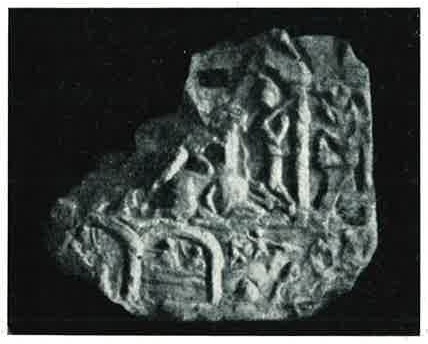
Marble tauroctony relief fragment from Steklen near Svichtov, ancient Novae in Moesia Inferior, preserving the right part of a bull-slaying scene with a serpent and the grotto border.

White marble fragment from the Mithraeum at Sarmizegetusa, Dacia, preserving the head of Sol with four attachment holes for rays.
Marble fragment from the Mithraeum at Sarmizegetusa, Dacia, preserving a head of Mithras in Phrygian cap; a small elevation at the side may be the shoulder of a torchbearer.
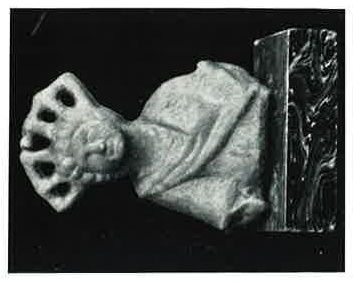
Fragment of bluish marble from the Mithraeum at Sarmizegetusa, Dacia, preserving the dressed bust of Sol with a diadem and holes for five rays; traces of red colour are preserved.
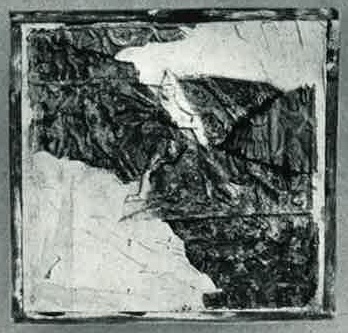
Bluish marble tauroctony relief in fragments from the Mithraeum at Sarmizegetusa, Dacia, divided into horizontal registers with the central bull-slaying and multiple subsidiary Mithraic scenes.
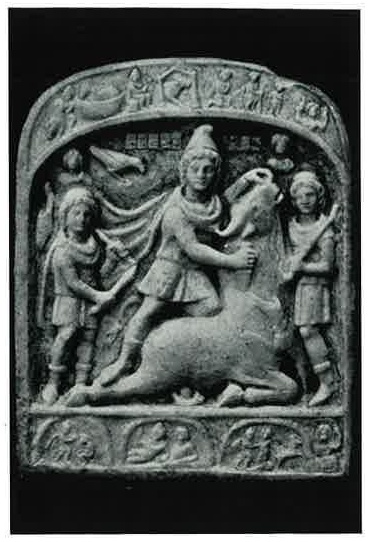
White marble tauroctony relief found in the river Mureș at Vintu de Jos near Apulum, Dacia, around 1859, depicting the bull-slaying with the full iconographic programme.
Small Mithras relief from Apulum, Dacia, mentioned by Buday but not published; a design shows the bust of Sol with one ray pointing towards Mithras.
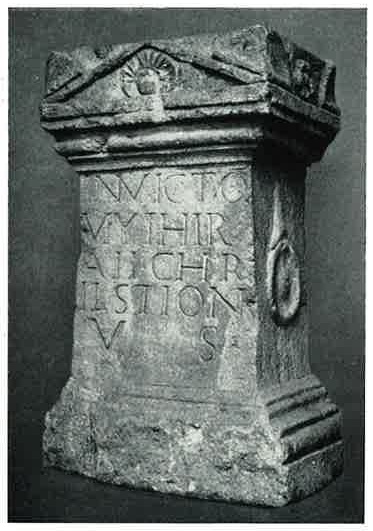
Limestone altar from Partoș or Mureș Port, Dacia, found in 1852, with a triangular pediment containing the head of Sol in a twelve-rayed crown and nimbus, flanked by a patera on the right and a jug on the left.
Minor finds from Mithraeum III at Carnuntum, Pannonia Superior, including lamps, bricks, pottery, and serpent-vase fragments; a coin of Macrinus (AD 217) from the entrance may provide a terminus, and the sanctuary is attested as restored in AD 307.
Marble relief fragment from Mithraeum II at Ptuj, ancient Poetovio, preserving the raven perched on the grotto's border with only two rays of Sol visible above.
Conglomerate statue from a layer of fire debris in the Mithraeum at Schachadorf, Noricum, depicting a naked Mithras without Phrygian cap being born from the rock with upraised hands; a coiling serpent is visible below.
Small bronze bust of Sol with five rays found at Strasbourg, ancient Argentoratum, during construction works in the 1860s–70s; associated with the Mithraic assemblage from the city.
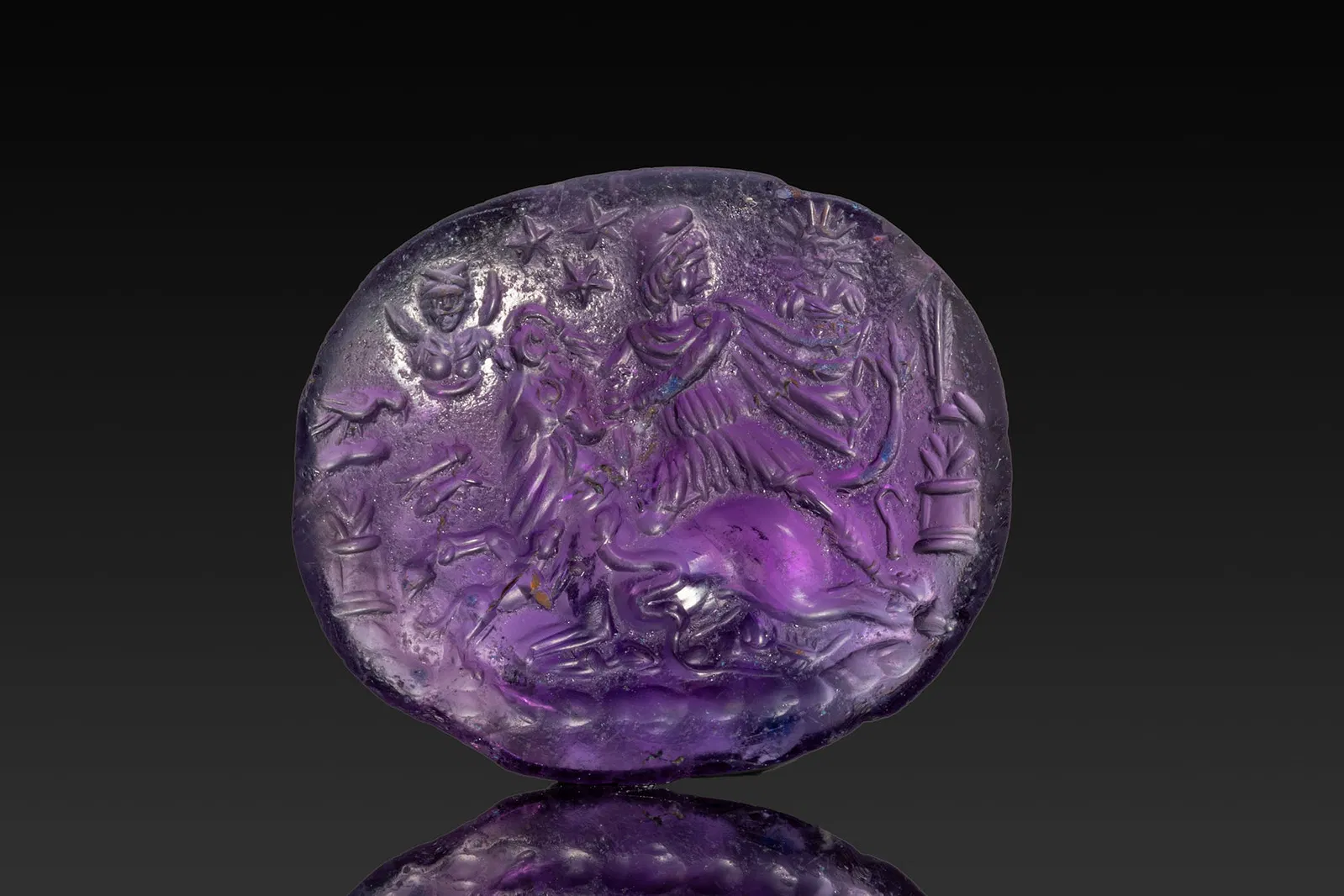
Amethyst intaglio engraved with Mithras slaying the bull, accompanied by Sol, Luna and other canonical Mithraic symbols.
Painted Parthian inscription on a ceramic sherd possibly referring to Mithras as a bull-slayer.
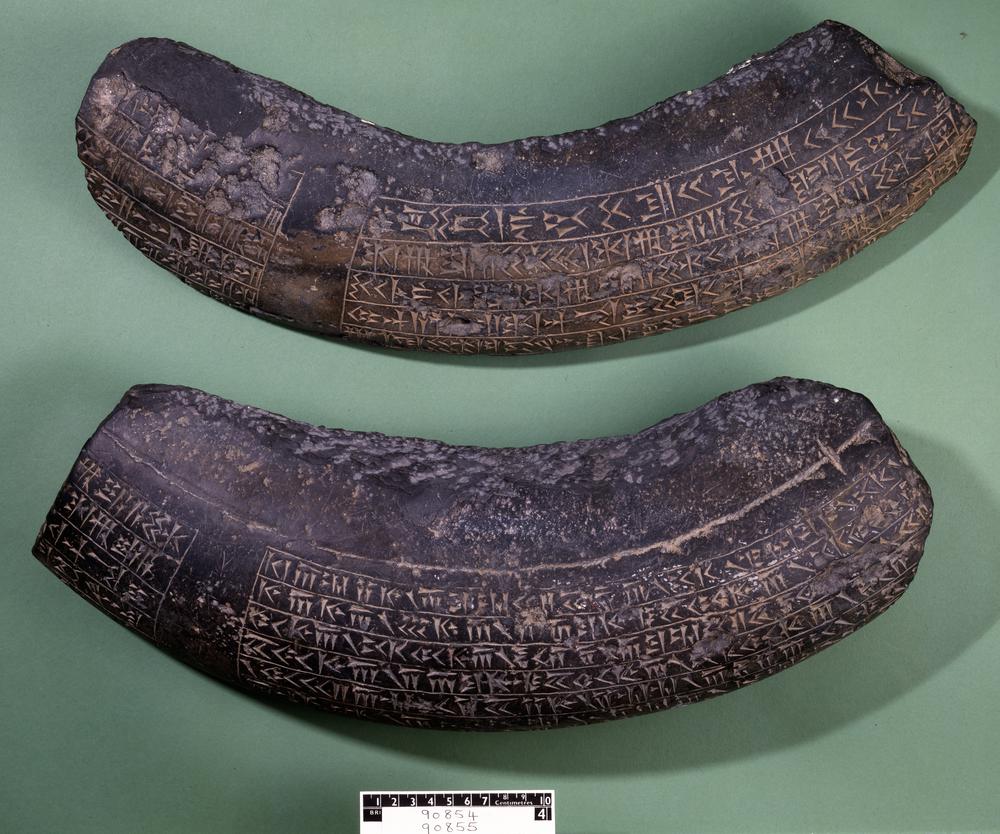
The base of the column bears an inscription that records the rebuilding of a palace at Ectabana ’by the favour of Ahuramaza, Anahita and Mithra’.

In this relief of Mithras as bull slayer, recorded in 1562 in the collection of A. Magarozzi, Cautes and Cautopates have been replaced by trees still bearing the torches.

Caesarea, also known historically as Mazaca, was an ancient city in what is now Kayseri, Turkey.

This relief of Mithras slaying the bull incorporates the scene of the god carrying the bull and its birth from a rock.
,_found_in_Rome,_2nd_century_AD,_British_Museum_(15545876047).jpg)
The sculpture of Mithras slaying the bull was transported from Rome to London by Charles Standish in 1815.
This fragment of pottery depicting Mithras may have come from Gallia.
