Your search Bu Njem gave 1882 results.

Fragment of an open-work marble tauroctony from the Mithraeum at Apulum, Dacia, preserving Mithras's head with only the snout of the bull; the relief is framed by a border.
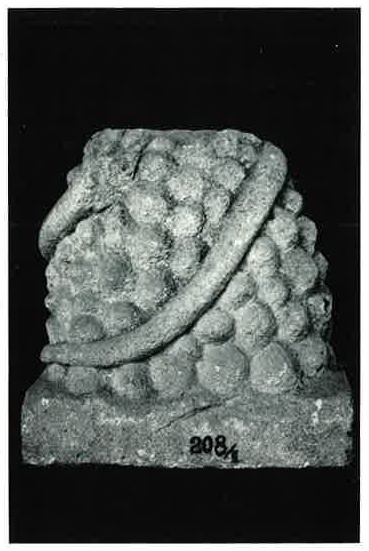
Dark sandstone statue from Mureș Port, Dacia, depicting Mithras's rock-birth with the rock encircled by a serpent; the statue's attribution to Mureș Port rather than Apulum is uncertain.
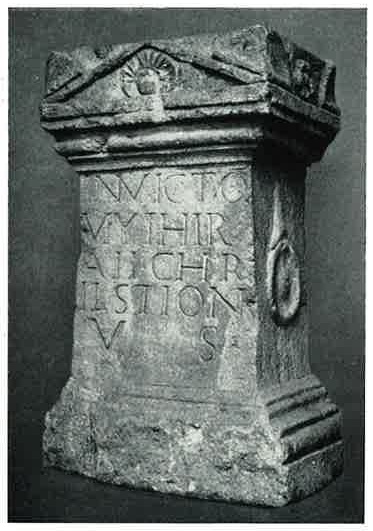
Limestone altar from Partoș or Mureș Port, Dacia, found in 1852, with a triangular pediment containing the head of Sol in a twelve-rayed crown and nimbus, flanked by a patera on the right and a jug on the left.
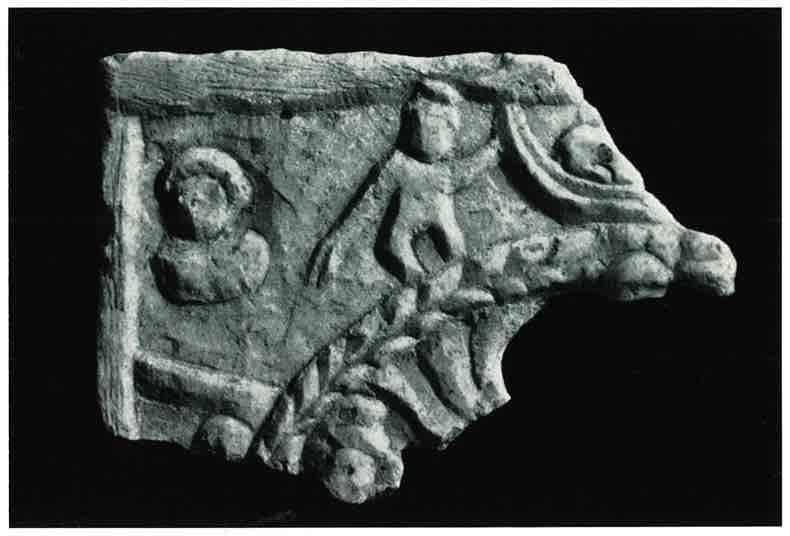
Marble relief fragment found in the Turda castrum in 1954, Dacia, preserving the bust of Sol in the upper left corner and Mithras grasping the bull; remnants of a wreath are visible in the upper right.
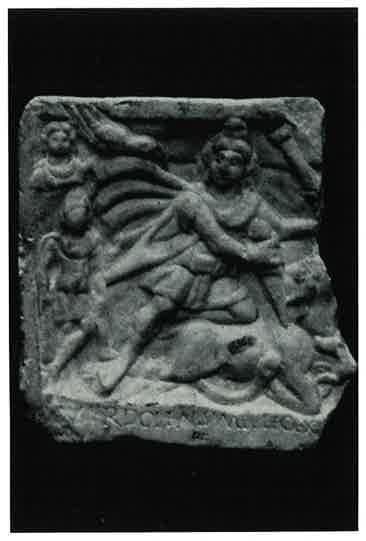
Fragment of a white marble tauroctony relief from Turda, ancient Potaissa in Dacia, depicting the bull-slaying with the bull's tail ending in three corn-ears, the dog, serpent, and scorpion.
Lost white marble tauroctony relief from Turda, ancient Potaissa in Dacia, depicting the bull-slaying with dog, serpent, and scorpion; the inscription in the lower border named the dedicant Iulius Iulianus.
Foundations of a rectangular building (10 × 6 m) and a front-stone fragment at Golubić near Bihać, Dalmatia, suggesting the existence of a Mithraic sanctuary.
Altar from Salona, Dalmatia, with a bust of Sol in radiate crown in the lower portion, dedicated to Deo invicto for the welfare and safety of Pamphilus, imperial dispensator, by his arkarius Fortunatus.
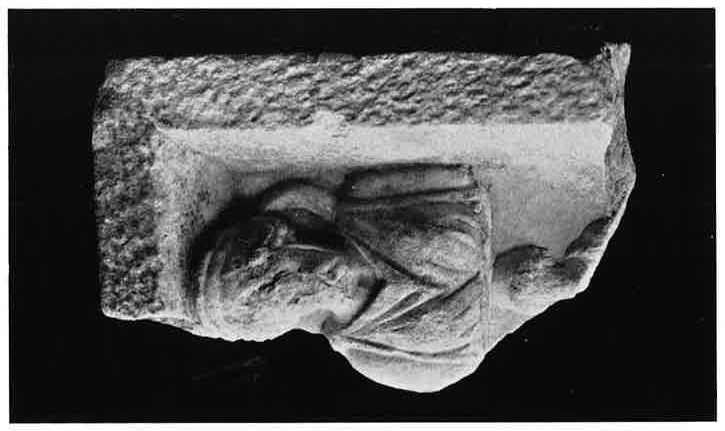
Right upper corner of a white marble bordered tauroctony relief from Salona or its surroundings, Dalmatia, with framing elements and part of the bull-slaying iconography.
Fragmentary inscription from Salona, Dalmatia, preserving only the phrase impendio suo — probably recording a building act.
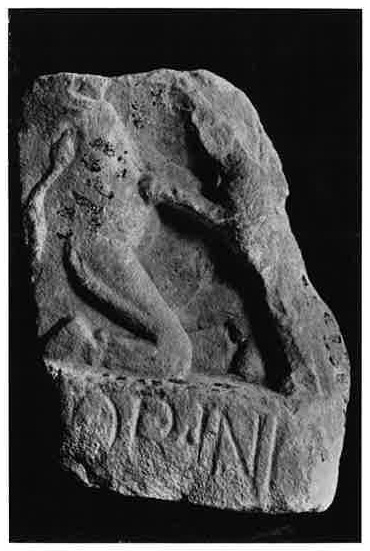
Limestone tauroctony relief fragment from Salona, Dalmatia, preserving the foremost part of the bull, the dog, the serpent, and part of Mithras's dagger hand.
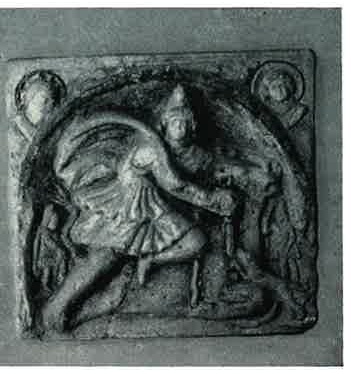
Marble tauroctony relief from Petronell, ancient Carnuntum in Pannonia Superior, with the bull's tail ending in corn-ears; no scorpion is depicted, and Cautes holds the upraised torch.
Small sandstone altar from Carnuntum, Pannonia Superior, dedicated to Deo Soli invicto by a dedicant whose name reads Sacellus; found in the Burgfeld in 1878.
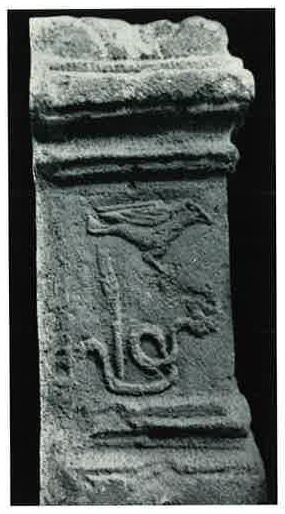
Sandstone altar from Carnuntum, Pannonia Superior, found in a flue of Building VII in 1899, decorated on the left with a raven, corn-ear, and serpent stacked vertically and on the right with a lying lion; dedicated to Invicto deo Mithrae.
Minor finds from Mithraeum I at Carnuntum, Pannonia Superior, comprising legionary brick stamps, burnt coal and wood, ash with ox, sheep, and goat bones, and fragments of serpent-vases; the coin evidence points to a terminus ante quem in the early third century…
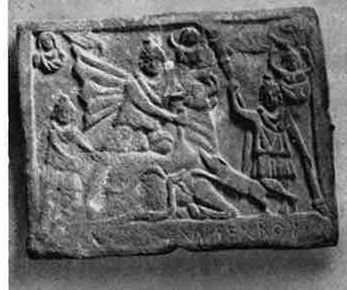
White marble tauroctony relief from Stix-Neusiedl, Pannonia Superior, depicting Mithras killing the bull with the raven perched on the rim of the god's flying cloak — an unusual detail placing the raven on the cloak rather than on the grotto border…
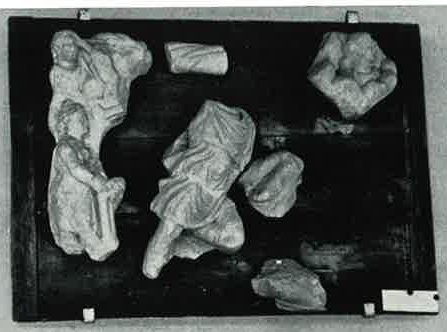
Marble tauroctony relief from Mithraeum III at Ptuj, ancient Poetovio, preserving Mithras killing the bull — head and most of the flying cloak lost — flanked by Cautopates holding the torch downward.
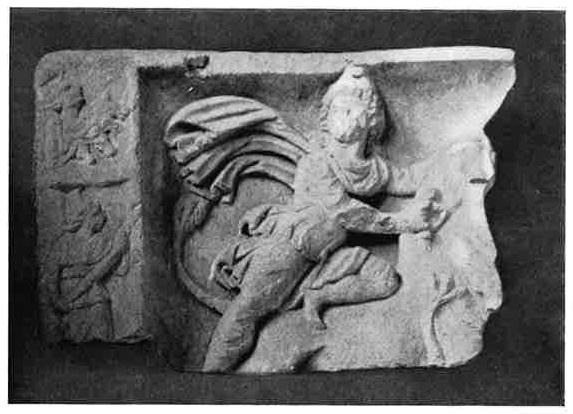
Marble tauroctony relief fragment from Mithraeum III at Ptuj, ancient Poetovio, notable for a three-headed serpent and a dog attempting to lick the blood; the bull's tail ends in three corn-ears.
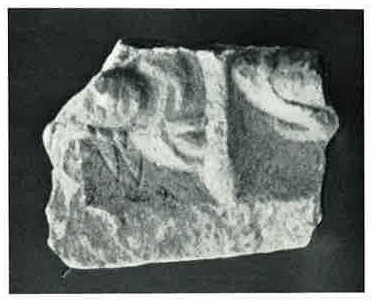
Left upper corner of a marble relief from Mithraeum II at Ptuj, ancient Poetovio, with the dressed bust of Sol in radiate crown above a horizontal rim, beneath which the head of a torchbearer, probably Cautopates.
Terracotta statuette from Mithraeum II at Ptuj, ancient Poetovio, depicting Mithras as bull-slayer with yellow-painted garments; the piece was not recovered during the author's visit and may be lost.
