Your search Bu Njem gave 1882 results.

Marble plate recording the construction of a centenarium Solis by the governor Septimius Flavianus, found at Bir Haddada in the Ager Sitifensis, dated 315/316 A.D.
Inscription dedicated to Sol Invictus for the wellbeing of Emperor Aurelianus and his dynasty, from Thagaste, dated 275 A.D.
Inscription dedicated to Deus Sol Invictus for the wellbeing of Emperor Probus and the municipality, from Chidibbia, dated 276-282 A.D.
Inscription dedicated to Sol Invictus at Lambaesis, of uncertain Mithraic attribution.
Two limestone figures of women, possibly from the Mithraeum near Memphis, one standing cross-legged holding a branch with flowers, Egypt.
Painted inscription naming a tribune Archelao, found on a column or wall of the Mithraeum of Dura-Europos, Syria.
Possible Mithras sanctuary at a grotto entrance in the Kavag-Dağ, Lycia; the identification remains purely hypothetical according to Cumont.
Sepulchral inscriptions from Lycaonia bearing the titles leo and aetos, previously interpreted as Mithraic grades but now understood as referring to tomb architecture.
Gold coin of the Scythian king Hooerkes, reverse showing Mithras (MIIPO) in tunic with lance and sword, north-west India, c. 87–129 A.D.
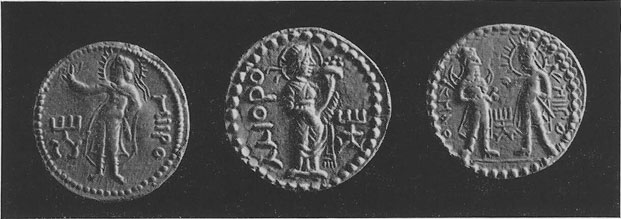
Gold coin of the Scythian king Hooerkes, reverse showing MIOPO (Mithras) as a goddess with cornucopia, north-west India, c. 87–129 A.D.
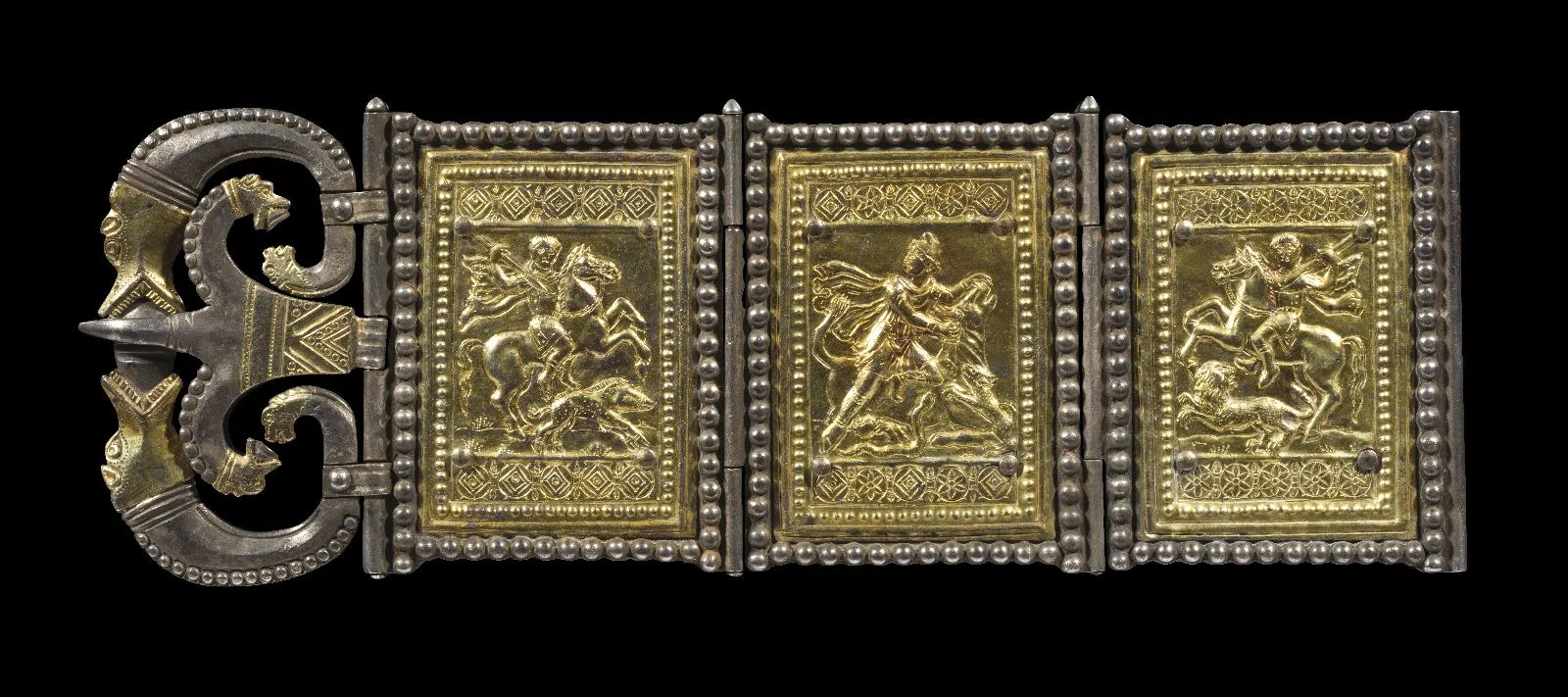
Silver belt fitting with Mithras tauroctony and aristocratic hunting horsemen, fourth century AD.
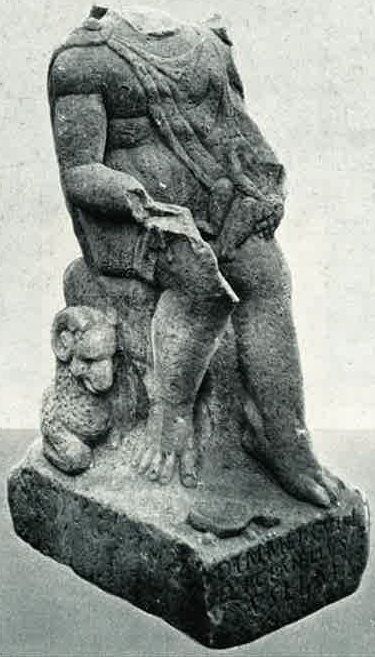
Sandstone statue of Mercury seated on a rock from Mithraeum II at Stockstadt, found near location 5 in the sanctuary
Fragmentary white sandstone altar from Mithraeum I at Stockstadt dedicated to Iupiter Dolichenus and Iuno Regina
Red sandstone relief from Mithraeum I at Stockstadt depicting Diana in a long garment drawing an arrow from her quiver, with a deer at her feet
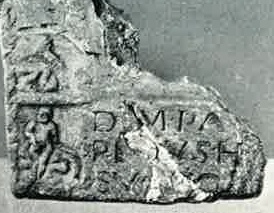
Double-sided white sandstone relief from Mithraeum I at Stockstadt, with Mithraic imagery on both faces
Large red sandstone tauroctony relief from Mithraeum I at Stockstadt, mostly thrown into the river Main when the sanctuary was destroyed
The inscription is carved into two pieces of marble cornice.
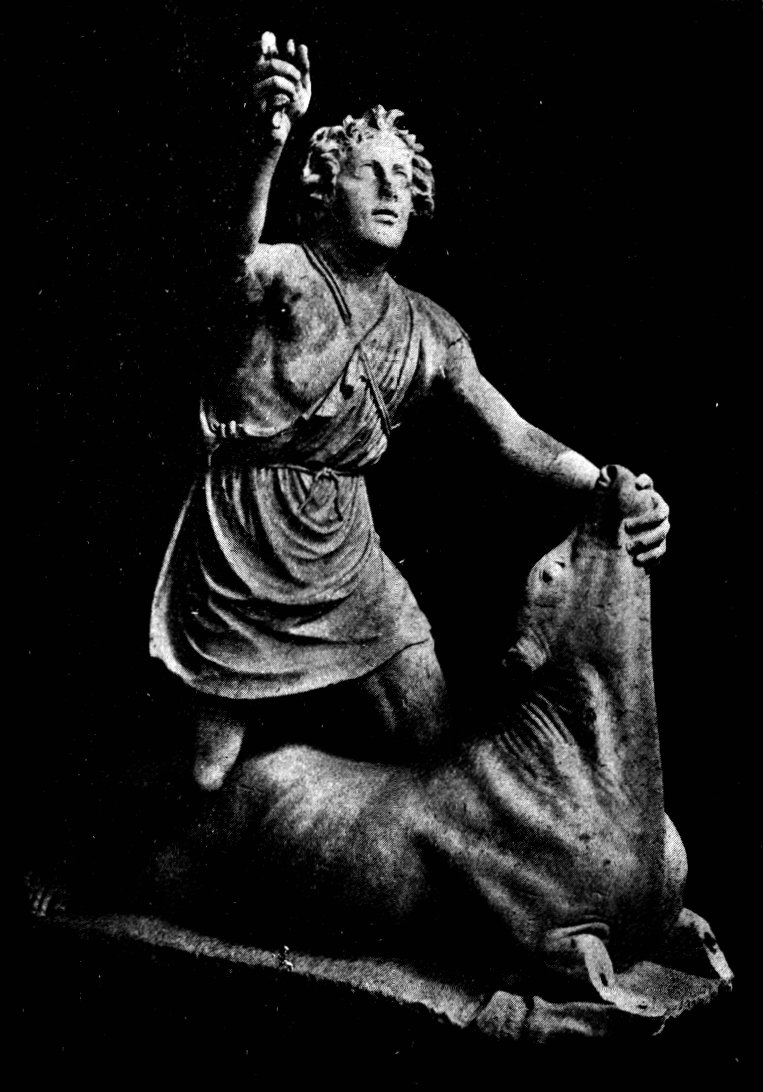
The person who commanded the sculpture may have been M. Umbilius Criton, documented in the Mitreo della Planta Pedis.
Gold lamina from Ciciliano showing a nude, serpent-entwined Aion-Kronos holding a key and surrounded by Greek voces magicae (2nd c. CE).
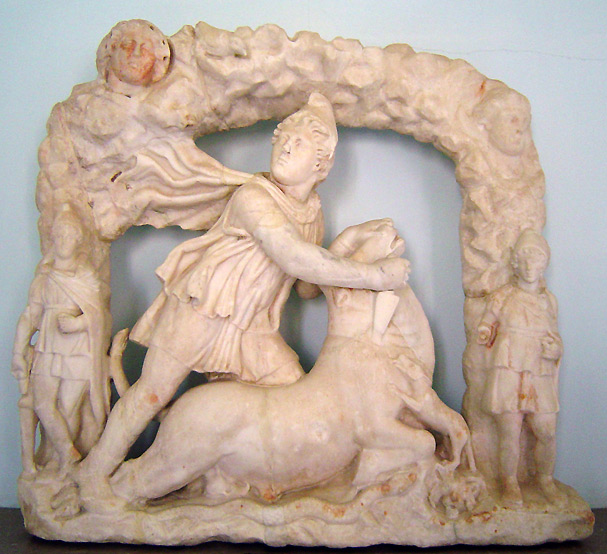
The assumed find-place of the Mithras Tauroctonus of Palermo is uncertain.
