Your search Bu Njem gave 1882 results.

Sandstone altar from Carnuntum, Pannonia Superior, dedicated jointly to Invicto deo by Baebius Martialis and Ulpius Breucianus.
Altar from Petronell, ancient Carnuntum, Pannonia Superior, dedicated to Deo invicto Mithrae by Aurelius, whose name is only partially preserved.
Sandstone plate from Mithraeum III at Carnuntum, Pannonia Superior, dedicated to Deo invicto by Caius Iulius Propinquus, who built a wall ex voto; traces of red on the rim.
Inscription from Mithraeum III at Carnuntum, Pannonia Superior, recording a dedication pro salute Augusti to Deo invicto by Magnius Heracla, a Roman citizen of peregrinian origin as indicated by his cognomen.
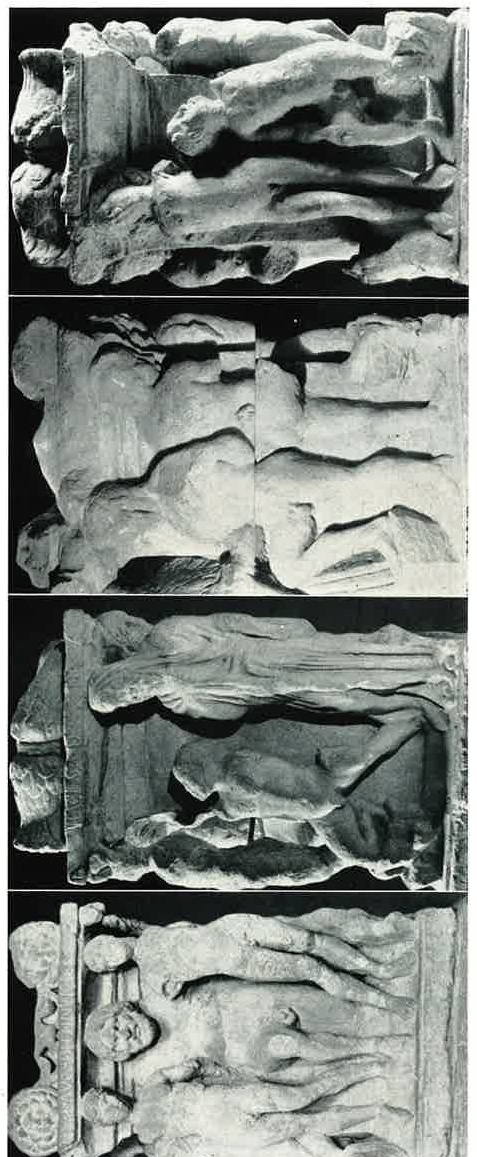
Large stone altar from Mithraeum III at Carnuntum, Pannonia Superior, decorated on all four sides with nine figures supporting the upper voluted section and bearing faces on the front of the volutes; a distinctive sculptural type within the Mithraic repertoire…
Inscription from Mithraeum III at Carnuntum, Pannonia Superior, recording that Titus Flavius Viator built or founded something for Deo invicto; the verb condi fecit is interpreted as referring to the construction of the sanctuary.
Marble relief fragment from Mithraeum III at Ptuj, ancient Poetovio, preserving the dog and part of the serpent approaching the bull's wound.
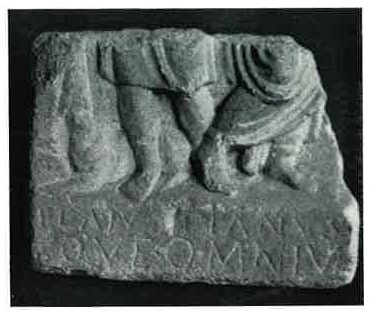
Marble relief fragment from Mithraeum III at Ptuj, ancient Poetovio, preserving part of Mithras's flying cloak and the scorpion below the bull.
Marble relief fragment from Mithraeum II at Ptuj, ancient Poetovio, preserving a raven as part of a tauroctony scene.
Fragmentary inscription from Mithraeum II at Ptuj, ancient Poetovio, recording a dedication to Deo invicto Mithrae by Titus Flavius Restutus, IIIIvir Augustalis of the Colonia Poetovionis.
Inscription from Mithraeum II at Ptuj, ancient Poetovio, dedicated to Deo Soli invicto Mithrae for the welfare of Flavius Iovinus, who had vowed the gift after witnessing the birth of the god; dated to the consulship of Peregrinus and Aemilianus, AD 244.
Inscription from the area of the castellum at Sisak, ancient Siscia, recording that Iucundus, imperial dispensator of Pannonia Superior, built a portico and an aparatorium for Deo invicto Mithrae ex voto.
Fragment of a small altar from Ljubljana, ancient Emona in Pannonia Superior, preserving a dedication to Invicto Mithrae by a dedicant whose name ends in -quartus; the Mithraic attribution is not entirely certain.
Inscription from Virunum, Noricum, dedicated to Deo Soli invicto by Iuventinus, who identifies himself with the Mithraic grade leo — one of the clearest grade attributions in the epigraphic record of Noricum.
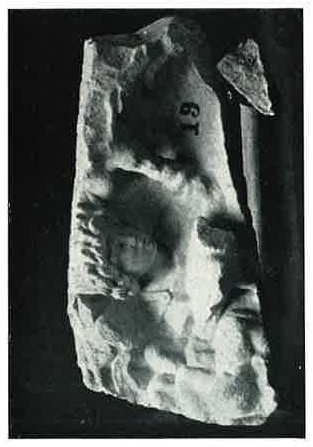
Three Italian marble fragments from the Zollfeld at Virunum, Noricum, forming a tauroctony relief; the iconography is well preserved and the use of imported Italian marble reflects the high status of the dedicants.
Small rectangular Mithraic sanctuary (spelaeum 8.00 m long) found in 1935–36 in a gravel terrace at Schachadorf near Wartberg an der Krems, Noricum; the building is divided into a pronaos and an inner cult room, and shows traces of fire destruction.
Upper portion of a sandstone statue from Strasbourg, ancient Argentoratum, showing a head surmounted by a serpent's head; the fragment probably belonged to an Aion.
Rocky base from the Mithraeum at Neuenheim probably originally supporting a representation of Mithras' rock-birth
Red sandstone base from the Mithraeum at Neuenheim with representations of deities on each of its four sides
Sandstone votive altar with traces of red paint from Wiesbaden, ancient Aquae Mattiacae, erected during the reign of Macrinus with permission of Varonius Lupulus
