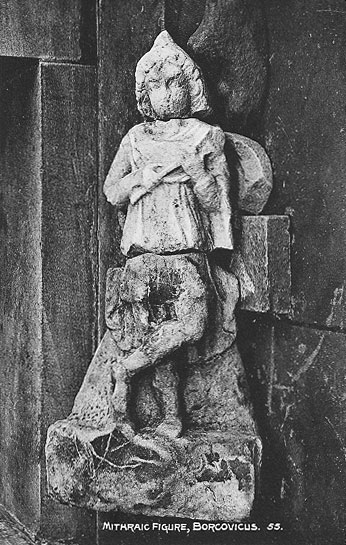
Your search for Carrawburgh gave 19 results.

Procolitia stood along Hadrian’s Wall near modern Carrawburgh and formed part of the frontier infrastructure of northern Britannia.
Brocolitia, also called Procolita or Brocolita, was an auxiliary settlement on Hadrian's Wall. This site is now known as Carrawburgh.
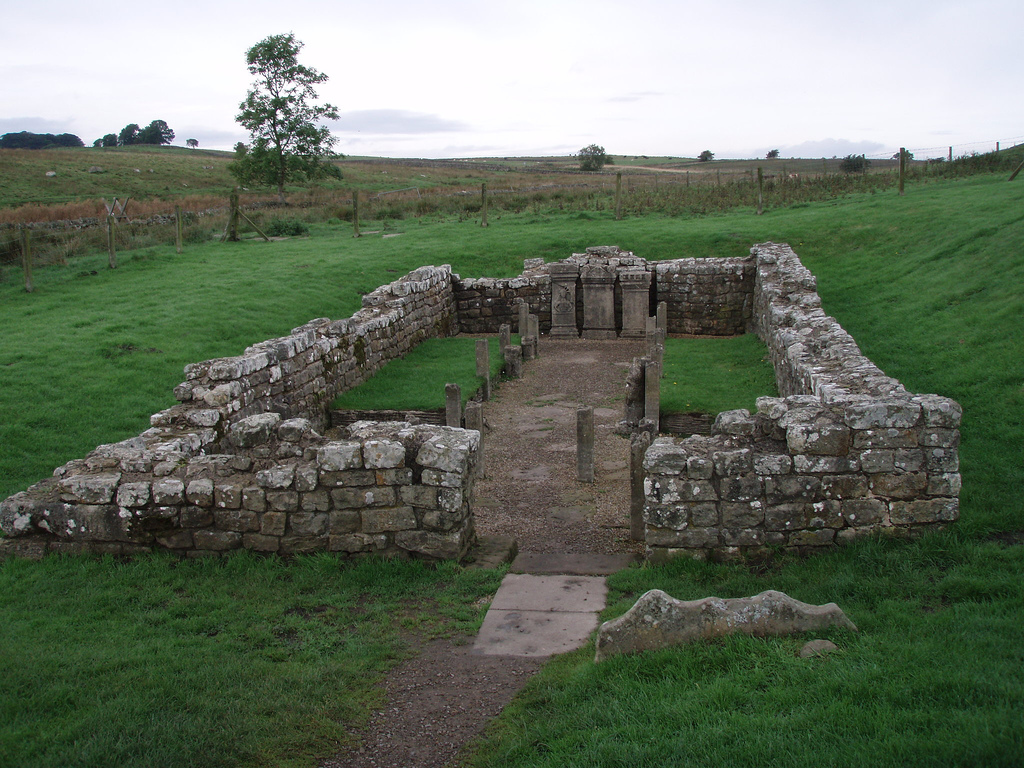
The temple of Mithras of Carrawburgh, Brocolita, disclosed three main stages of development, the second exhibiting two reconstructions.

A small stone pedestal and the fallen statue of a seated Mother-goddess from the Mithraeum at Procolitia (modern Carrawburgh), depicting a figure of ungainly proportions enfolding in her arms a basket resting on her knees, found in the corner behind the screen at the east end of the temple…
Ritual vessels and iron objects from the Mithraeum at Procolitia (modern Carrawburgh), including containers for votive offerings, cups, cooking-pots, platters, mortaria and jars, and iron implements comprising an altar-shovel, thatch-hook, mounting and candlestick…
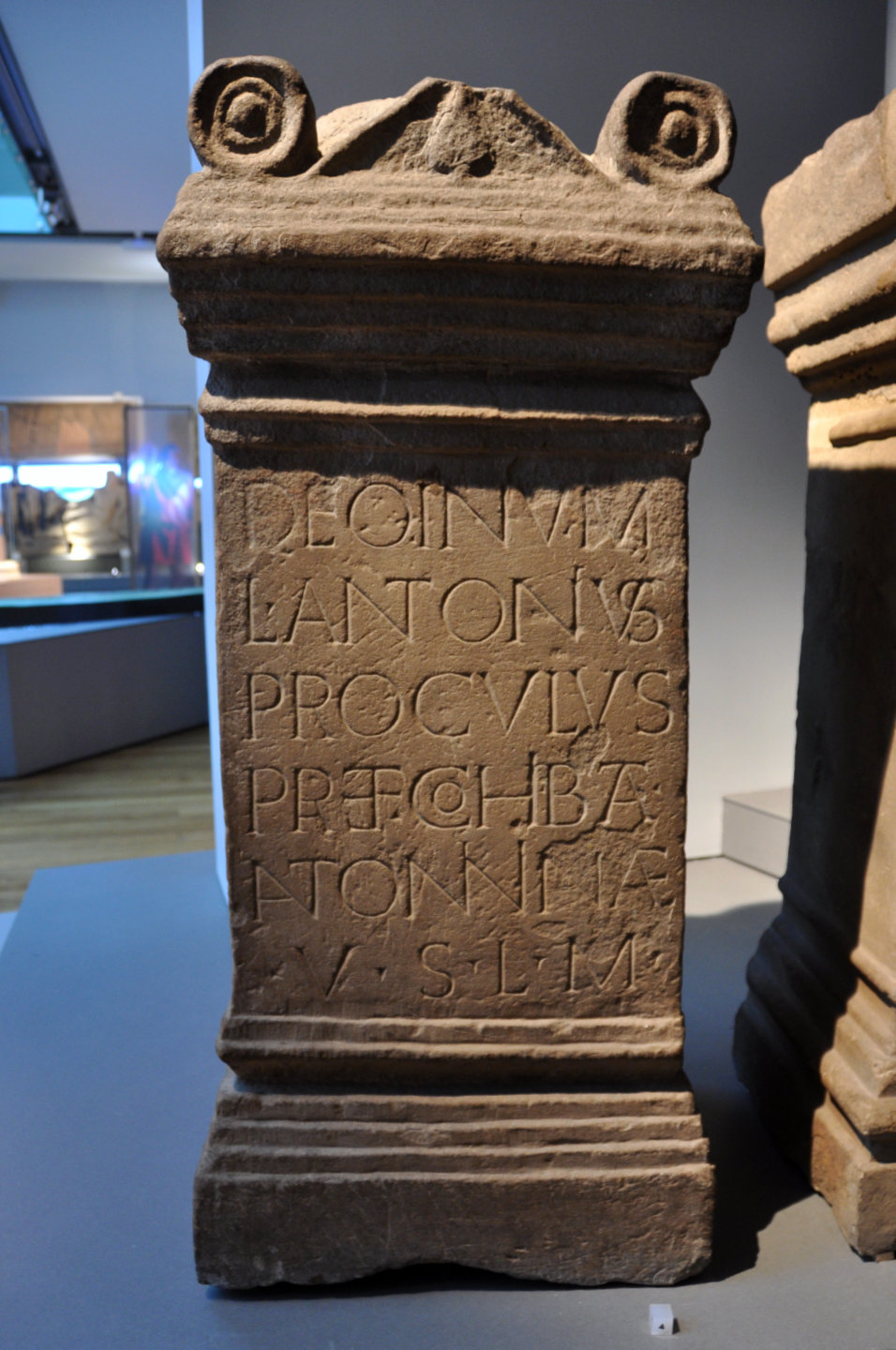
One of the three altars to Mithras found at the Mithraeum of Carrawburgh fort.
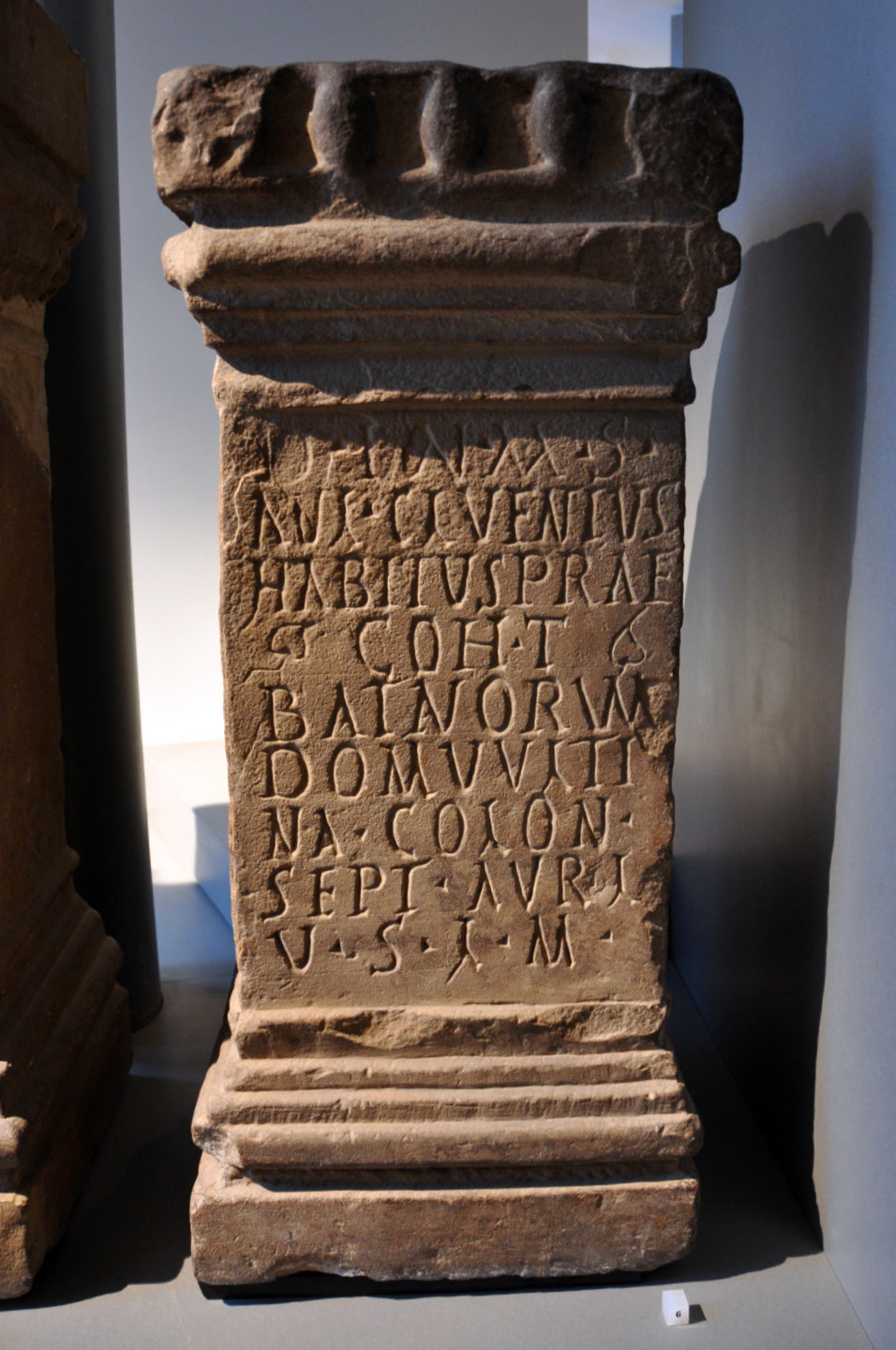
One of the three altars to Mithras found at the Mithraeum of Carrawburgh fort.
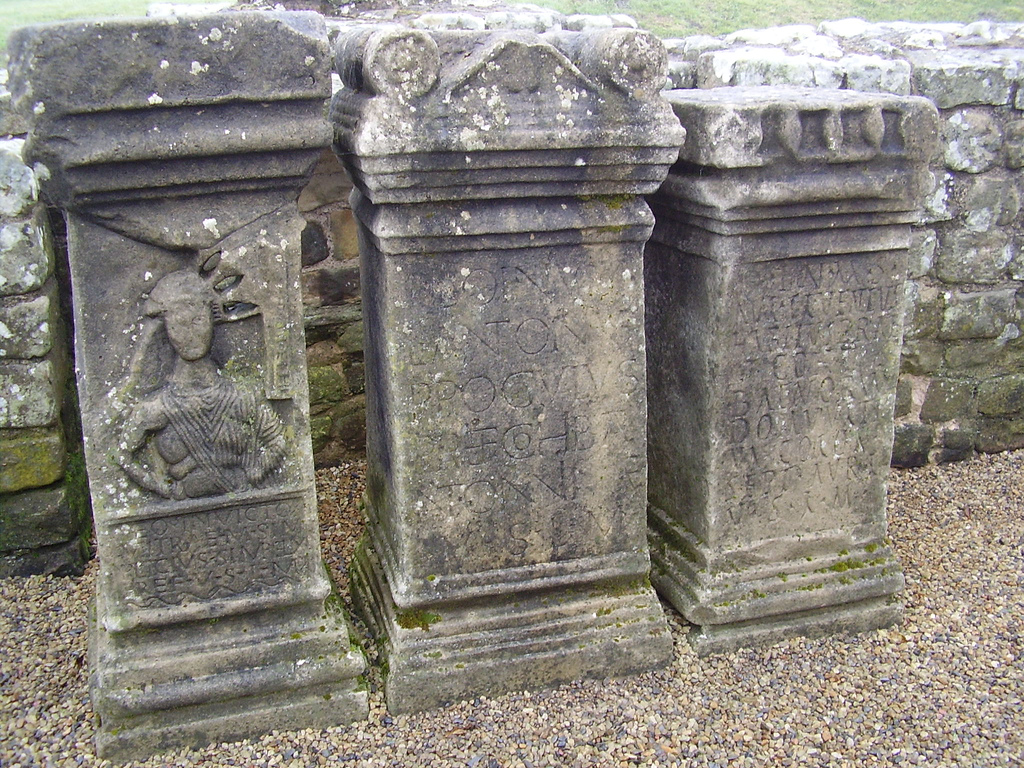
One of the altars from the Carrawburgh Mithraeum depicts the bust of Mithras or Sol.
Pair of Castor ware vessels interpreted as ritual banquet deposits from the Mithraeum of Procolitia.

The archaeology of the Mithraeum at Carrawburgh
Roman auxiliary prefect associated with the maintenance of the Mithraeum at Carrawburgh.
Roman auxiliary prefect of the Cohors I Batavorum Antoniniana and one of the earliest known patrons of the Mithraeum of Carrawburgh.

Roman auxiliary prefect of the Cohors I Batavorum and one of the earliest known devotees of Mithras at Carrawburgh.