Your search Civita gave 13 results.

White marble tauroctony relief from Golema Kutlovica, ancient Civitas Montanensium in Moesia Superior, depicting the standard bull-slaying scene.
Inscription from Civitas Montanensium, Moesia Superior, dedicated to Deo sancto invicto by Lucaius ex voto.

Civitas Montanensium developed around the important Roman settlement at modern Montana in Bulgaria.

Murius Victor was an aedile of Civitas Taunensium who, in fulfilment of a vow, built an altar to Mithras.
This altar found in Sentinum bears an inscription from two brothers.
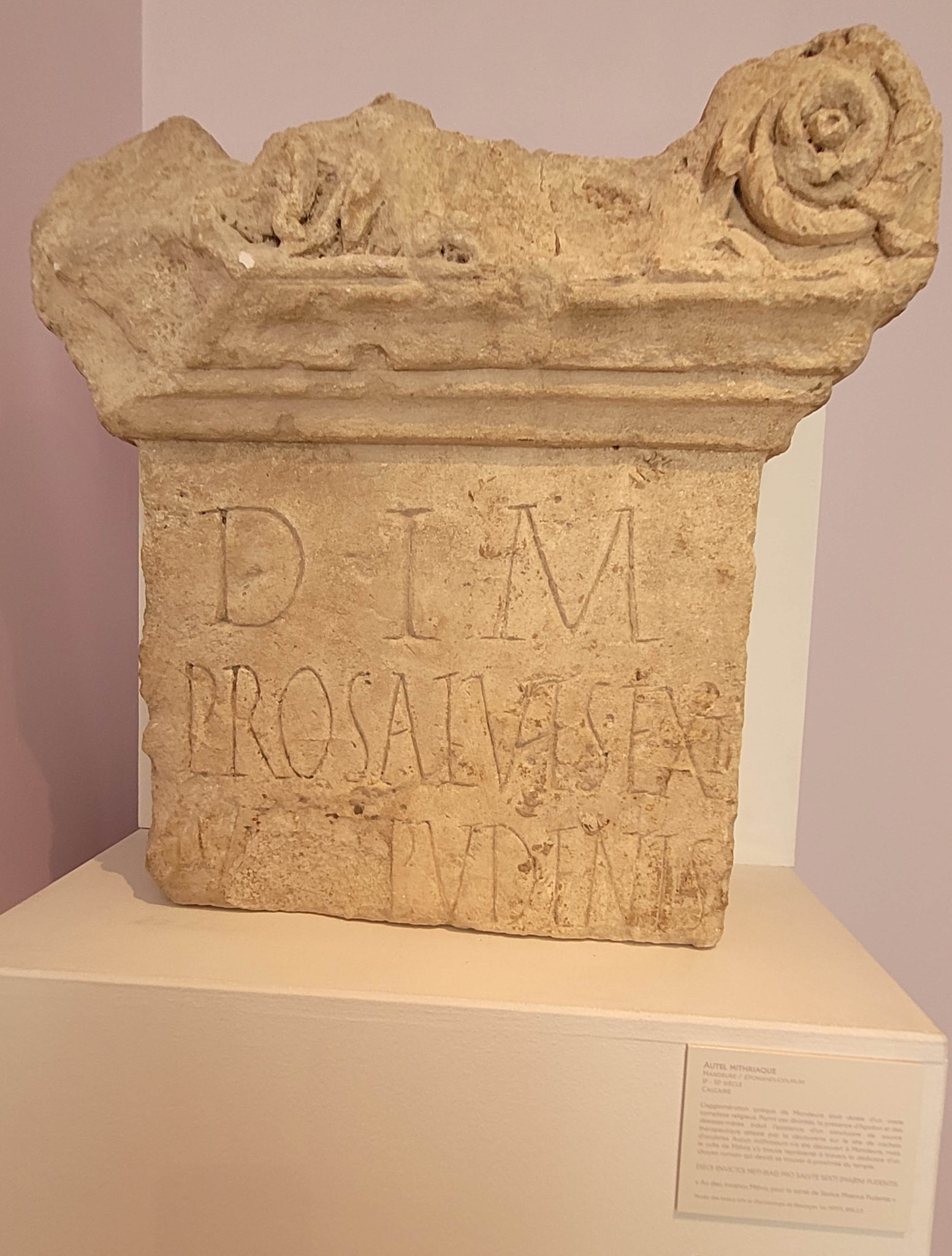
Stela dedicated to Mithras Invictus, found in 1895–1896 at Epamantodurum (modern Mandeure), in the territory of the civitas Sequanorum (Gallia Belgica). The inscription records a vow to Mithras Invictus made for the welfare of Sextus Maenius Pudens.
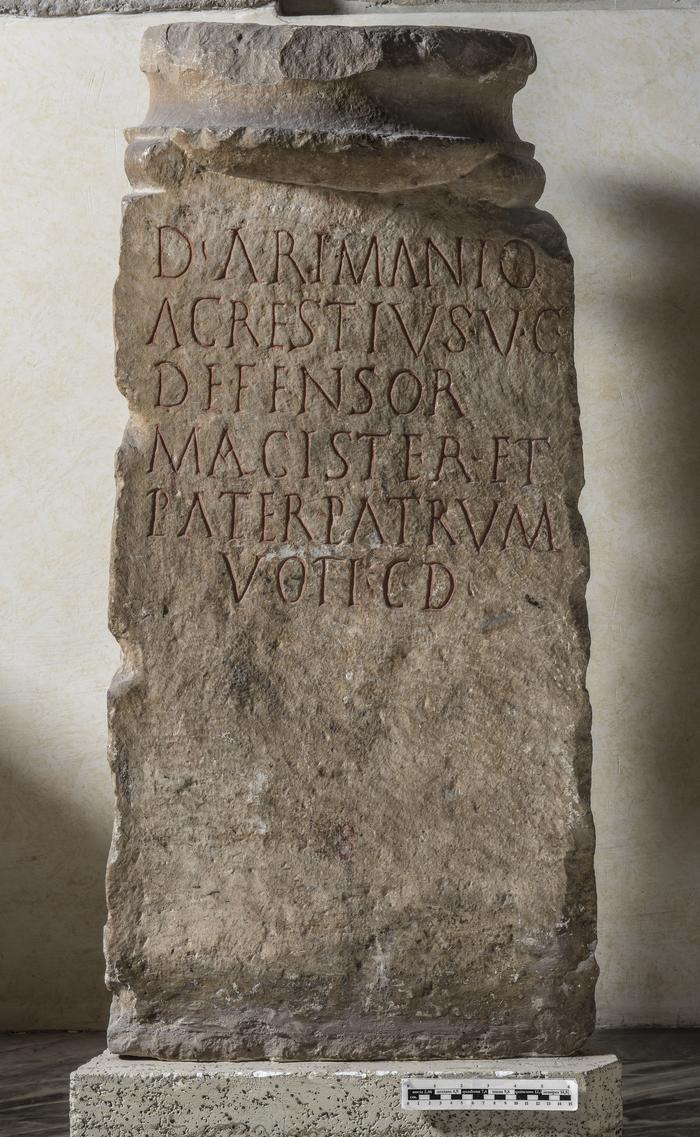
This altar mentioning the god Arimanius was found in 1655 at Porta San Giovanni, on the Esquilino.
Settlement of prehistoric origin that developed into the Roman Vicus Vetonianus, modern Dieburg, incorporated into the civitas Auderiensium in Germania Superior and attested as an active centre during the Roman period.
The Gaulish name of today Martigny was either Octodurus or Octodurum in the 1st century BC. It was conquered by the Romans in 57 BC and occupied by Servius Galba with the Legion XII.


Tracing the links between the cult of Mithras and the Proud Boys’ quest for identity, power, and belonging. How ancient rituals and brotherhood ideals resurface in radical modern movements.
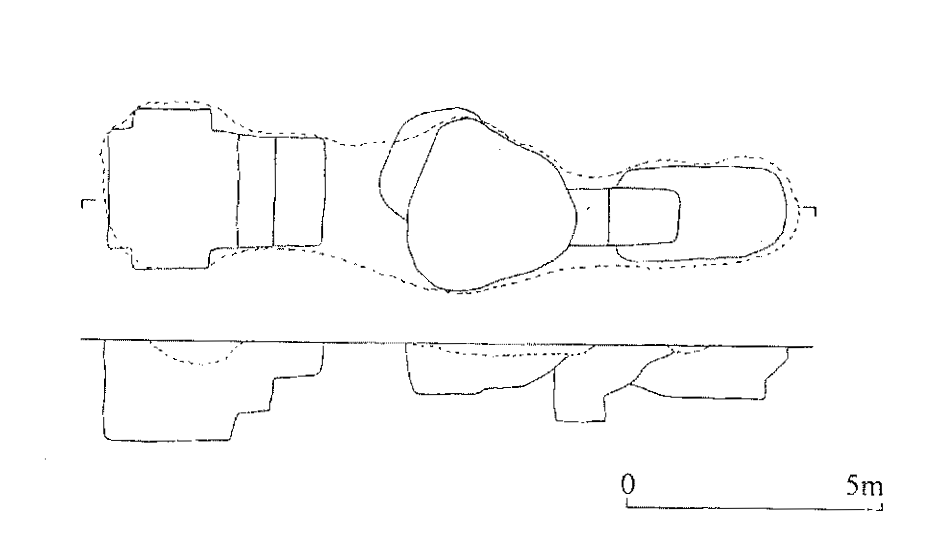
The temple contained hundreds of ceramic vessels and animal bones, which may indicated that a grand Mithraic feast was celebrated before its closing.
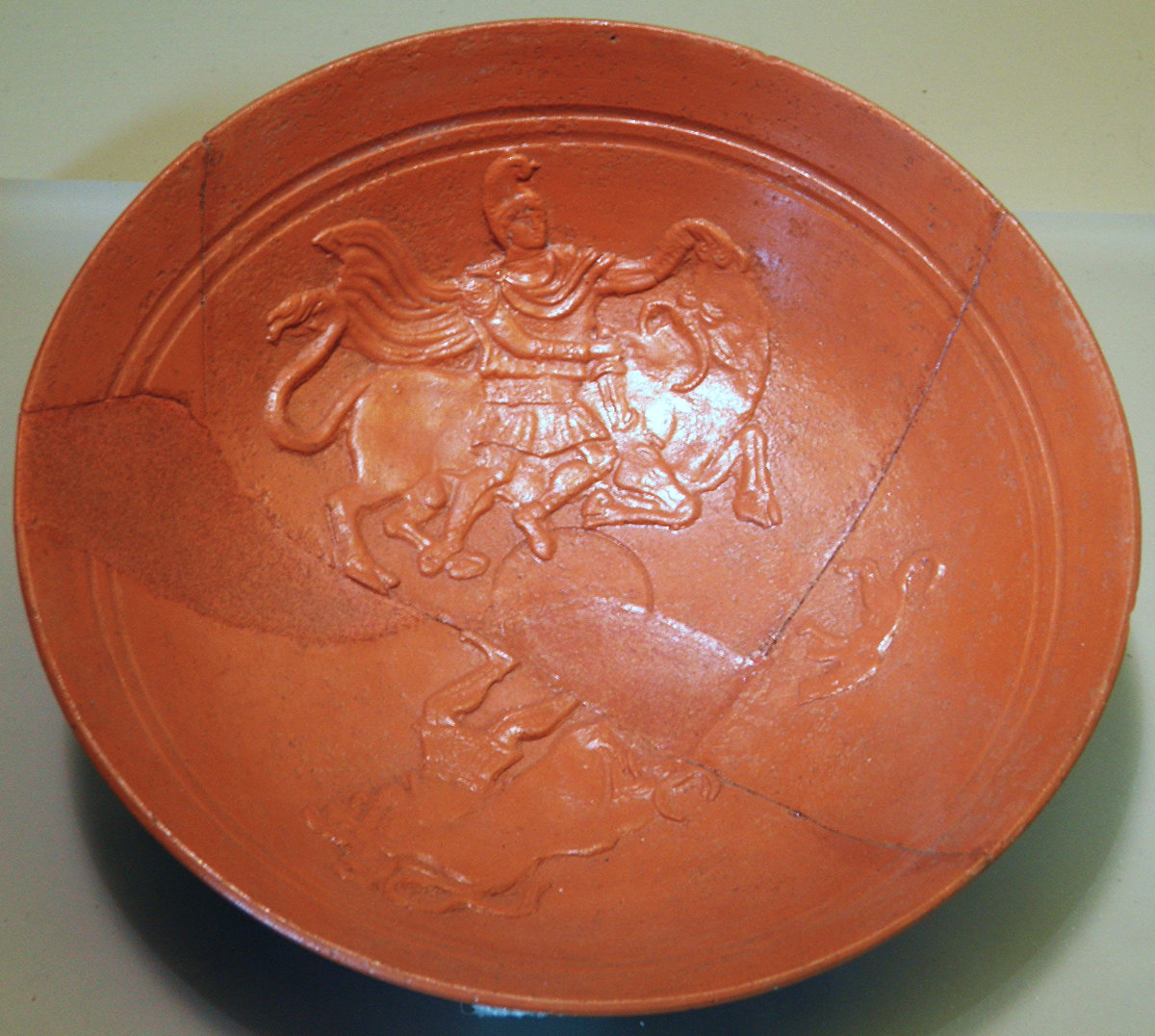
The red ceramic vessel from Lanuvium shows Mithra carrying the bull, followed by the dog, and the Tauroctony on the opposite side.
