Your search Ernest Will gave 219 results.

Marble epistylium in three fragments from the Mithraeum at Moosham, Noricum, decorated with a central tree, a flying hind pursued by a dog and an Amazon, a walking lion, and a horseman; bearing an identical inscription on both lateral tabulae.
Small Mithraic sanctuary (8 × 8 m) excavated in 1950–52 on a slope west of Schloss Moosham, Noricum, on the left bank of the river Mur; the finds include a marble epistylium, a Mithras head, and fragmentary altars.
Marble slab from the S. Prisca Mithraeum with a dedication to Sol Invictus Mithre thanking his divine will for repeatedly answering prayers and enjoining the fulfilment of vows.
Fragment of a white marble relief depicting the head of Mithras with Phrygian cap and nimbus, found on the Syrian coast between Lattakieh and Tartous, first half of 2nd century A.D.
Clay tablets recording a treaty between the Hittites and Mitanni invoking Mitra among the divine witnesses, excavated at Boğazkale (ancient Boghaz-Koï), 14th century B.C.
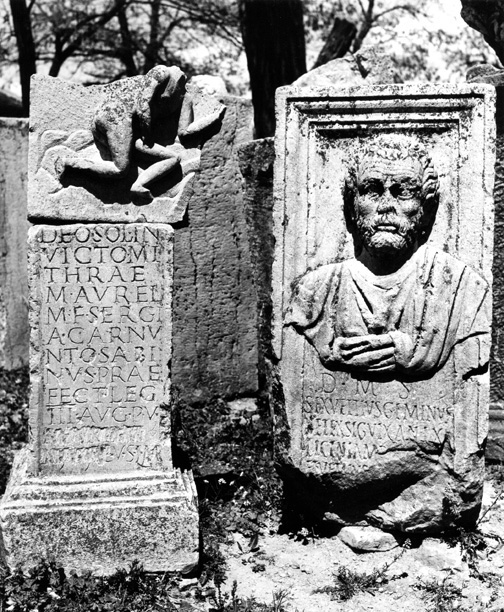
This altar to the god Sol invicto Mithra was erected by a legate during Maximin’s reign in Lambaesis, Numidia.
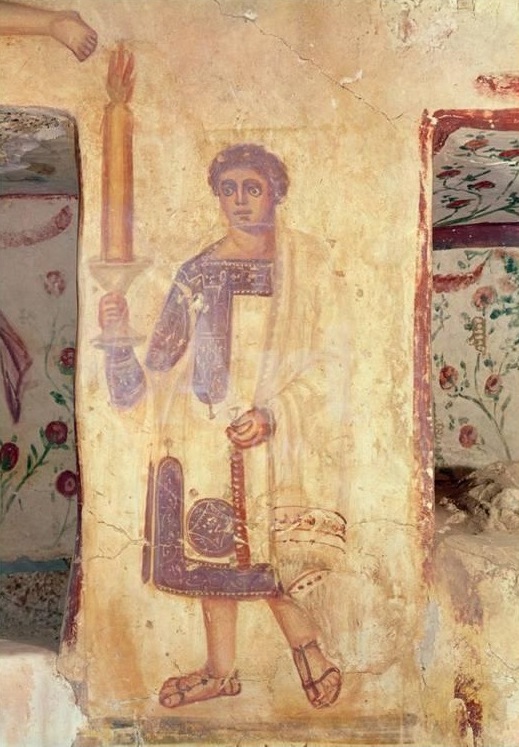
The Mithraic nature of the frescoes of Oea, according to the scholars Cumont and Vermaseren, is now questioned.
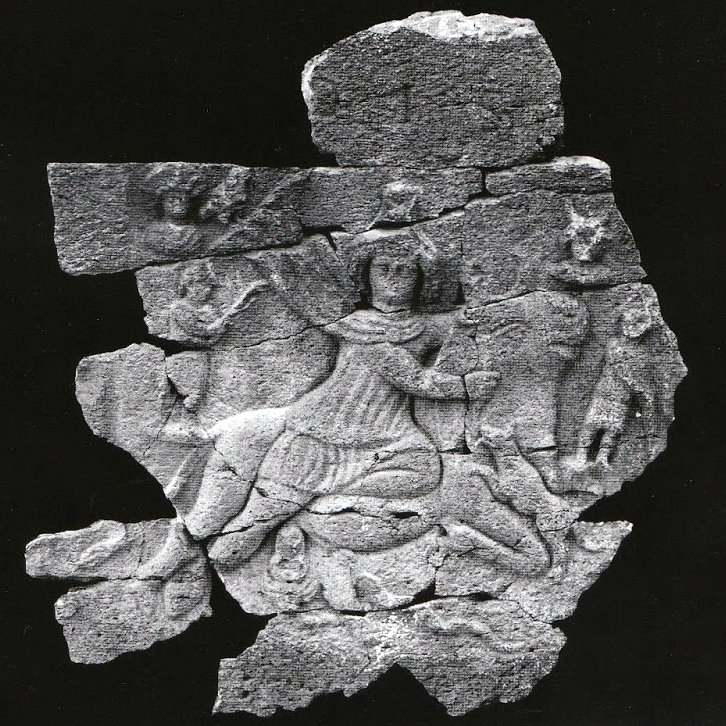
The second tauroctony of Jabal al-Druze seems to have be made by the same sculptor.
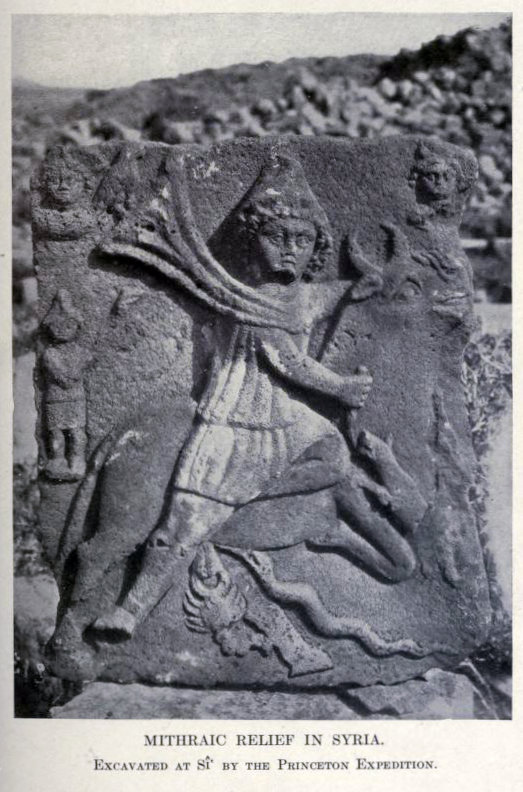
In the tauroctony of Jabal al-Druze in Syria, the snake appears to be licking the head of the bull's penis.

This dedicatory inscription by Aurelius Seleucus, found in Cilicia, aligns with Plutarch’s account of Cilician pirates performing foreign sacrifices and secret rites of Mithras.

Administrator, probably a slave of Pater Alfius Severus, who dedicated the main altar of the Mitreo di Marino.

Member of the Mithraic community of Les Bolards and dedicator of a statue of Cautes.
This supposed Mithraic altar from Soulan in the Pyrenees was later identified as a modern forgery, including both the inscription and the alleged cave context in which it was said to have been discovered.
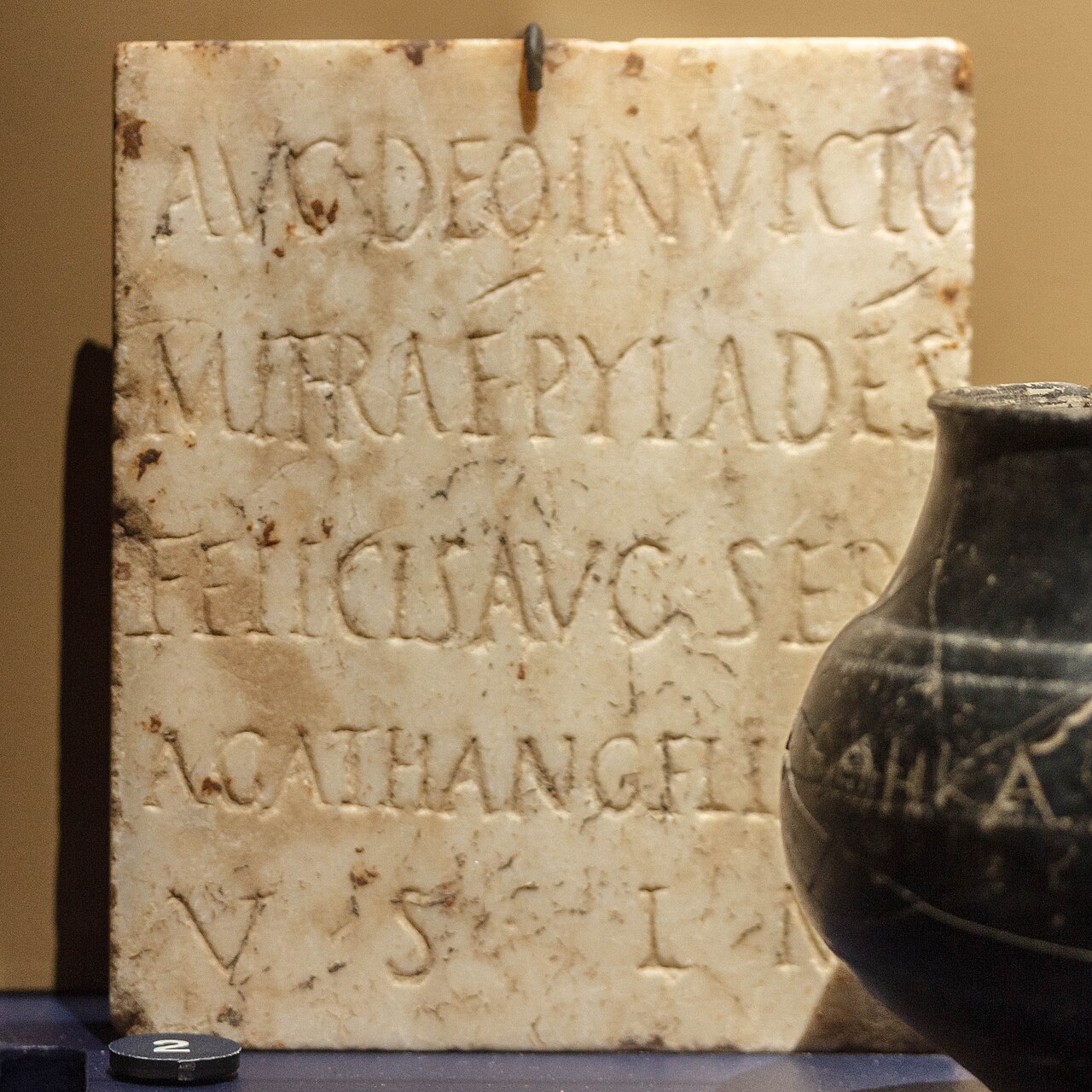
This marble plaque from Iuliomagus, Roman Angers, bears a rare dedication to Mithras by Pylades, a slave of an imperial slave connected to the Roman administration in Gaul.
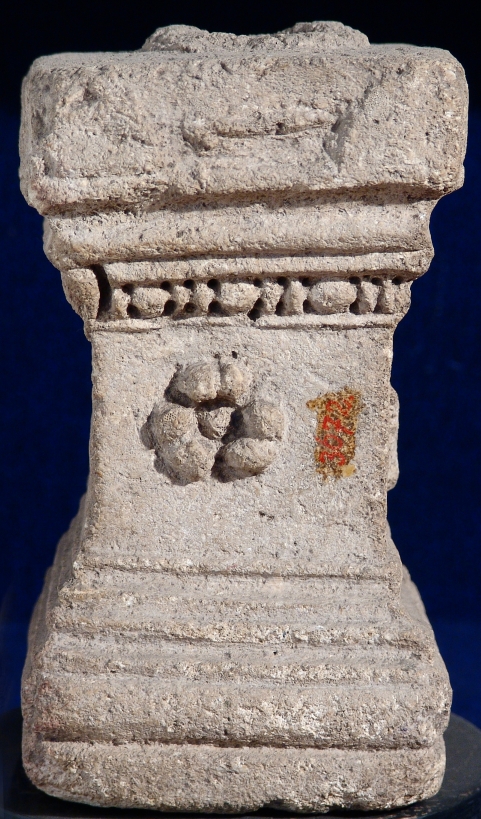
This limestone altar from Roman Dacia preserves a dedication to Mithras by a commander of the Ala II Pannoniorum.
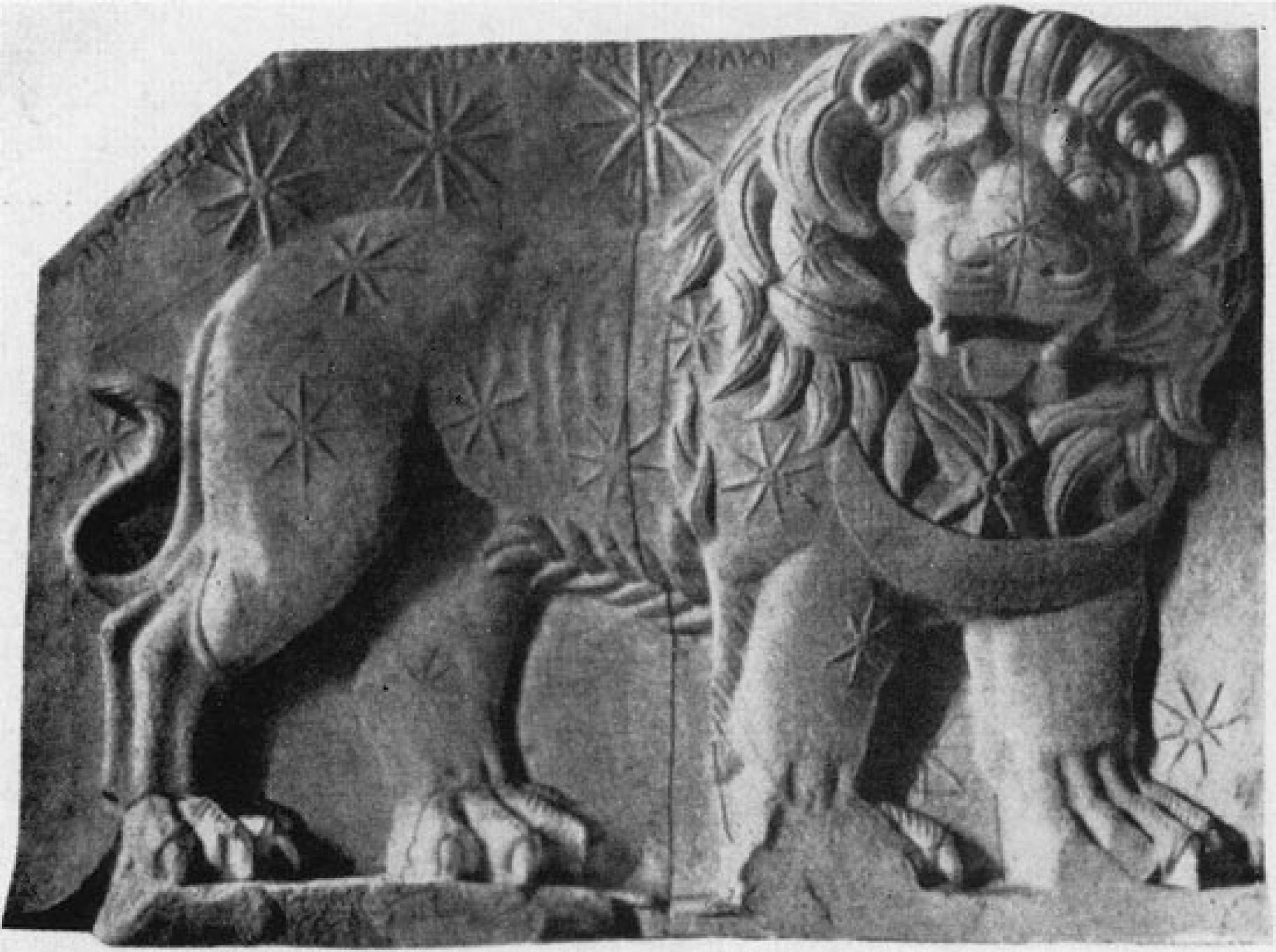
The lion relief from Nemrut Dag has the moon and several stars over his body.
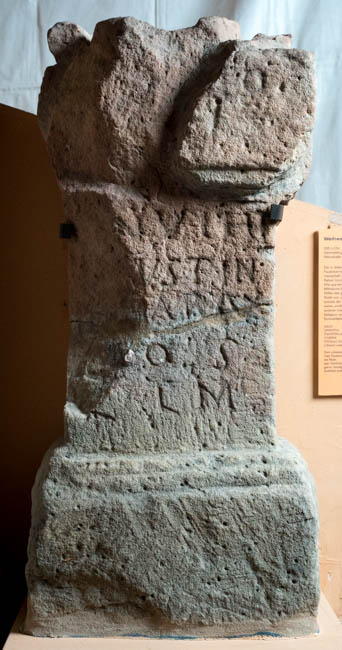
This sandstone altar was dedicated to the god Invictus by a certain Faustinus from Gimmeldingen.
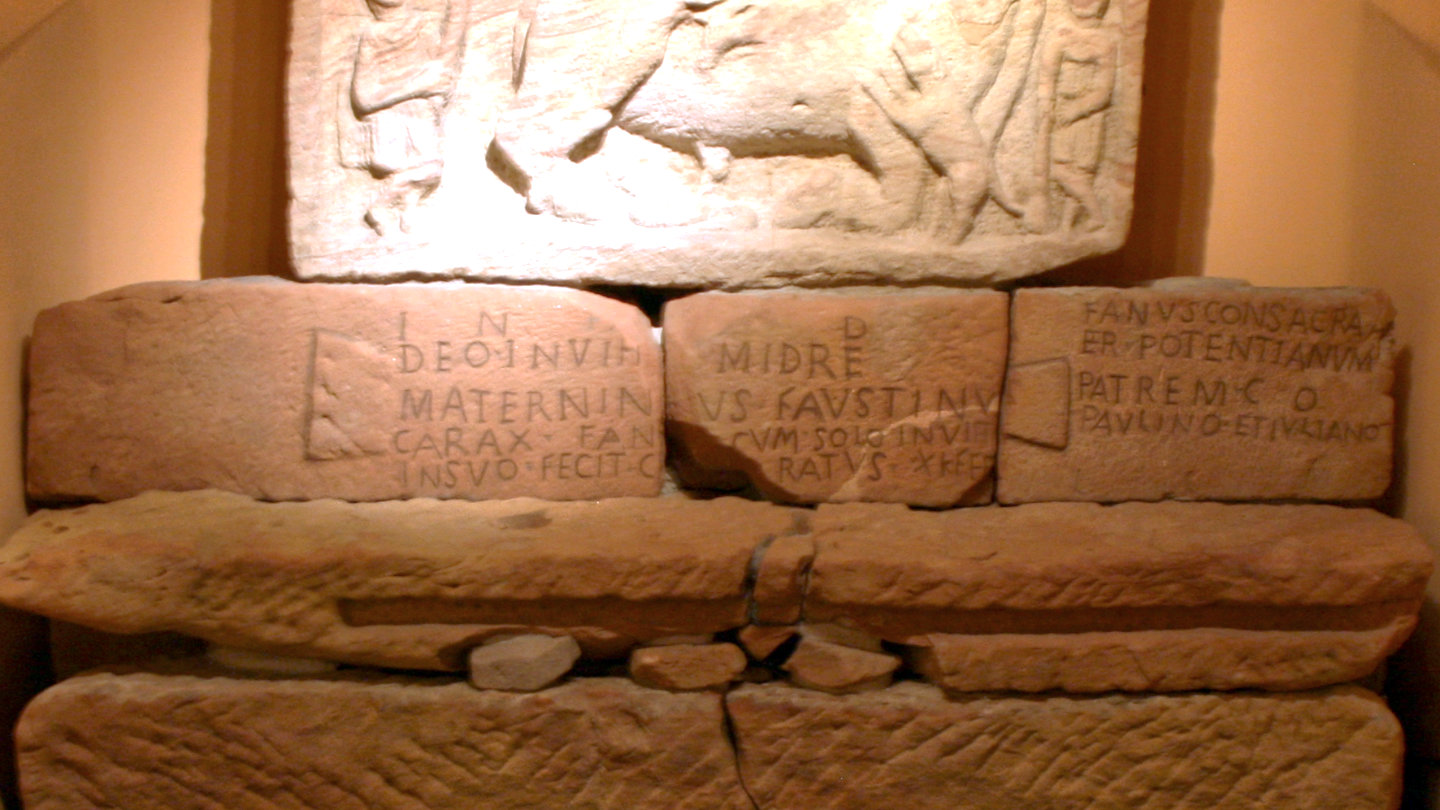
The inscription was located at the base of the main Tauroctony of the Gimmeldingen Mithraeum.
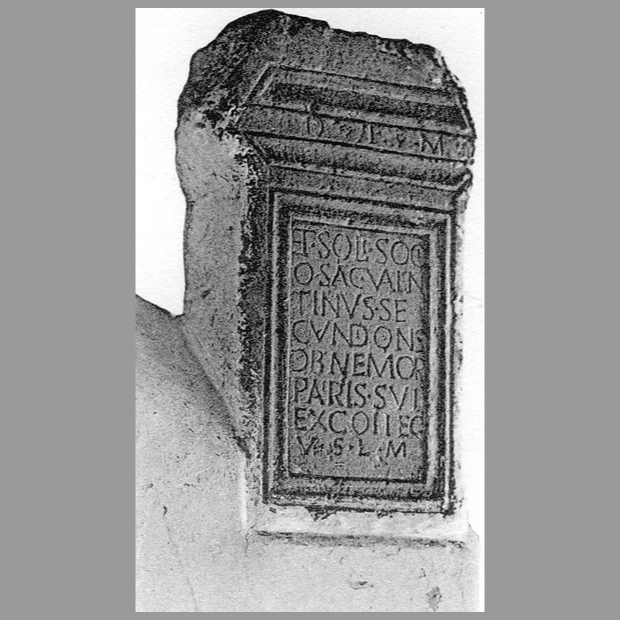
This monument, now lost, was discovered in the 16th century, probably on the site of Sublavio statio.
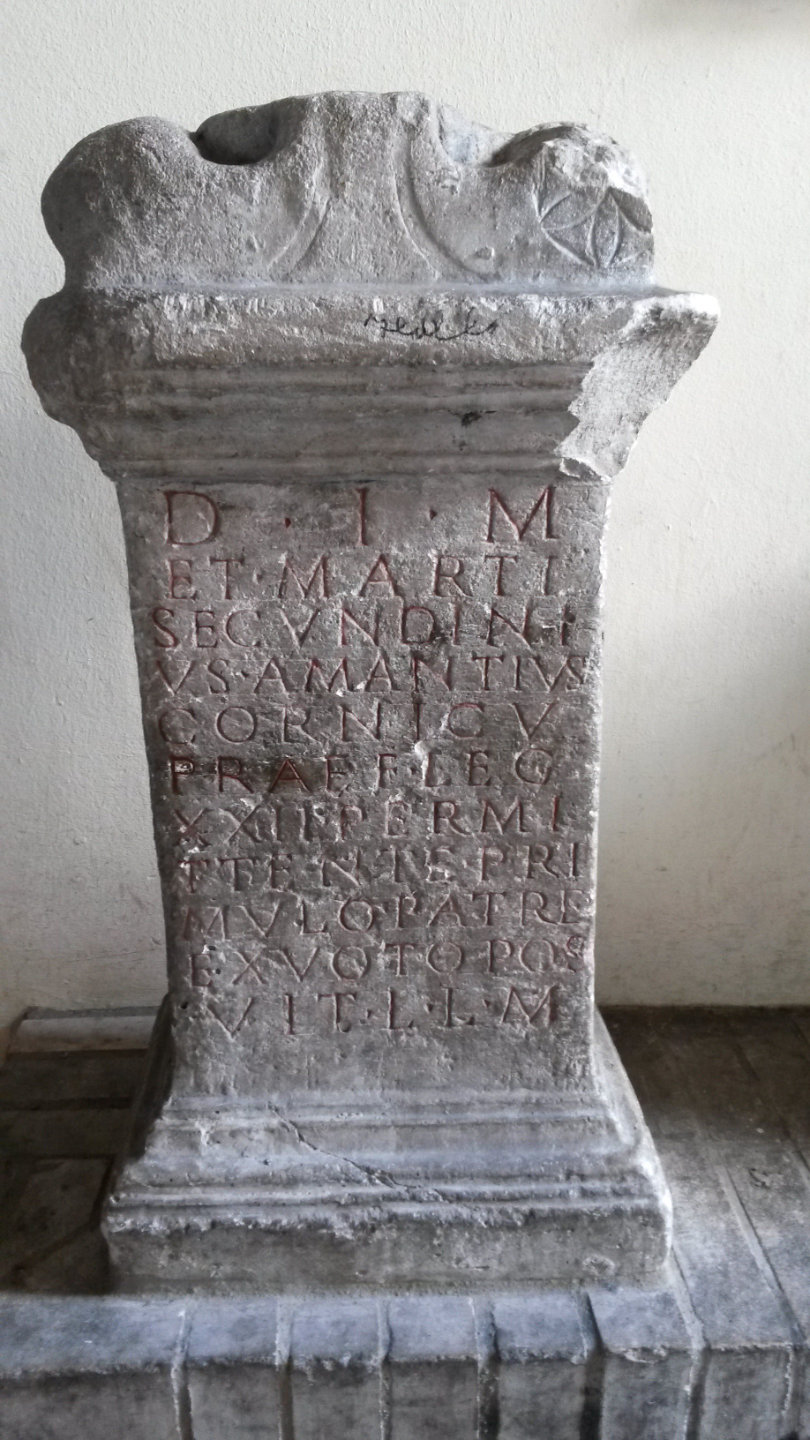
This altar has been unusually dedicated to both gods Mithras and Mars at Mogontiacum, present-day Mainz.
