Your search Fürth gave 130 results.
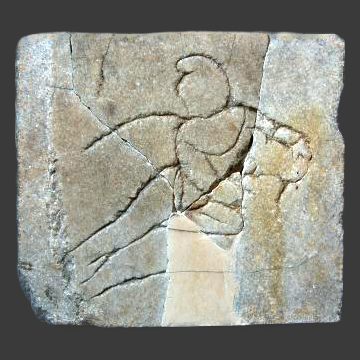
This unfinished Mithras tauroctonos without the usual surrounding animals was found in 1923 in Italica, near Seville, Spain.
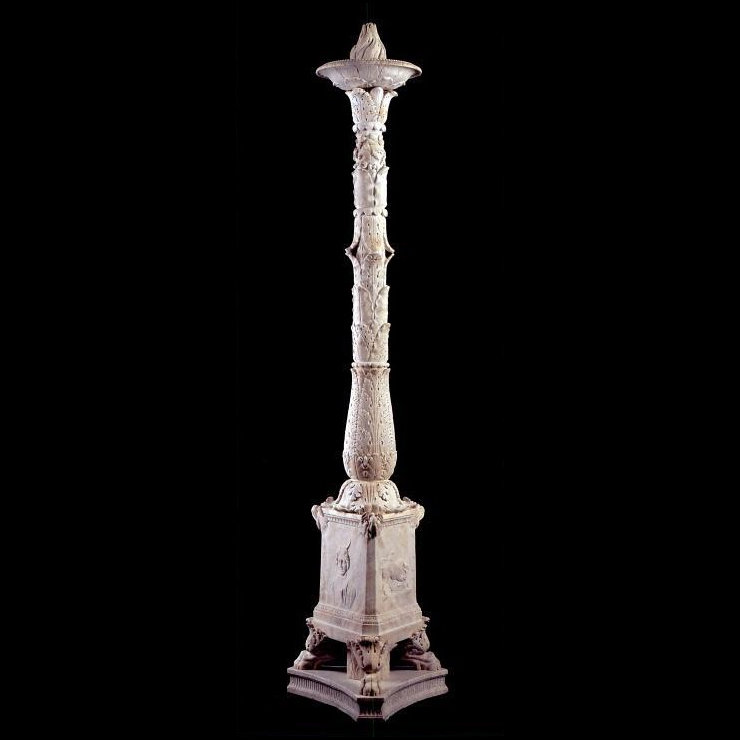
This magnificent candelabrum was found in Rome in 1803, in the Syrian Temple of Janicule.

Wall-painting of Mithras tauroktonos in fresco, discovered in 1886 in an underground room of the house of the Nummi Albani on the Quirinal (Via Firenze); the god wears a red cap and tunic, the torchbearers wear yellow or orange tunic and cap with green or brown anaxyrides…
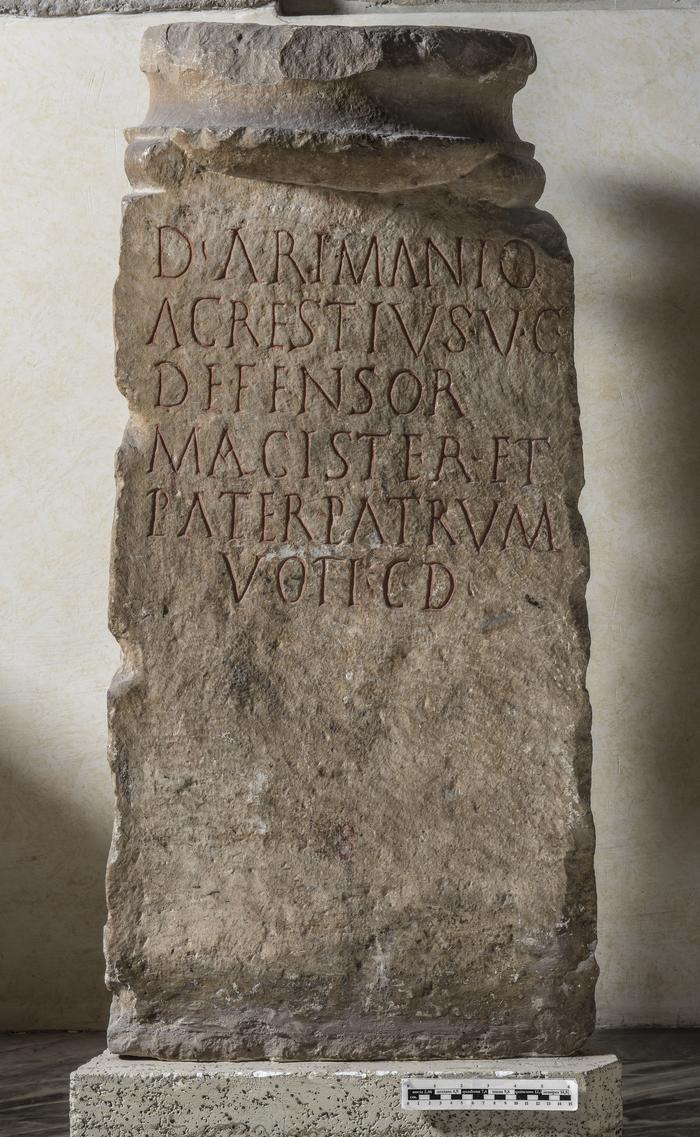
This altar mentioning the god Arimanius was found in 1655 at Porta San Giovanni, on the Esquilino.
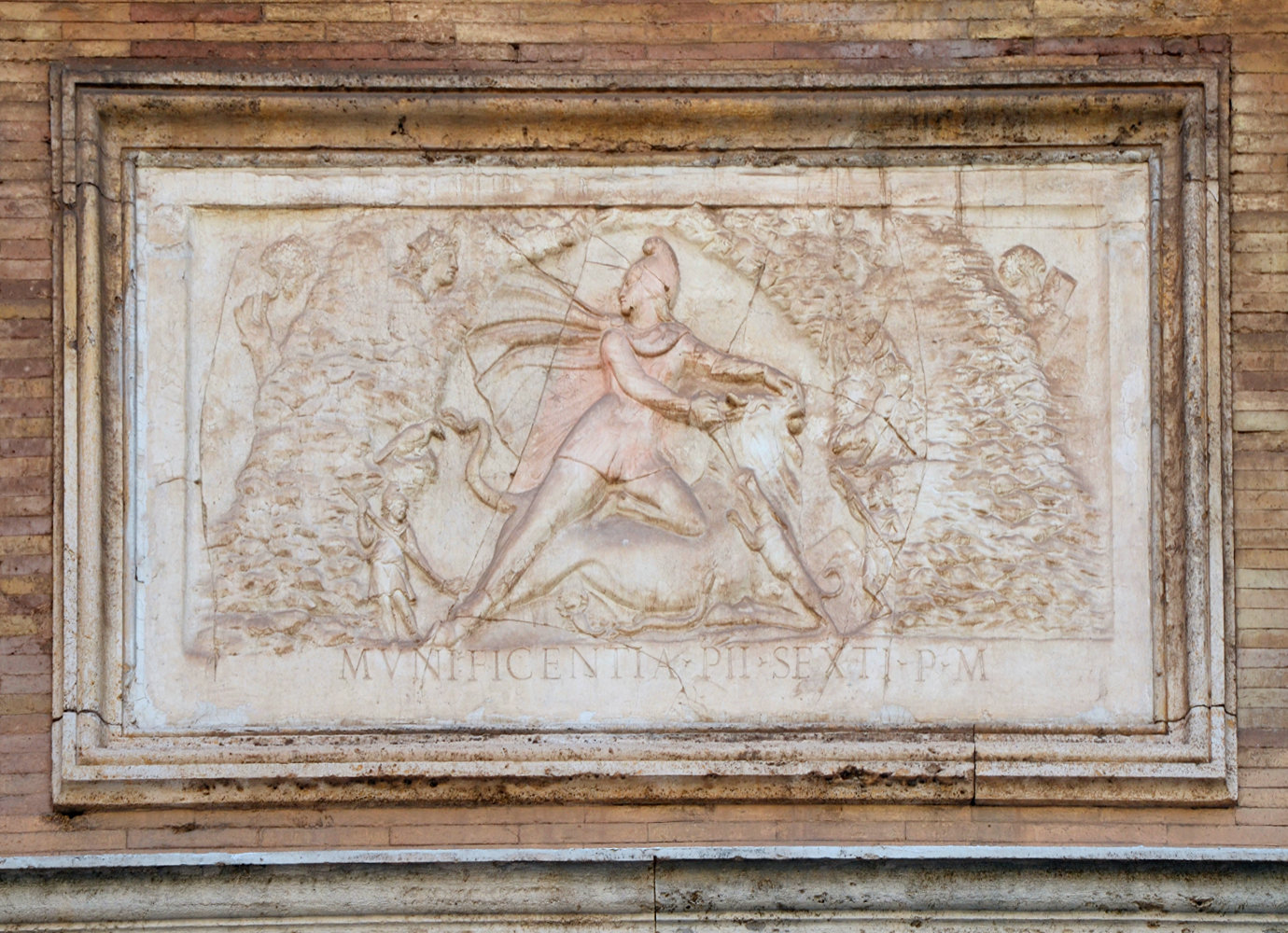
The Tauroctony relief of Mithras killing the bull walled in the Cortile of the Belvedered, Vatican City, was found by Fagan near Ostia.
Statuettes of eastern deities including Mithras, found in a walled compartment near a Punic cemetery at Duimes, Carthage.
One of the rooms in a sustantive masonry building in Hollytrees Meadow was considered to be a Mithreum, a theory that has now been discarded.
Marble tauroctony relief fragment from near Dolna-Malina, Thracia, depicting part of Mithras as bull-slayer together with Cautopates; no further details are available.
Relief from Durostorum, Moesia Inferior, depicting Cautopates; no further details available.
Circular Mithraic relief from Oescus, Moesia Inferior, mentioned by LeRoy Campbell; no further details are available to the author.
Fragment of a Mithraic relief in a crown from Ratiaria, Moesia Superior, mentioned in a personal communication from Radnóti; no further details.
Two lost Mithraic monuments from Rome: one documented in a 1738 catalogue of the Palazzo Barberini as a tauroctony group with scorpion, snake and dog, and another mentioned by Pirro Ligorio as a Mithras panel in the Palazzo del Duca di Sanseverino.
Under-layer wall-paintings in the S. Prisca Mithraeum on the Aventine showing a further procession of Mithraic initiates in different colours, with partially legible dipinti including liturgical verses and acclamations.
Miscellaneous small finds from the Mithraeum at the Palazzo dei Musei, Rome, including animal bones, tusks of boars, marble pieces, bronze objects, glass fragments, and a tile with a Domitianic inscription.
Possible Mithraeum discovered in 1869 near the previous sanctuary in Muti's gardens, described by Lanciani as a spelaeum cut in tufa with vestibule and cell with niches and altar, at the corner of the Via Nazionale and Via Venezia.
Miscellaneous finds from the middle of the Mithraeum of Capua, including a terracotta antefix with centaurs, basins, marble bases, lamps with a Sol head, and coins of M. Aurelius and Constantine.
Fresco showing two persons standing behind each other, from the initiation sequence of the Mithraeum of Capua.
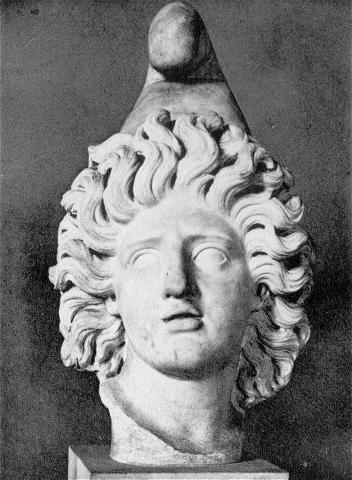
The head of Mithras had seven holes made for fastening rays.
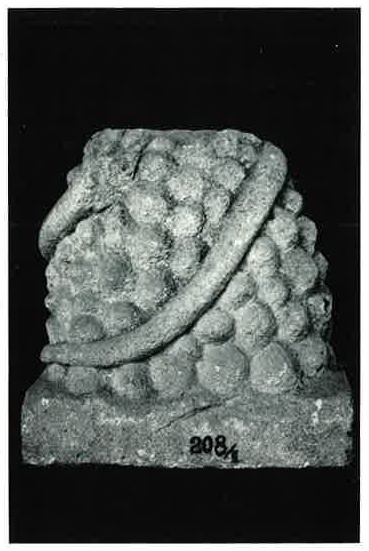
Dark sandstone statue from Mureș Port, Dacia, depicting Mithras's rock-birth with the rock encircled by a serpent; the statue's attribution to Mureș Port rather than Apulum is uncertain.
Altar from Petronell, ancient Carnuntum, Pannonia Superior, dedicated to Soli divino ex visu by Lucius Aelius Leo — possibly the same individual who dedicated a further altar identifying himself as a miles of Legio XIIII Gemina.
