Your search Housesteads Roman Fort gave 88 results.
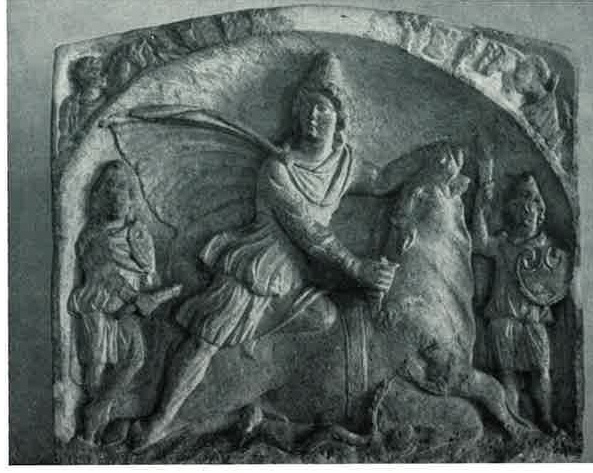
One of the three altars to Mithras found at the Mithraeum of Carrawburgh fort.

Altar found at Osijek in 1922 when the fortress was demolished, ancient Mursa in Pannonia Inferior, now in the Zagreb Archaeological Museum, bearing a dedication to Deo Aeterno — the Eternal God.
Altar from Osijek, ancient Mursa, found when the fortress was demolished in 1922, dedicated to Deo Aeterno — the Eternal God — a title sometimes associated with Mithraic worship.
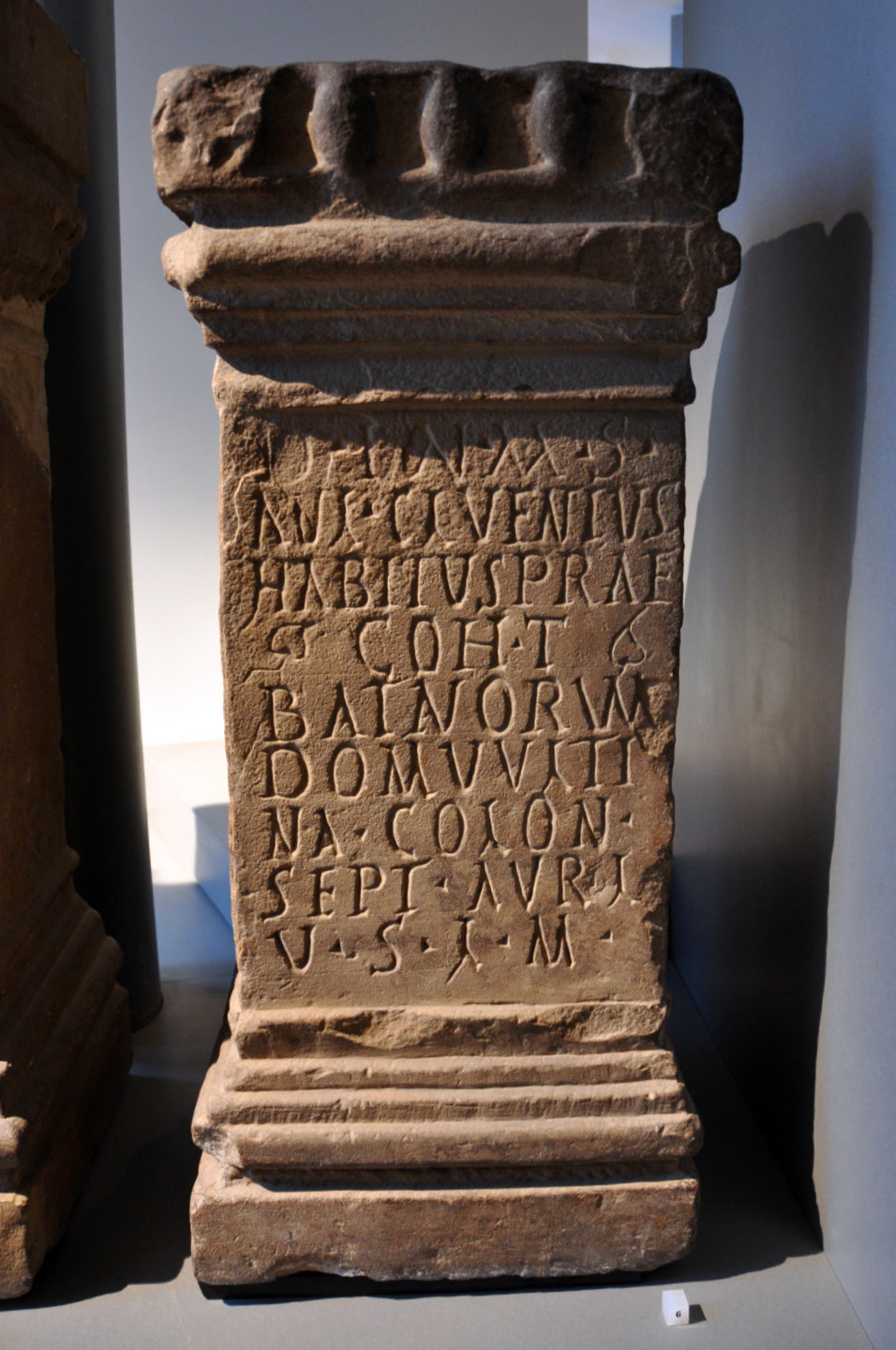
Altar found at Recking near Heilbronn in 1615, dedicated to Soli invicto Mithrae by Publius Nasellius Proclianus, centurion of Legio VIII Augusta, who is also attested as dedicant of altars to Apollo Pythius and Fortuna.
Sculpted torchbearer relief discovered near the Roman fort of Castellum Echzell.
Sandstone altar combining imagery of Apollo, Mithras and the torchbearers Cautes and Cautopates near the Roman fort of Whitley Castle.
Inscription dedicated to Sol Invictus, Omnipotent and Holy Caelestis, with Fortuna Lares and Tutelae, found near the Mitreo Sabazeo at Ostia, dedicated by Venerandus.
Limestone base from near the Kutyamál vineyard south of the fortress at Apulum, Dacia, decorated with Bacchic vine scrolls and grapes at the top.
Two lamps — one bearing the stamp Fortis — and a bronze coin of Hadrian from the Mithraeum at Sárkeszi, Pannonia Inferior.
Votive inscription from Heddernheim, ancient Nida, dedicated to Fortuna by Tacitus, an eques of the Ala I Flavia Milliaria
Elongated cult building near the Saalburg fort traditionally interpreted as a Mithraeum but later reconsidered as a possible funerary enclosure.

Founded on the east bank of the Tigris, Sumere is mentioned in Roman sources as a fortified settlement during the Persian campaign of Julian in 363 CE, notably by Ammianus Marcellinus.
Vicus Baudobriga was a Roman settlement on the left bank of the Rhine, founded during the conquest of Gaul. Its development reflects the Rhine’s shifting role as frontier, trade route, and fortified border before Roman withdrawal.
Isca, variously specified as Isca Augusta or Isca Silurum, was the site of a Roman legionary fortress and settlement or vicus, the remains of which lie beneath parts of the present-day suburban town of Caerleon, Walles.
Storgosia was a Roman road station and later a fortress, located in the modern Kaylaka Park in the vicinity of modern Pleven (North-central Bulgaria). Pleven is today the seventh most populous city in Bulgaria.
Bremenium is an ancient Roman fort located at Rochester, Northumberland, England.
Vindobala, now a hamlet of Rudchester, was the fourth Roman fort on Hadrian's Wall.
Senj is a town on the upper Adriatic coast in Croatia, in the foothills of the Mala Kapela and Velebit mountains. The symbol of the town is the Nehaj Fortress which was completed in 1558. Senj is to be found in the Lika-Senj County of Croatia, the
