Your search Kadin Most gave 85 results.

Kadine-Most lies within the central Balkan region historically connected with Roman Moesia.
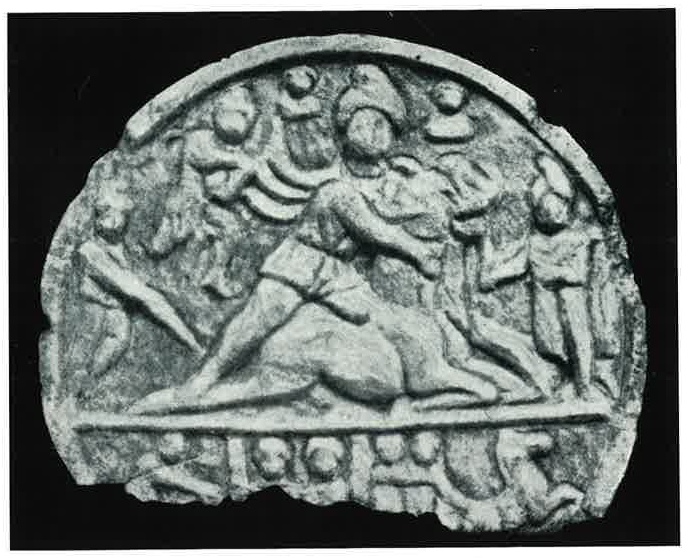
Small circular marble tauroctony relief from Kadine-Most in the Küstendil district, Moesia Superior, divided into two parts by a horizontal rim, with the bull-slaying in the upper and a figure or inscription in the lower.
Roman Dacia preserves one of the densest and most frontier-oriented bodies of Mithraic evidence in the empire.

Gaius Accius Hedychrus was one of the most prominent Mithraists known from Roman Hispania and a central figure in the Mithraic community of Emerita Augusta during the mid-second century CE.

White marble tauroctony relief fragment of unknown provenance, preserving the foremost part of the bull and part of Mithras as bull-slayer.
Athenae remained one of the foremost intellectual and cultural centres of the eastern Mediterranean under Roman rule.
Sabratha, in the Zawiya District of Libya, was the westernmost of the ancient "three cities" of Roman Tripolis, alongside Oea and Leptis Magna.
A dedication to the unconquered and propitious Sol Invictus Mithras, made by a priest named M. Pompeius on behalf of the divine house, the most sacred council, and the devout inhabitants of the colony of Elusatium (modern Eauze) in Aquitania.
A collection of 284 coins, spanning from 254 to 395 AD and mostly of the fourth century, found in the Mithraeum at Pons Saravi (modern Saarburg) in Belgica, indicating that the sanctuary was founded under the Severan dynasty and destroyed in the fourth century…
Ceramic finds from both excavations of the Mithraeum at Borcovicium (modern Housesteads), comprising red and thin black-glazed pottery fragments together with a silver coin of Faustina Minor, indicating the sanctuary was in use before 253 A.D. and was most likely destroyed by fire…
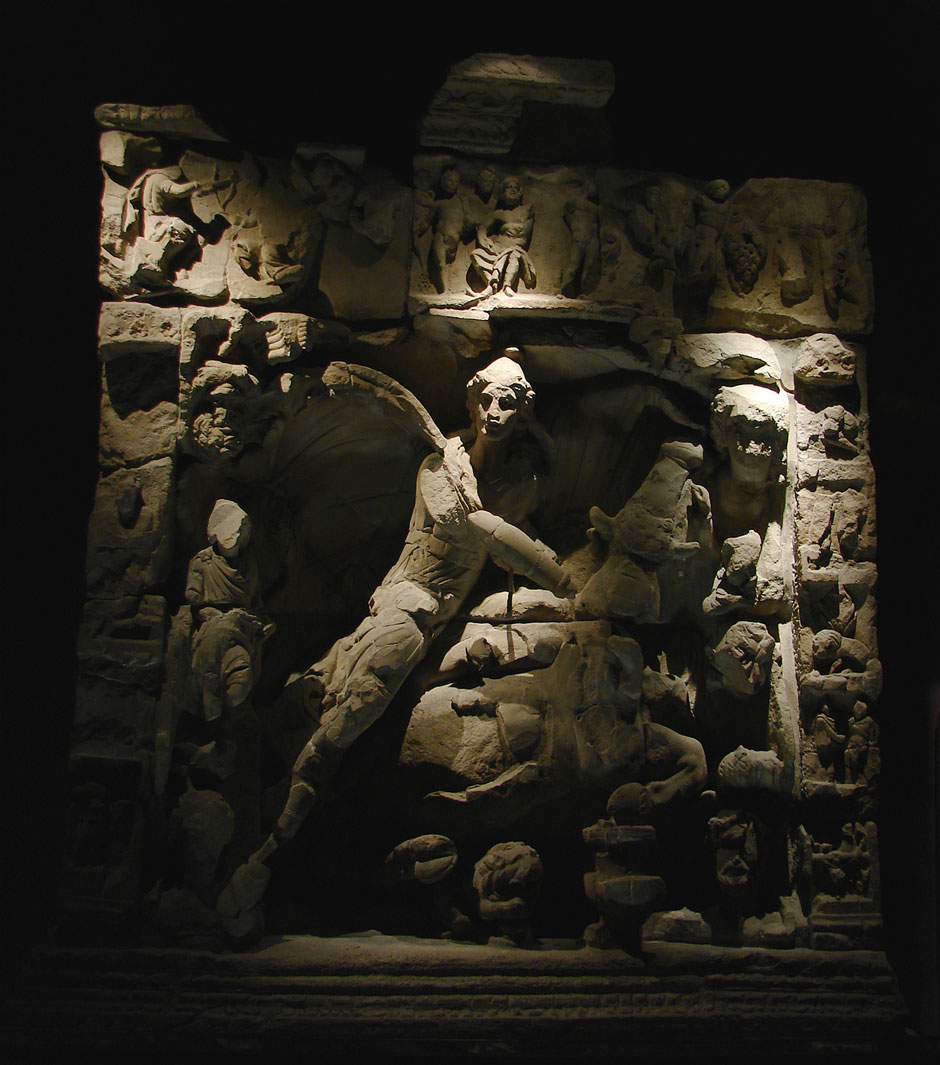
The Tauroctony of Saarbourg (Sarrebourg, ancient Pons Sarravi), France, contains most of Mithras deeds known in a single relief.
A marble funerary cippus from the Vigna Dionigi at Torre Pignatara outside Rome, dedicated to Sextineius Restitutus as most indulgent pater sacrorum by his children and mother, with a crown carved to the left of the final line.
Marble tauroctony relief fragment from near Radomir, Thracia, depicting the foremost part of the bull and the lower body of a cross-legged torchbearer.
Marble relief fragment from Acbunar, Moesia Inferior, preserving the foremost part of two horses — probably from a scene of Sol's biga — with remnants of an inscription below.
Marble tauroctony fragment from Ratiaria, Moesia Superior, preserving the lower part of Mithras's body with his right leg, the hindmost part of the bull, and the serpent below.
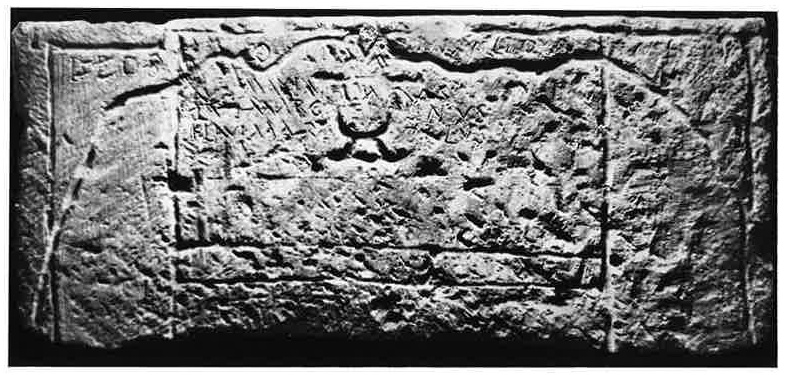
Limestone slab from a Roman settlement at Bijelo Polje north-east of Mostar, ancient area of Han Potoci in Dalmatia, found in 1902 and probably dating to the fourth century AD, depicting a Mithraic scene.
Small yellow sandstone fragment from the Mithraeum at Dieburg showing the foremost part of an animal, probably a dog or ram, with head turned right
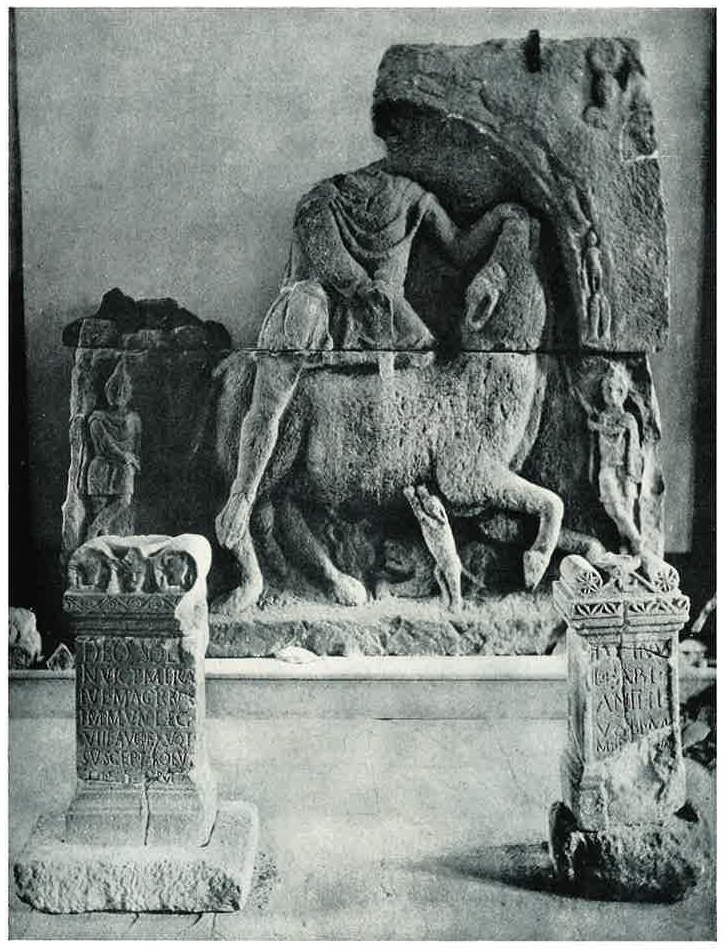
Large two-fragment sandstone tauroctony relief from the Mithraeum at Gross-Krotzenburg, one of the most significant Mithraic monuments in the region
Large red sandstone tauroctony relief from Mithraeum I at Stockstadt, mostly thrown into the river Main when the sanctuary was destroyed
Marble fragment from the Mithraeum at Sarmizegetusa, Dacia, preserving the hindmost part of the dog.
