Your search Monteu da Po gave 2101 results.
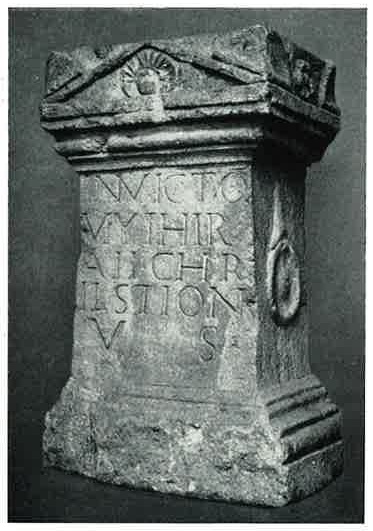
Limestone altar from Partoș or Mureș Port, Dacia, found in 1852, with a triangular pediment containing the head of Sol in a twelve-rayed crown and nimbus, flanked by a patera on the right and a jug on the left.

Inscription from Mureș Port, Dacia, dedicated to Deo invicto omnipotenti Mithrae by Lucanus, who fulfilled his vow.
Limestone altar from Mureș Port near Apulum, Dacia, dedicated to Invicto Mithrae; the dedicant is identified only as Augustalis (coloniae?).
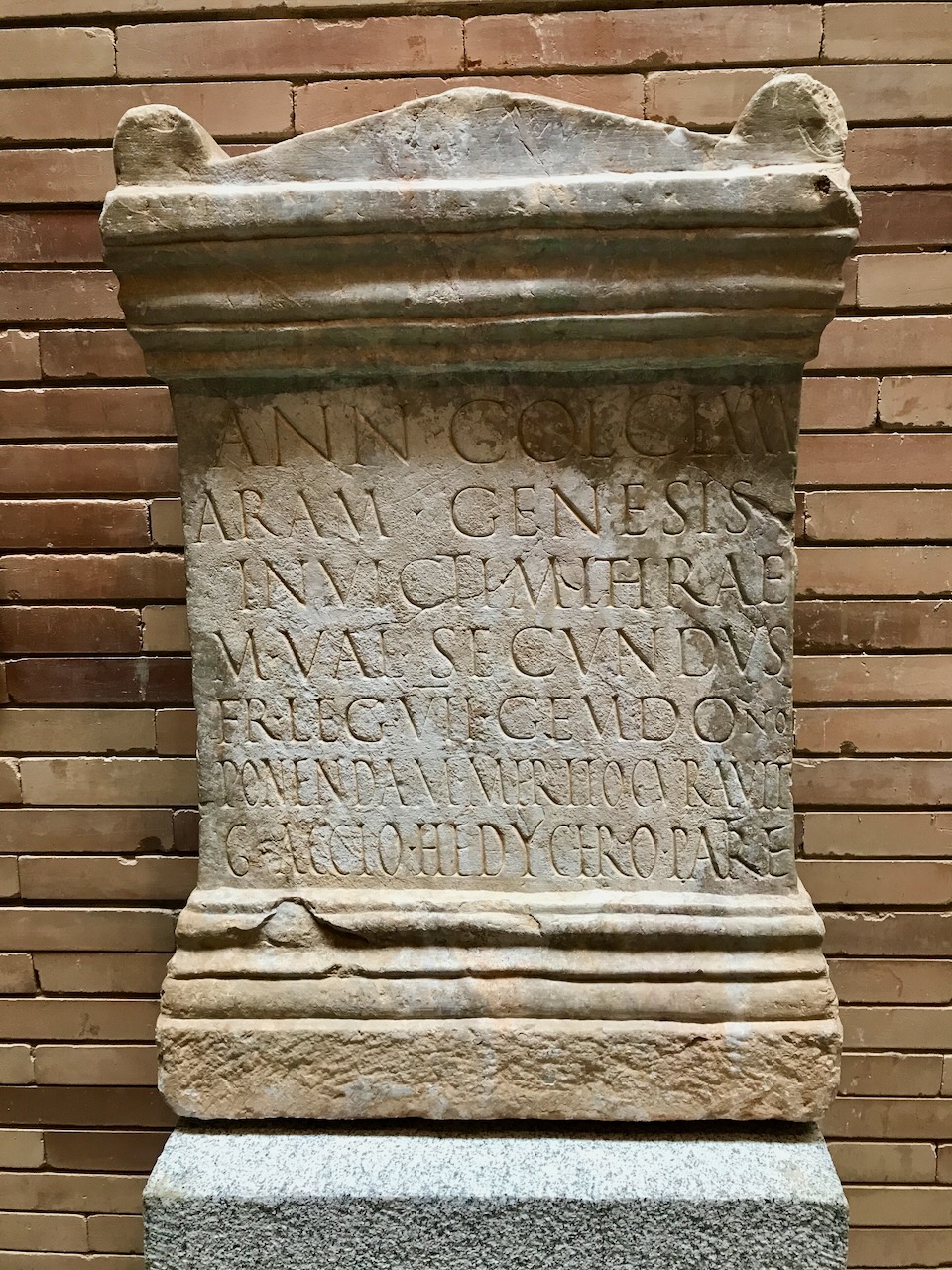
This altar is dedicated to the birth of Mithras by a frumentarius of the Legio VII Geminae.
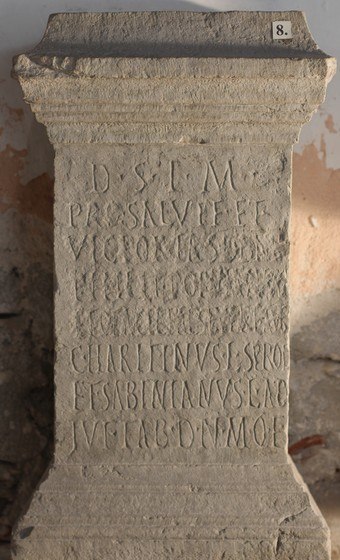
This stone altar found in Poreč was dedicated by two freedmen to the numen and majesty of the emperors Philip the Arab and Otacilia Severa.
Stone altar fragment from Danilo Gornje near Šibenik, Dalmatia, bearing a dedication to Deo invicto by Comitius.
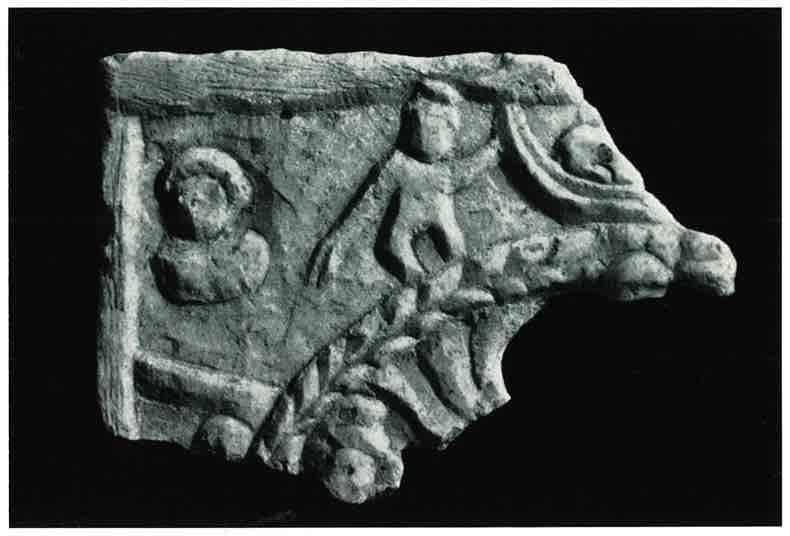
Marble relief fragment found in the Turda castrum in 1954, Dacia, preserving the bust of Sol in the upper left corner and Mithras grasping the bull; remnants of a wreath are visible in the upper right.
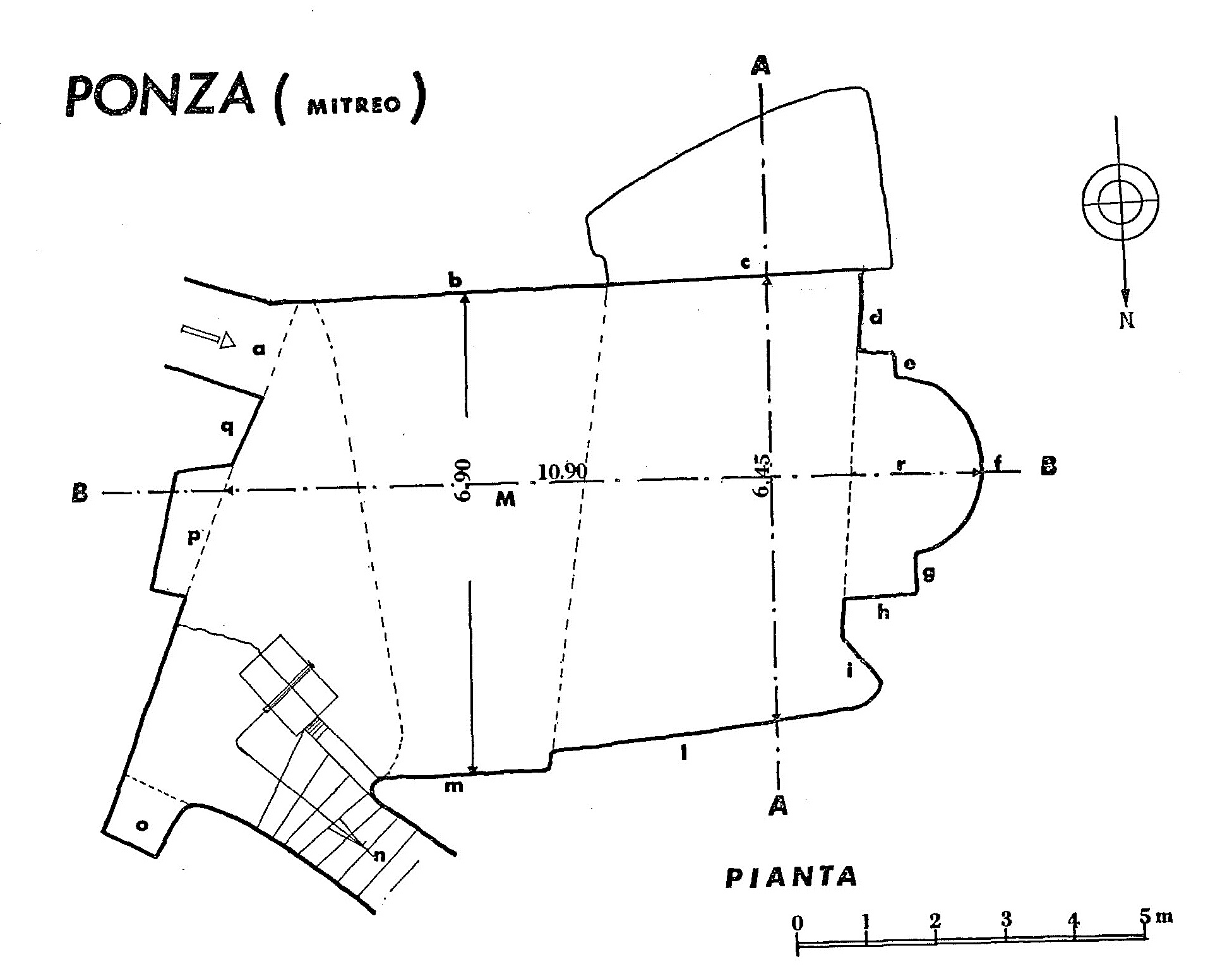
This Mithraic shrine on the island of Ponza is renowned for its exceptional stucco zodiac and astral symbolism linked to Roman Mithaism.
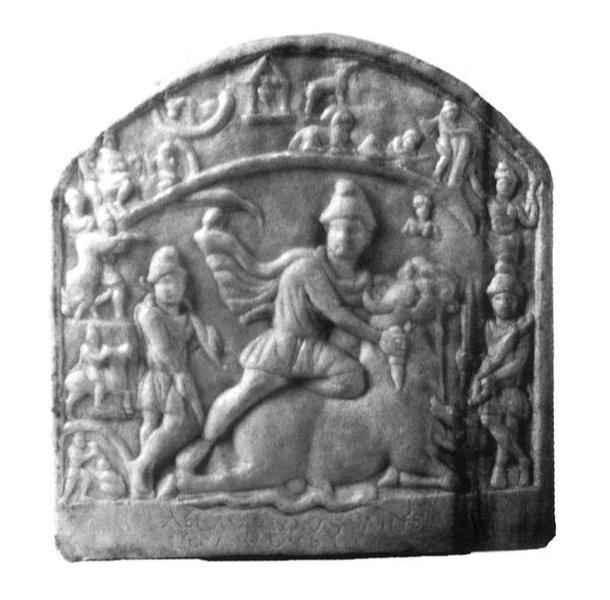
This small relief of Mithras killing the bull was found in 1859 in Turda, in the Cluj region of Romania.
Un recorrido por los orígenes, la expansión y el legado de Mitra desde Persia hasta el corazón de Roma.

The locality of Han Potoci lies within the mountainous hinterland of ancient Dalmatia.
Danilo occupied an important position in the hinterland of the central Dalmatian coast near Šibenik.
Axiopolis occupied a strategic position near the Danube crossings of Moesia Inferior.
An altar from Baetulo (modern Badalona) in Hispania Citerior, carved in a rock on a hill facing east opposite the town, recording a dedication to Sol Deus by A. Pompeius Abascantus.
A marble statue from Augusta Emerita (modern Mérida), depicting a standing dressed male person whose right leg leans against a tree-trunk and whose raised right arm once held a lance or trident, tentatively identified as Poseidon.
Madauros was a Roman-Berber city in Numidia, in present-day Algeria, renowned in antiquity as an important intellectual and educational centre of Roman North Africa.

Small relief found in 1956 at Oarda de Sus near Alba Julia, Dacia, framed by a border; the upper part depicts the dressed bust of Mithras in Phrygian cap, the lower portion the bull-slaying scene.
Sandstone altar with akroteria from the Mithraeum at Pohanica, Noricum, dedicated to Deo invicto Mithrae by Marcianus; the frame bears two outward-pointing darts as a decorative motif.
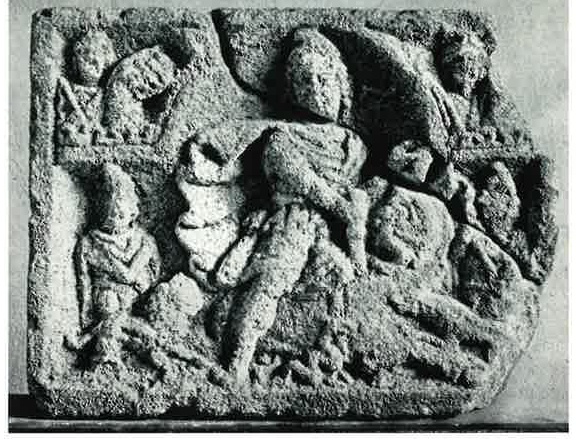
Bachern marble tauroctony relief from the Mithraeum at Pohanica, Noricum, notable for the prominent inclusion of a lion entering from the left — an unusual compositional element — alongside the standard dog, serpent, and torchbearers.
Great royal inscription of Antiochus I of Commagene carved on the thrones at Nemrud Dağı, invoking Apollo-Mithras-Helios among the guardian deities of the kingdom, 69–34 B.C.
