Your search Monteu da Po gave 2105 results.

The fifth mithraeum from Aquincum has been found in the house of a military tribune.
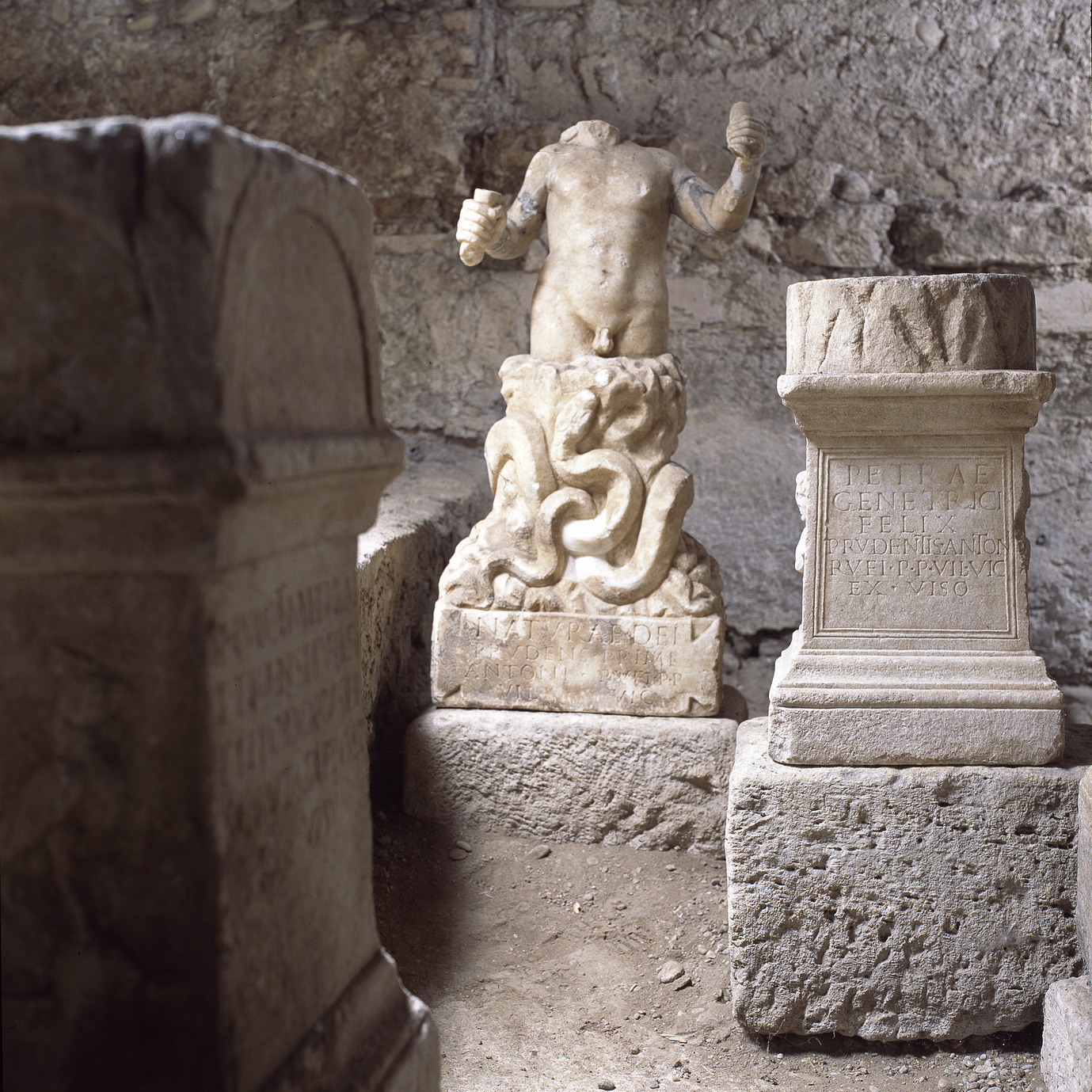
The sculpture includes a serpent climbing the rock from which Mithras is born.
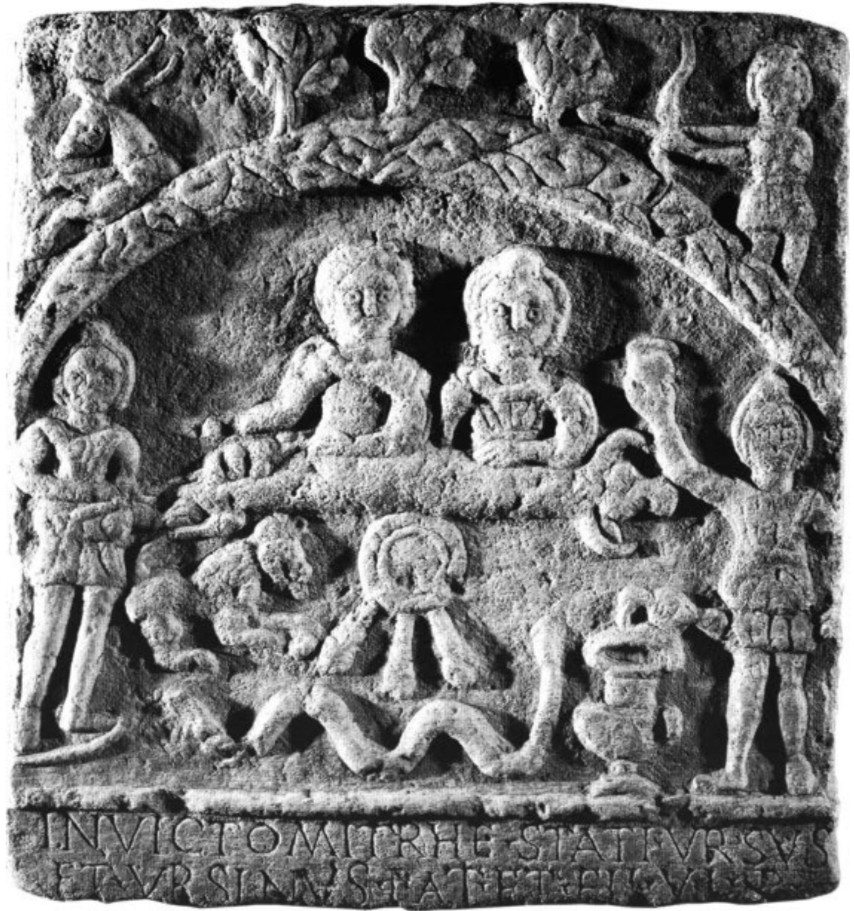
Mithras and Sol share a sacred meal accompanied by Cautes and Cautopates on a relief found in a cemetery from Croatia.

In Aquincum petrogenia, Mithras holds the usual dagger and torch as he emerges from the rock.

The article reveals the context in which the first public appearance of Mitra happened to answer two questions: who were the first people to give prominence to this deity, and for what purpose they did so.
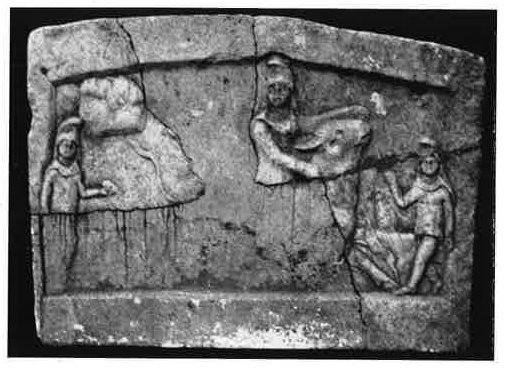
Three white marble tauroctony fragments from Constanța, ancient Tomis in Moesia Inferior, preserving the upper part of Mithras as bull-slayer with flanking divine busts.
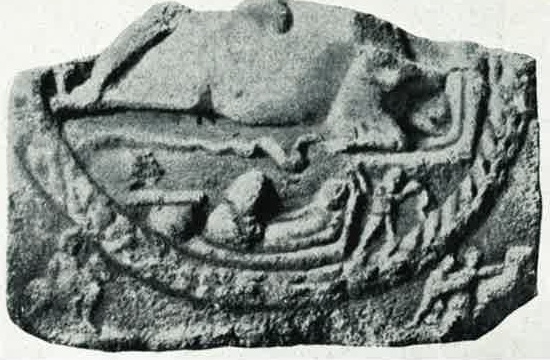
Lower part of a marble tauroctony relief from Küstendil, ancient Pautalia in Moesia Superior, preserving only the lower half of the bull-slaying scene with partially visible legs of the torchbearers.

Marble tauroctony fragment from Ratiaria, Moesia Superior, preserving the lower part of Mithras's body with his right leg, the hindmost part of the bull, and the serpent below.
Site excavated by C. F. L. Lohner in 1824–25 at the Renzenbühl near Thun-Allmendingen, Germania Superior, where the outline of five rooms was identified, one or more of which may have served as a Mithraic sanctuary.
Animal bones from the refuse pit of the Mithraeum at Königshoffen, comprising goat, hen, ox, and deer remains, attesting to ritual feasting within the sanctuary.
Assemblage of plates, jugs, dishes, cups, censers, two bronze coins, and animal bones from the Mithraeum at Dieburg
Sculpted lion’s head from Vichy tentatively described as Mithraic in regional archaeological literature.
Small fragment of a marble piece of rock from the S. Prisca Mithraeum on the Aventine, probably a remnant of a Mithraic rock-birth scene.
Pieces of roughly worked stone from the Caracalla Mithraeum which may represent Mithras' rock-birth.
Altar fragment from Intercisa, Pannonia Inferior, dedicated to Deo invicto by Comitius.

Sighișoara is a municipality on the Târnava Mare River in Mureș County, central Romania.
Viminacium was a major city, military camp, and the capital of the Roman province of Moesia.
