Your search Mount Caelius gave 46 results.

Marble bust from the south-east slope of the Acropolis at Athens, from the Attic mountain Pentelikon, depicting a man with an uncovered breast and mantle; probably Mithras, though the head is lost.
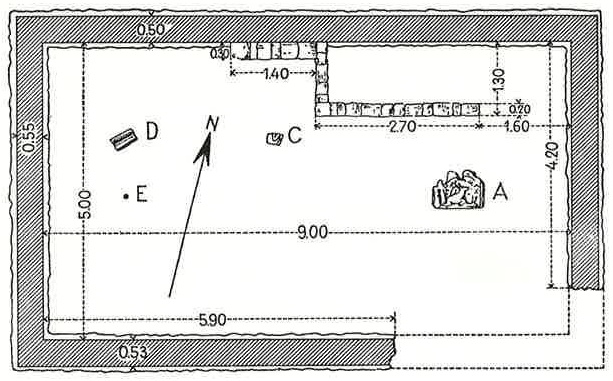
Mithraic sanctuary found in 1897 on the slope of the Repovic mountains on the right bank of the river Trstenic near Konjic in Herzegovina, Dalmatia; a limestone sanctuary with cult relief, altar, and architectural elements.
Tauroctony relief mentioned from a mountaintop at Krivošije near Risn, Boka Kotorska, Dalmatia, found before World War I; the relief was lost.
Several thin silver fragments from the Mithraeum at Linz, ancient Lentia, reconstructed as a votive object surmounted by a crescent or two horns; paralleled in sanctuaries of Jupiter Dolichenus.
Two small limestone heads in Phrygian caps from the Stockhorn Mountains near Thun-Allmendingen, each approximately fist-sized, probably belonging to statues of the torchbearers.
Unusual sculptural representation of stylised flames mounted on a pedestal.
A white marble tauroctony relief found near a Roman villa on the northern slope of Mount Ciminus near Soriano nel Cimino in Etruria, showing Mithras slaying the bull with dog, serpent and scorpion, the bull's tail ending in three ears of grain, the god's resting leg abnormally small…
Sandstone shell from Mithraeum III at Carnuntum, Pannonia Superior, probably mounted on a base and serving as a cult water basin.
Upper portion of a sandstone statue from Strasbourg, ancient Argentoratum, showing a head surmounted by a serpent's head; the fragment probably belonged to an Aion.
Sandstone basin from the pronaos of the sanctuary originally mounted on a short column.

Susa was an ancient city in the lower Zagros Mountains about 250 km east of the Tigris, between the Karkheh and Dez Rivers in Iran.
The Roman settlement overlooked a passage between the Hodna and the Sahara via the Aïn Rich plain and the valley of the Oued Chaïr, between the Ouled-Naïl and Zab mountains.
Mount Nemrut or Nemrud is a 2,134-metre-high mountain in southeastern Turkey, notable for the summit where a number of large statues are erected around what is assumed to be a royal tomb from the 1st century BC.
Senj is a town on the upper Adriatic coast in Croatia, in the foothills of the Mala Kapela and Velebit mountains. The symbol of the town is the Nehaj Fortress which was completed in 1558. Senj is to be found in the Lika-Senj County of Croatia, the
Sarrebourg is a commune of northeastern France. In 1895 a Mithraeum was discovered at Sarrebourg at the mouth of the pass leading from the Vosges Mountains.
Pamphylia was a region in the south of Asia Minor, between Lycia and Cilicia, extending from the Mediterranean to Mount Taurus.
Samnium occupied a mountainous region of central Italy linked to Rome through military movement and regional urban networks.
The high mountain routes of Alpes Graiae formed part of the Alpine corridors connecting Italy, Gaul and the northwestern provinces.
The Alpine regions preserve scattered Mithraic evidence associated with military circulation and strategic routes across the western empire.

One of the clearest examples of the late Roman aristocracy’s involvement in the mysteries of Mithras and other initiatory cults during the fourth century.
