Your search Murviel-lès-Montpellier gave 267 results.

Fragmentary remains of a statuette of Cautopates in a short tunic, including a thigh, knee, and hand holding the end of a torch, found near the entrance of the Mithraeum at Les Bolards (ancient Venetonimagus) in Lugdunensis.
Partial list of Mithraic initiatory grade titles attested in inscriptions from the Mithraeum of Dura-Europos, Syria, 3rd century A.D.
Yellow sandstone relief from the Mithraeum at Dieburg depicting Hercules standing with the Nemean lion
Tauroctony relief in the Museo Torlonia, Rome, remarkable for having a large ant grasping the testicles in place of the scorpion, with the raven on Mithras' flying cloak, the dog and serpent near the wound, and the busts of Sol and Luna in the upper corners; no torchbearers represented…
Sandstone relief fragment from Mithraeum I at Stockstadt showing the lower part of a naked Hercules with a club and lion's skin
Fragment of a red sandstone relief from Mithraeum I at Stockstadt showing Hercules dragging a collared Cerberus from a cave while holding a club
Altar from Carnuntum, Pannonia Superior, dedicated to Soli invicto Mithrae by Lucius Aelius Leo, miles of Legio XIIII Gemina.
Marble altar from Mithraeum III at Ptuj, ancient Poetovio, dedicated to Deo invicto Mithrae by Aurelius Victor, miles of Legio XIII Gemina.
Marble relief from Mithraeum II at Ptuj, ancient Poetovio, depicting standing Jupiter with sceptre and thunderbolt beside standing Hercules with the Hesperides' fruit and club — a divine pair with Mithraic associations.
Fragmentary inscription from Wiesbaden, ancient Aquae Mattiacae, dedicated to Deo invicto by a miles pius, closely parallel to no. 1232
Decorative bronze candlestick discovered near the entrance of the supposed Mithraic sanctuary.

Cales was an ancient city of Campania, in today's comune of Calvi Risorta in southern Italy, belonging originally to the Aurunci/Ausoni, on the Via Latina.
Naples has been inhabited since the Neolithic Age. In the 2nd millennium BC, the Mycenaeans settled in the area. During the Roman period, Naples maintained its Greek language and customs, and greatly expanded.
The Romans took Arelate from the Ligurians in 123 BC and made it an important city by building a canal towards the Mediterranean. Present-day Arles has preserved many Roman buildings.
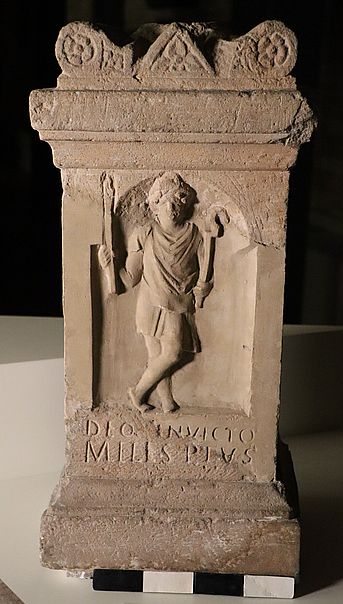
Small votive altar in white limestone from Aquae Mattiacae, dedicated to Deo Invicto by a miles pius. The top preserves the head of Cautes with his raised torch.
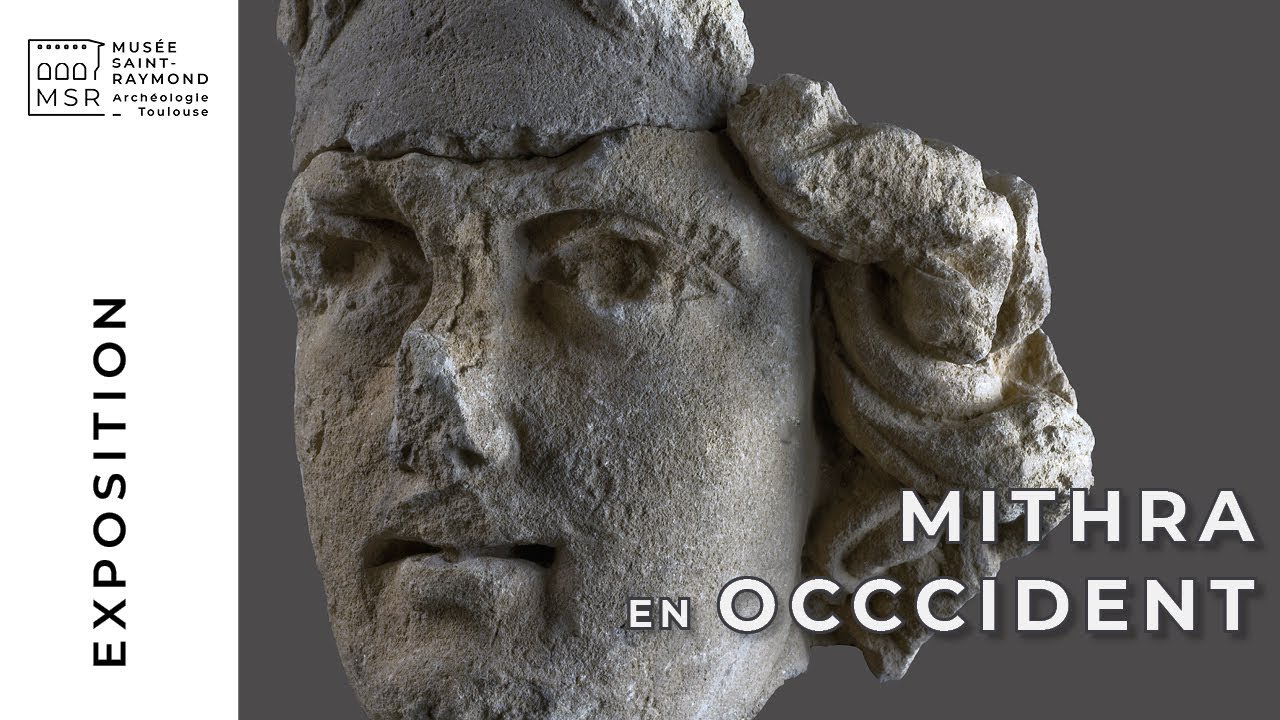
Philippe Roy, docteur en Sciences de l’Antiquité, présente dans cette vidéo la réception du culte de Mithra dans les provinces occidentales de l’Empire romain.
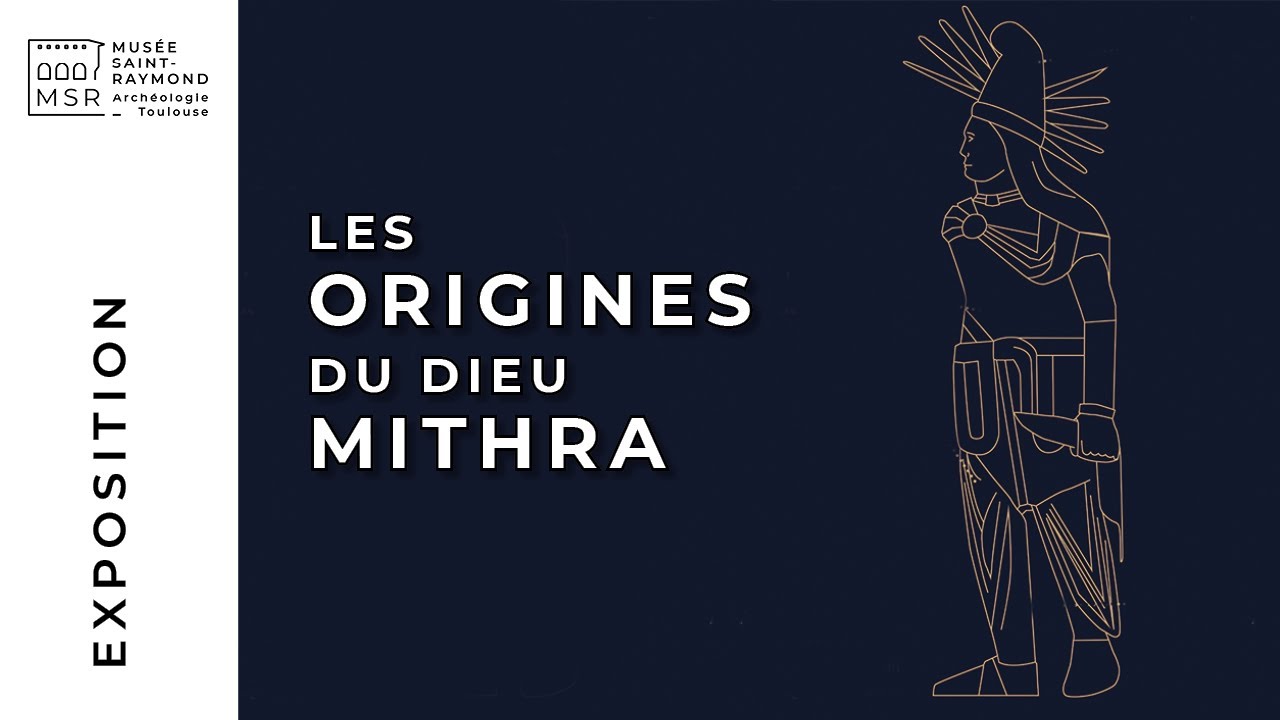
Margaux Bekas, commissaire de l’exposition ’Le mystère Mitrha. Plongée au cœur d’un culte romain’, présente dans cette vidéo les origines du dieu Mithra.
Découvrez les coulisses de la réalisation et du montage de l’exposition « Le mystère Mithra. Plongée au cœur d’un culte romain ».
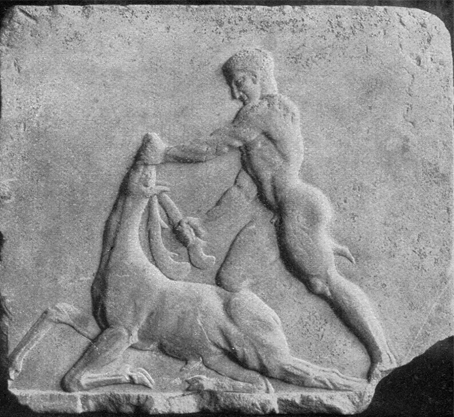
Relief of Heracles/Hercules capturing the Golden Hind of Artemis.
Fragment of yellowish chalcedony in the Cabinet des Médailles, Paris, formerly in the Millingen collection, depicting the standard tauroctony.
