This site uses cookies to offer you a better browsing experience.
Find out more on how we use cookies in our privacy policy.

 
Quaere

The New Mithraeum Database

Find news, articles, monuments, persons, books and videos related to the Cult of Mithras

Your search Newcastle upon Tyne gave 85 results.

 
Monumentum

Votive plaque of Stockstadt

This plaque was found in Mithraeum I at Stockstadt broken into pieces inserted between the blocks of the socle of the cult relief, in the manner of a votive deposit.

 
Monumentum

CIMRM 1198

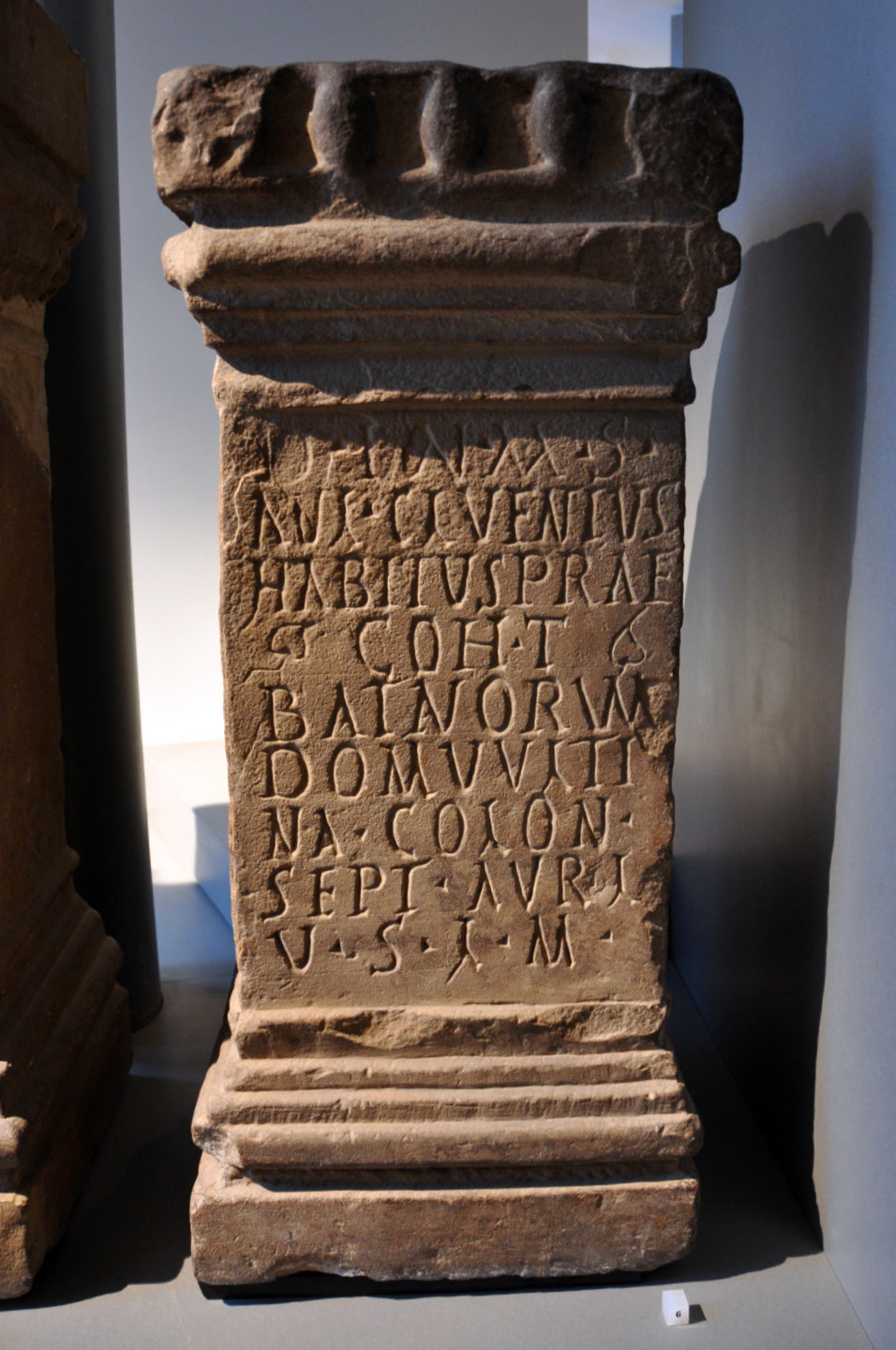
Red sandstone altar from Stockstadt, featuring a square cavity in the front that contained a fragment of crystal and a small lamp.

 
Monumentum

Mithräum von Ober-Florstadt

Mithraeum discovered in 1887–1888, located about 85 m north of the castellum at Ober-Florstadt, built on a hillside with a central aisle, benches, and an altar podium.

 
Textum

Hieronymus’ letter to Laeta

In Letter 107 to Laeta, Jerome combines a pastoral reflection on conversion with an account of the urban prefect Gracchus, who ordered the destruction of a Mithraic cave in Rome, listing the seven grades of initiation associated with the cult.

 
Monumentum

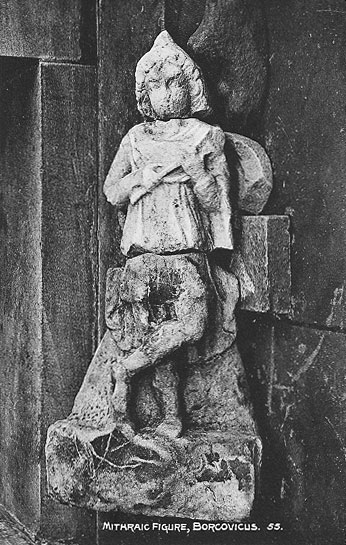
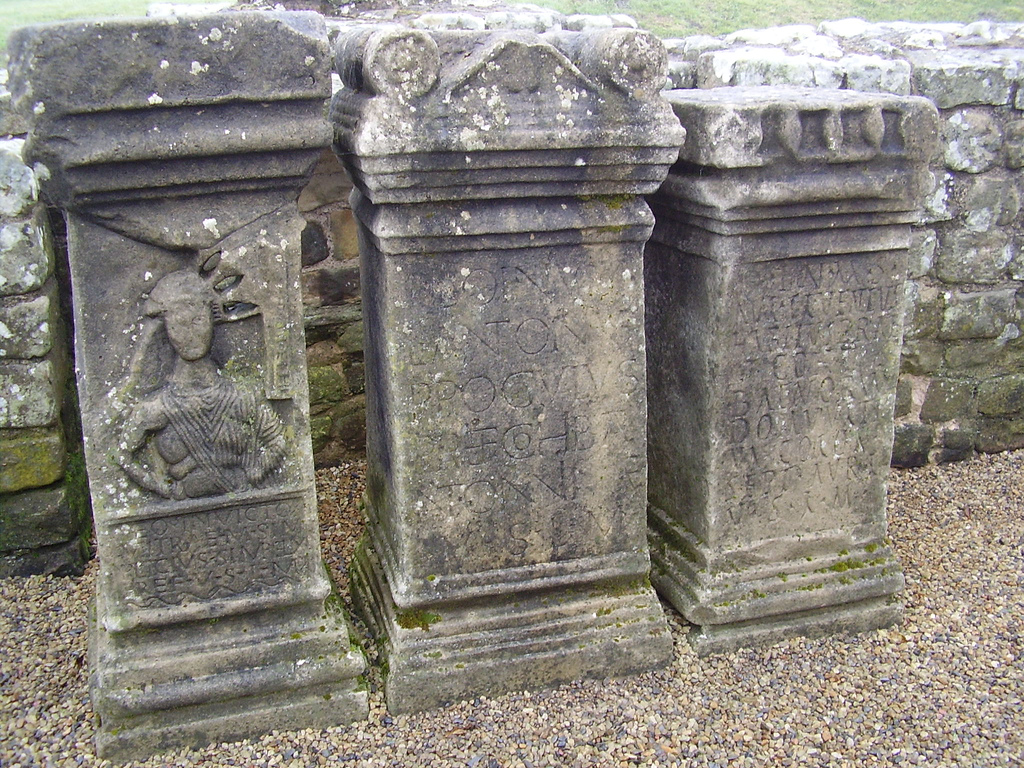
Mithraeum of Rudchester

The Mithraeum of Rudchester was discovered in 1844 on the brow of the hill outside the roman station.

 
Monumentum

Aion (?) from Janiculum Hill

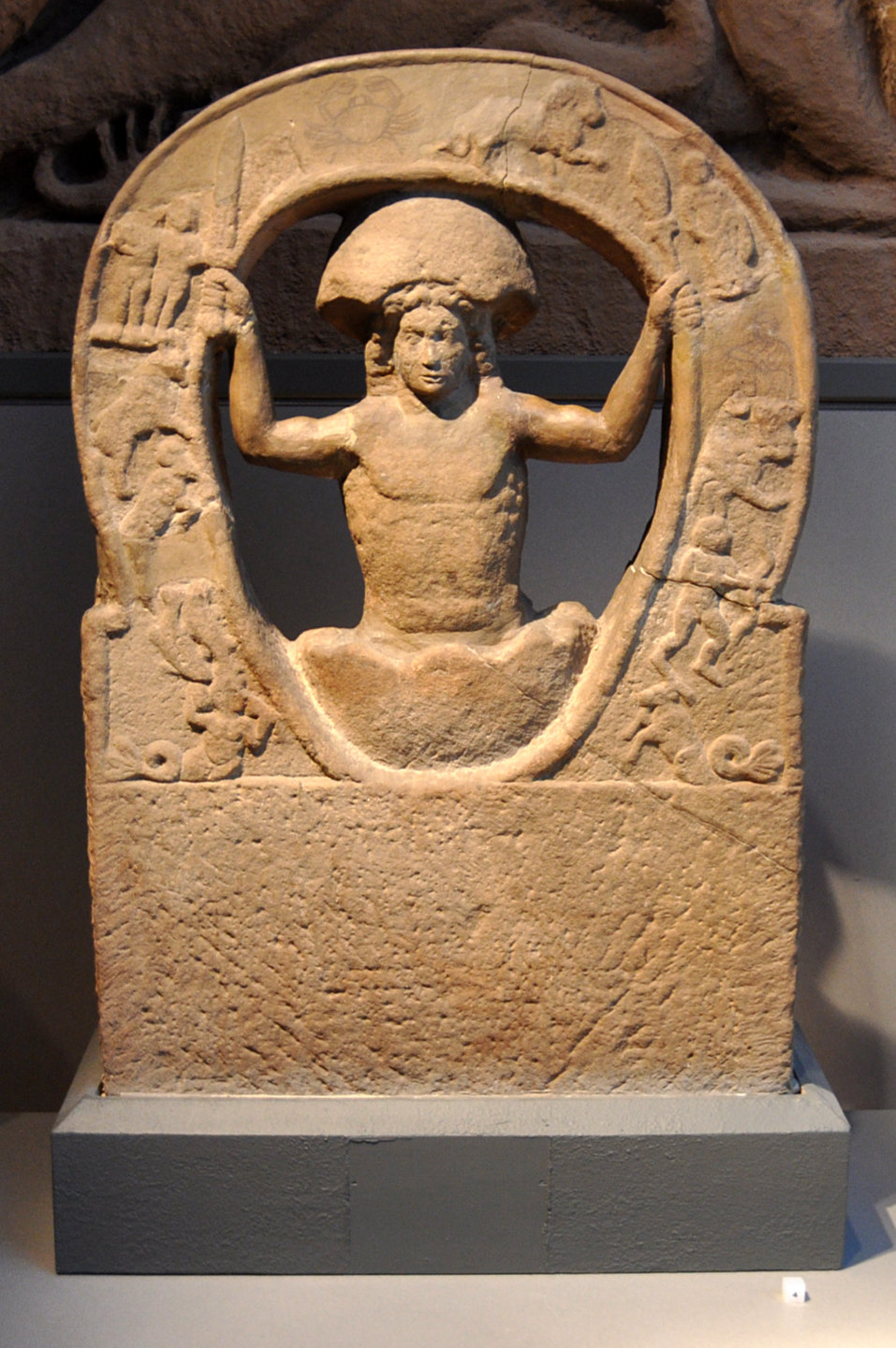
Roman relief from a sanctuary on the Janiculum Hill (Rome), showing a male figure bound by a serpent coiled seven times.

 
Textum

Tertullian on Mithras

In polemical passages from the late second and early third centuries, Tertullian portrays the cult of Mithras as a demonic imitation of Christian rites and provides rare early references to Mithraic initiation and ritual symbolism.

 
Textum

Alexander Romance

Late antique legendary biography of Alexander the Great (c. AD 300), where history, myth, and imperial ideology merge around figures of divine kingship and solar power.

 
Liber

Phallic Miscellanies. Facts and Phases of Ancient and Modern Sex Worship, as Illustrated Chiefly in the Religions of India

India, beyond all other countries on the face of the earth, is preeminently the home of the worship of the Phallus—Linga puja. It has been so for ages and remains so still.

 
Monumentum

Aion of Orazio Muti

This monument has been identified from ’Memorie di varie antichità trovate in diversi luoghi della città di Roma’, a book by Flaminio Vacca of 1594.

 
Textum

Life of Alexander

In Plutarch’s Life of Alexander, the grieving Darius binds the eunuch Tireus by the light of Mithras to reveal the truth about his captive wife Statira, a solemn appeal that leads to unexpected praise for Alexander’s honor and restraint.

 
Textum

Life of Pompey

Passage from Plutarch’s Life of Pompey, recounting the rise, power, and insolence of the Cilician pirates before Pompey’s campaign to suppress them.

 
Textum

De Abstinentia

Two extracts from De abstinentia ab esu animalium by Porphyry on sacrifices and the importance of abstinence from animal food among Persian Magi.

 
Textum

De Iside et Osiride

Of Isis and Osiris or Of the Ancient Religion and Philosophy of Egypt, Plutarch, The Moralia.

 
Textum

Discourse on the doctrines and practices of the magi

Dion Chrysostom, c. 100 A.D., a philosophical writer under the emperors Nerva and Trajan, composed a series of discourses or essays (λόγοι) on various subjects, in one of which he reports concerning the doctrines and practices of the magi.

 
Textum

Nonnus Abbas on Gregory of Nazianzus

Commentaries by Pseudo-Nonnus, also known as Nonnus the Abbot, on Gregory Nazianzen’s In Julianum Imperatorem Invectivae Duae and In Sancta Lumina.

 
Textum

De fluviis

Pseudo-Plutarch, De fluviis. Goodwin, Ed. Plutarch. Plutarch’s Morals. Translated from the Greek by several hands. Corrected and revised by. William W. Goodwin, PH. D. Boston. Little, Brown, and Company. Cambridge. Press of John Wilson and son.

 
Notitia

De fluviis

Pseudo-Plutarch, De fluviis. Goodwin, Ed. Plutarch. Plutarch’s Morals. Translated from the Greek by several hands. Corrected and revised by. William W. Goodwin, PH. D. Boston. Little, Brown, and Company. Cambridge. Press of John Wilson and son.

 
Notitia

Contra Celsum

229 A.D. The passage quoted is from the sixty-third book, ch. 10. Origen

Back to Top