Your search Palazzo Tagliamonte gave 57 results.

Bust of a man in lorica and paludamentum from the Mithraeum at the Palazzo dei Musei, Rome; the head is lost.
Base of a Venus statuette preserving only the feet and a jug with a cloth on the right side, from the Mithraeum at the Palazzo dei Musei, Rome; a second broken base may also have belonged to a Venus statuette.
Lower part of a small statuette of Minerva in a long chiton, leaning on a shield with her left hand, from the Mithraeum at the Palazzo dei Musei, Rome.
Marble pilaster broken in two with ridges on all four sides and the head of Sol in a radiate crown at the top, from the Mithraeum at the Palazzo dei Musei, Rome.
Marble serpent's head with a small hole at the beginning of its neck, belonging to a Mithras bull-killing group or a rock-birth scene, from the Mithraeum at the Palazzo dei Musei, Rome.
Fragment of a small white marble relief showing Cautes in tunica manicata and long cloak with an upraised flaming torch, from the Mithraeum at the Palazzo dei Musei, now at Via Portico d'Ottavia 29, Rome.
Graffito on the left wall of the Palazzo Barberini Mithraeum consisting of the single name Macarius.
Wall-painting on the last column but one of the Palazzo Barberini Mithraeum, showing a standing person in a short tunic with a wreath of ivy, carrying fruits in his left hand.
Wall-painting on the last column of the left bench in the Palazzo Barberini Mithraeum, showing a standing person pressing his left hand to his breast and extending his right hand towards a kneeling person whose head is covered with ivy.
Square marble slab walled in the right projecting elevation before the cult-niche of the Palazzo Barberini Mithraeum, with a dedication by Yperanthes (a Persian name) to the Invictus, inscribed in a red frame with traces of red and blue colour.
White marble slab showing Mithras as a bull-killer on a rocky base, found in 1928 by the Comtesse de Robillant in a cellar of the Palazzo del Grillo behind the Forum of Augustus; Mithras' head, both arms, and the bull's head and tail are lost.
A small two-wick lamp and a larger twelve-wick lamp inscribed Serapiodori inny, from the Mitreo del Palazzo Imperiale at Ostia.
Marble lion's head fastened into a wall, its flat square back indicating it was set into masonry, from the Mitreo del Palazzo Imperiale at Ostia.
A few pieces of tuff worked as rocks, forming a cone representing the remnants of the rock-birth of Mithras, found around the altar in the Mitreo del Palazzo Imperiale at Ostia.
Two marble fragments of a statue of Mithras as bull-killer, preserving the head in Phrygian cap and right hand with dagger, with traces of red paint, from the Mitreo del Palazzo Imperiale at Ostia.
A small hollow edicola of simple square structure near altar K, with an opening for lamp offerings, from the Mitreo del Palazzo Imperiale at Ostia.
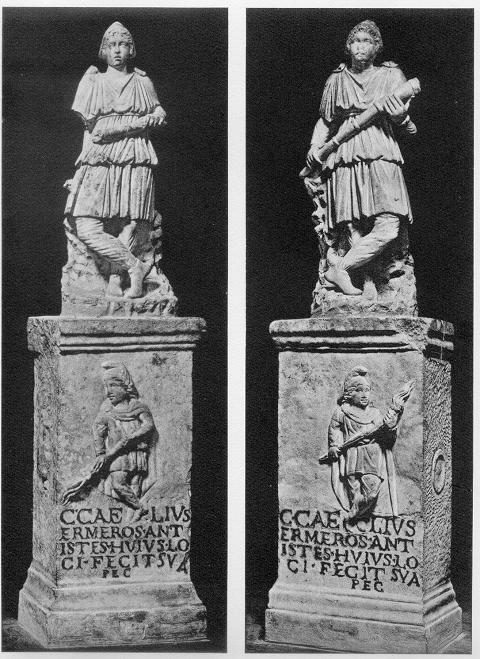
The sculptures of Cautes and Cautopates from the Mitreo del Palazzo Imperiale may have been reused from an older mithraeum in Ostia.
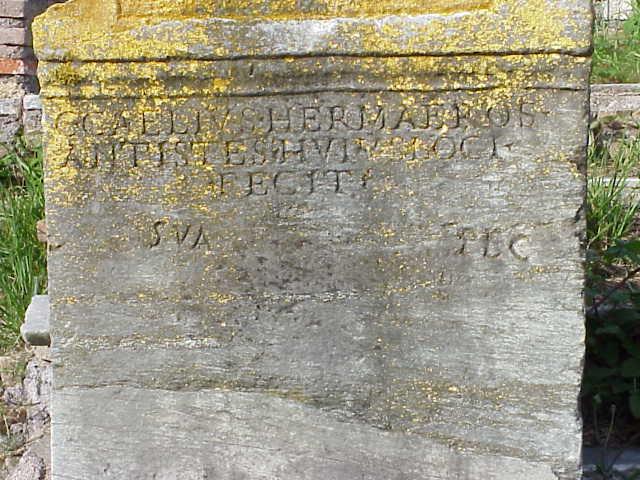
This is one of several marble inscriptions made by a certain Caelius Ermeros, who was the antistes of the Mithraeum of the Imperial Palace.
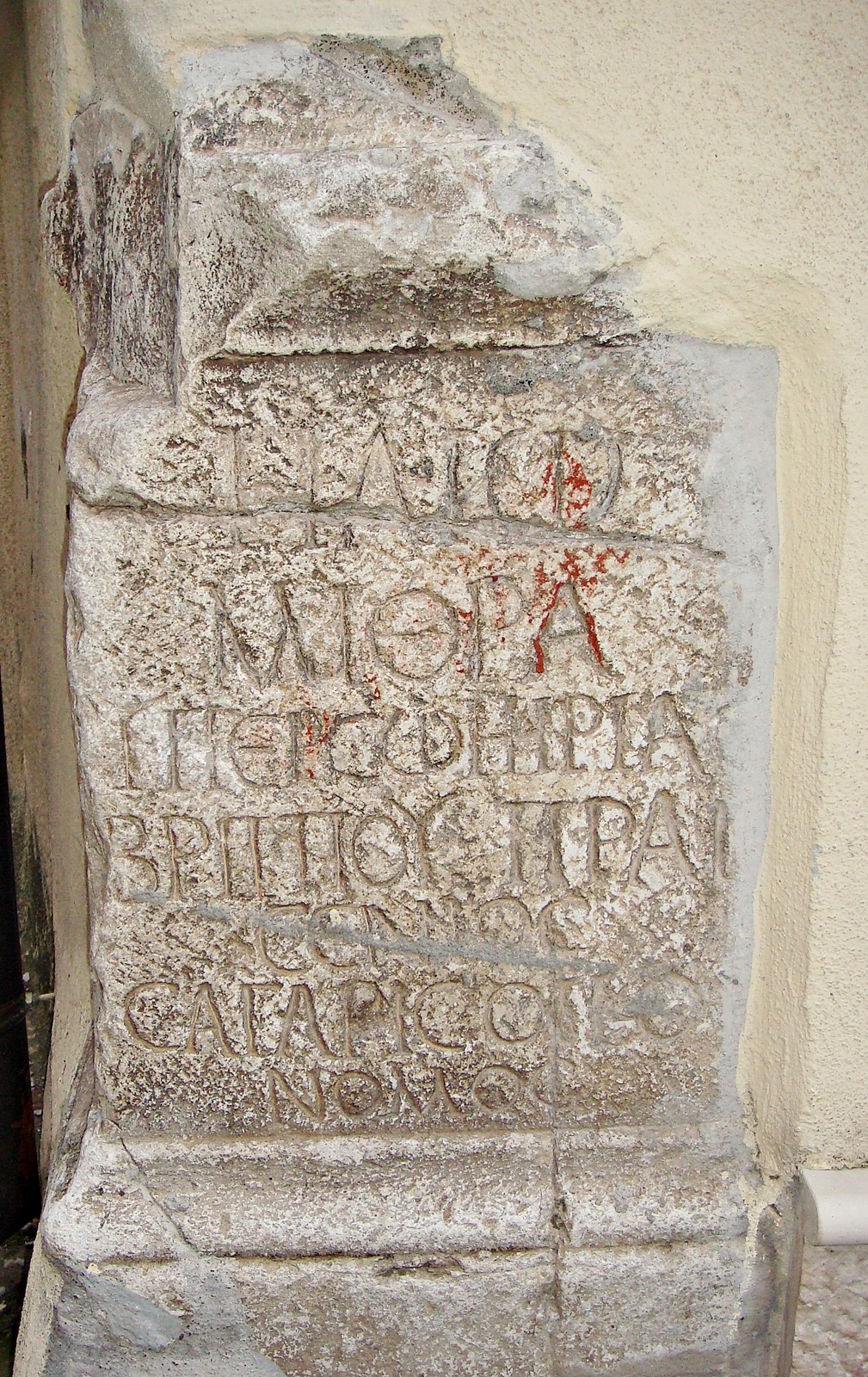
This altar dedicated to Helios Mithras by a certain Sagaris was repurposed in the masonry of Palazzo Bagnoli, Venosa, Italy.
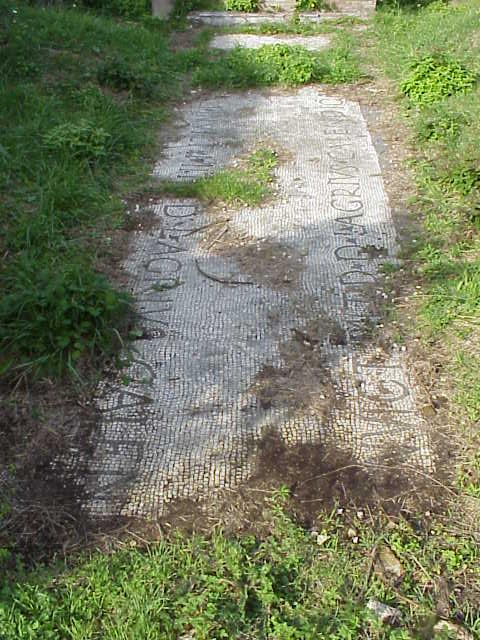
It bears an inscription repeated on each side of the podia.
