Your search Podersdorf am See gave 2325 results.
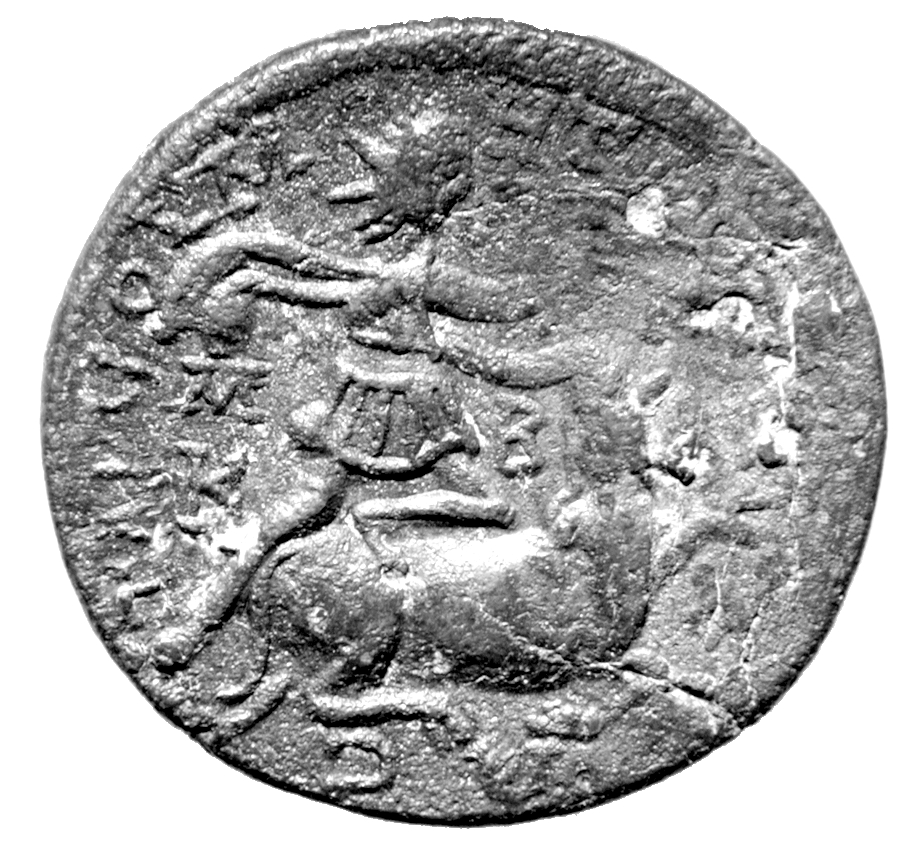
The bronze medallion, from Cilicia, shows Mithras Tauroctonus on the revers.

Late Roman senator and governor of Numidia whose inscriptions present him as a Mithraic pater and initiate in several mystery cults.

A powerful and wealthy man, founder of a mithraeum in the city of Aquincum of which he was the mayor.
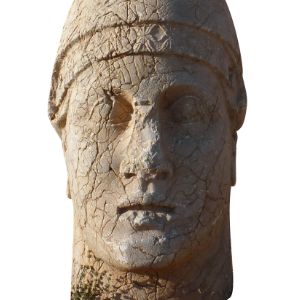

Veteran recalled to imperial service and sole named devotee of Mithras currently attested at Grumentum.
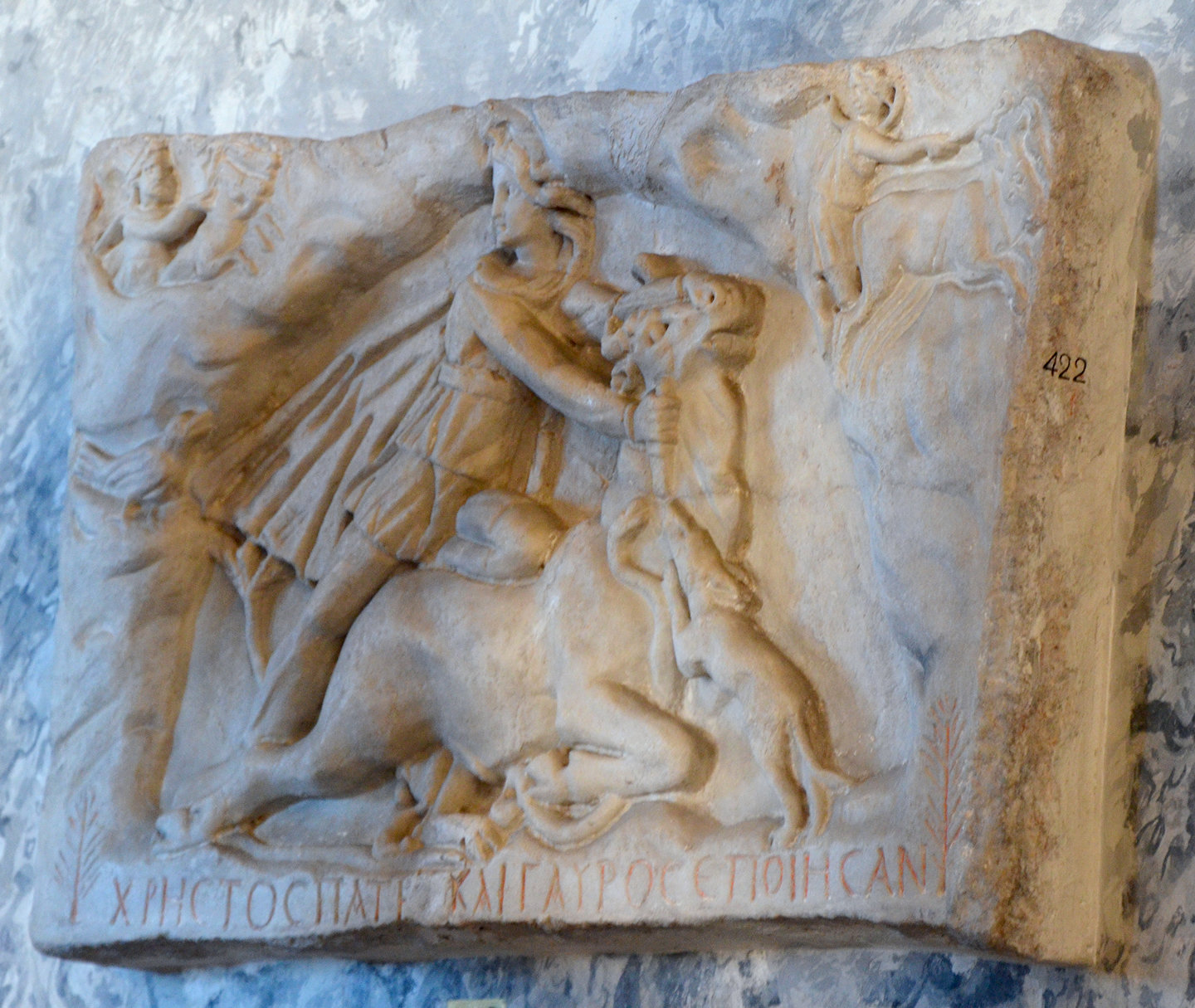
This relief of Mithras killing the bull, signed by a certain Χρῆστος, is on display in the Sala dei Animali of the Vatican Museum.

This altar from Grumentum in Lucania was dedicated to Sol Invictus Mithras by Titus Flavius Saturninus, an evocatus in imperial service.

Black jasper gem from the Seyrig collection, depicting Mithras radiate slaying the bull, with the god grasping the muzzle with the left hand and driving a knife into the animal's neck with the right.
Fragment of yellowish chalcedony in the Cabinet des Médailles, Paris, formerly in the Millingen collection, depicting the standard tauroctony.
Gold ring amulet formerly in the Schlumberger Collection, published as Mithraic by Cumont and later identified as a healing charm against colic and diseases of the uterus.
Yellow jasper fragment of unknown provenance, formerly in the Museo Borgiano, with a tauroctony on the obverse and a Mithraic figure on the reverse.

Yellow lenticular carnelian gem probably from Aquileia, now in Udine, depicting a Mithraic scene nearly identical to the Florence jasper.
A marble statuette found at Augusta Emerita (modern Mérida) in 1902, representing a seated deity whose head, arms and feet are lost, tentatively identified as Jupiter-Serapis.
A small limestone votive altar from Pola (modern Pula) bearing on its front face a damaged relief head of a youthful Sol with long curly hair, above which is carved the inscription Soli and below the dedicatory text by Atticus (No. 757).
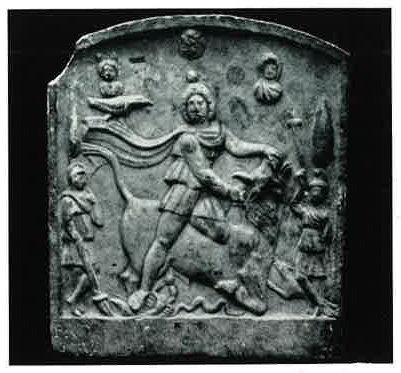
Marble tauroctony relief of uncertain but probably Apulum/Dacian provenance, depicting Mithras tauroktonos with raven, serpent, scorpion, and dog.
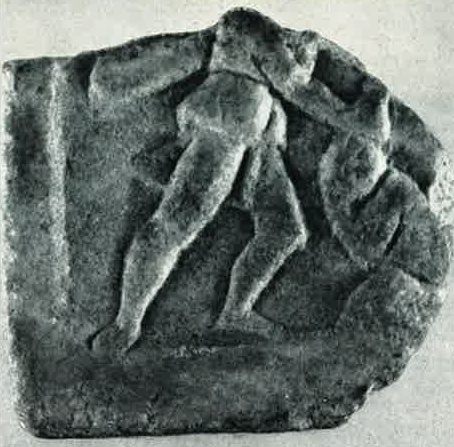
Marble relief fragment from Dacia, depicting Mithras placing a Phrygian cap on the kneeling Sol — one of the more unusual variants of the Mithraic iconographic programme.

Camulodunum, modern Colchester, was among the earliest coloniae established in Britannia after the Roman conquest.
Campona occupied a strategic position south of Aquincum along the Danube frontier.
Amorium, also known as Amorion, was a city in Phrygia, Asia Minor which was founded in the Hellenistic period, flourished under the Byzantine Empire, and declined after the Arab sack of 838.
Arsameia on the Nymphaios is an ancient city located in Old Kâhta in Kâhta district, Adıyaman Province, Turkey.
