Your search Podersdorf am See gave 2325 results.

Marble torso from Mithraeum II at Ptuj, ancient Poetovio, probably representing a winged, reclining bull with two vertical attachment ligaments on the reverse.
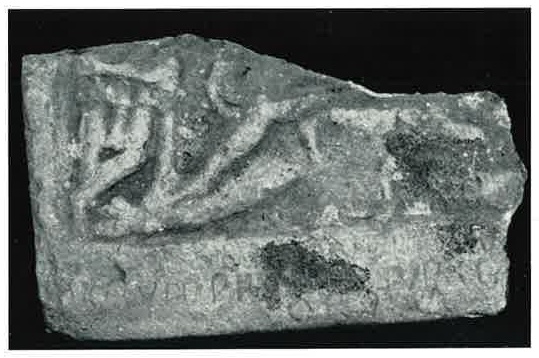
Marble relief from Mithraeum II at Ptuj, ancient Poetovio, preserving the lower part of the tauroctony with a bull in full extension, the scorpion, and a serpent with upraised head, together with Cautopates behind the bull.

Left portion of a marble tauroctony relief from Mithraeum II at Ptuj, ancient Poetovio, preserving the bust of Sol and below it standing Cautopates with a downward torch, together with the bull's hind-leg and Mithras's right leg.
Marble altar with akroteria from Mithraeum II at Ptuj, ancient Poetovio, dedicated to Fonti perenni by Epictetus and Viator, vicarii of Quintus Sabinius Veranus, vilicus of the publicum portorium.
Inscription on the column base from Mithraeum II at Ptuj, ancient Poetovio, dedicated to Deo invicto Mithrae for the welfare of the Emperors and Geta Caesar by Salvianus, contrascrip of the statio Atrantiana; Geta's name was subsequently erased.
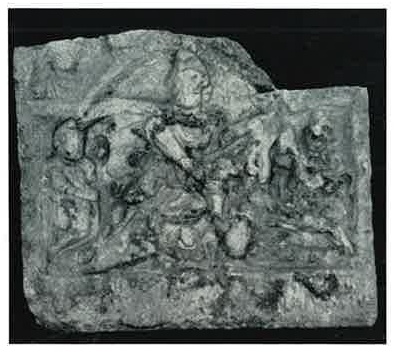
Marble tauroctony relief from Mithraeum II at Ptuj, ancient Poetovio, distinguished by the bull represented with fully stretched legs; Cautopates is shown resting his head on his hand in a pensive posture.
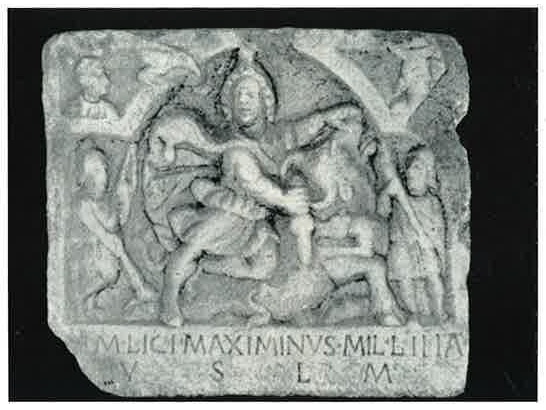
White marble tauroctony relief from Mithraeum II at Ptuj, ancient Poetovio, depicting Mithras in Oriental dress killing the bull with a girdle and the raven perched on the grotto's border.
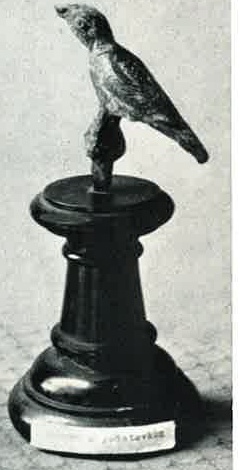
Small bronze raven perched on a dagger from Mithraeum I at Ptuj, ancient Poetovio — a Mithraic grade symbol representing the corax, the lowest of the seven Mithraic initiation grades.
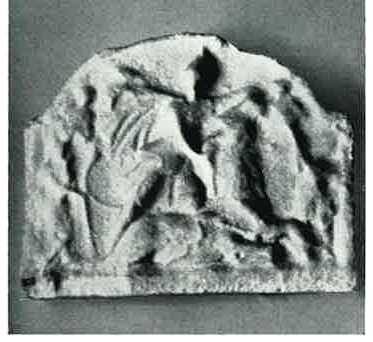
Small marble tauroctony relief from Ruše, Noricum, depicting Mithras killing the bull in a grotto, notable for the unusually elongated neck of the bull; dog and serpent approach the wound, and the raven perches above.
Altar from Töltschach am Zollfeld, Noricum, dedicated to Soli invicto Mithrae for the welfare of the Augustus in honour of the Domus Divina by Hilarus, imperial freedman and tabularius patrimonii regni Norici, and Epictetus, imperial arkarius…
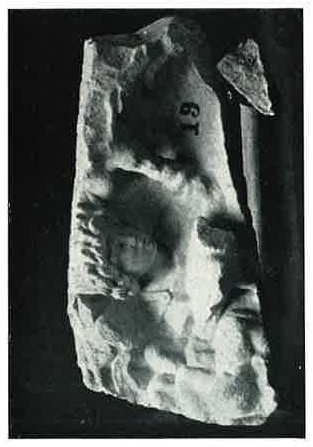
Three Italian marble fragments from the Zollfeld at Virunum, Noricum, forming a tauroctony relief; the iconography is well preserved and the use of imported Italian marble reflects the high status of the dedicants.
Lance point, key, bronze lamp, and pottery and brick fragments from the Mithraeum at Neuenheim
Miscellaneous objects from the Rückingen Mithraeum including stone balls, cult-vase fragments, lamps, and two candlesticks
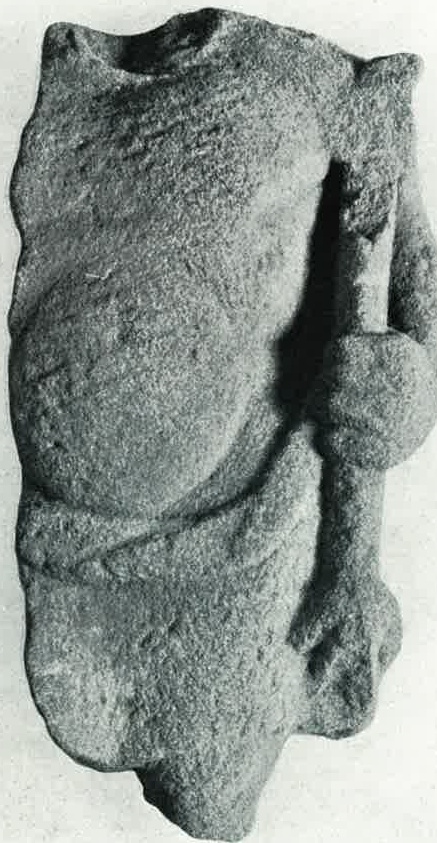
Group of sandstone relief fragments from Rückingen depicting multiple deities including a male head identified as Hercules
Miscellaneous cult objects from Ober-Florstadt including pottery, lamps, legionary stamps, coins, animal bones, and a bone flute fragment
Sacrificial knife, lamps, pottery, animal remains and inscribed terracotta fragments discovered inside the sanctuary.
Assemblage of altars, lamps, coins and ritual objects discovered in the sanctuary.
Group of altars and a base indicating the existence of a Mithraeum near the Roman camp of Vetera.
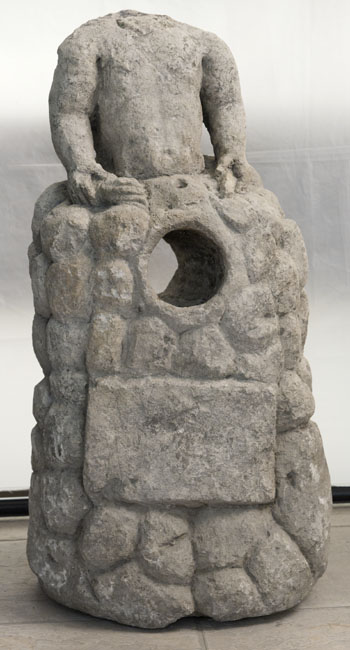
This sculpture from Dobrosloveni, Romania, depicts the petrogenesis of Mithras, with a hole through the generative rock from which water flowed.
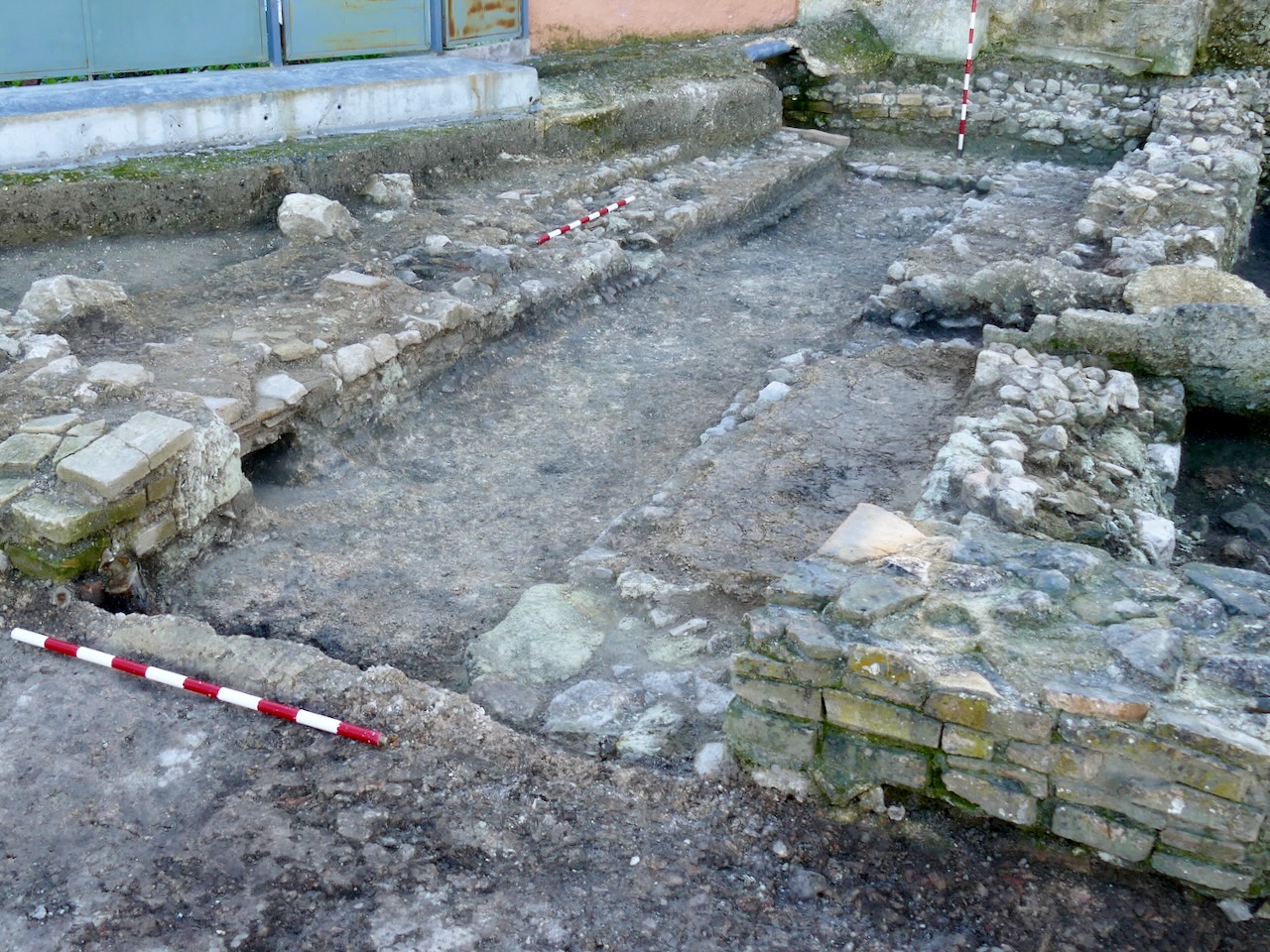
The Mithraeum of Cabra is located in the Villa del Mitra, which owes its name to the discovery in 1951 of a Mithras tauroctonus in the remains of the Roman villa.
