Your search Podersdorf am See gave 2325 results.
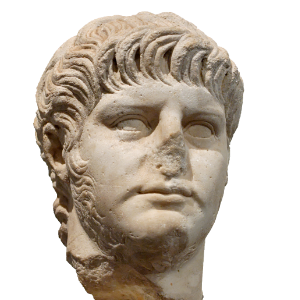
Roman emperor whose ceremonial reception of Tiridates I of Armenia established one of the earliest recorded links between Mithras and the Roman imperial court.
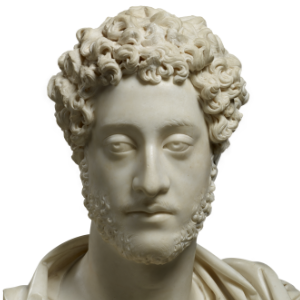
Roman emperor traditionally regarded as the first ruler initiated into the Mysteries of Mithras.

Alfius Severus was a prominent figure associated with the Mithraeum of Marino, probably acting as pater of a small Mithraic community connected with the nearby peperino stone quarries.

Roman settlement of Dacia superior located in the area of present-day Sibiu in Romania. The site became an important urban and military centre, later developed into the medieval city known as Hermannstadt in German and Nagyszeben in Hungarian.
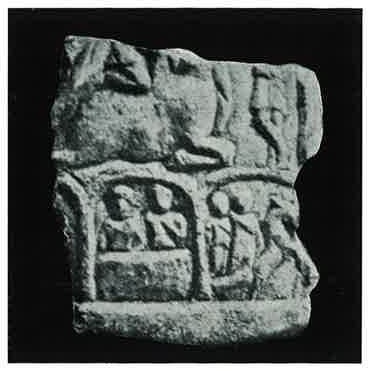
Right lower corner of a marble tauroctony relief from Oltenia, Dacia, preserving the lower portion of Mithras killing the bull.
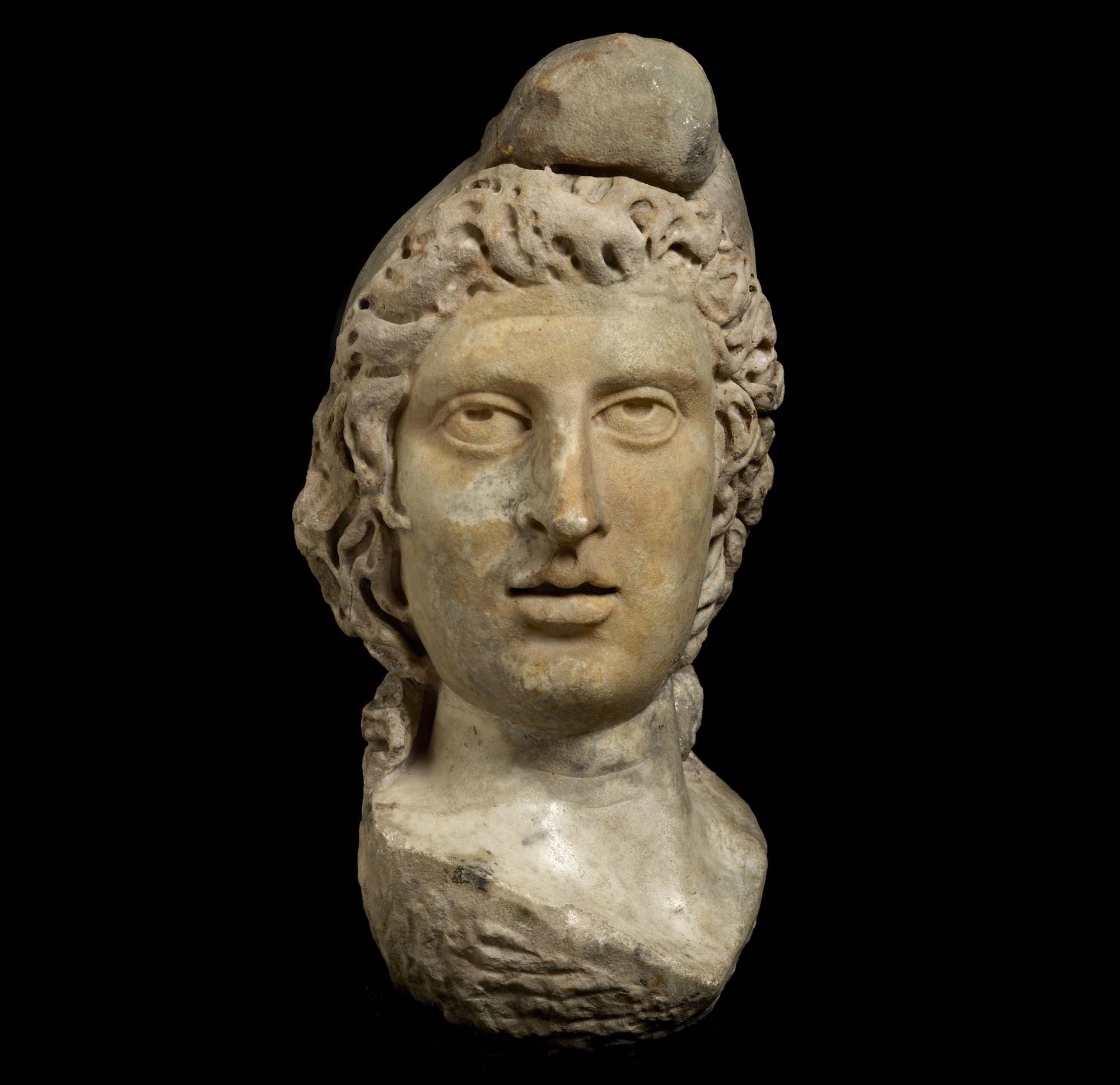
The Mithras's head of Walbrook probable belonged to a life-size scene of the god scarifying the bull.
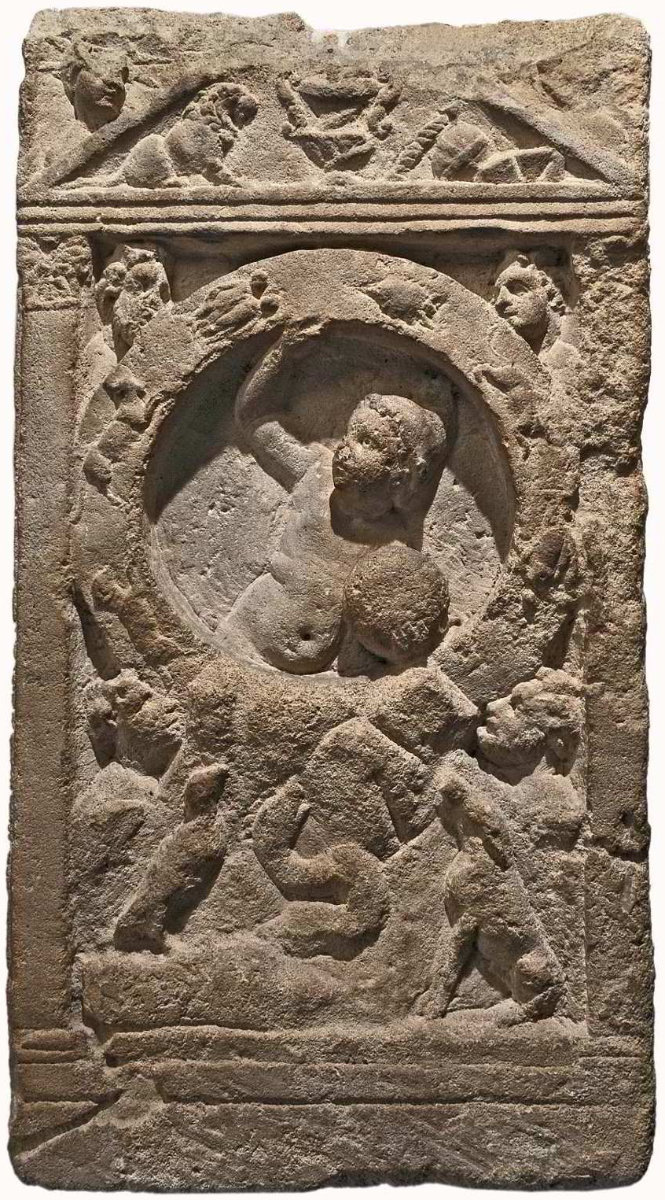
The relief depicts the birth of Mithras, holding a globe, surrounded by the zodiac.
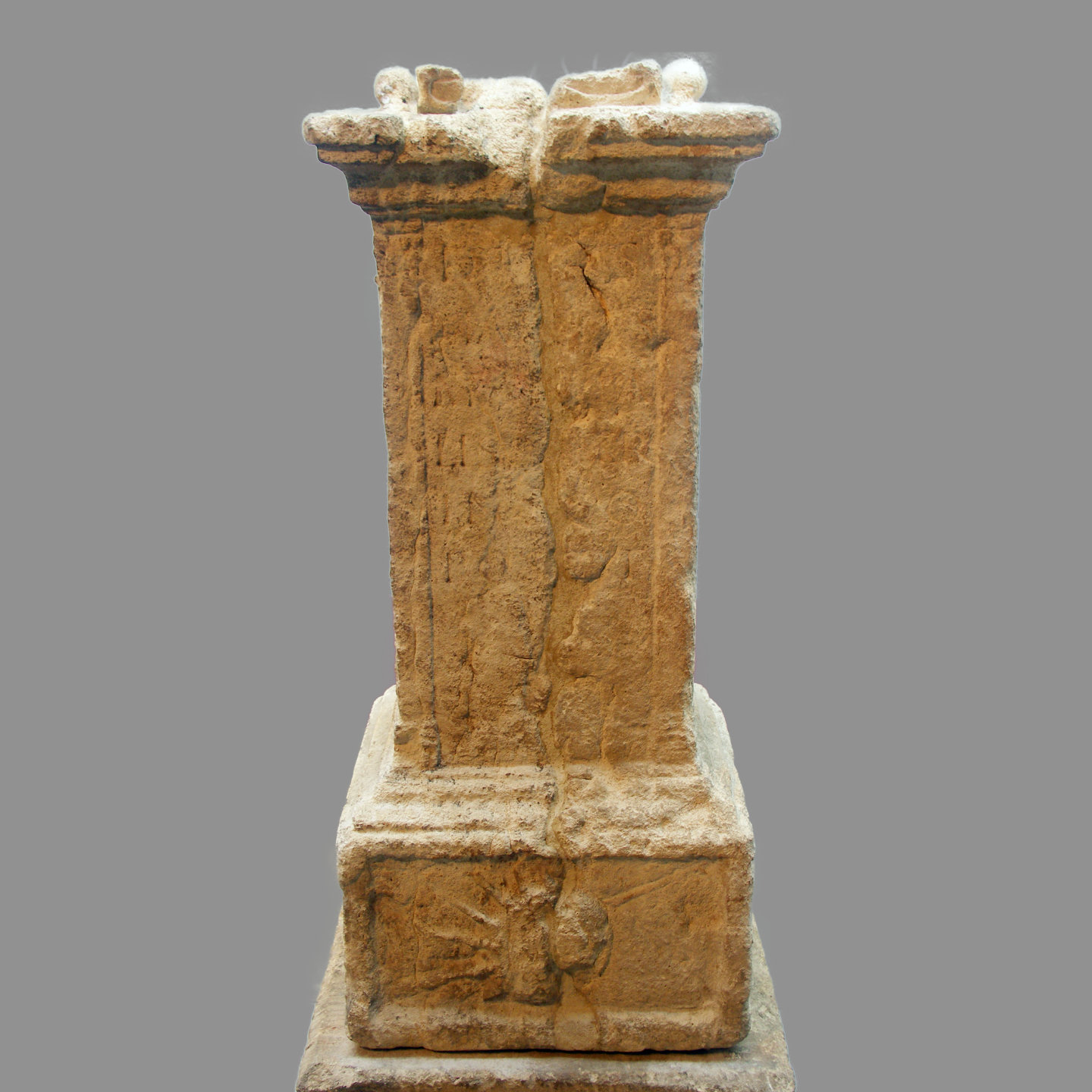
This stone altar fround in Altbachtal bears an inscription by a certain Martius Martialis.
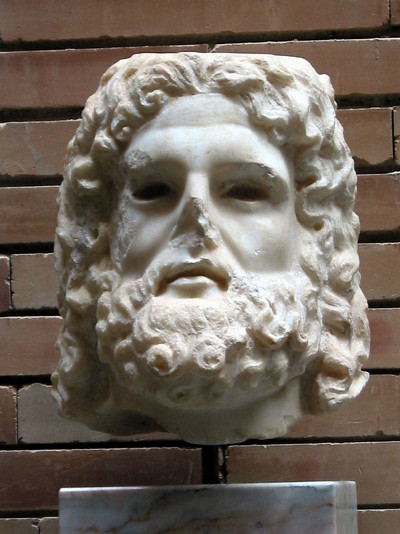
This head of Serapis from Cerro de San Albín may be unrelated to Mithras worship.
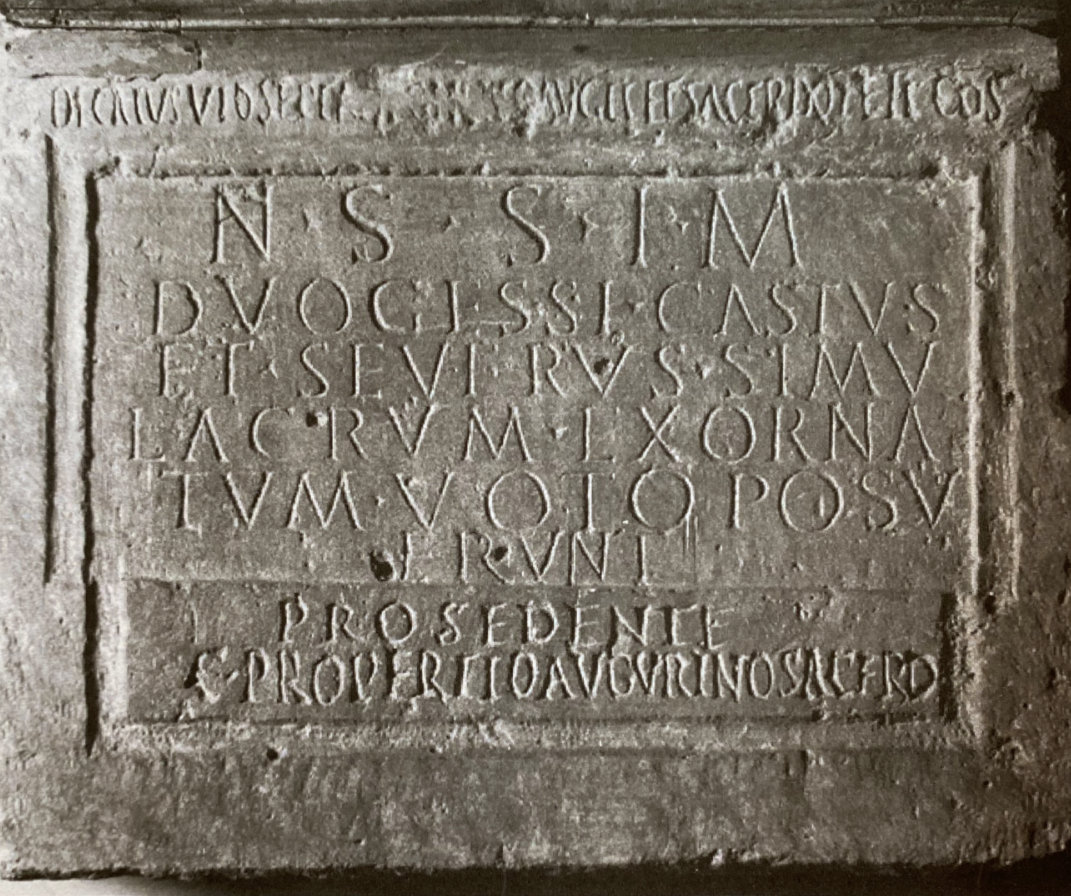
Gessius Castus and Gessius Severus have placed a decorated stutue and left testimony on this inscription below.
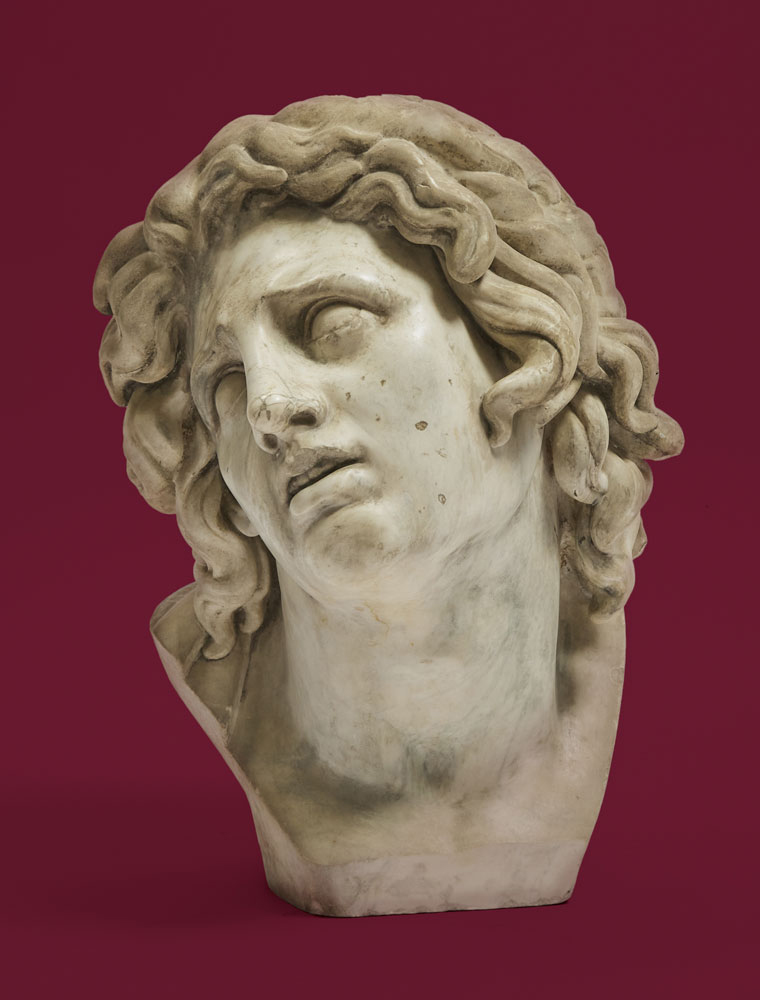
Head formerly associated with Mithraic material but interpreted by Margarete Bieber as a dying Giant.

A marble altar found in 1873 between the Baths of Diocletian and the Via di Porta Pia in Rome, dedicated to Sol Invictus Mithras by Sextus with Titus Flavius Ianuarius as antistes.
An inscription to Sol Invictus Mithras found in the Vigna Patritii outside the Porta Pia in Rome, dedicated by Aelius Victorinus, a veteran of the emperors honourably discharged, with M. Aurelius Romulus as antistes and sacerdos of the cult.

Roman Mithraic relief illustrated in figure 171 of Vermaseren’s catalogue.
Greek inscription dedicated to Sol Invictus Mithras by Balbillus, saved from the waters, in the presence of Bassus the priest, belonging to the Mithraic grade of Leo.
Large limestone jar from room Z of the S. Prisca Mithraeum, fitted with a small cylindrical vase and a lid bearing the graffito "Te cauterio i Saturne i Ata[r i] Opi".
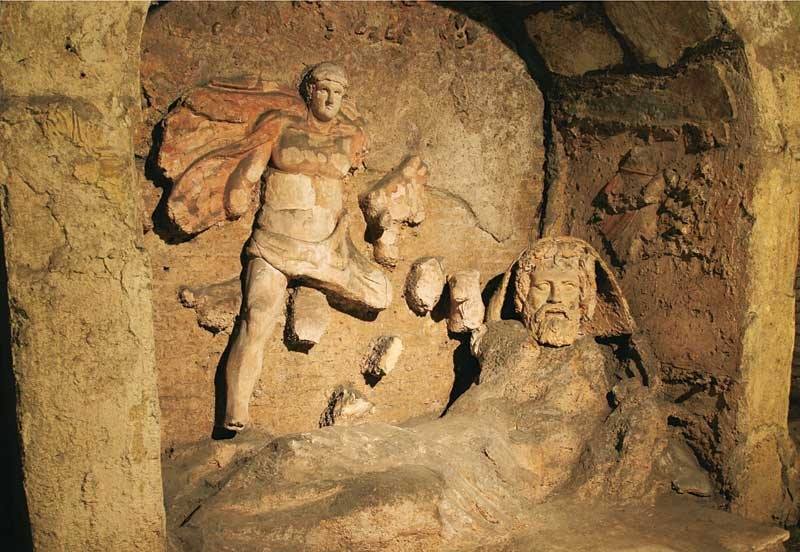
Even if only a few fragments remain, it is very likely that the main niche of the Mitreo di Santa Prisca contained the usual representation of Mithras killing the bull.
The fragmented tauroctony of the Mitreo di Santa Prisca rests on the naked figure of a bearded man, probably Ocean or Saturn.
Marble base found in 1764 on the Aventine with a dedication to Sol by C. Rufus Volusianus, vir clarissimus, who held the offices of pater, hierophant, prophet of Isis and pontifex of the Sun, dated to the 4th century A.D.

Roman building on the Aventine between the eastern side of S. Saba and Via Salvator, probably used as a Mithraeum at the end of the 4th century, with a long corridor bearing three semicircular niches and a large external basin.
