Your search Podersdorf am See gave 2325 results.
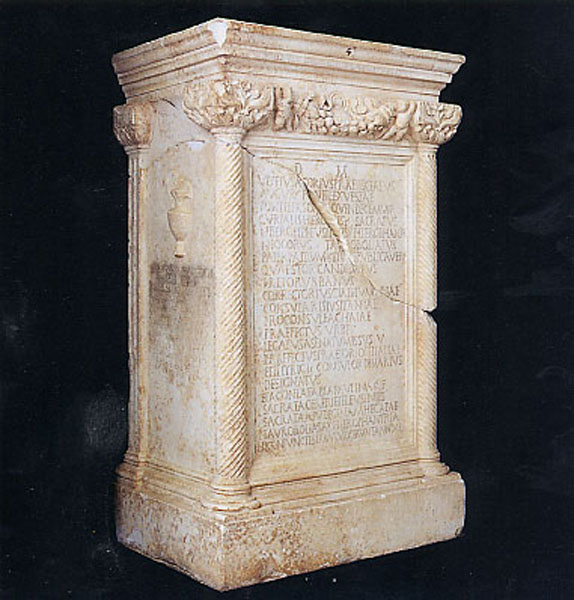
The marble altar mentions Vettius Agrorius Praetextatus as Pater Sacrorum and Patrum and his wife Aconia Fabia Paulina.

Wall-painting of Mithras tauroktonos in fresco, discovered in 1886 in an underground room of the house of the Nummi Albani on the Quirinal (Via Firenze); the god wears a red cap and tunic, the torchbearers wear yellow or orange tunic and cap with green or brown anaxyrides…
Marble inscription found near the Church of S. Susanna on the Quirinal, with a dedication to Sol Invictus as a votive offering by Cornelius Maximus, centurion of the tenth praetorian cohort.
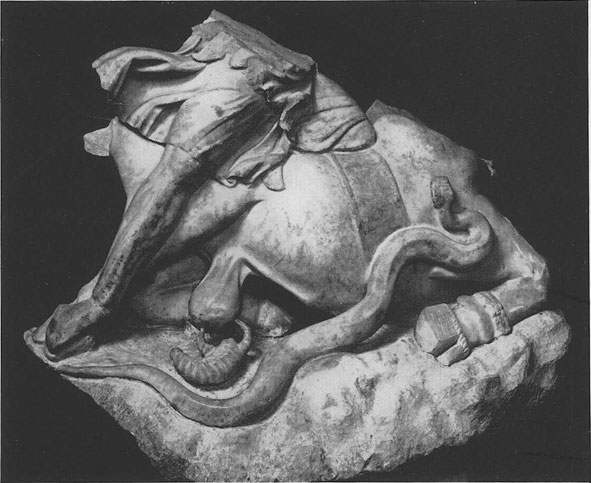
Partial marble statue of Mithras as a bullkiller found near Viale Latino, about 200 meters from Porta San Giovanni.
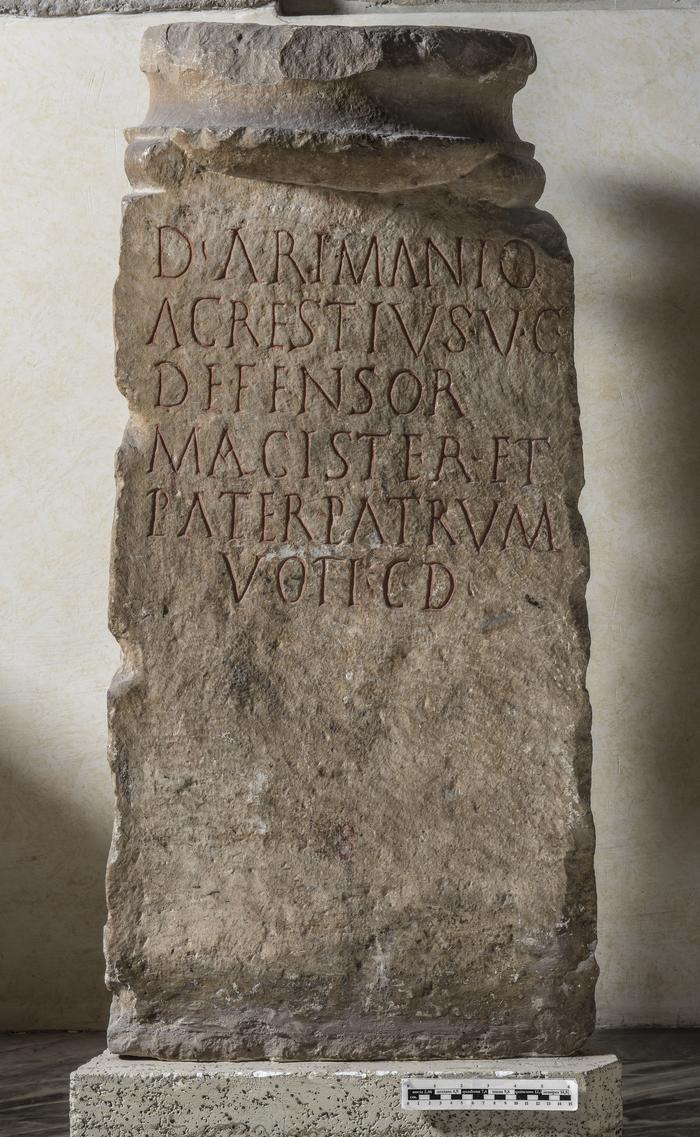
This altar mentioning the god Arimanius was found in 1655 at Porta San Giovanni, on the Esquilino.
Lower part of a candelabrum-shaft in the form of a palm trunk on an acanthus base, with a dedication to Mithras by T. Aelius Iustus on three faces of the plinth, found between the churches of SS. Eusebius and Vitus, Rome.
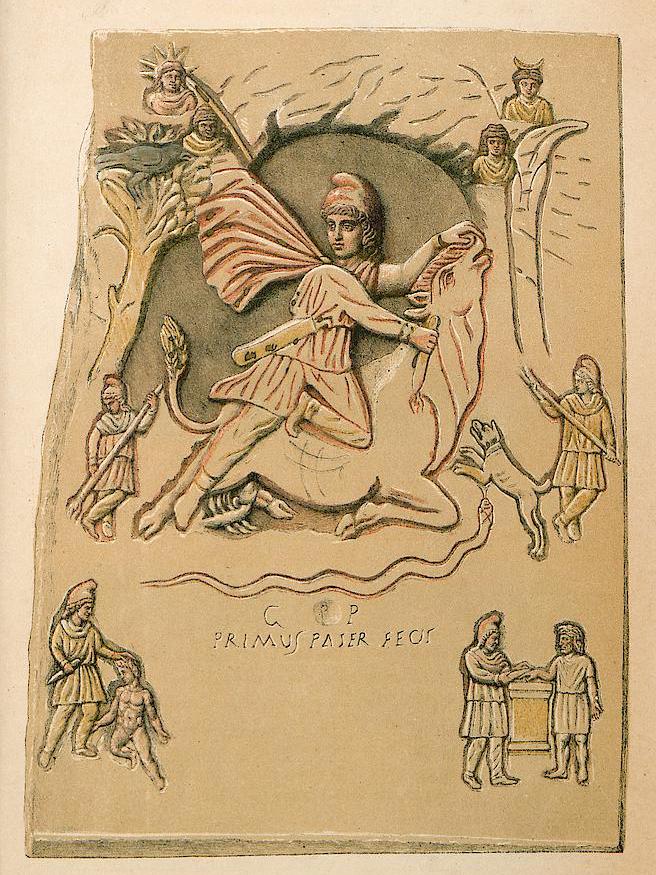
The relief of Mithras slaying the bull found on the Esquiline Hill includes two additional scenes with Mithras and two other figures.
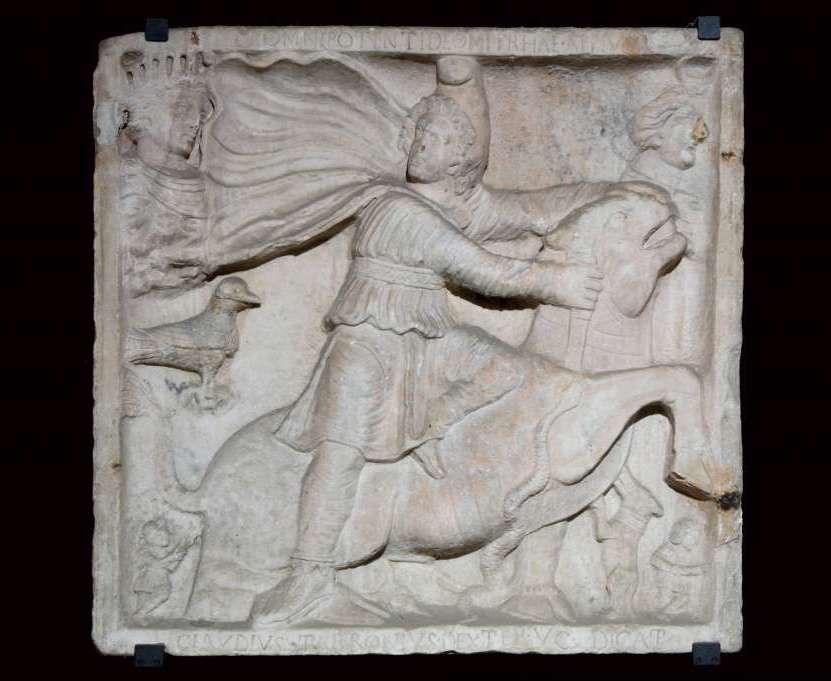
The marble relief of Mithras killing the bull in Naples bears an inscription that calls the solar god omnipotentis.
Marble plate inscription dedicated to Deo Soli Invicto Mithrae for the wellbeing of Emperor Commodus, dated 180-192 A.D., from Aïn-Tekria.
Punic ex-voto to Tanit bearing the formula 'Meqim Elim Mithrahastarni', tentatively interpreted as a Mithras reference but pre-dating the Roman cult.
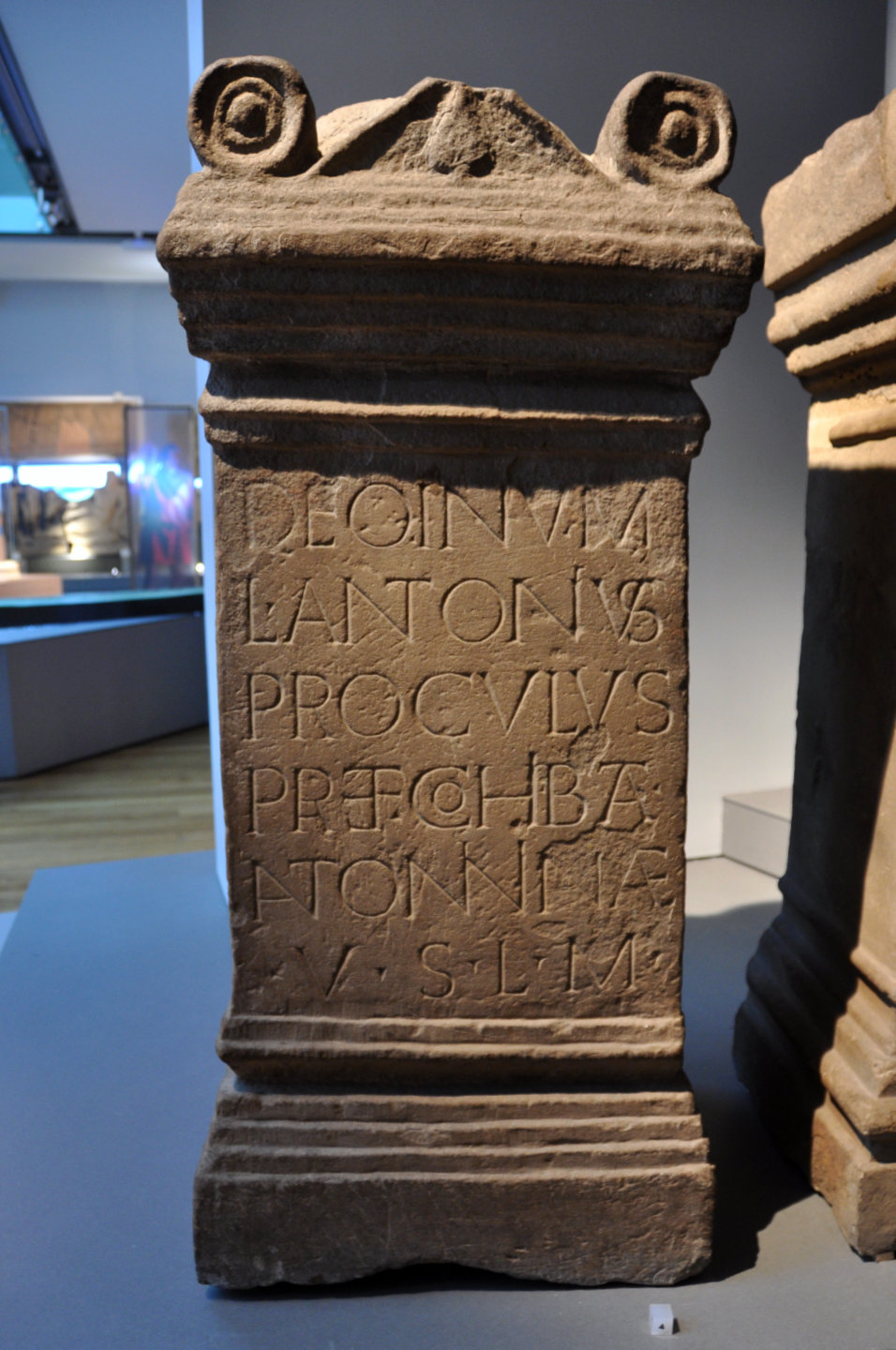
One of the three altars to Mithras found at the Mithraeum of Carrawburgh fort.
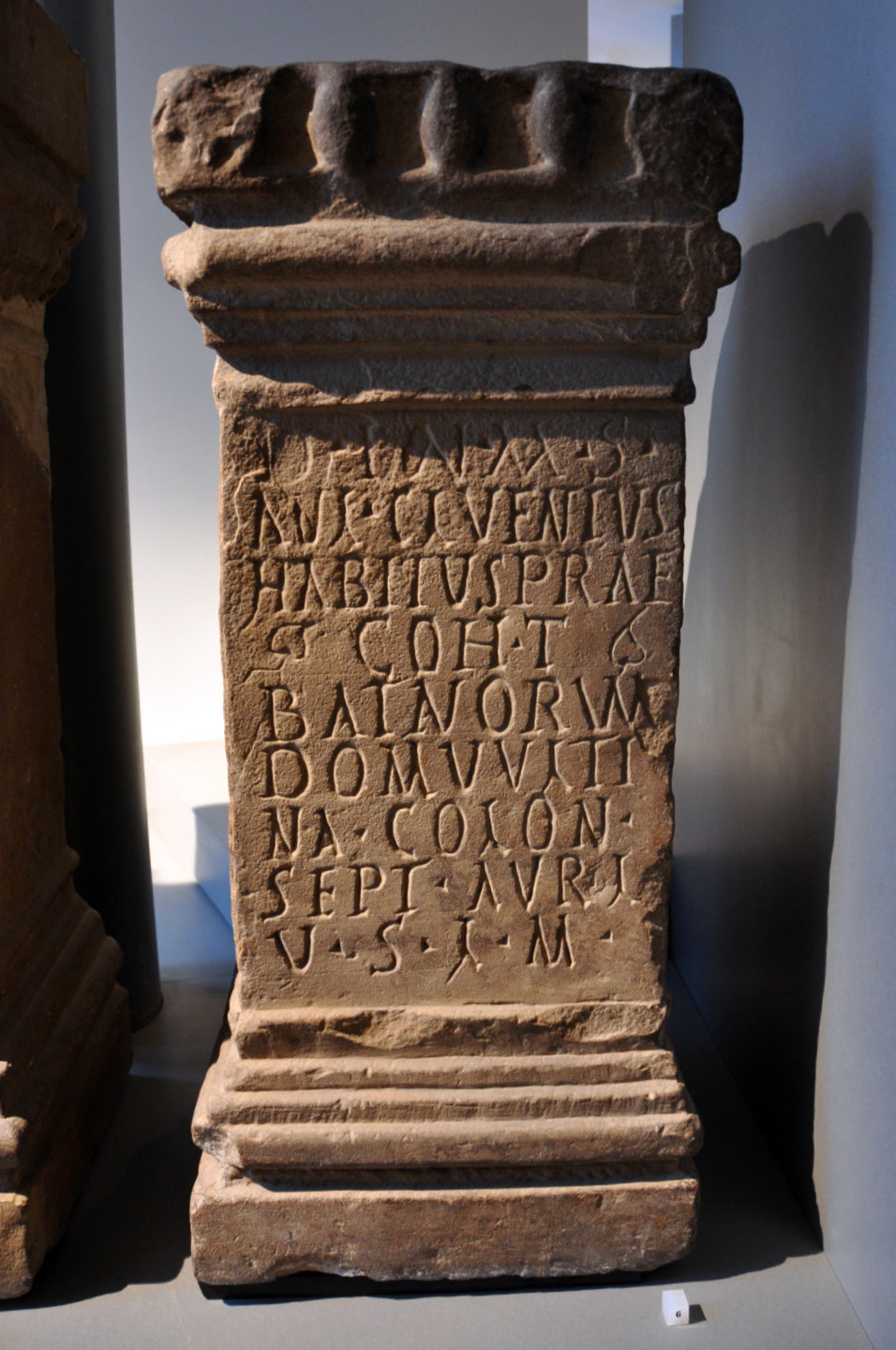
One of the three altars to Mithras found at the Mithraeum of Carrawburgh fort.
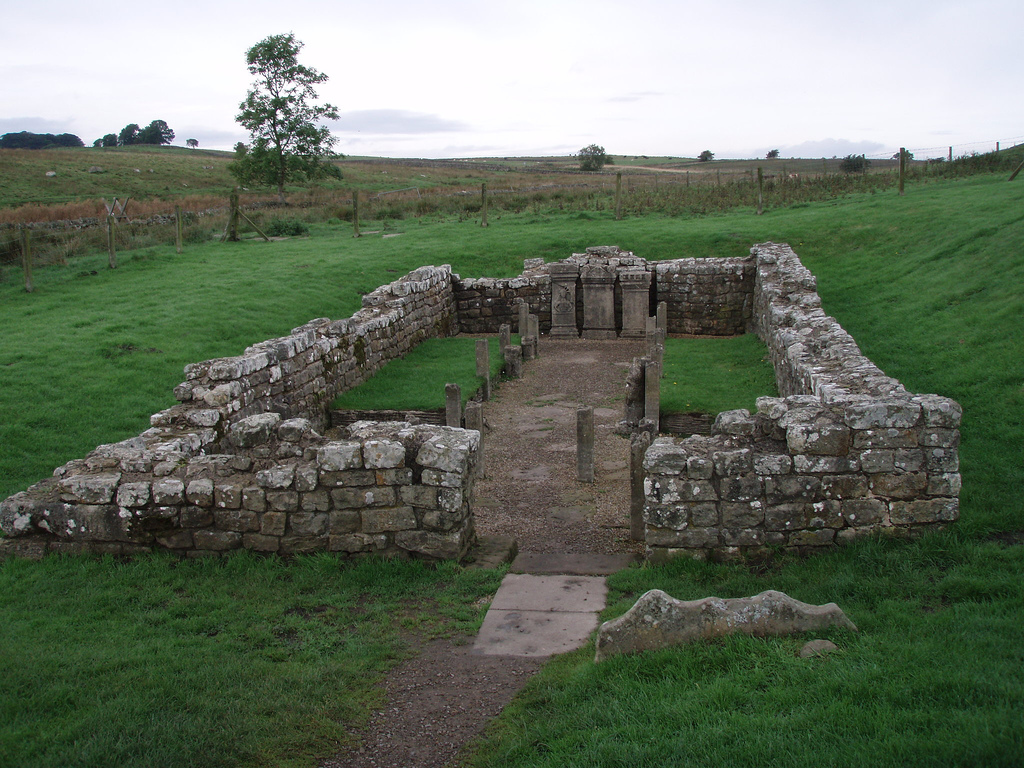
The temple of Mithras of Carrawburgh, Brocolita, disclosed three main stages of development, the second exhibiting two reconstructions.
Epigraphic monument from Tripolitania preserving a corrected reading discussed in later scholarship.
Partial list of Mithraic initiatory grade titles attested in inscriptions from the Mithraeum of Dura-Europos, Syria, 3rd century A.D.
Rough-hewn statuette found at Emir Ghasi in Lycaonia, once thought to represent a Mithraic soldier; according to Cumont, a modern forgery.
Marble bust from the south-east slope of the Acropolis at Athens, from the Attic mountain Pentelikon, depicting a man with an uncovered breast and mantle; probably Mithras, though the head is lost.
Fragmentary Greek inscription from Sinitovo, Thracia, preserving only the epithet epekooi — the listening one — and a partially legible name beginning with Audios.
Fragment of a marble tauroctony relief found between Sinitovo and Tatar-Bazardjik, Thracia, preserving only the upper portion with the busts of Sol and Luna; the Greek inscription in the border names the dedicant.
Two marble relief fragments from Dolni Vadin, Thracia, one showing Sol's chariot and the other the right lower corner of a bull-slaying scene; the two fragments may not belong to the same relief.
