Your search Quirinalis, Via Rasella gave 94 results.
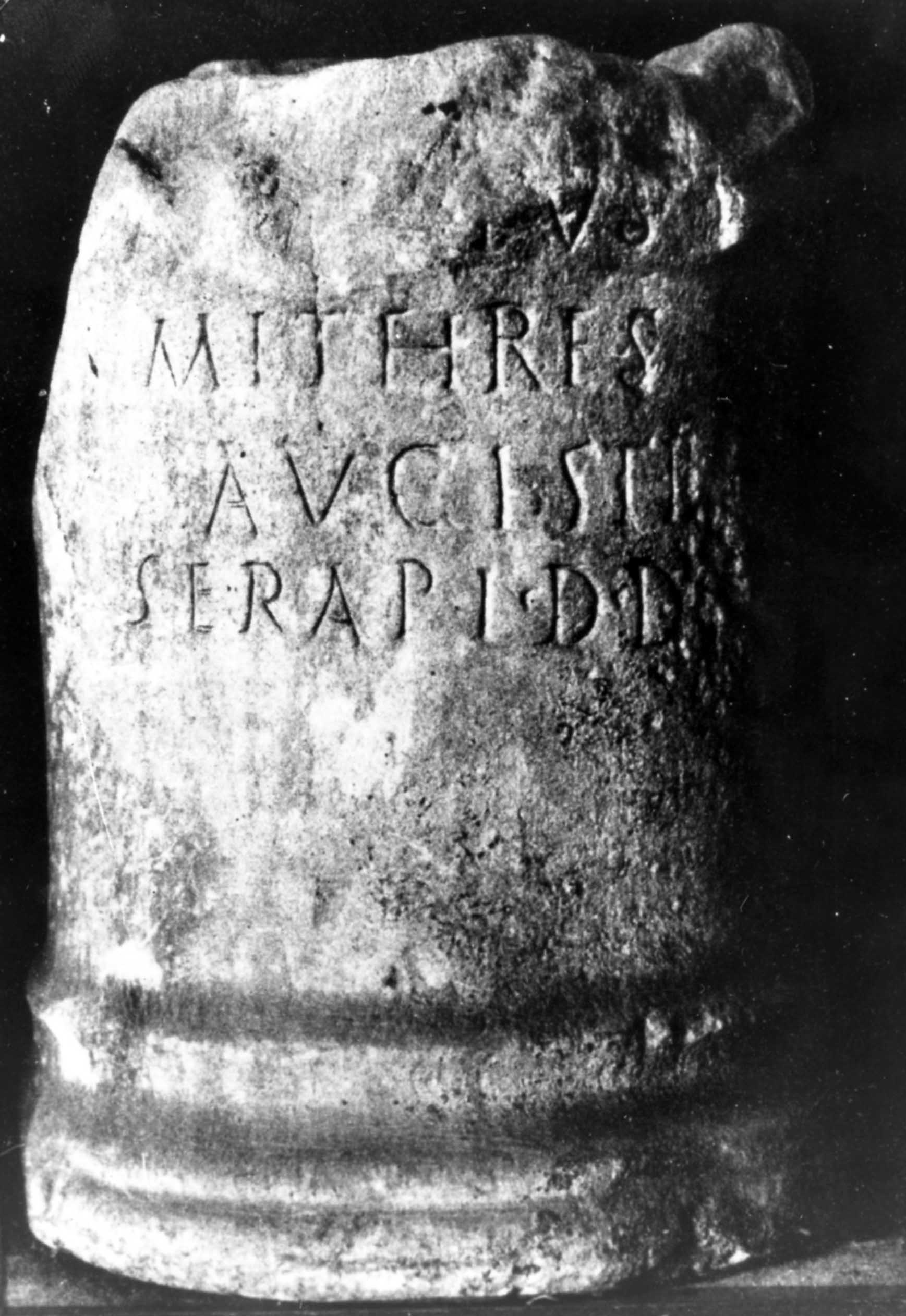
This monument, found in the Domus Flavia in Rome, bears an inscription by a certain Aurelius Mithres.
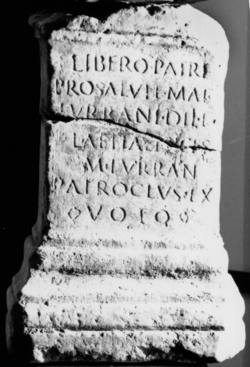
This altar was erected by Hermadio, who also signed other monuments in Dacia and even in Rome.

Marble torso found at Ostia in 1912 between the Decumanus and the Via dei Molini, dedicated to Mithras by a certain Atilius Glyco.
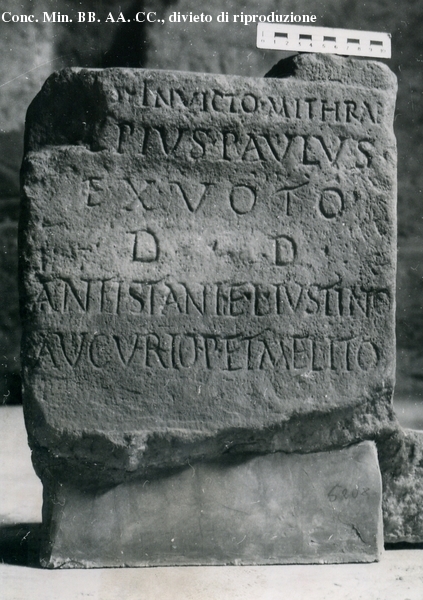
Small marble base, found in one of the private houses along the Via Sacra nearly opposite to the Basilica of Constantine, Rome.

Thessalonike became one of the principal urban centres of the Balkans and the Via Egnatia corridor.
Philippi became an important Roman colony in eastern Macedonia along the Via Egnatia.

A subterranean room with a stucco depiction of Mithras slaying the bull, probably from the fourth century, discovered at Agurzano near Ponte Mammolo on the Via Tiburtina outside Rome.
A marble slab reused as a tombstone in Comodilla's catacombs near the Via Ostiense in Rome, originally inscribed by Titus Flavius Eutychus as a gift to the Invincible and Holy god.
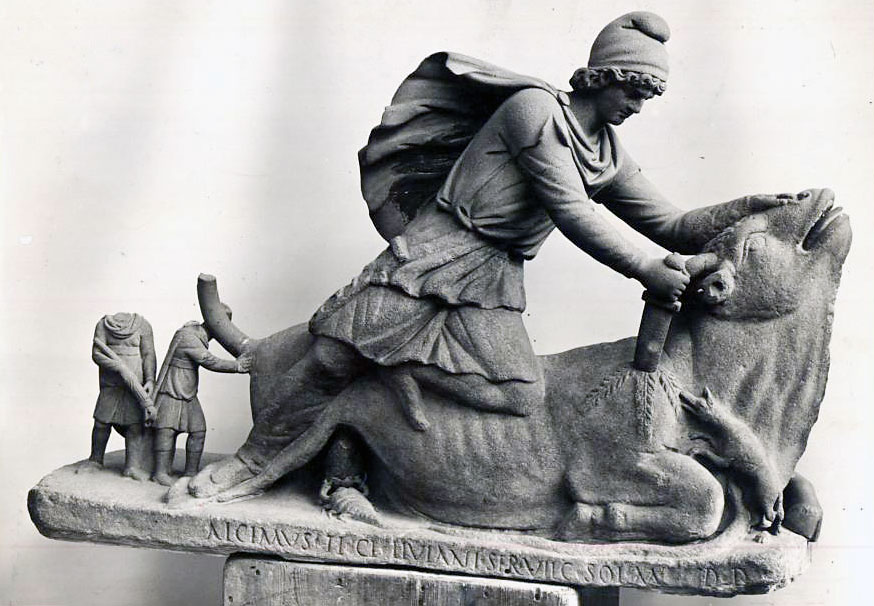
Wall-painting of Mithras tauroktonos in fresco, discovered in 1886 in an underground room of the house of the Nummi Albani on the Quirinal (Via Firenze); the god wears a red cap and tunic, the torchbearers wear yellow or orange tunic and cap with green or brown anaxyrides…
Small semi-round base found on the Monte Quirinale in Via Mazzarini, from a small Mithraeum, with a dedication to Mithras by T. Camurenus Philadelfus through Nonius Firmus pater.
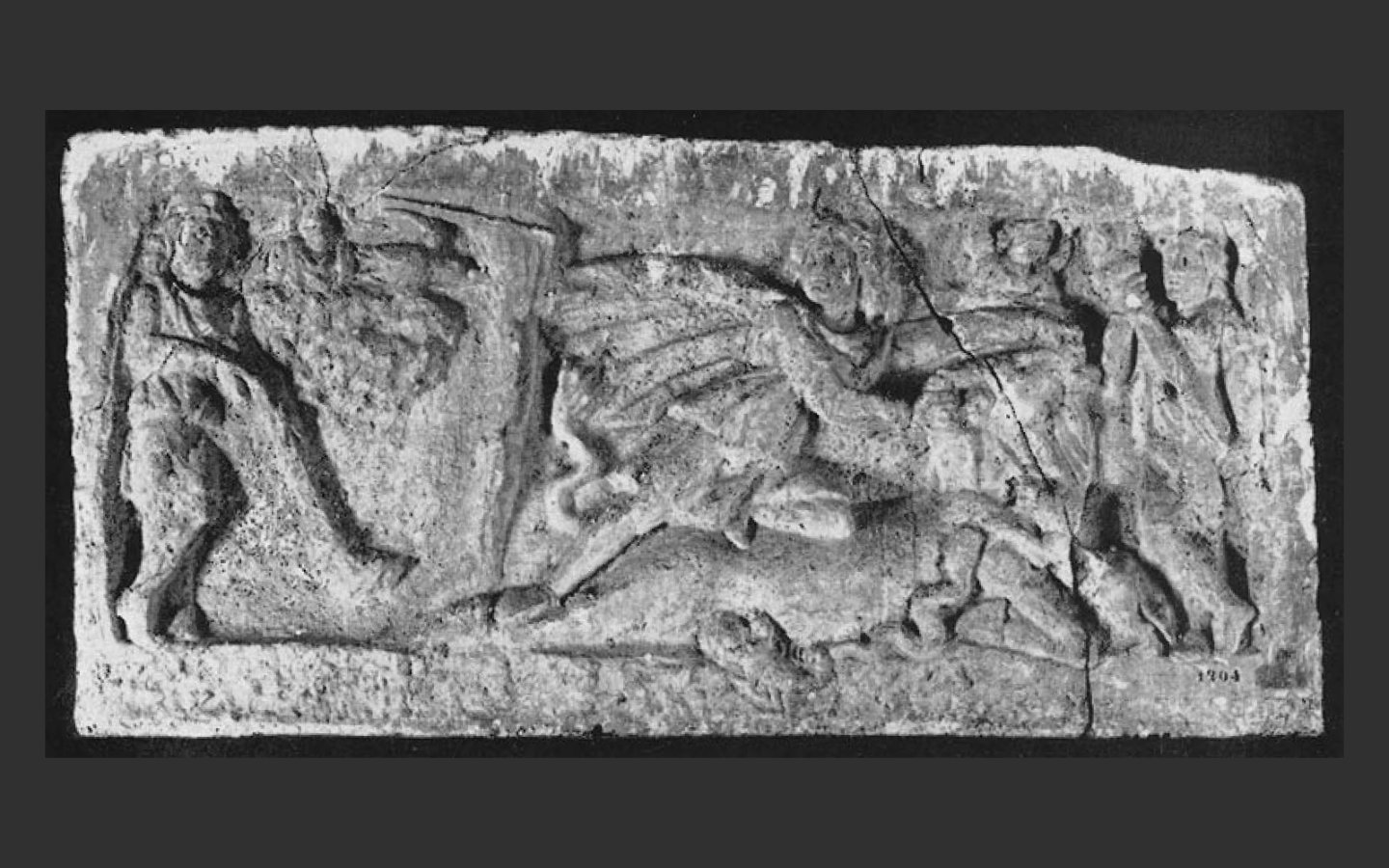
This relief of Mithras Tauroctonos from Rome bears the inscription of three brothers, two of them lions.
Limestone altar from Oescus, Moesia Inferior, dedicated to Deo invicto by Tettius Plotus, veteran of Legio IIII Flavia Fidelis and pater sacrorum — one of the clearest grade attributions from Moesia Inferior.
Fragmentary inscription from Fellbach, Germania Superior, preserving only the abbreviated name of Mithras.
Small fragmentary inscription from the Mithraeum at Dieburg preserving only the abbreviated dedication D(eo) i(nvicto) M(ithrae)
A brief dedicatory inscription carved in the lower corner of the tauroctony relief from near Vicus Matrini on the Via Cassia in Etruria, recording L. Avillius Rufinus as dedicant.
A marble relief depicting Cautopates as a standing cross-legged torchbearer in Eastern attire with his burning torch pointing downwards, found in Rome near the Via Appia and now in the Museo Nazionale delle Terme, the head and much of the torch lost.
A marble relief depicting Cautes as a standing cross-legged torchbearer in a short tunic and Phrygian cap with torch upraised and left hand lost, found in Rome near the Via Appia and now in the Museo Nazionale delle Terme.
Fragment of a small white marble relief showing Cautes in tunica manicata and long cloak with an upraised flaming torch, from the Mithraeum at the Palazzo dei Musei, now at Via Portico d'Ottavia 29, Rome.
Pair of white marble statues — Cautes with upraised torch and a cock, and Cautopates with a bird at his feet — found in 1886 on the north side of the Palatine between the hill and Via S. Teodoro, with traces of red painting on base and sides.
