Your search Roman cemetery of St. Matthias gave 2753 results.
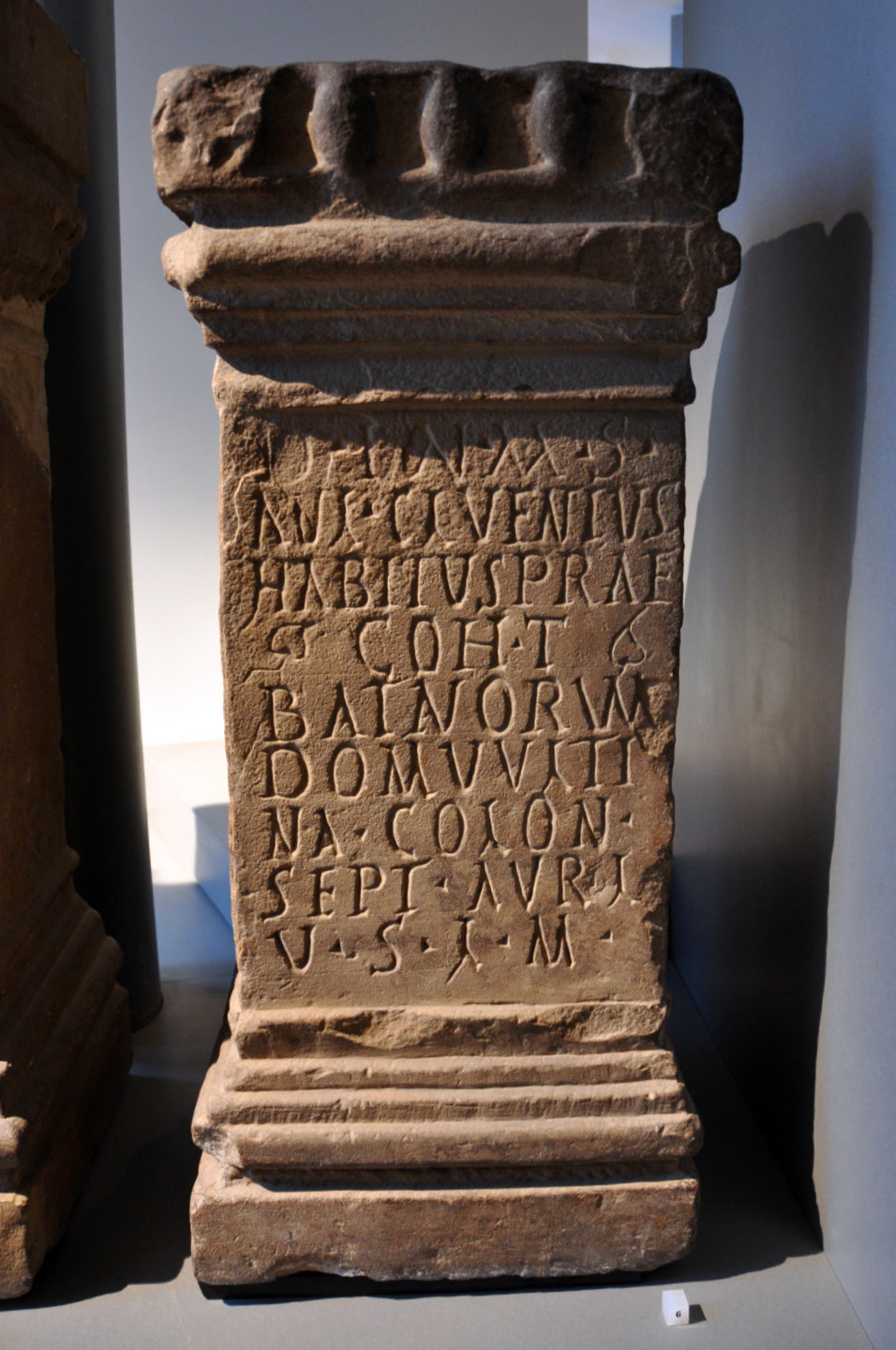
One of the three altars to Mithras found at the Mithraeum of Carrawburgh fort.

Fragmentary inscription from Tomis, Moesia Inferior, preserving only the garbled closing formula votum pusuit (for posuit).
Inscription from Drmno, Moesia Superior, dedicated to Deo invicto Mithrae by a naucleros — a ship-owner or navigator — who arranged the erection of the monument.
Mithraic sanctuary found at Sárkeszi near Székesfehérvár, Pannonia Inferior, in a place called Ságvölgyi; yielding altars, tauroctony reliefs, and cult objects.
Fragment of a Mithras relief from Zsámbék near Aquincum, Pannonia Inferior, showing seven altars alternated with trees — a processional or decorative border rather than a main tauroctony scene.
Small altar found in 1843 at Sankt Johann in the Saan valley, Noricum, dedicated to Deo invicto Mithrae by Sextus Masclinus.
A skull and two human femora, the lower jaw missing, recovered from a small circular pit within the Mithraeum at Königshoffen; interpreted by Cumont as a parallel to ritual deposits of human remains in other Oriental sanctuaries on the Janiculum.
Altar from the Mithraeum at Königshoffen, dedicated in honour of the Domus Divina to Deo invicto Mithrae by a dedicant whose name is partially preserved and may be read as Secundus or Secundinus.
Altar from the Mithraeum at Königshoffen, dedicated to Deo Cissonio — a Celtic god identified with Mercury — by Gittonius Pippausus; the dedicant's Celtic name may be etymologically connected to that of the deity.
Altar from the Mithraeum at Königshoffen, dedicated in honour of the Domus Divina to Deo invicto Mithrae by Matto, son of Gnatus.
Fragmentary inscription from the Mithraeum at Königshoffen recording a dedication in honour of the Domus Divina to Deo invicto Mithrae; only the opening formula is preserved.
Fragmentary altar from the Mithraeum at Königshoffen preserving only the opening of a dedication to Deo invicto Mithrae and a partially legible dedicant's name beginning with C.

The tauroctonic relief from Dragus includes a naked flying figure that Vermaseren has identified as Phosporus or Lucifer.
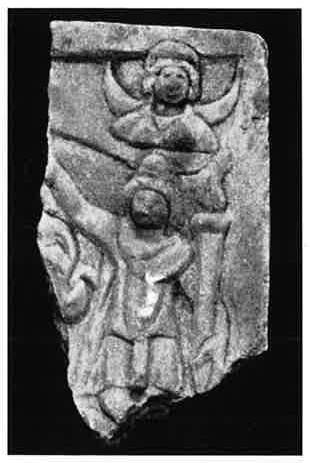
White marble tauroctony fragment from Turda, Dacia, preserved in the Deva Museum, showing only the forepart of Mithras killing the bull with the god's snout.
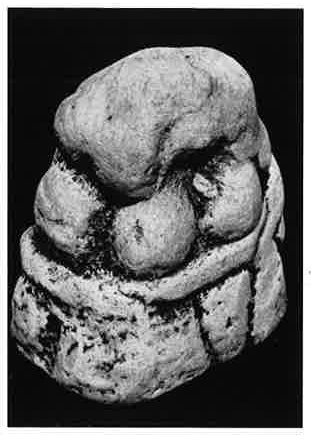
White marble rocky base encircled by a serpent from the Mithraeum at Sarmizegetusa, Dacia, probably the base of a rock-birth group.
Inscription from Sarmizegetusa, Dacia, dedicated to Soli invicto by Lucius Domitius Primanus.
Fragment of an altar from Sarmizegetusa, Dacia, preserving only the opening of a dedication to Deo invicto Mithrae.
Upper portion of a white marble column from the Mithraeum at Sarmizegetusa, Dacia, bearing the abbreviated dedication to Soli invicto Mithrae.
Inscription from Sarmizegetusa, Dacia, dedicated to Soli invicto Mithrae by Cornelius Cornelianus ex voto.
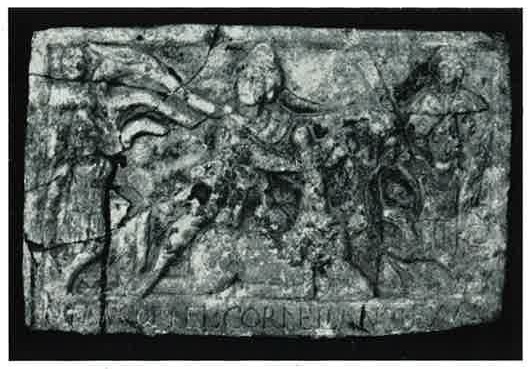
Marble tauroctony relief from Sarmizegetusa, Dacia, in the Deva Museum, depicting Mithras killing the bull; one of several reliefs attributed to the Sarmizegetusa sanctuary that were found elsewhere.
