Your search San Giovanni al Timavo gave 3161 results.

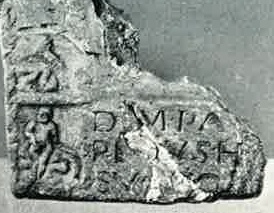
Lower portion of a red sandstone stele of Cautes from Mithraeum I at Stockstadt, cross-legged, with a dedicatory inscription on the base
Double-sided white sandstone relief from Mithraeum I at Stockstadt, with Mithraic imagery on both faces
Fragment of a sandstone relief from Mithraeum I at Stockstadt depicting a beardless figure in a velum, identified as a wind or winter deity
Large red sandstone tauroctony relief from Mithraeum I at Stockstadt, mostly thrown into the river Main when the sanctuary was destroyed
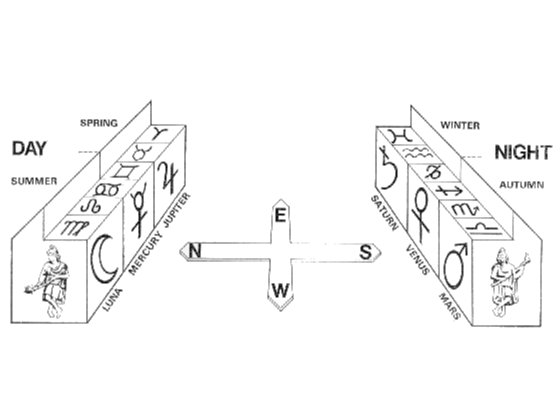
The rich mosaics of the Mithraeum of the Seven Spheres include the the signs of the Zodiac.
The inscription is carved into two pieces of marble cornice.
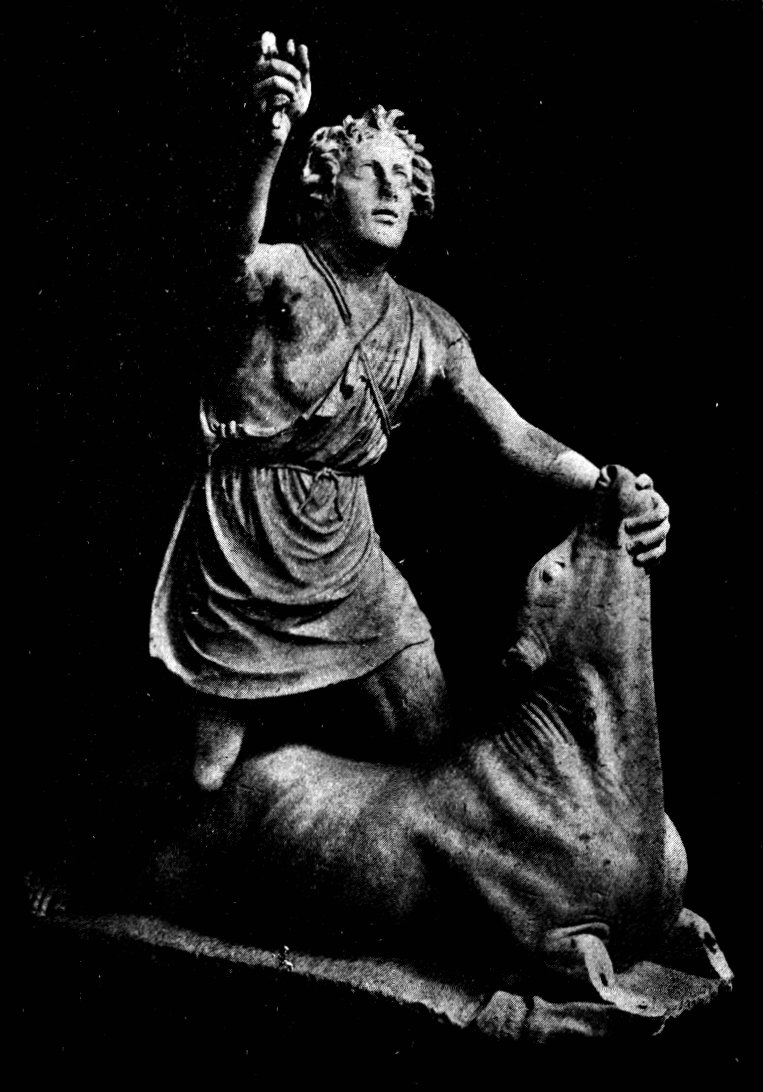
The person who commanded the sculpture may have been M. Umbilius Criton, documented in the Mitreo della Planta Pedis.
Gold lamina from Ciciliano showing a nude, serpent-entwined Aion-Kronos holding a key and surrounded by Greek voces magicae (2nd c. CE).

Ciciliano is a comune in the Metropolitan City of Rome in the Italian region of Latium, located about 35 kilometres east of Rome.
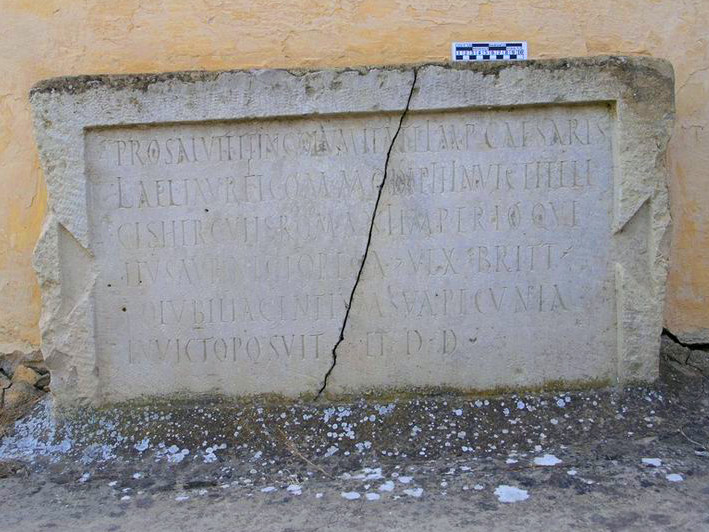
One of the two inscriptions by Aurelius Nectoreca, a follower of Mithras, found in Meknès, Morocco.
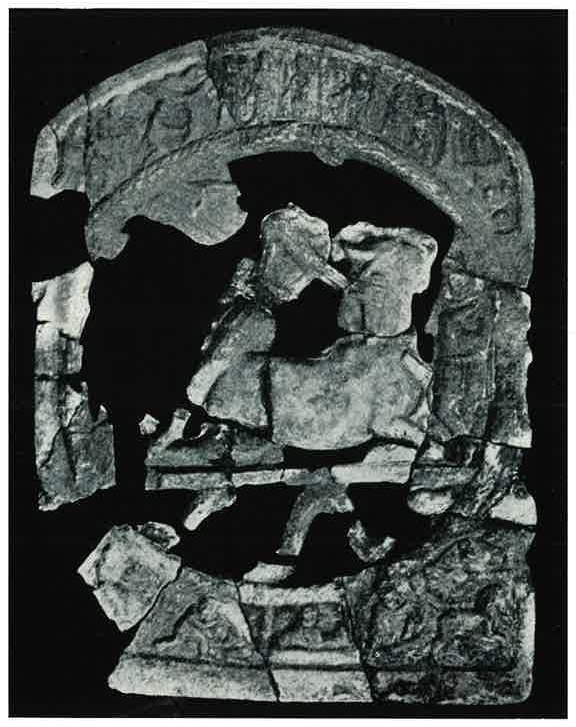
White marble tauroctony relief in several fragments from the Mithraeum at Biljanovac, Moesia Superior, depicting the standard bull-slaying with the full iconographic programme.
Bronze handle of a knife or dagger reportedly originating from Narbo and formerly preserved in major private collections.
Fragmentary marble relief with the hind legs of a bull once interpreted as Mithraic but considered doubtful by Vermaseren.
Second-century Mithraeum discovered in the lower storey of the Curia complex at Cosa.
Mithraic monuments associated with Ceionius Iulianus Kamenius and linked with the inscriptions discussed in entries 395A–B.
Fragmentary relief from the area of the Porticus of Pompey once interpreted as Mithraic but later identified as a representation of Victoria.
Marble inscription discovered near the Via Cupa mentioning an offering to the invincible Mithras by Apollonius Tetes Syras of Marcianopolis.

White marble tauroctony relief from Sofia, ancient Serdica in Thracia, found near the Church of St. Kral, depicting the standard bull-slaying with the full iconographic programme.
Small white marble relief from Kostolac, ancient Viminacium in Moesia Superior, depicting the sacred repast of Mithras and Sol: two reclining figures behind a three-legged table (tripod), in an arched niche.
Right portion of a limestone Cautes relief from Kostolac, ancient Viminacium in Moesia Superior, depicting Cautes standing on an elevation in Oriental dress — not cross-legged — with a semicircle above him, probably Sol's nimbus.
