Your search San Giovanni al Timavo gave 3157 results.

Inscription from Turda, ancient Potaissa in Dacia, dedicated to Soli invicto Mithrae by Aurelius Victorinus.
Inscription from Turda, ancient Potaissa in Dacia, recording a dedication by Aurelius Dolens, miles of a legion, ex voto.
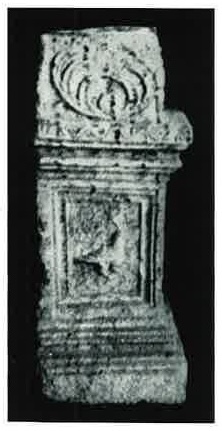
Inscription from Aquincum, Pannonia Inferior, dedicated to Deo invicto Mithrae by Caelius Anicetus with his son.
Lost inscription from Carnuntum, Pannonia Superior, dedicated to Soli invicto deo by Quintus Livinius Senecio, veteran of Legio XIIII Gemina; dated to the second or third century.
Inscription from Mithraeum II at Ptuj, ancient Poetovio, dedicated to Deo Soli invicto Mithrae by Ulpius, a veteran, for himself and his family.
Inscription from Mithraeum II at Ptuj, ancient Poetovio, dedicated to Deo Soli Mithrae by Ulpius Lupus for his own welfare.
Inscription from Mithraeum II at Ptuj, ancient Poetovio, dedicated to Deo Soli invicto Mithrae for the welfare of Flavius Iovinus, who had vowed the gift after witnessing the birth of the god; dated to the consulship of Peregrinus and Aemilianus, AD 244.
Fragment of a large marble relief from Mithraeum II at Ptuj, ancient Poetovio, preserving the forepart of the bull, the leaping dog, and the serpent approaching the wound.
Duplicate inscription from Mithraeum I at Ptuj, ancient Poetovio, set up by Primitivos in memory of Hyacinthus; a companion piece to no. 1501, suggesting that the two inscriptions flanked the cult niche.
Inscription from Mithraeum I at Ptuj, ancient Poetovio, dedicated to Cautes sacrum by Venulus, slave of Aponius Ingenuus.
Inscription from Sisak, ancient Siscia, dedicated to Iovi optimo maximo, Soli invicto, and the Genius loci by Aurelius Antiocianus; the Mithraic character is uncertain.
Marble fragment from the Zollfeld at Virunum, Noricum, bearing a dedication to Deo invicto Mithrae for the welfare of the Emperor Antoninus Augustus.
Inscription from Virunum, Noricum, dedicated to Deo Soli invicto by Iuventinus, who identifies himself with the Mithraic grade leo — one of the clearest grade attributions in the epigraphic record of Noricum.
Ara litteris rubricatis from Mainz, ancient Mogontiacum, dedicated to Deo invicto Mithrae, with the dedicant's name only partly legible
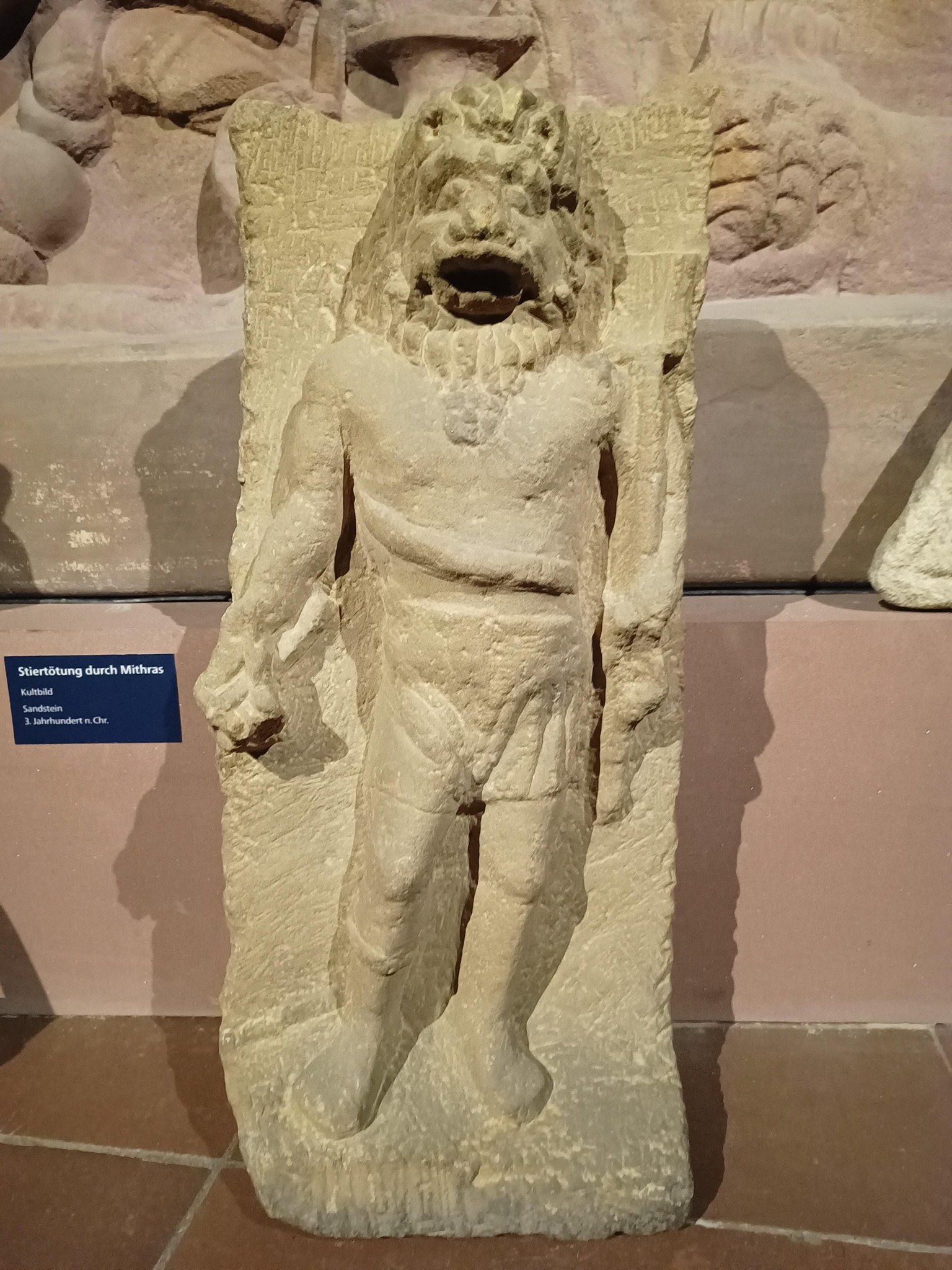
This lion-headed figure from Nida, present-day Frankfurt-Heddernheim, holds a key and a shovel in his hands.

Burgos is a city in the autonomous community of Castile and León in Spain.
Dura-Europos was a Hellenistic, Parthian and Roman frontier city built on the Euphrates River. It was founded around 300 BC by Seleucus I Nicator. The Romans took Dura-Europos in 165 AD.
The area was populated by Iberians, but the origins of Baetulo date back to the 1st century BC, when the Romans founded the city on the Rosés hill. Baetulo was famous for its vineyards, which produced wine for export throughout the Empire.
