Your search San Giovanni al Timavo gave 3159 results.

Large marble base from near Kutyamál at Apulum, Dacia, dedicated ex iussu dei Apollinis and naming the Fons Aeternus — the eternal spring — by Ulpius Proculinus, speculator of Legio XIII Gemina.
Limestone base from near the Kutyamál vineyard south of the fortress at Apulum, Dacia, decorated with Bacchic vine scrolls and grapes at the top.
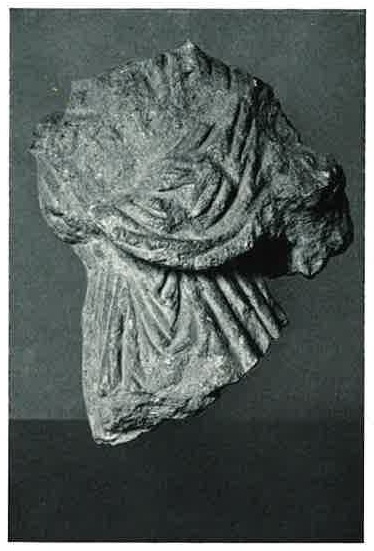
Limestone statue torso from the Mithraeum at Apulum, Dacia, found with the preceding piece, depicting a person in Oriental dress carrying a bull's head in his left hand; head, arms, and legs are lost.
Fourth Mithraic sanctuary discovered near the southern town-wall of Aquincum, Pannonia Inferior, between a rectangular building and an apsidal structure; excavated in 1941–42 and yielding the most complete sculptural assemblage from the city.
Sandstone statue from near Mithraeum III at Aquincum, Pannonia Inferior, depicting a lion to the right with an open frontal mouth, holding an ox head between its forefeet with a red-painted tongue.
Third Mithraic sanctuary at Aquincum, Pannonia Inferior, between the Amphitheatre and the Krempelmühle, attested by five altars and a decorated mosaic; the building itself is not fully known.
Second Mithraic sanctuary discovered at Altofen in 1888, Pannonia Inferior; rectangular (15.03 × 7.06 m) and raised two metres above ground, with benches and a cult niche; one of the most fully excavated Mithraea from the Danubian region.
Two sandstone fragments from Mithraeum III at Carnuntum, Pannonia Superior, comprising a base with one leg and a downward torch, and a Phrygian-capped head of Cautopates; probably stood at the beginning of the benches alongside the Cautes statue.
Fourth Mithraic sanctuary discovered at Ptuj, ancient Poetovio, at Zgornji Breg in 1937; the sanctuary (c.14 × 7 m) is oriented west–east with the standard corridor and bench division, an altar before the cult niche, and a water-basin in the pronaos.
Small circular marble basin from Mithraeum II at Ptuj, ancient Poetovio, probably used for libations or purification within the sanctuary.
Fragment of a marble relief from Mithraeum II at Ptuj, ancient Poetovio, preserving a woman's head adorned with a wreath; probably a secondary deity from the sanctuary's sculptural programme.
Upper portion of a marble plate from Mithraeum II at Ptuj, ancient Poetovio, decorated with a central stem flanked by leaf motifs and a small twig — a purely decorative element from the sanctuary.
Large marble water-basin on a column from Mithraeum II at Ptuj, ancient Poetovio, decorated with a central rosette; it probably stood near the entrance of the sanctuary.
Deposit of twenty-three coins from the Mithraeum at Schachadorf, Noricum, spanning from Claudius II to Valentinianus II and providing a terminus for the sanctuary's use.
Small rectangular Mithraic sanctuary (spelaeum 8.00 m long) found in 1935–36 in a gravel terrace at Schachadorf near Wartberg an der Krems, Noricum; the building is divided into a pronaos and an inner cult room, and shows traces of fire destruction.
Sandstone relief fragment from the Mithraeum at Gimmeldingen preserving the upper bodies of two standing deities: a bearded male, possibly Vulcanus, and a helmeted Minerva with lance.
Small red sandstone statuette of a lying lion from Wiesbaden, ancient Aquae Mattiacae, with snout and hindquarters broken off
Sandstone relief from Wiesbaden, ancient Aquae Mattiacae, found in a subterranean room in 1858, depicting Cautopates in Oriental dress holding a downward torch

Fragment of a white sandstone tauroctony relief from Mainz, ancient Mogontiacum, found reused in the wall of a house in 1864
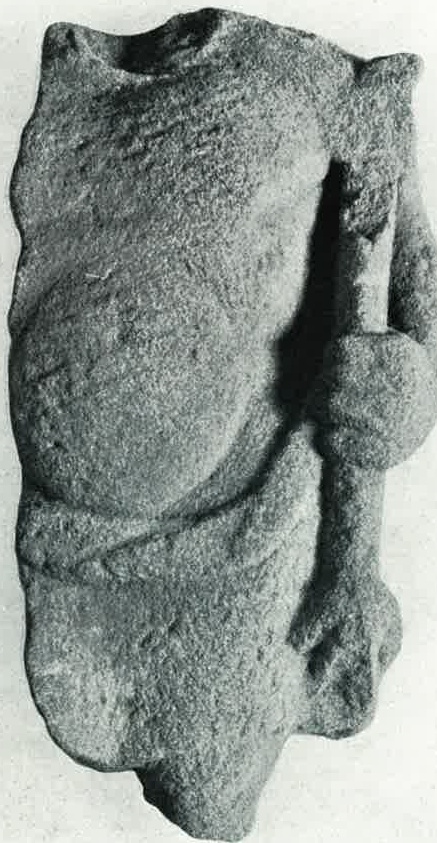
Group of sandstone relief fragments from Rückingen depicting multiple deities including a male head identified as Hercules
