Your search San Valentino in Abruzzo Citeriore gave 587 results.

Upper corner of a sandstone base from the Mithraeum at Königshoffen bearing a fragmentary inscription in which the word Leo is legible, suggesting a Mithraic grade dedication.
Pair of large stone lions from the Mithraeum at Königshoffen, each holding a boar's head beneath its forepaws and painted red on a white ground; they were set at the ends of the podia, flanking the sanctuary.
Badly damaged sandstone statue of a togatus from the Mithraeum at Mackwiller, preserving only fragments of the head and garment.
Sandstone plate from Beihingen in the Neckar valley, depicting on one side a youth in Oriental dress with a bow in an arched niche, and on the other a corresponding figure; both may represent torchbearers or Mithraic grades.
Sandstone slab from Kindenheim, Germania Superior, depicting a standing winged Aion with traces of a lion's mane on the breast and objects in both hands; the head and part of the body are damaged.
Second sandstone lion from Brumath, ancient Brocomagus, of uncertain Mithraic attribution; larger than the inscribed companion piece.
Sandstone lion from Brumath, ancient Brocomagus, with a votive inscription on its base recording a dedication by Tertius; a common Mithraic cult animal.
Sandstone altar found together with the Vocco altar at Rottenburg am Neckar, ancient Solicinium, bearing a fragmentary dedication and decorated with trees on its lateral faces.

Large grey sandstone tauroctony relief from Fellbach near Cannstatt, depicting the bull-slaying in a vaulted grotto with torchbearers, Sol, Luna, and subsidiary Mithraic scenes along the border.
Two rectangular sandstone reliefs from Zasenhausen near Cannstatt, ancient Clarenna, each depicting a male bust with astral symbols on the forehead, arranged in opposing directions.
Small sandstone head in Phrygian cap from Cannstatt, ancient Clarenna, probably belonging to a statue of Cautes or Cautopates.
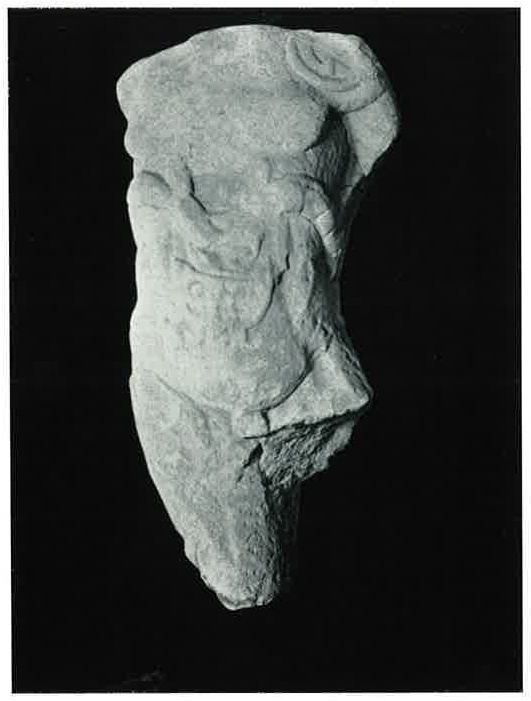
Sandstone statue from Wahlheim, Germania Superior, depicting a naked torso encircled by two serpents holding their heads towards the figure's face — the characteristic iconography of the leontocephaline Aion.
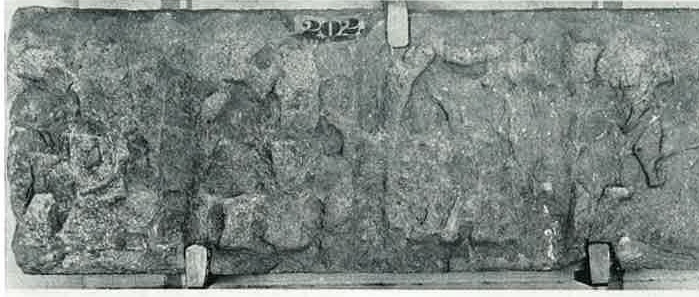
Badly damaged red sandstone relief from Hölzern, Germania Superior, depicting the standard bull-slaying scene; possibly forming part of the border zone of a larger composition.
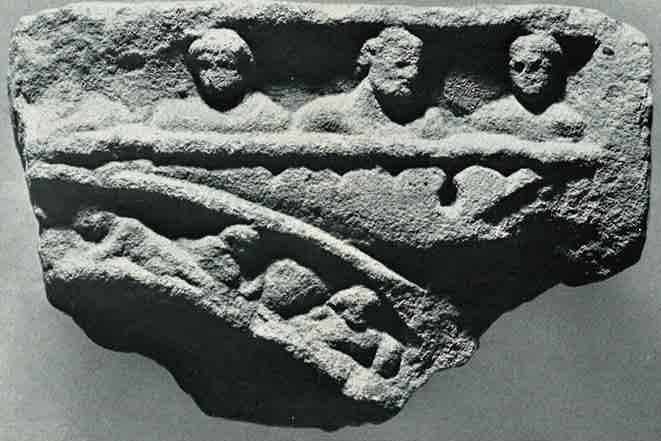
Fragment of a red sandstone relief found in the Frankfurterstrasse at Dieburg, depicting four divine busts in the upper corner of the composition
Various altar and base fragments, two sandstone balls, and two millstone fragments from the Mithraeum at Dieburg
Small yellow-red sandstone altar from the Mithraeum at Dieburg dedicated to Deo sancto Mercurio
Red sandstone altar from the Mithraeum at Dieburg that had been reused, its original inscription obliterated and replaced with a dedication to Deo invicto Mithrae
Small red sandstone fragment from the Mithraeum at Dieburg preserving a head in a Phrygian cap
Two yellow sandstone fragments from the Mithraeum at Dieburg, comprising a base with a foot and another piece with part of a garment and a club
Bust of a diademed woman in red sandstone from the Mithraeum at Dieburg, probably representing Juno
