Your search Sankt Urban gave 106 results.

Pautalia became an important urban and thermal centre in the southwestern Balkans.
Mursa became one of the principal urban centres of Roman Pannonia along the Drava river.
Kabyle became one of the principal urban centres of inland Thrace during the Roman period.
Iuvavum and Ovilava formed two important urban centres connected by the Norican road network.
Iconium, modern Konya, became one of the principal urban centres of Lycaonia and an important crossroads of central Anatolia.
Flavia Solva became one of the principal urban centres of southern Noricum.
The city of Vienna, modern Vienne, became one of the principal urban centres of Roman Gaul along the Rhône corridor.
Augusta Rauricorum became one of the principal urban centres of the Upper Rhine region.
Aguntum became an important urban centre of Roman Noricum near the eastern Alpine routes.

A head in a Phrygian cap, possibly belonging to a torchbearer statue, formerly kept at St. Wendel in Belgica but possibly transported to the Provinzialmuseum in Trier, where it may be identical with CIMRM 993.
Roman settlement of Dacia superior located in the area of present-day Sibiu in Romania. The site became an important urban and military centre, later developed into the medieval city known as Hermannstadt in German and Nagyszeben in Hungarian.
Small altar preserved in the castle of Freudenberg at St. Thomas am Zeiselberg, Noricum, recording a dedication to Hermes invicto Mitrae — an unusual conflation of Hermes and the invincible Mithras.
Column found at Sankt Peter in Holz, ancient Teurnia in Noricum, dedicated to Cautes by Lucius Albius Atticus and Caius Albius Avitus — probably father and son — making it a rare joint family dedication to a Mithraic torchbearer.
Fragmentary marble tablet inscription mentioning Sol Invictus Mithras and a priest, from Tivoli (ancient Tibur), possibly of urban origin.
Ancient region of the Crimean Peninsula associated with the Greek colonies and Roman presence in Taurica.
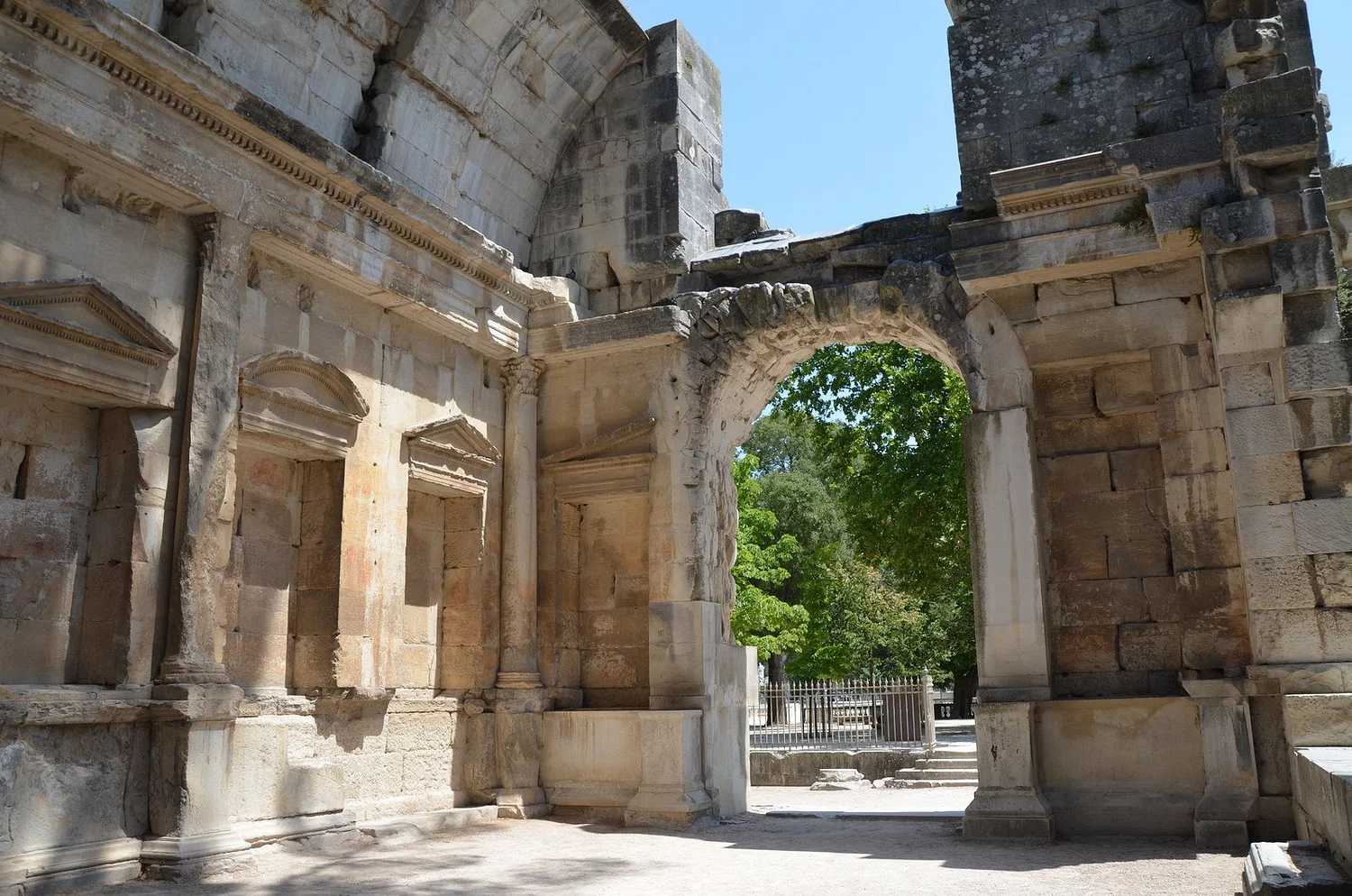
Roman Gallia preserves one of the largest and most geographically diverse corpora of Mithraic evidence in the western empire.
Arabia connected the Roman Near East to caravan routes, desert frontiers and the commercial networks of the southern Levant.
