Your search for Santa Maria Capua Vetere gave 83 results.

Capua is currently a city and comune in the province of Caserta, in the region of Campania, southern Italy, situated 25 km north of Naples, on the northeastern edge of the Campanian plain.
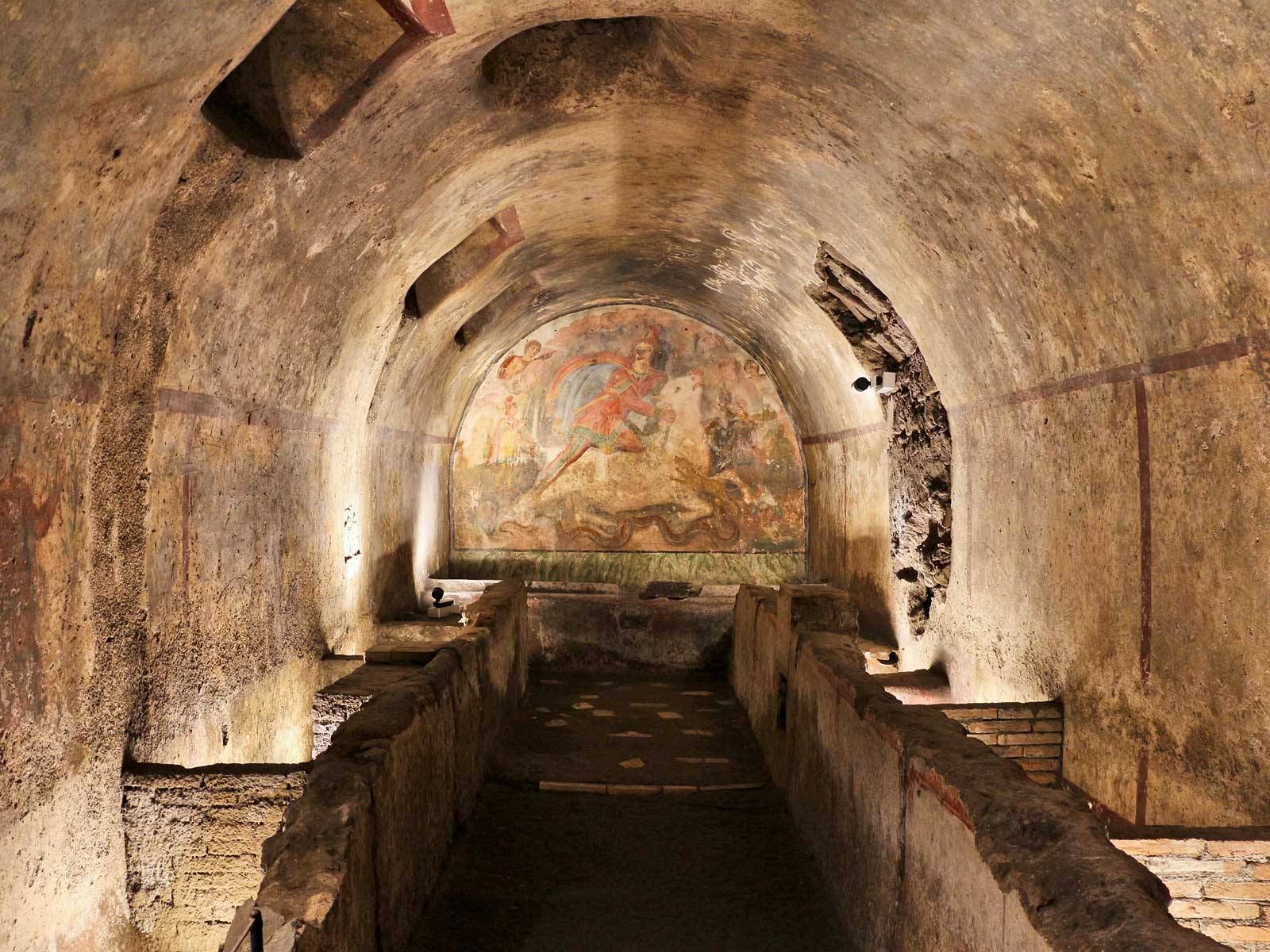
One of Roman Italy’s most important Mithraic sanctuaries, the Mithraeum at S. Maria Capua Vetere preserves a remarkable painted cycle of initiation scenes, offering rare visual evidence for the ritual life of Roman Mithaism.
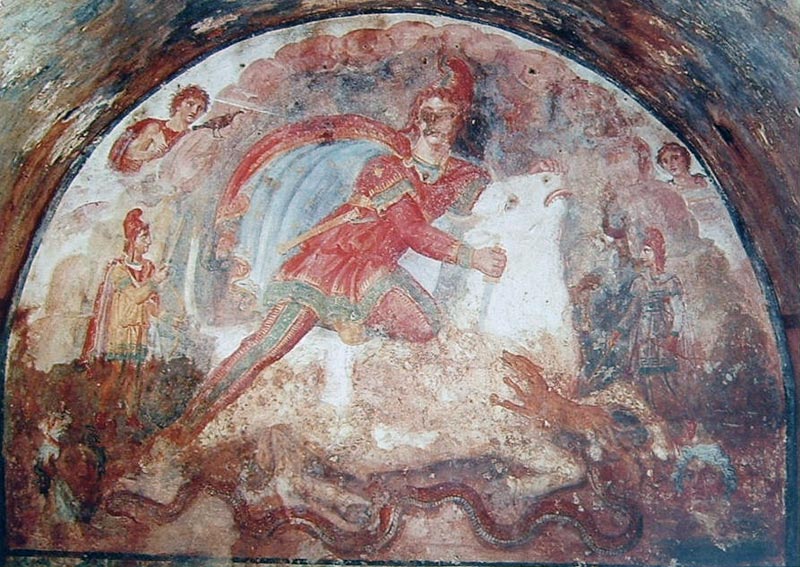
The main fresco of the Mithraeum of Santa Maria Capua Vetere portrays Mithras slaughtering a white bull.
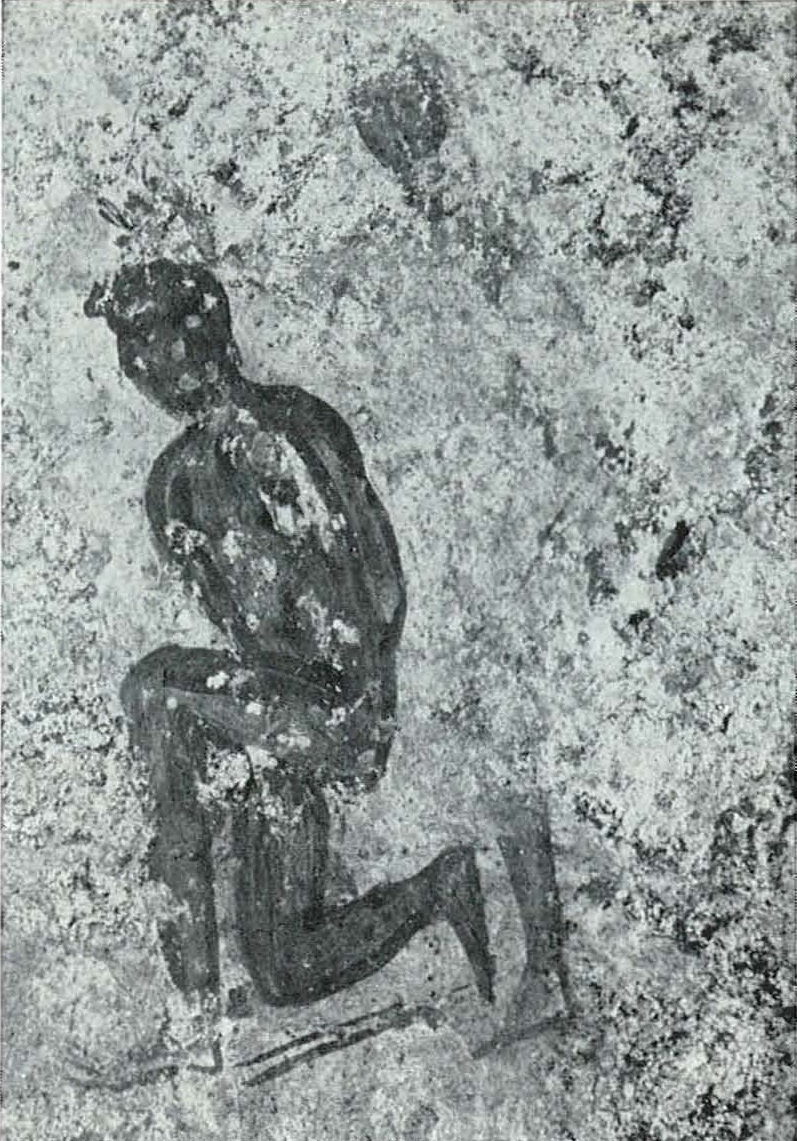
This scene from the frescoes of the Mitreo di Santa Maria Capua Vetere shows a kneeling, naked man surrounded by two other figures.
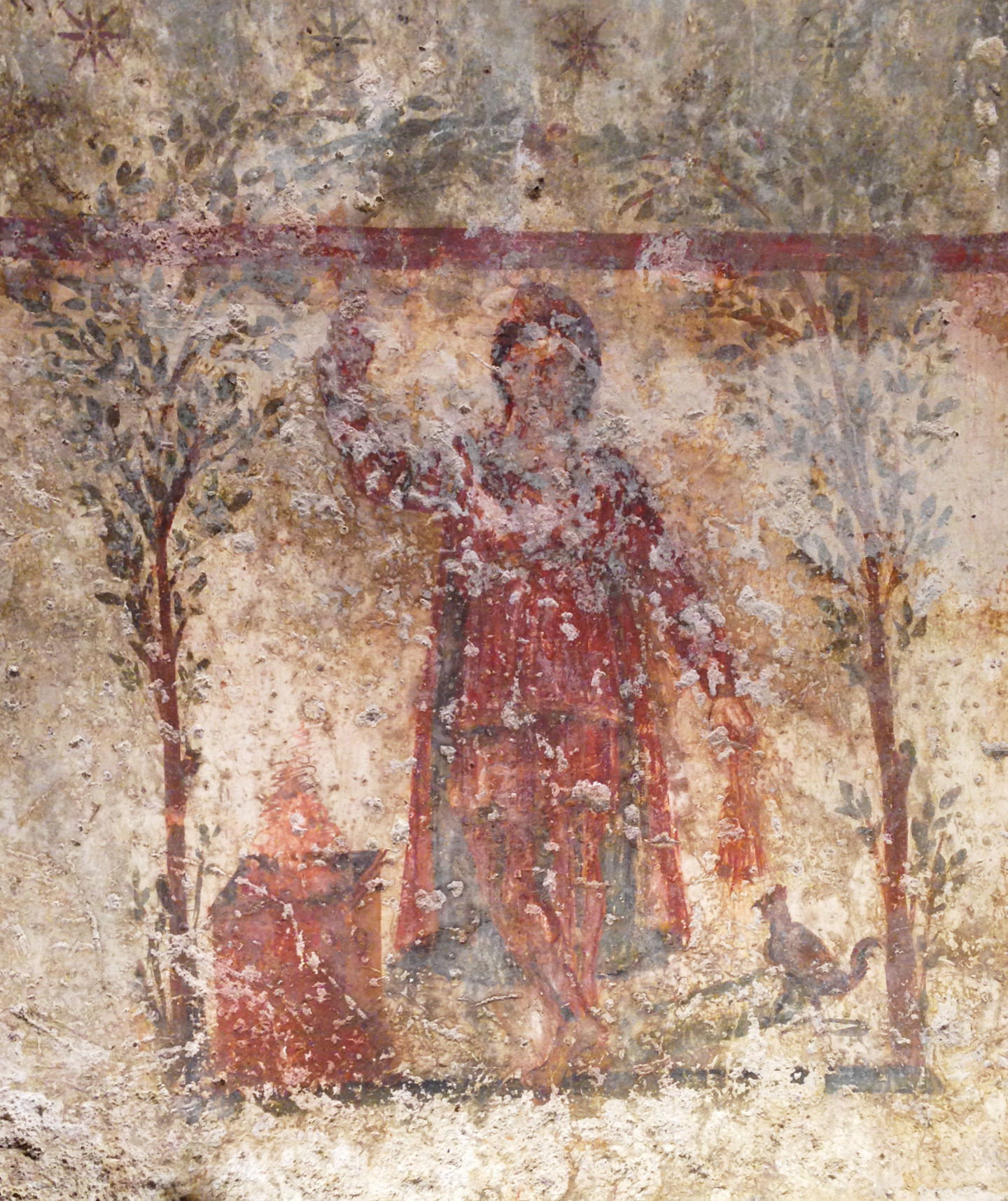
In the Mithraeum of S. Capua Veteres, Cautes stands between two laurel trees.
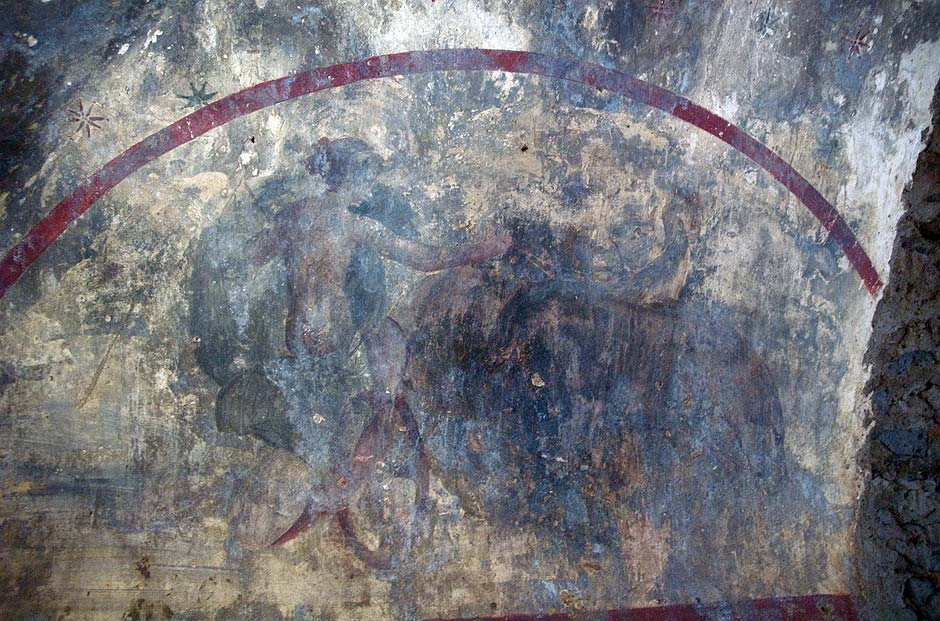
Luna riding a biga in the Mithraeum of Santa Capua Vetere.
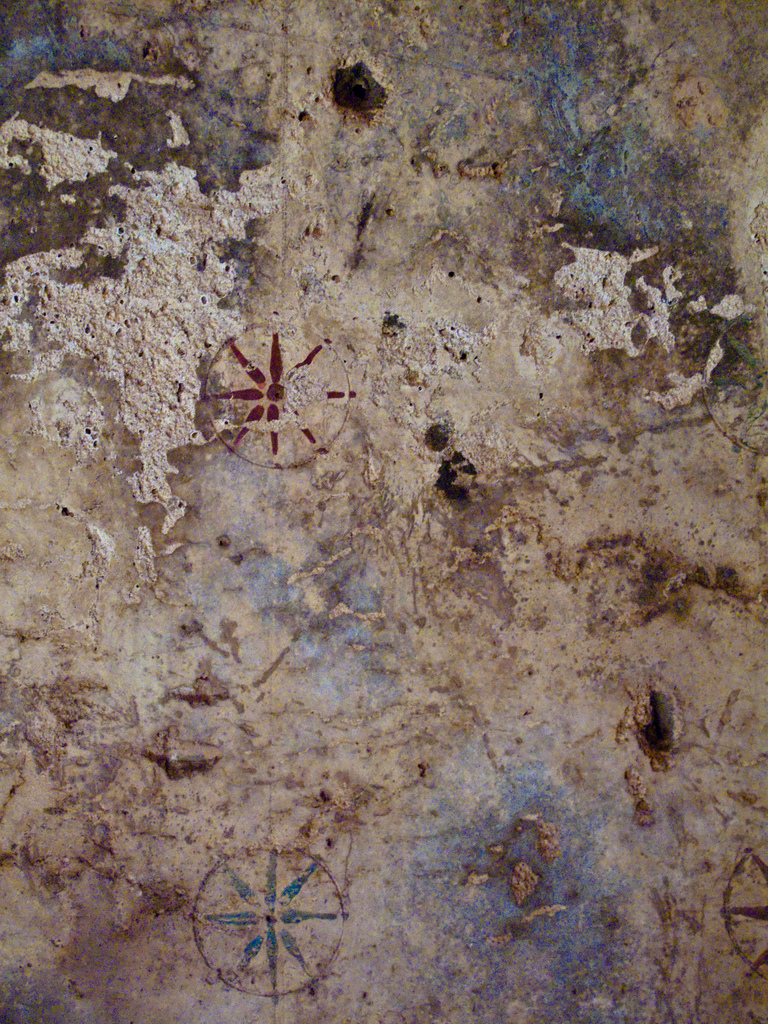
The vault of the Mithraeum in S. Capua Vetere is decorated with stars that have holes in their centers, which once held colorful glass decorations.
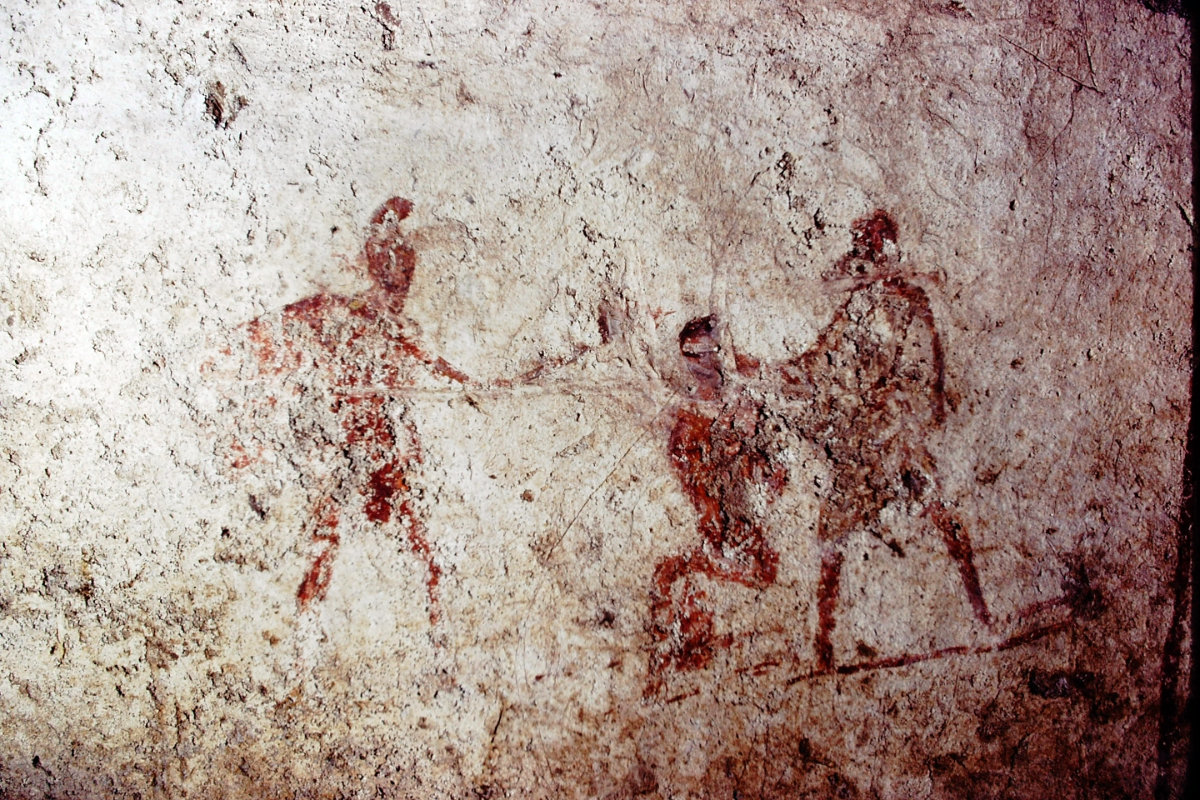
Fresco showing a scene of initiation into the mysteries of Mithras in the Mithraeum of Santa Maria Capua Vetere.
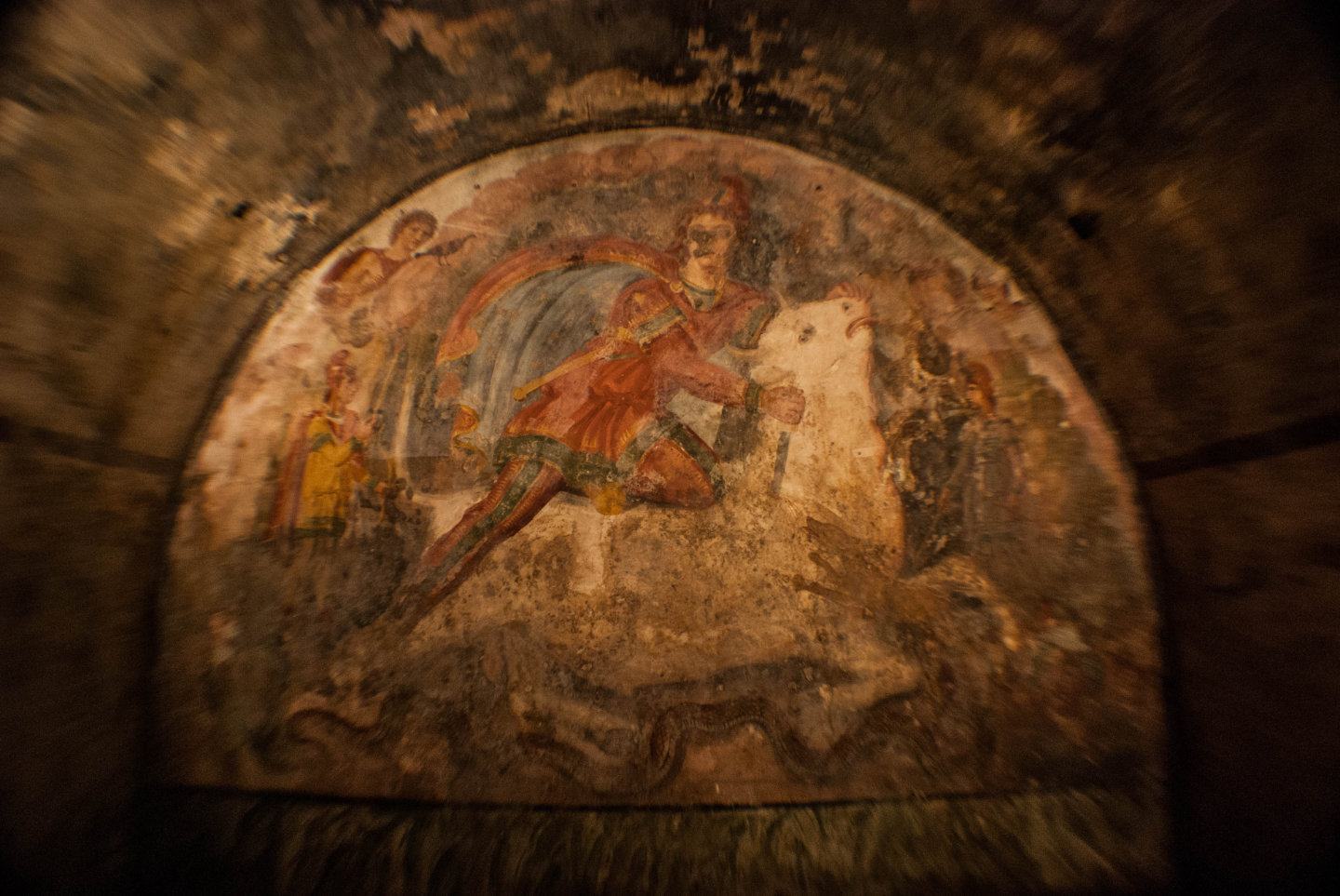
This article revisits the Mithraeum of S. Maria Capua Vetere, one of the most complete and artistically refined Mithraic sanctuaries in the Campanian region, situating it within its archaeological, iconographic, and ritual-historical contexts.
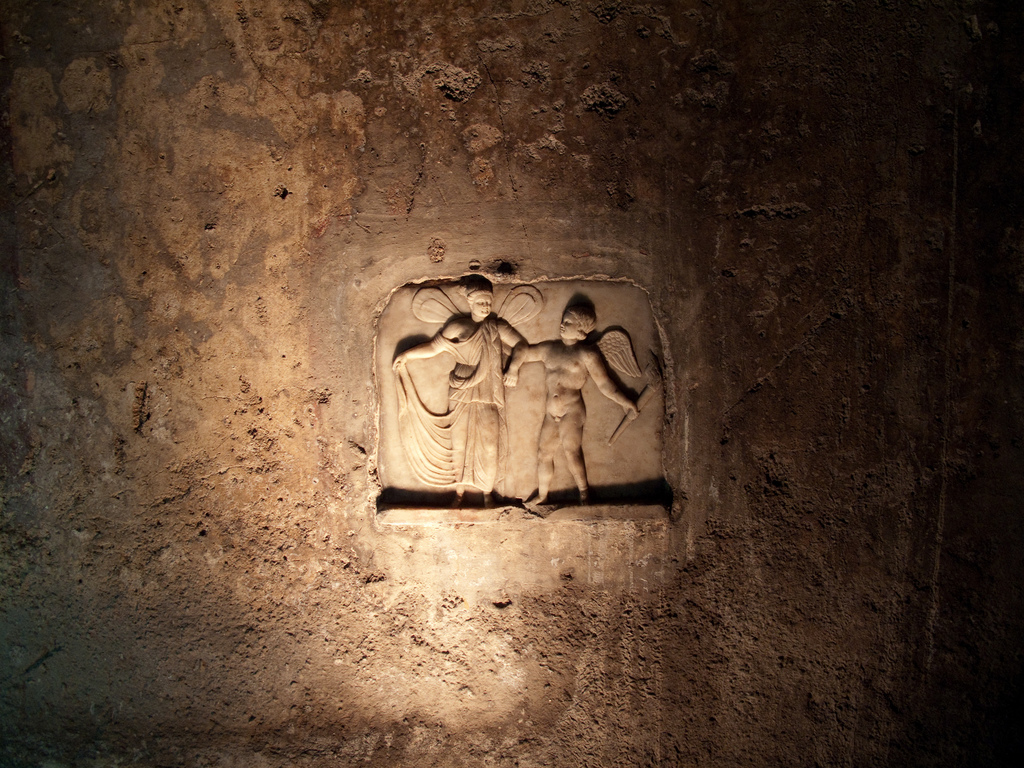
The Mithraeum of Santa Maria Capua Vetere includes a marble relief depicting a child Eros guiding Psyche through the dark.
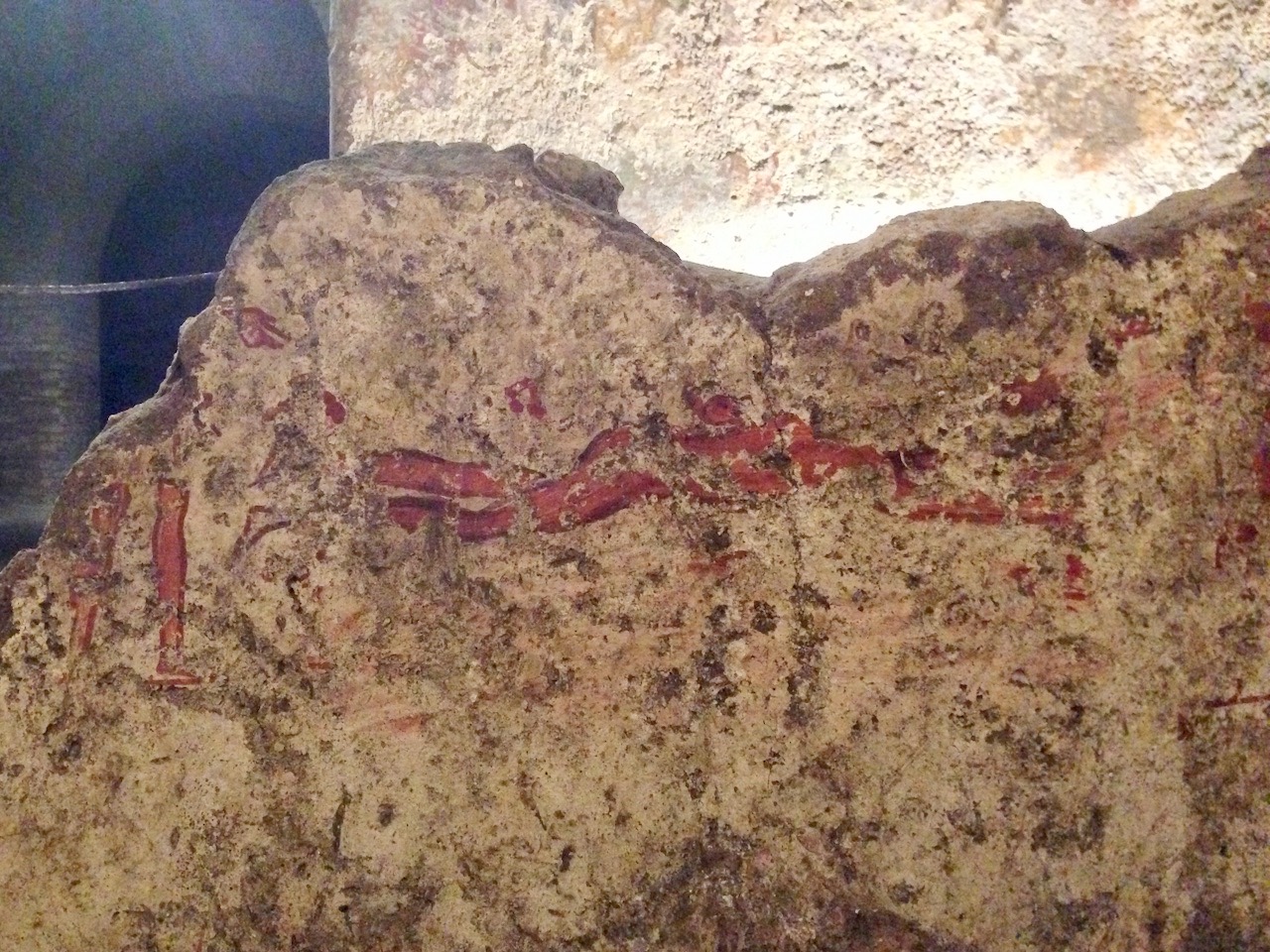
Representation of a person lying prostrate on the ground between two other walking figures on the Mitreo of Santa Capua Vetere.

Fresco depicting an initiation scene from the Mithraeum of Capua Vetere.

Finds discovered near the crossing of the criptoporticus of the Mithraeum at Capua, including marble plate fragments, a tuff base, red lamps, and animal bones.
Miscellaneous finds from the middle of the Mithraeum of Capua, including a terracotta antefix with centaurs, basins, marble bases, lamps with a Sol head, and coins of M. Aurelius and Constantine.
Fresco fragment from the initiation sequence of the Mithraeum of Capua, of which only the heads and parts of the white tunica of two figures remain visible.
Two scenes from the initiation sequence of the Mithraeum of Capua, now indistinguishable.
Fresco showing a mystagogus pressing down the shoulders of a kneeling myste, attended by a third figure in Phrygian cap, from the initiation sequence of the Mithraeum of Capua.
Fresco showing two persons standing behind each other, from the initiation sequence of the Mithraeum of Capua.
Fresco showing a standing figure in a small cloak approached by two other persons, from the initiation sequence of the Mithraeum of Capua.