This site uses cookies to offer you a better browsing experience.
Find out more on how we use cookies in our privacy policy.

 
Support The New Mithraeum The New Mithraeum is an independent, non-profit project dedicated to Mithraic studies, ancient religions and classical culture. Developed and maintained independently since 2007, the site exists without advertising, paywalls or institutional funding. If you have found value in its articles, interviews, photographs or database, please consider supporting the project with a contribution. Every contribution helps keep The New Mithraeum open, free and alive. Thank you.
Support us →
Quaere

The New Mithraeum Database

Find news, articles, monuments, persons, books and videos related to the Cult of Mithras

Your search Santa Maria Capua Vetere gave 119 results.

 
Monumentum

Fresco fragment from Capua

Fresco showing a mystagogus pressing down the shoulders of a kneeling myste, attended by a third figure in Phrygian cap, from the initiation sequence of the Mithraeum of Capua.

 
Monumentum

Fresco fragment from Capua

Fresco showing two persons standing behind each other, from the initiation sequence of the Mithraeum of Capua.

 
Monumentum

Fresco fragment from Capua

Fresco showing a standing figure in a small cloak approached by two other persons, from the initiation sequence of the Mithraeum of Capua.

 
Monumentum

Fresco fragment from Capua

Badly damaged fresco fragment showing a person in red attire in a kneeling position, from the initiation sequence of the Mithraeum of Capua.

 
Monumentum

Fresco of Cautopates from Capua

Fresco depicting Cautopates in Eastern attire between two laurels, cross-legged, pointing his torch downwards over a burning altar, from the Mithraeum of Capua.

 
Monumentum

Head from Capua

Head in Phrygian cap with a sorrowful expression, used as a protome in the Amphitheatre of Capua and interpreted as a head of Mithras.

 
Liber

Mithriaca I. The Mithraeum at S. Maria Capua Vetere

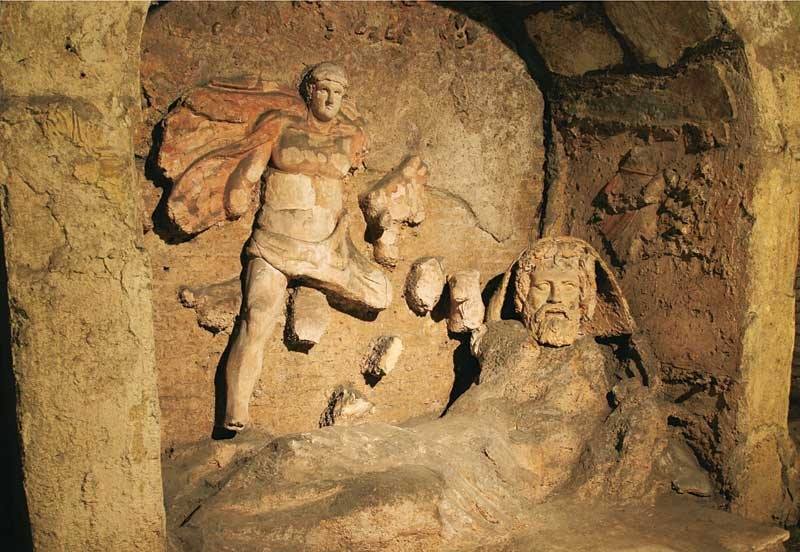
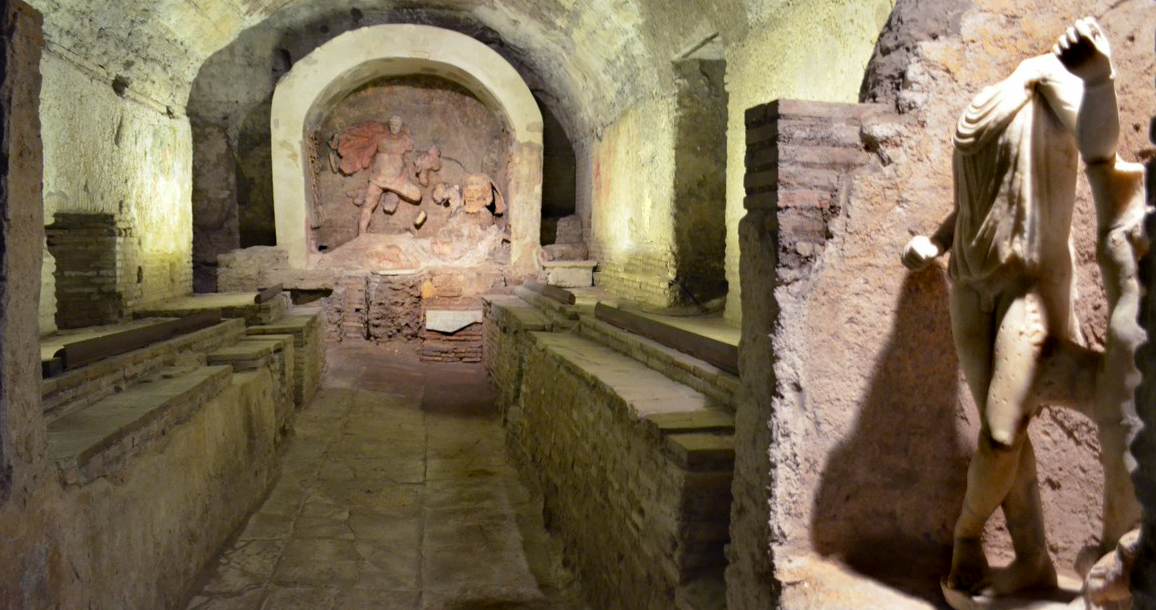
The Mithraeum at Capua is in many respects one of the most important sanctuaries of the Iranian god who in the first centuries of our era conquered the Roman world.
 
Monumentum

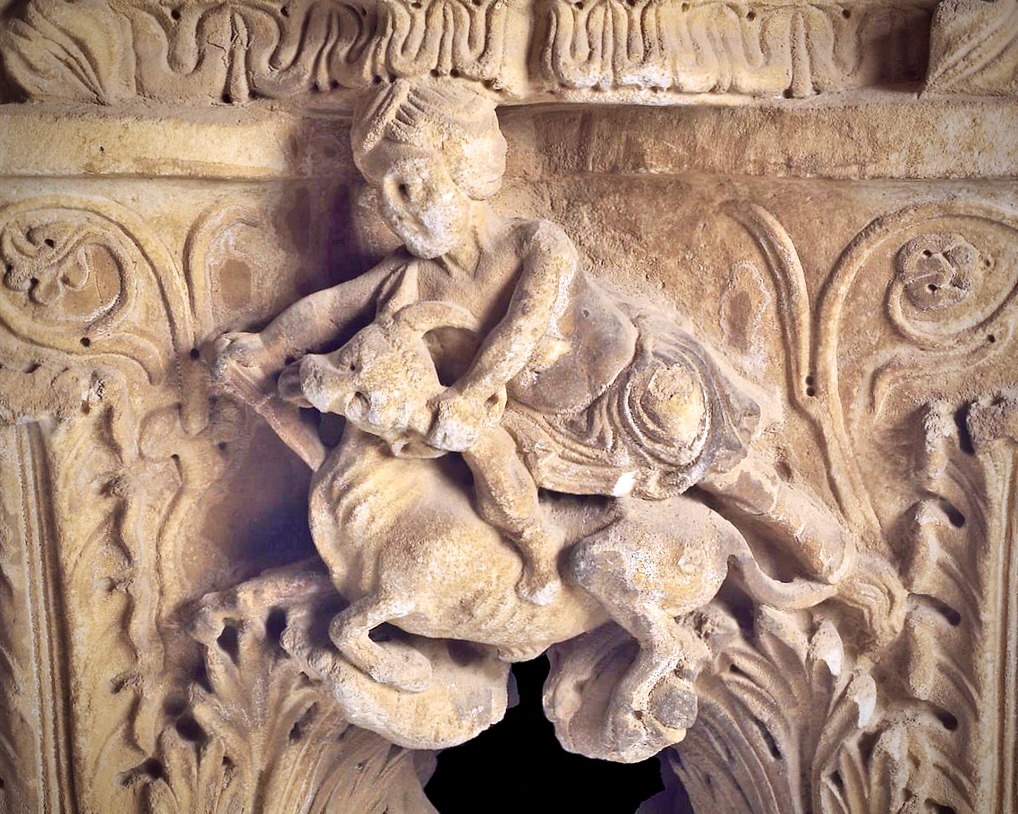
Tauroctony from Monreale

On one of the capitals of the cathedral of Santa Maria Nuova in Monreale, Sicily, an unusual turbaned bull-slaying Mithras has been recorded.
 
Monumentum

Mitreo d’Ottaviano Zeno

A probable Mithraic sanctuary near Santa Maria in Domnica on the Caelian Hill, known from a group of dispersed reliefs formerly owned by Ottaviano Zeno.

 
Monumentum

Cautes and Cautopates of Sarrebourg

The base of these sandstone reliefs bears an inscription referring to a certain Marcellius Marianus.

 
Monumentum

Oceaunus of Mérida

The sculpture of Oceanus in Merida bears an inscription by the Pater Patrorum Gaius Accius Hedychrus.

 
Monumentum

Mitreo di Santa Prisca

The Mithraeum of Santa Prisca houses remarkable frescoes showing the initiates in procession.

 
Liber

Los templos del dios Mitra en el Imperio romano

Este es un libro que pretende esbozar un panorama general de los documentos mitraicos repartidos a lo largo del Imperio romano.

 
Liber

Testimonios de un culto oriental entre los astures transmontanos. La lápida y el santuario mitraicos de San Juan de la Isla (Asturias)

La localización de una comunidad mitraísta en San Juan de la Isla posee un notable interés, debido a la débil popularidad de este culto oriental entre las poblaciones de Hispania.

 
Monumentum

Altar from Novaria by Aelius Secundinus

The v in this small altar found in Novaria has been interpreted by some commentators as qualifying Mithras as victorious.

 
Monumentum

Inscription by Claudius Thermodon of Bolsena

The donor of this Mithraic inscription from Bolsena, a certain Tiberius Claudius Thermoron, is known from two other monuments.

 
Monumentum

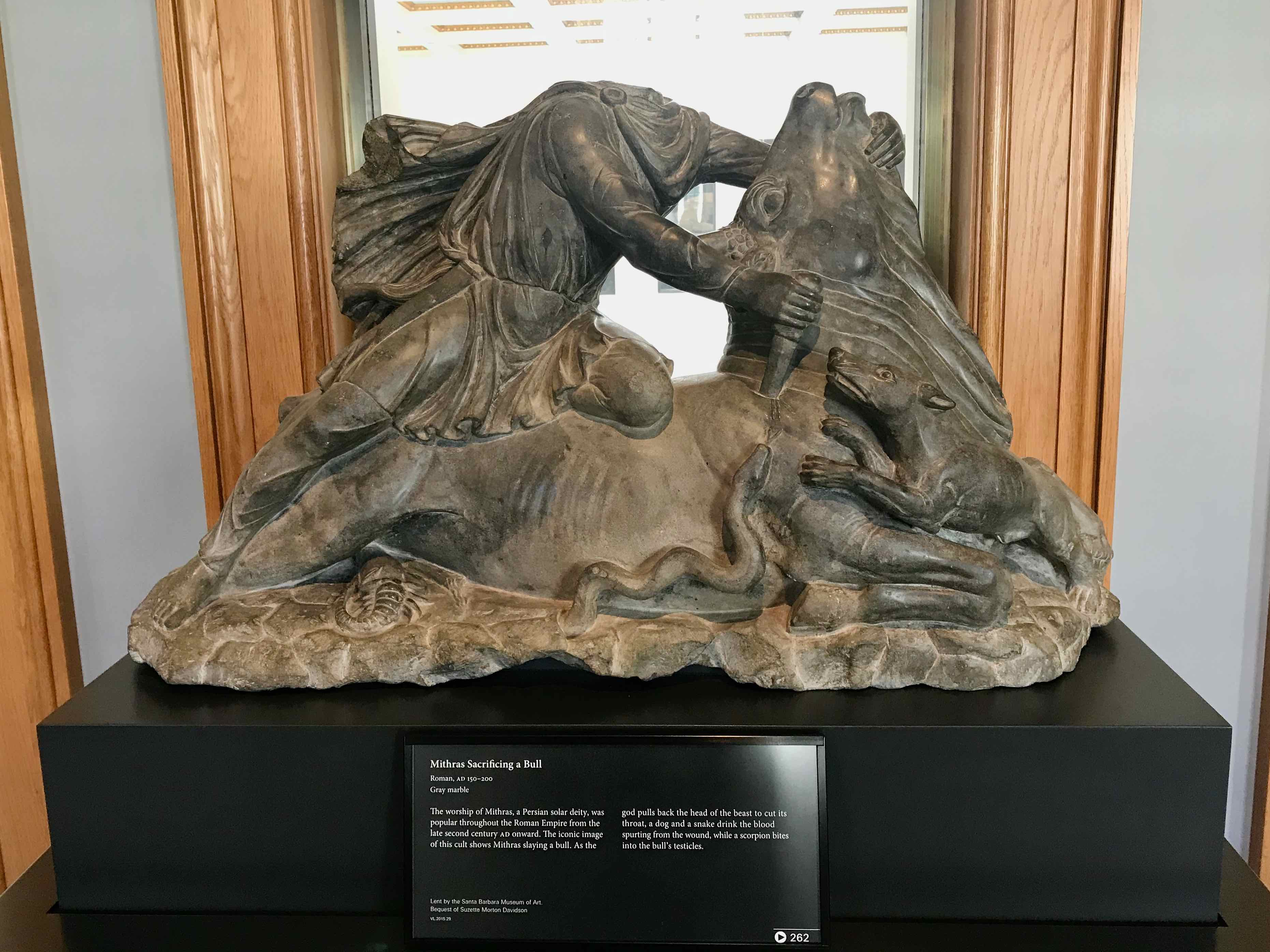
Mithras sacrificing the bull at Santa Barbara Museum of Art

Tauroctony in black marble on display at the Santa Barbara Museum of Art, California.

 
Monumentum

Tauroctony from the Mithraeum of Lucciana

The archeologists have found three fragments of the Tauroctony of Lucciana, which includes Cautes and Cautopates.

Back to Top