Your search Sulz am Neckar gave 1038 results.
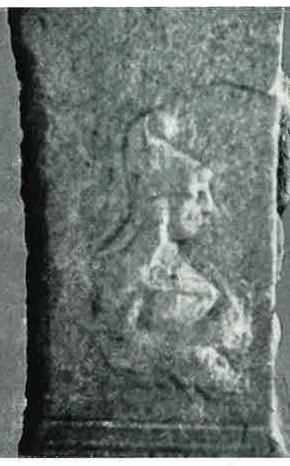
White marble altar from Mithraeum I at Ptuj, ancient Poetovio, decorated below the inscription with the dressed bust of Cautopates, a palm between two ram's heads above, and busts of Mithras on both lateral faces.

Small altar found at Töltschach in 1817, Noricum, decorated with the traces of two ram heads flanking foot-prints; the relief is no longer visible and only the inscription survives.
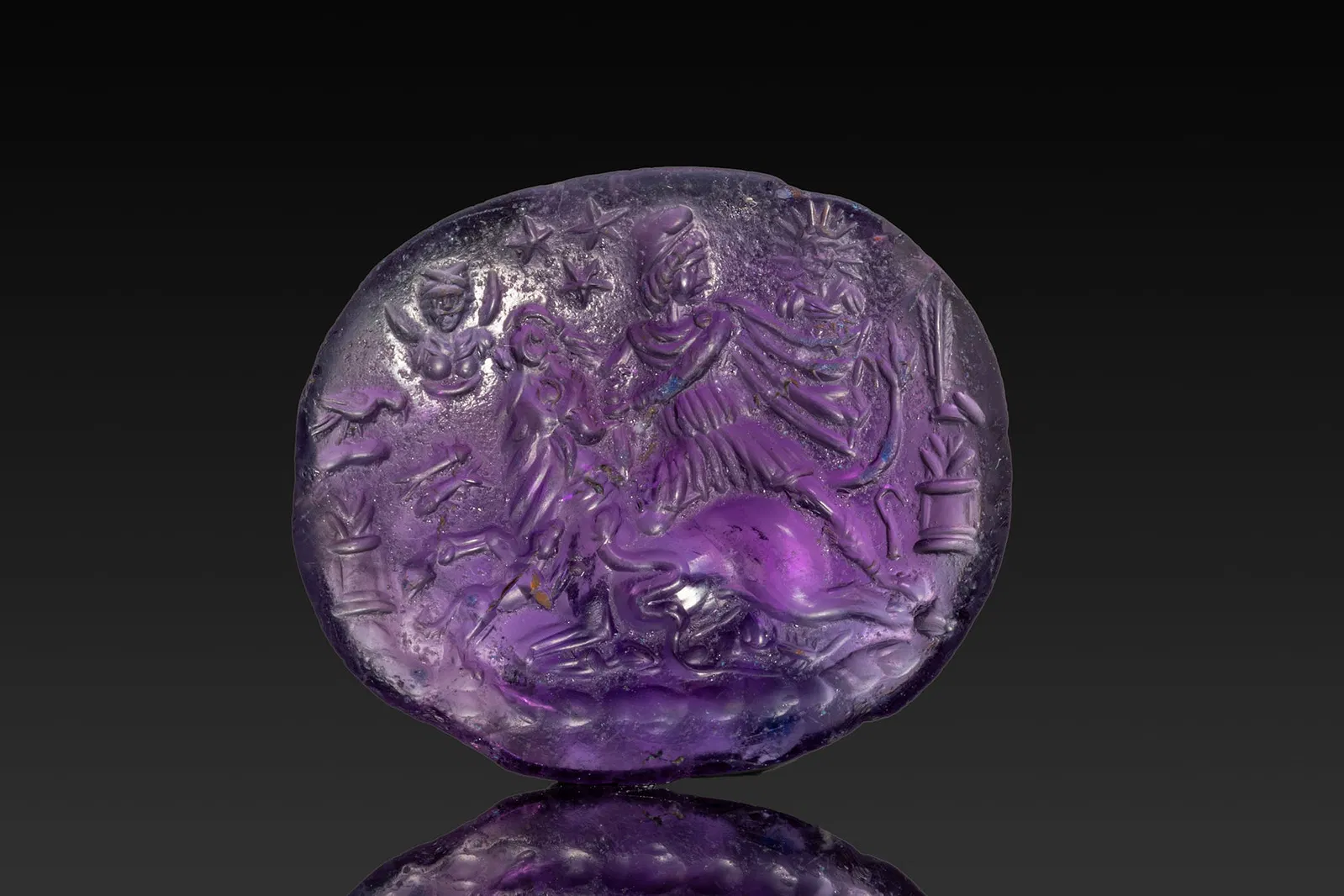
Amethyst intaglio engraved with Mithras slaying the bull, accompanied by Sol, Luna and other canonical Mithraic symbols.

Nida was an ancient Roman town in the area today occupied by the northwestern suburbs of Frankfurt am Main, Germany, specifically Frankfurt-Heddernheim, on the edge of the Wetterau region.
This inscription by a certain Numidius Decens was found in the Forum of Lambaesis, now Tazoult تازولت in Algeria.
Stockstadt am Main is a market municipality in the Aschaffenburg district in the Regierungsbezirk of Lower Franconia in Bavaria, Germany.
Bergamo is a city in the alpine Lombardy region of northern Italy, approximately 40 km northeast of Milan, and about 30 km from Switzerland, the alpine lakes Como and Iseo and 70 km from Garda and Maggiore.
Stabiae was an ancient city situated near the modern town of Castellammare di Stabia and approximately 4.5 km southwest of Pompeii.
Rottenburg am Neckar; until 10 July 1964 only Rottenburg; Swabian: Raodaburg is a medium-sized town in the administrative district of Tübingen in Baden-Württemberg, Germany. Rottenburg is the seat of a Roman Catholic bishop, being the official centr
Pamphylia was a region in the south of Asia Minor, between Lycia and Cilicia, extending from the Mediterranean to Mount Taurus.
Tiddis was a Roman city that depended on Cirta and a bishopric as Tiddi, which remains a Latin Catholic titular see. It was located on the territory of the current commune of Bni Hamden in the Constantine Province of eastern Algeria.
The Celts are the first known to have settled in this place, which they called Binge, meaning rift. Roman troops stationed here in the first century AD rendered the local name as Bingium in Latin.
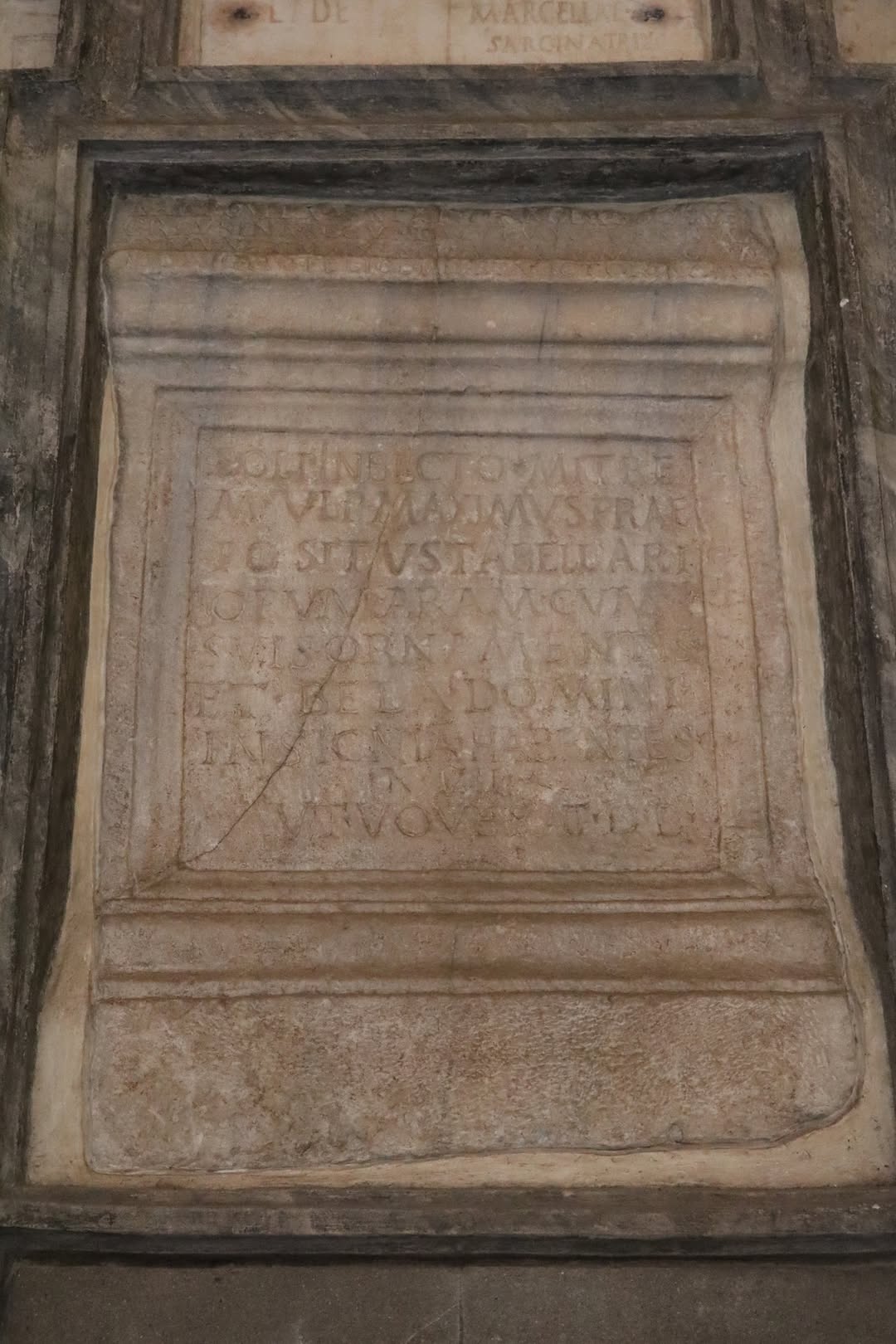
Marble altar dedicated to Sol Invictus Mithras, found in Rome (in aedibus Maffaeiorum), set up in 183 A.D. by M. Ulpius Maximus, praepositus tabellariorum, together with its ornaments and Mithraic insignia, in fulfilment of a vow.
'Hail to Kamerios the Pater' can be read on one of the walls of the mithraeum at Dura Europos.

This relief of Mithras slaying the bull, framed by acanthus leaves, was sold at auction in 2011 by Bonhams.
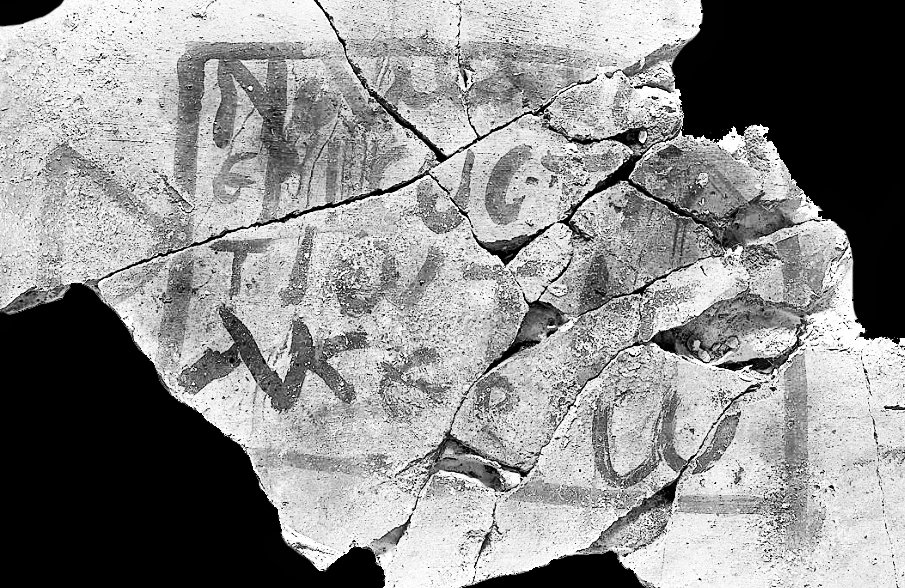
The text mentions a certain Kamerios, described as immaculate miles.
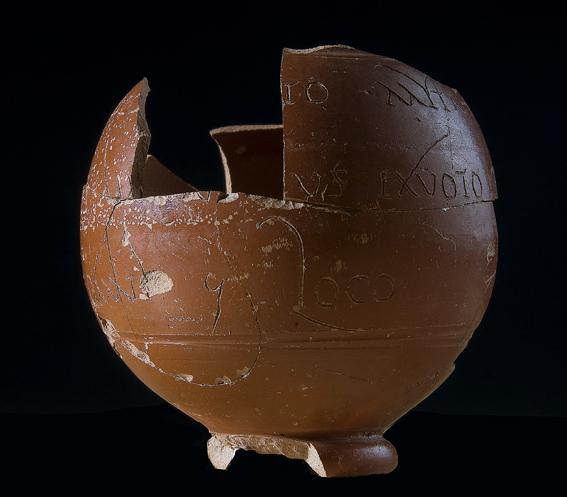
The spherical ceramic cup found at the Mithraeum in Angers bears an inscription to the unconquered god Mithras.
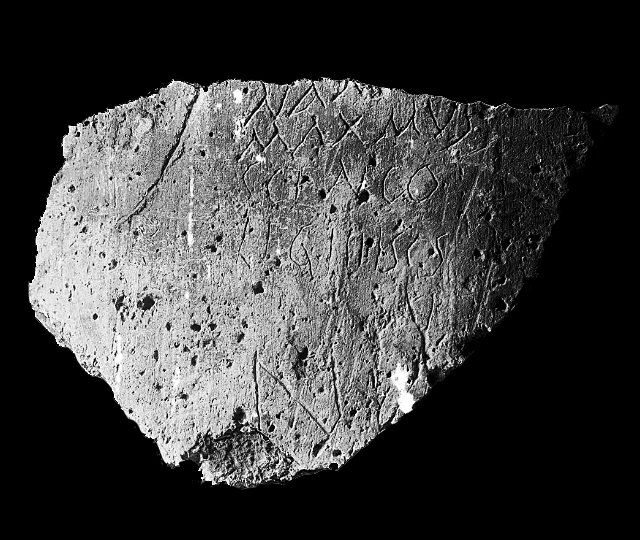
A certain Maximus from the Legio IV Scythica engraved his name in one of the columns of the Mithraeum of Dura Europos.
