Your search Tal hal Hariri / Es-Sâlihiyeh / As Salhiyah gave 3731 results.
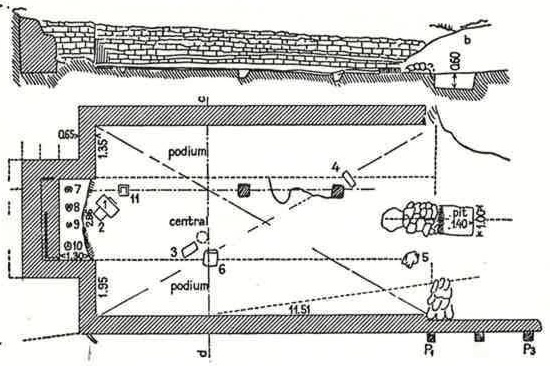
Second Mithraic sanctuary discovered at Stockstadt between 1909 and 1913, situated on a slope near the river Main, with finds at Aschaffenburg

Yellow sandstone altar from Mithraeum I at Stockstadt bearing a bust of Sol in radiate crown holding a whip, with a pierced square hole at the base
Grey sandstone altar from Mithraeum I at Stockstadt decorated with a triangle between two rosettes, the votive inscription now illegible
Collection of sculptural fragments from Mithraeum I at Stockstadt including a genius, a cornucopia, a goddess with a he-goat, and a youth's head
Small red sandstone fragment from Mithraeum I at Stockstadt depicting the ritual hand-clasp, iunctio dextrarum
Two grey sandstone fragments of a lion statue on a base from Mithraeum I at Stockstadt, with part of the tail missing
Red sandstone relief fragment from Mithraeum I at Stockstadt preserving the lower part of Vulcanus with an anvil, hammer, and tongs
Sandstone fragment from Mithraeum I at Stockstadt preserving the lower part of a person in armour, possibly Mars
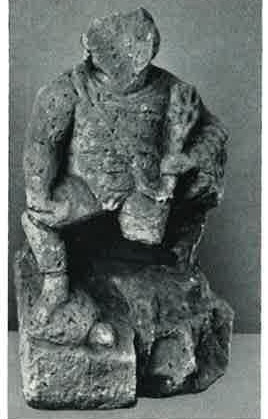
Yellow sandstone statue of a seated Mercury from Mithraeum I at Stockstadt, holding a caduceus, with his right foot resting on a tortoise
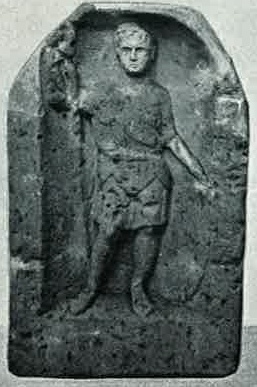
Red sandstone relief from Mithraeum I at Stockstadt depicting a standing Mars in helmet with lance and shield, head partially restored
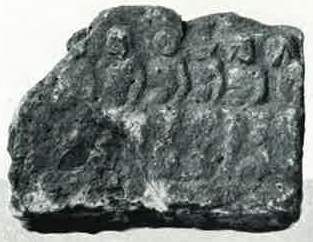
Yellow sandstone relief from Mithraeum I at Stockstadt showing six bearded, draped figures reclining at a ritual banquet
Two white sandstone fragments from Mithraeum I at Stockstadt possibly depicting a rock with part of a serpent, relating to Mithras' birth
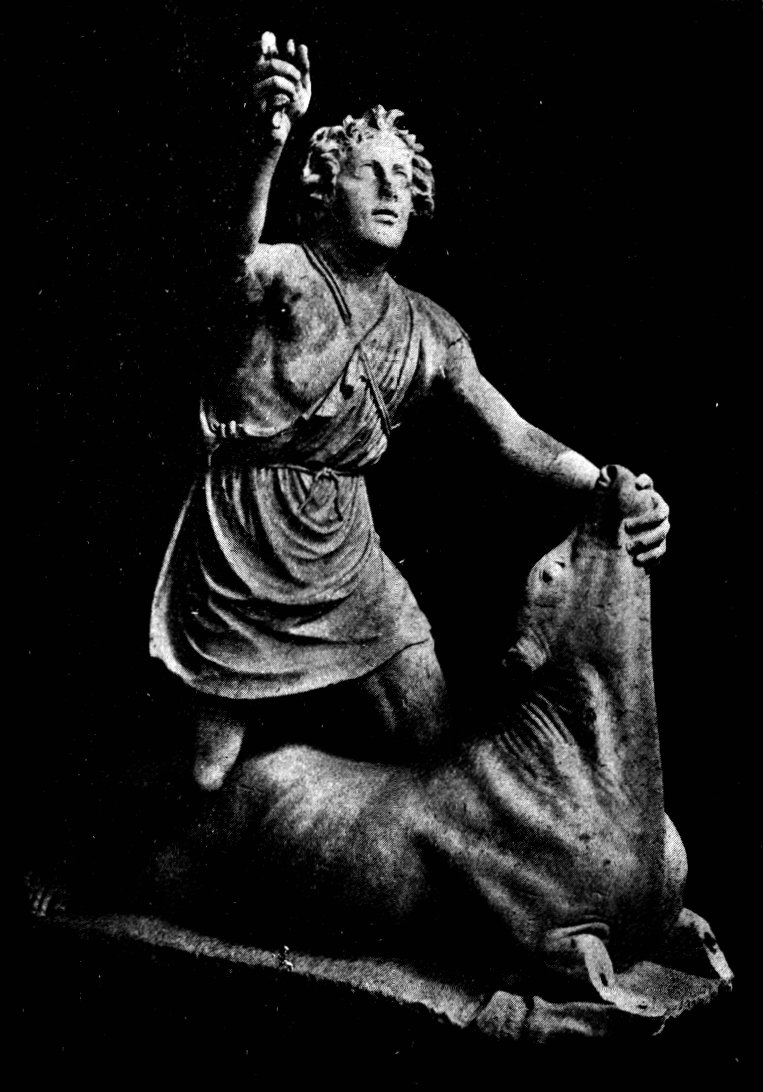
Double-sided white sandstone relief from Mithraeum I at Stockstadt, with Mithraic imagery on both faces
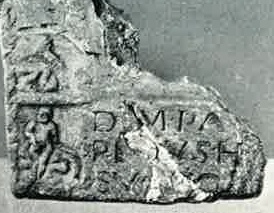
The person who commanded the sculpture may have been M. Umbilius Criton, documented in the Mitreo della Planta Pedis.
Bronze handle of a knife or dagger reportedly originating from Narbo and formerly preserved in major private collections.
Group of Mithraic finds distributed across different localities named San Zeno along the Verona–Brenner route.
Second-century Mithraeum discovered in the lower storey of the Curia complex at Cosa.
Mithraic material whose correct archaeological attribution belongs to Regio XII of ancient Rome.
Marble plate from the Mithraeum at Serdica, Thracia, bearing a cryptic inscription whose letter sequence has not been satisfactorily explained.
Sandstone altar from Romula, Dacia, dedicated to Deo invicto Mithrae by Aurelius Rufus ex voto, with the busts of Sol and Luna flanking the text.
