Your search Tal hal Hariri / Es-Sâlihiyeh / As Salhiyah gave 3730 results.


.jpg)
A.B. Candidate in Departments of History and Classics at Dartmouth College (Hanover, NH)
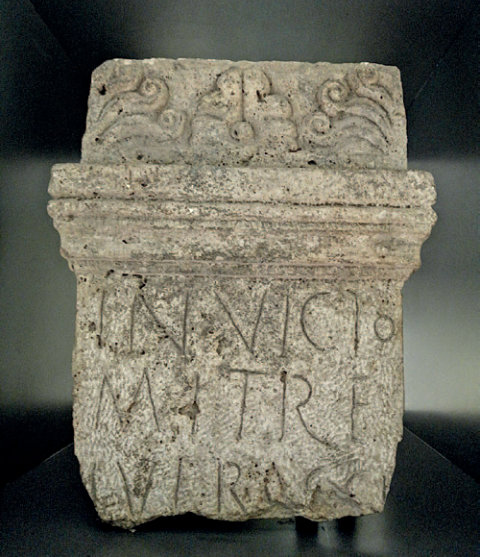
This Mithraic altar of a certain Iulius Rasci or Racci was found in 1979 in a field in Borovo, Croatia, in the area of the Roman fort of Teutoburgium.
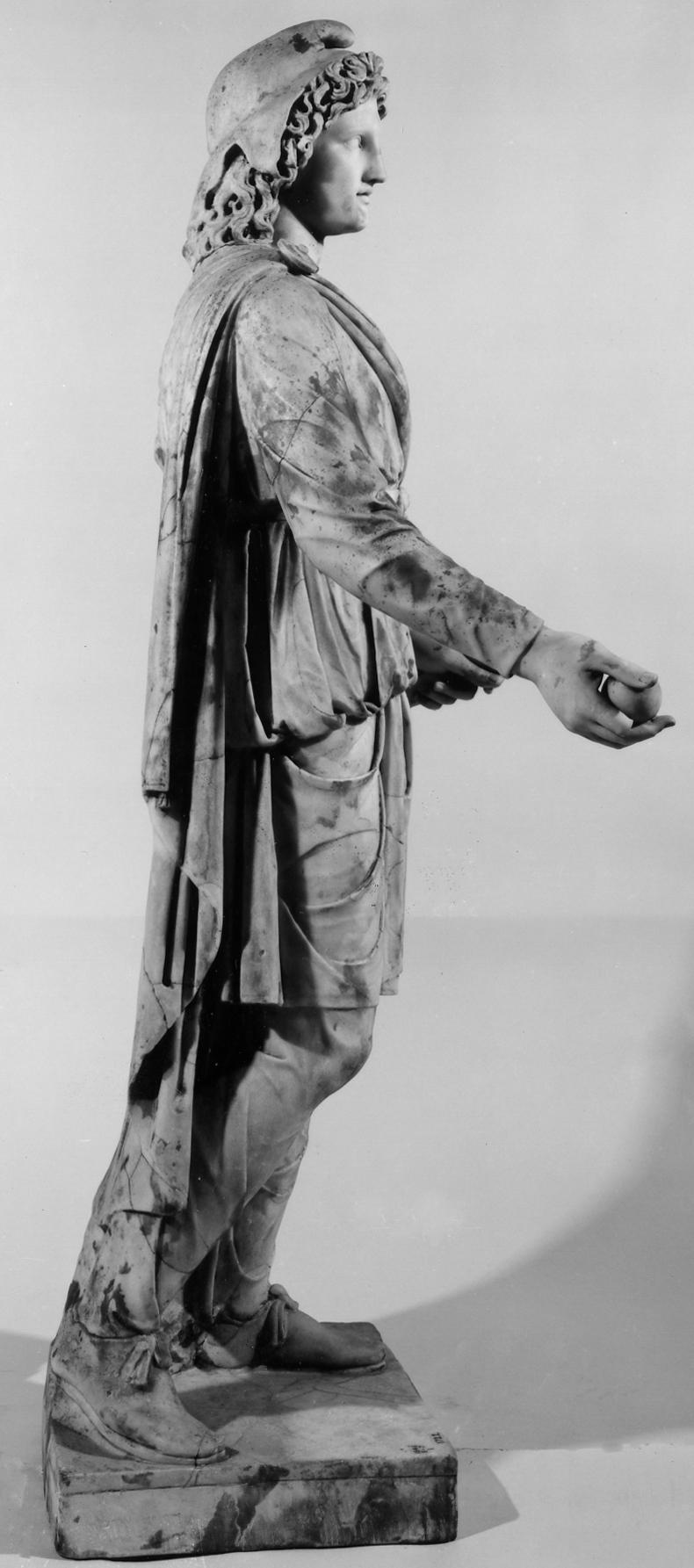
This is one of the two torchbearers, probably Cautes, transformed into Paris, now in the British Museum.

This base was found in the 18th century and bears an inscription to the god Arimanius.

According to F. Cumont, the Bedouins told a legend from which Nöldeke concluded that the castle of Quasr-ibn-Wardân was a fort with a mithraeum.
A bearded Bacchus and another hermes as a woman, both crowned with vine tendrils, were walled into the base of a niche.
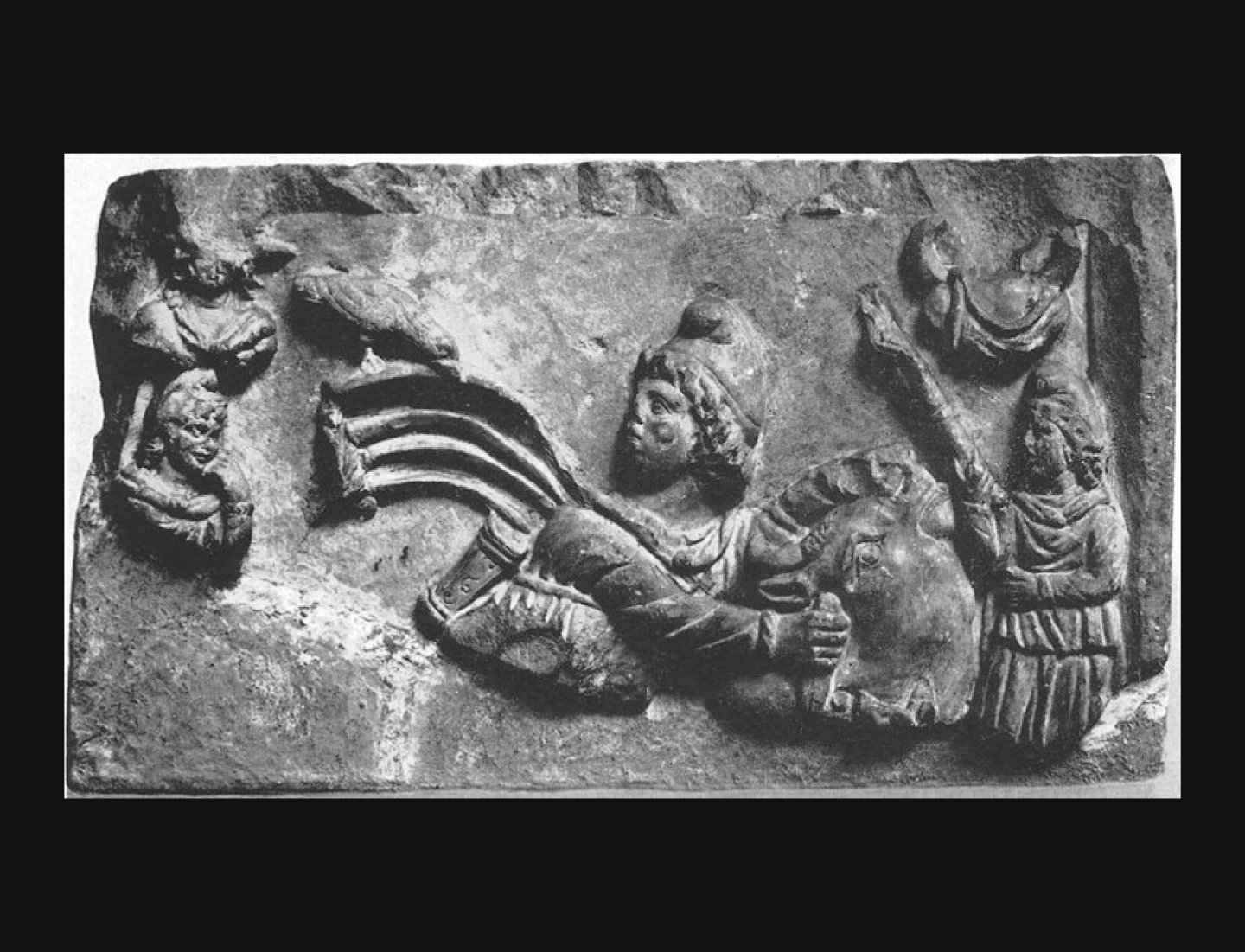
Franz Cumont bought this relief of Mithras as a bullkiller from a dealer who claimed to have found it in a vineyard near the church of Saint Pancrace, in Rome.
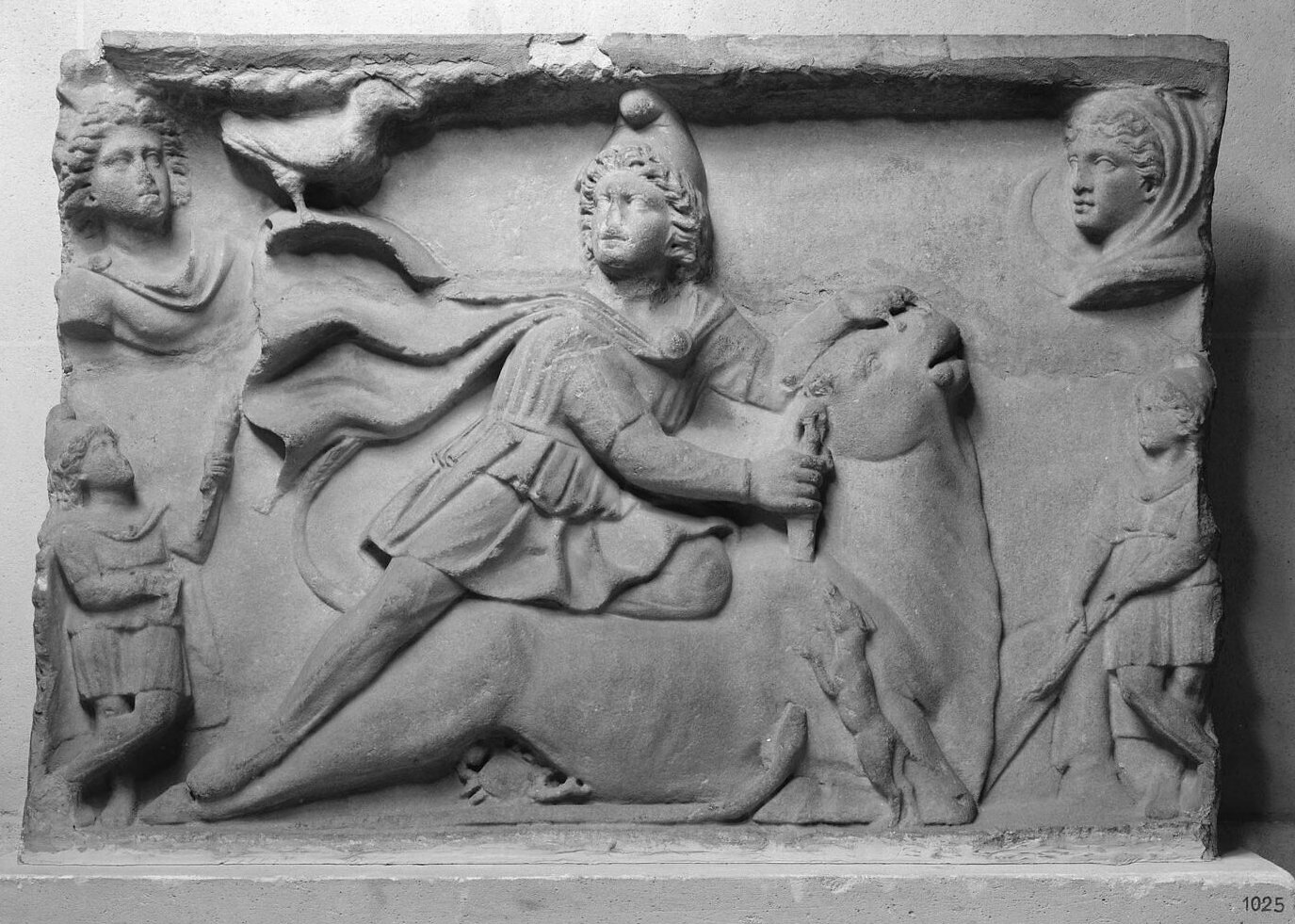
This is one of the three reliefs of Mithras as a bullkiller from the Villa Borghese collection that belong to the Louvre museum, now in the Louvre Abu Dhabi.
This marble of Cautes was found together with his partner Cautopates in Ostia in 1939.
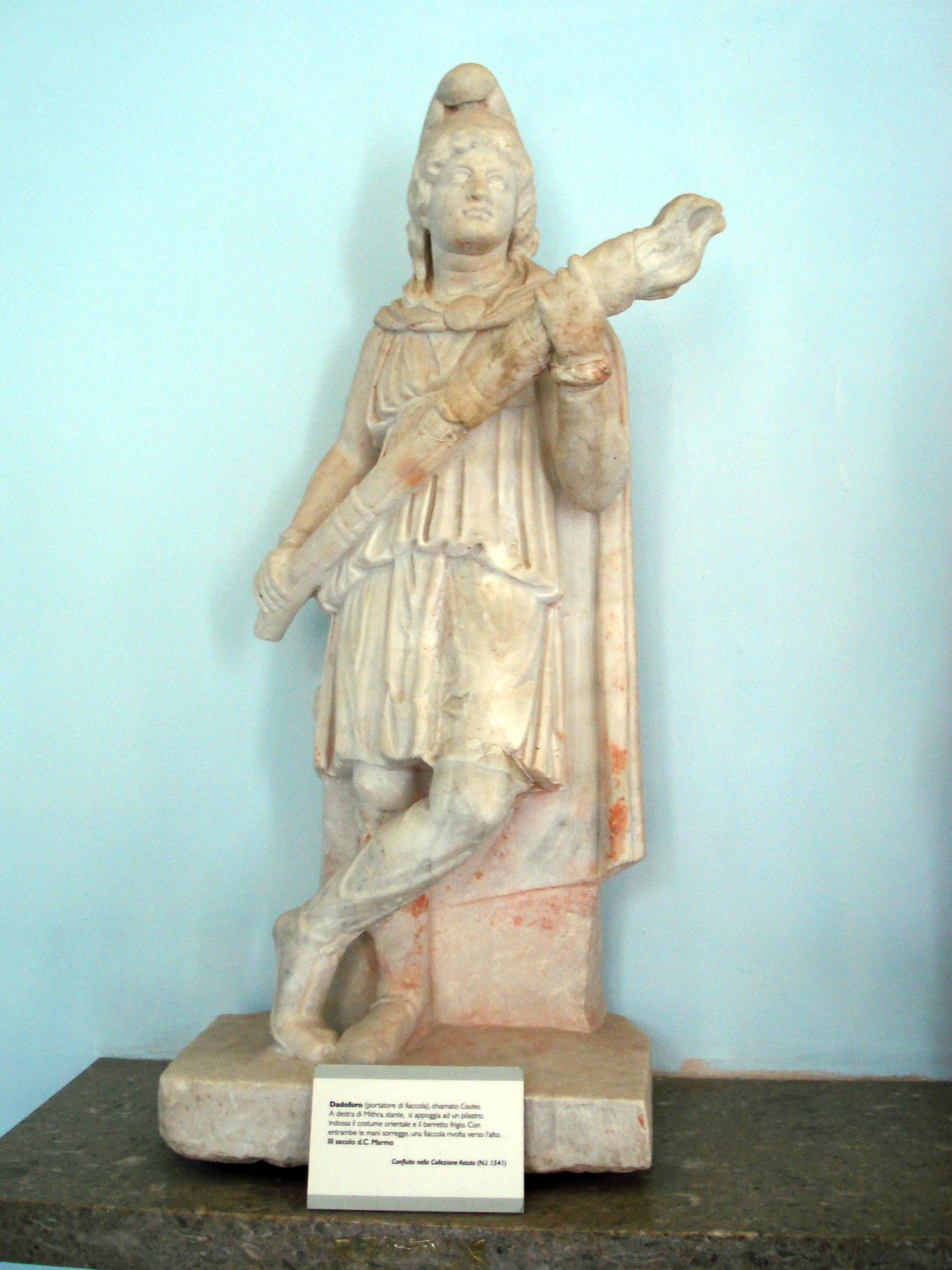
These two mithraic sculptures of Cautes and Cautopates belong to the same collection of Astuto de Noto, made up of mostly Sicilian monuments.
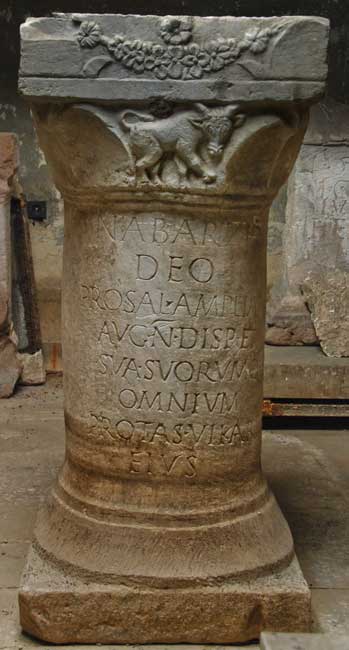
This column found in the Mithraeum of Sarmizegetusa bears an inscription to Nabarze instead of Mithras.
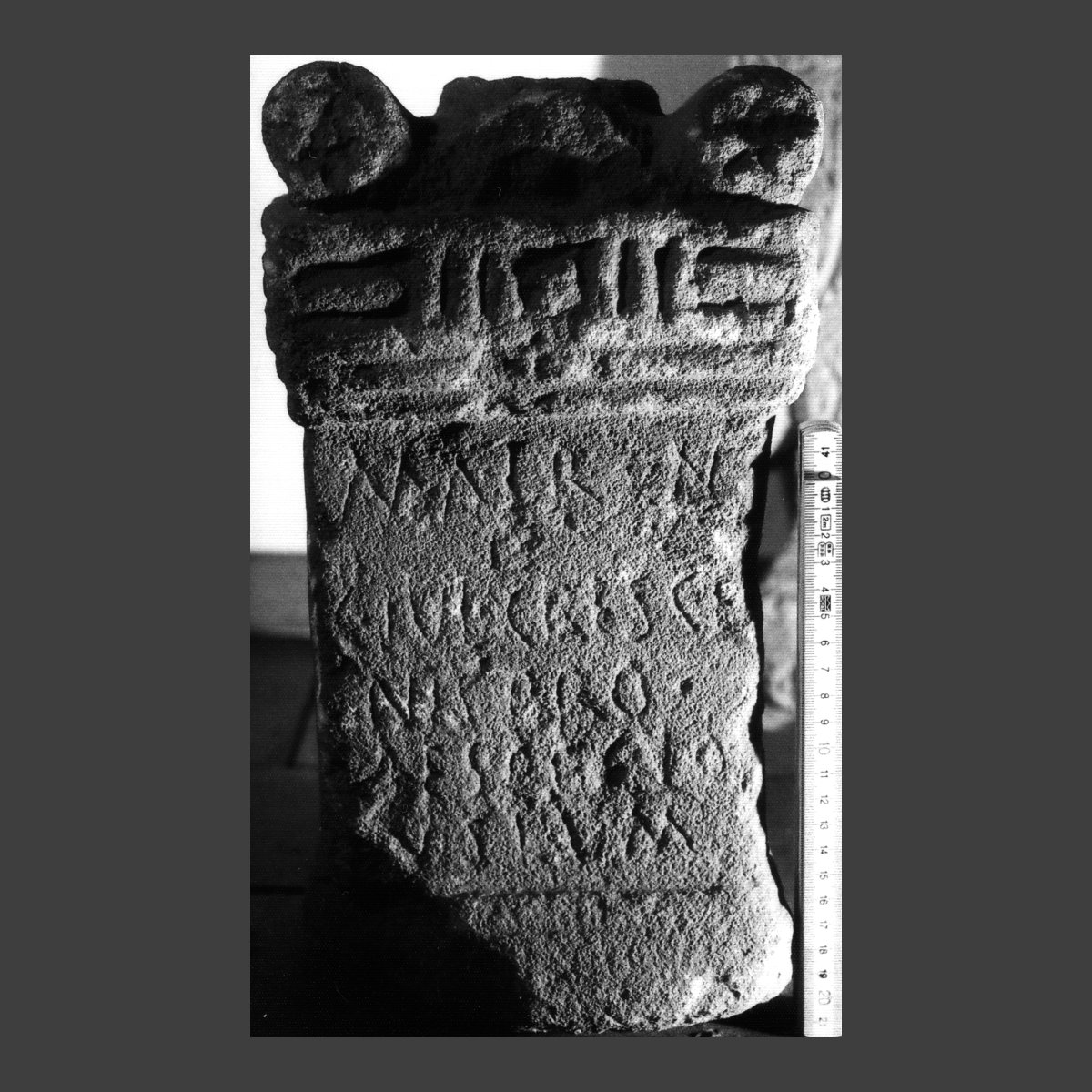
This fragmented altar of a certain Caius Iulius Crescens, found in the Mithraeum of Friedberg, bears an inscription to the Mother Goddesses.
In the altar that Titus Tettius Plotus dedicated to the invincible God, he called himself pater sacrorum.
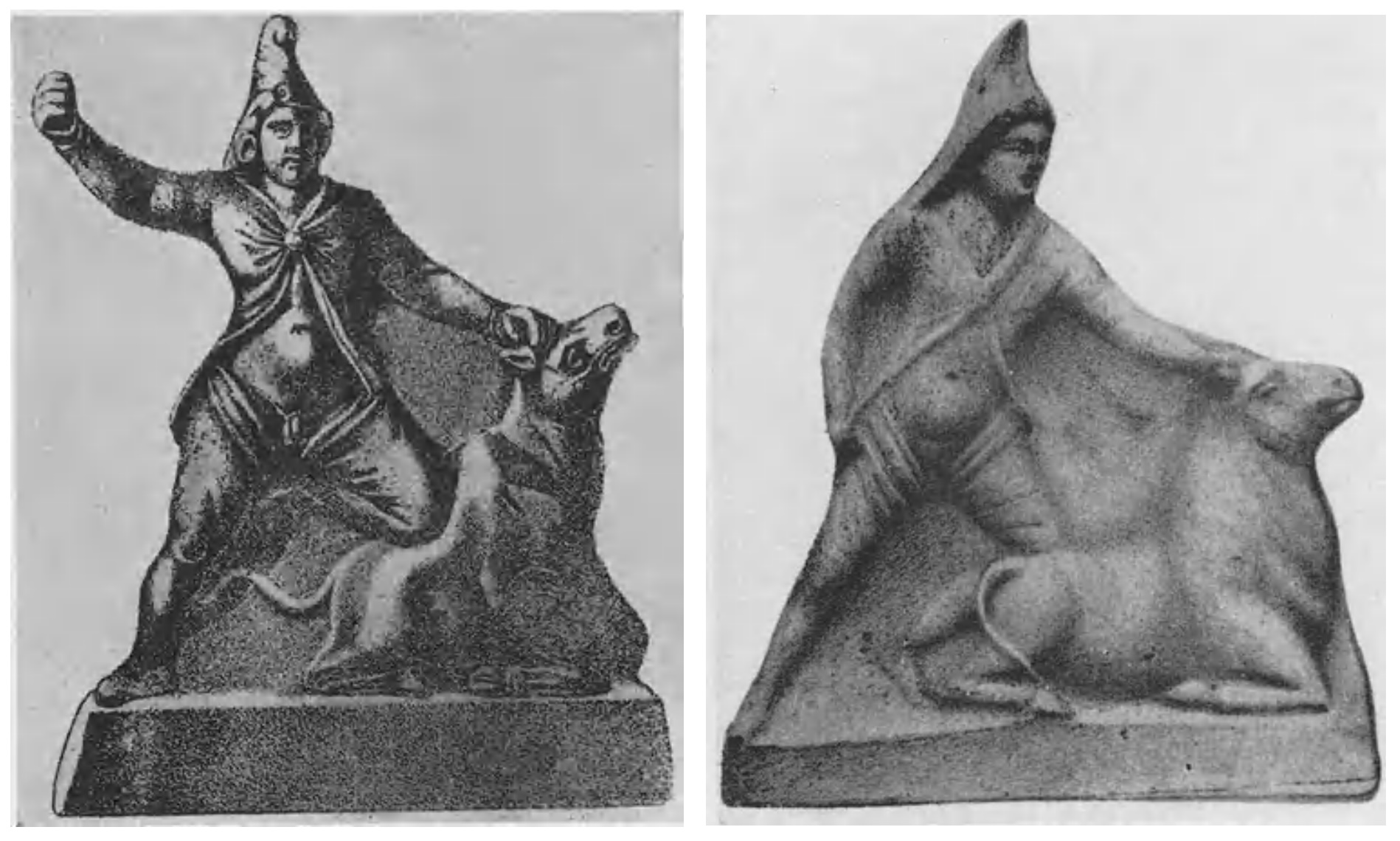
Terracotta tablets depicting a Taurombolium by Attis which might be at the origins of the mithraic Tauroctony iconography.
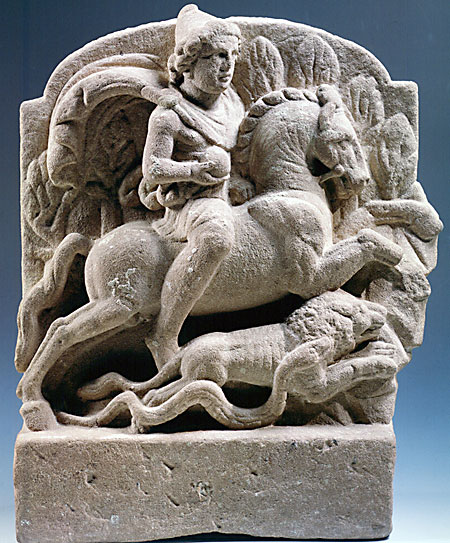
Mithras galloping, in a cypress forest, carrying a globe in one hand and accompanied by a lion and a snake.
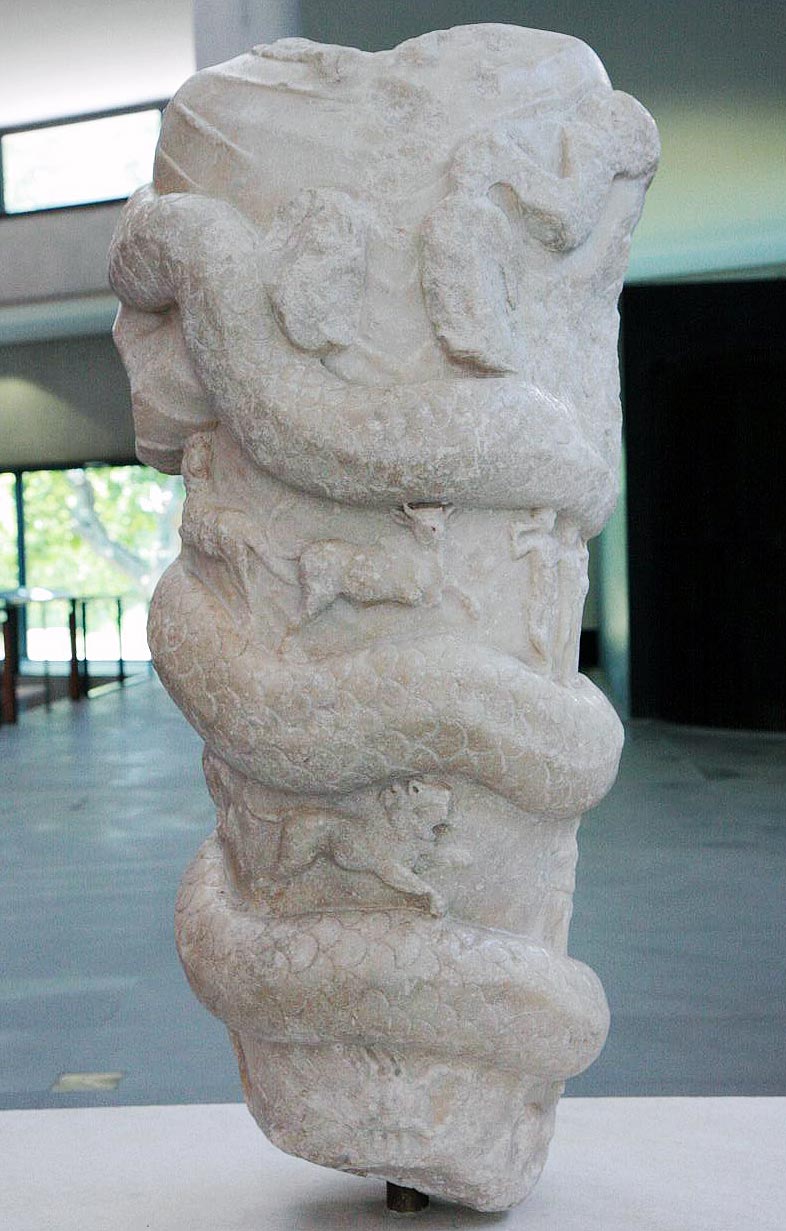
The Aion of Arles includes nine signs of the zodiac in three groups of three, between the spirals of the serpent.
