Your search Tal hal Hariri / Es-Sâlihiyeh / As Salhiyah gave 2515 results.
The Kempraten Mithraeum was unexpectedly discovered during the 2015 excavations near the vicus.
The Isis of Merida is covered by a long dress that reaches down to her feet.
The sculpture of the solar god is signed by its author, Demetrios.
Its base is partially broken, so it is unclear if the figure was standing on a globe, an expected position, or not.
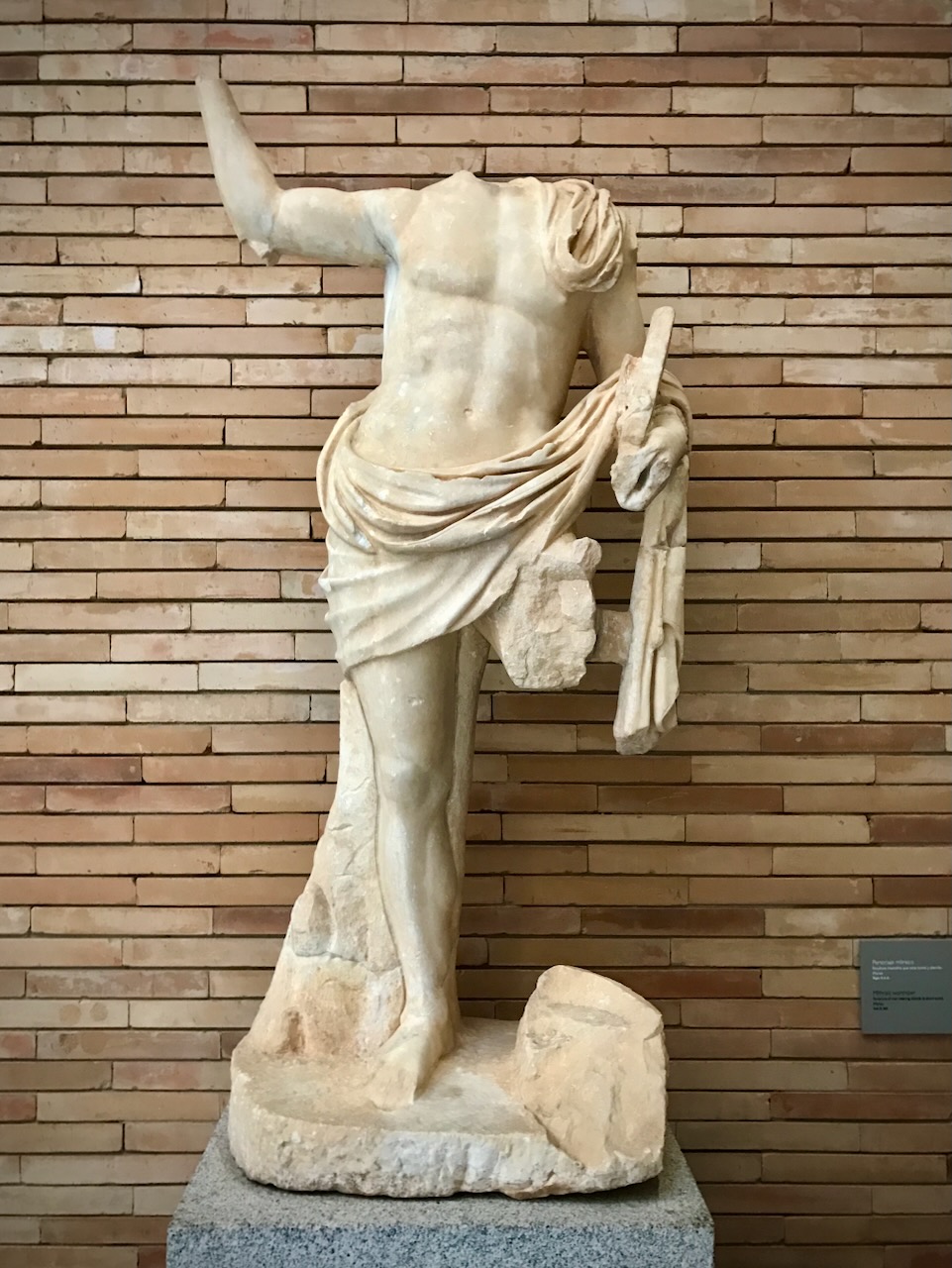
The lack of attributes and its decontextualisation prevent us from attributing a specific Mithraic attribution to this small Venus pudica from Mérida.
This standing sculptural figure from Mérida appears to carry the serpent staff, characteristic of the medicine god Aesculapius.
The altar of the Sun god belongs to the typology of the openwork altar to be illuminated from behind.
The lion relief from Nemrut Dag has the moon and several stars over his body.
The Nushijan Mithraeum testifies to the worship of Mithra in the region since before the Zoroastrian reform.
The Mithraeum of Szony has the form of a grotto and the entrance is on the west side.
The 'Mithraic cave' in the Gradische/Gradišče massif near St. Egidio contained vessels decorated with snakes and the remains of chicken bones and other animals that were consumed during Mithraic ceremonies.
The relief of Mithras slaying the bull of Sisak includes the zodiac and multiple scenes from the myth of Mithras.
Prof. Parvaneh Pourshariati; 9th European Conference of Iranian Studies, Free University of Berlin, September 2019.
Glass paste imprint depicting the Tauroctony surrounded by symbolic figures.
Of this great relief of Mithras slaying the bull only a few segments remain.
Emperor Julian is supposed to have presided over a human sacrifice in the Mithraeum of Scarbantia, according to N. Massalsky.
The Temple of Mithras, inside an ancient military settlement, is situated on the eastern border of the Roman Empire.
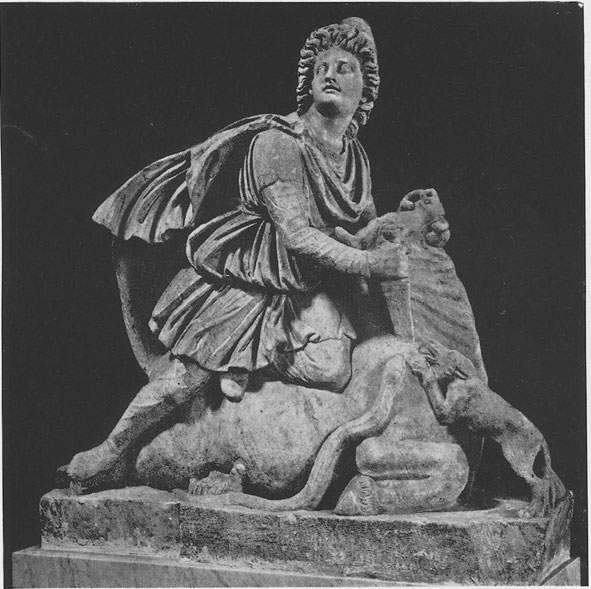
Marble group of Mithras killing the Bull sold by Antiqurium Ltd, New York