Your search Terme di Caracalla gave 2881 results.
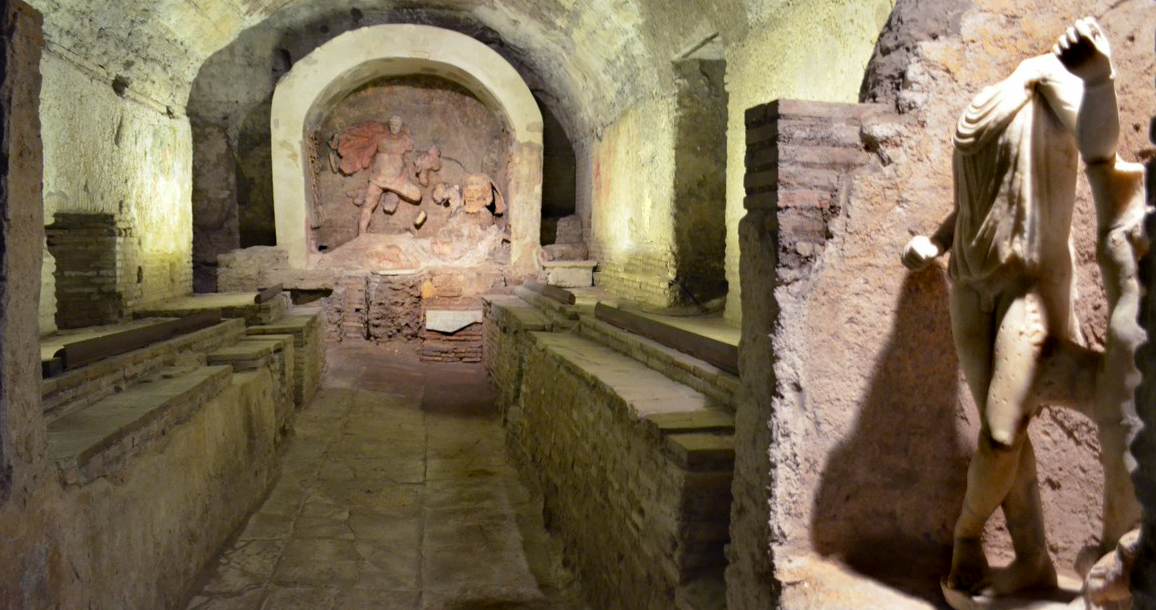
The Mithraeum of Santa Prisca houses remarkable frescoes showing the initiates in procession.

Marble tauroctony relief from the surroundings of Küstendil, ancient Pautalia in Moesia Superior, depicting the bull-slaying with torchbearers and Sol and Luna busts in the upper corners.
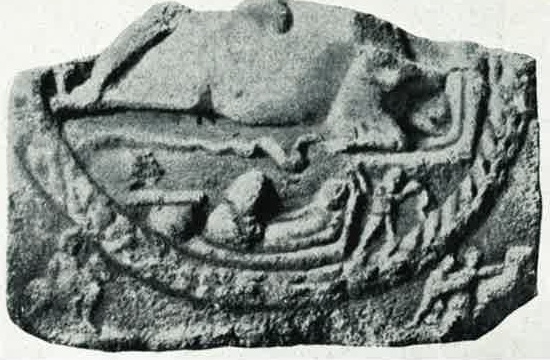
Lower part of a marble tauroctony relief from Küstendil, ancient Pautalia in Moesia Superior, preserving only the lower half of the bull-slaying scene with partially visible legs of the torchbearers.
Fragmentary inscription from Transdierna, Moesia Superior, preserving only the opening of a dedication to Deo invicto Mithrae.
Deposit of 1,200 coins spanning Augustus to Constantine and a small bronze bell from Thun-Allmendingen, representing the longest chronological range of any coin assemblage from a Mithraic context in Germania.
The six divine names inscribed on the bronze hatchets from Thun-Allmendingen — Iovi, Neptuni, Minervae, Mercurio, Matribus, Matroni — reflecting the polytheistic religious landscape of the Mithraic community at this site.
Set of six triangular bronze votive hatchets from Thun-Allmendingen, each inscribed with the name of a deity: Iovi, Neptuni, Minervae, Mercurio, Matribus, and Matroni; forming a unique ensemble of polytheistic dedications within a Mithraic context.
Limestone left hand holding a caduceus from Thun-Allmendingen, belonging to a statue of Mercury associated with the possible Mithraeum.
Fragmentary limestone relief from Thun-Allmendingen of the same dimensions as the bull relief, depicting a swine; both may have formed part of the sanctuary's ritual décor.
Large limestone relief from Thun-Allmendingen depicting a bull walking to the left; the head is lost. At approximately 2.91 × 2.43 m one of the largest single-animal reliefs from a Mithraic context.
Two small limestone heads in Phrygian caps from the Stockhorn Mountains near Thun-Allmendingen, each approximately fist-sized, probably belonging to statues of the torchbearers.
Various altar and base fragments, two sandstone balls, and two millstone fragments from the Mithraeum at Dieburg
Small fragmentary inscription from the Mithraeum at Dieburg preserving only the abbreviated dedication D(eo) i(nvicto) M(ithrae)
Red sandstone altar from the Mithraeum at Dieburg that had been reused, its original inscription obliterated and replaced with a dedication to Deo invicto Mithrae
Small red sandstone fragment from the Mithraeum at Dieburg preserving a head in a Phrygian cap
Two yellow sandstone fragments from the Mithraeum at Dieburg, comprising a base with a foot and another piece with part of a garment and a club
Small yellow sandstone fragment from the Mithraeum at Dieburg showing the foremost part of an animal, probably a dog or ram, with head turned right
Red sandstone base of a Mercury statue from the Mithraeum at Dieburg, preserving only the tortoise attribute at the god's feet
Twenty-three fragments of a yellow sandstone statue of Mercury from the Mithraeum at Dieburg, dressed in a short mantle and holding a caduceus
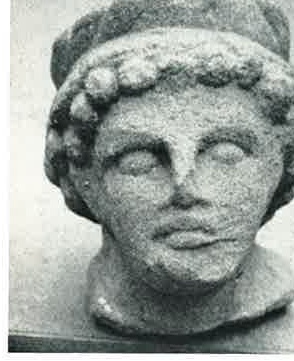
Head in red sandstone from the Mithraeum at Dieburg wearing an oblong pointed cap, possibly Mithras, a torchbearer, or Phrygia
