Your search Tirowite (Old town of Plovdiv) gave 279 results.

Boğazkale is a town of Çorum Province in the Black Sea region of Turkey, located 87 kilometres from the city of Çorum.

Yellow sandstone altar from Mithraeum I at Stockstadt bearing a bust of Sol in radiate crown holding a whip, with a pierced square hole at the base
Fragment of a red sandstone relief from Mithraeum I at Stockstadt showing Hercules dragging a collared Cerberus from a cave while holding a club
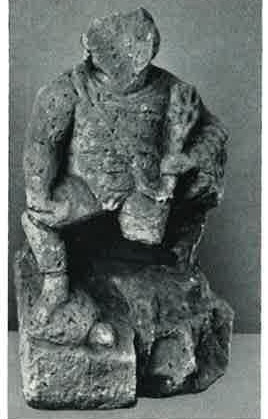
Yellow sandstone statue of a seated Mercury from Mithraeum I at Stockstadt, holding a caduceus, with his right foot resting on a tortoise

White sandstone statuette of Mercury from Mithraeum I at Stockstadt, standing in a shoulder cape, holding a purse and wearing wings in his hair
Sandstone stele from Mithraeum I at Stockstadt showing Cautopates in Oriental dress, cross-legged, holding a burning torch down and resting on a pedum
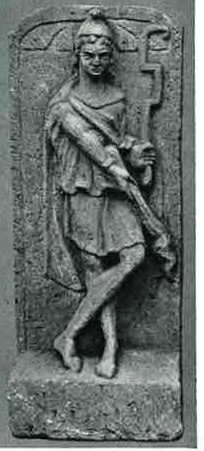
Red sandstone stele from Mithraeum I at Stockstadt depicting Cautopates in Oriental dress, cross-legged, holding a downward torch
Gold lamina from Ciciliano showing a nude, serpent-entwined Aion-Kronos holding a key and surrounded by Greek voces magicae (2nd c. CE).
Group of nearby religious dedications associated with soldiers of the Legio III Augusta and the wider sacred landscape around the Mithraeum.
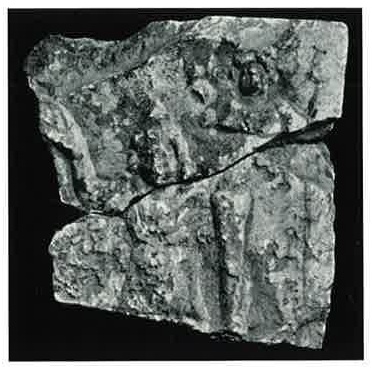
Two bluish marble fragments from the Mithraeum at Sarmizegetusa, Dacia, preserving the upper part of Cautes holding a torch in each hand, with traces of red on his neck, dress, and the torches.
Marble fragment from the Mithraeum at Sarmizegetusa, Dacia, preserving the middle part of Cautopates holding a downward torch in his left hand.
Fragment of a marble relief from the Mithraeum at Sarmizegetusa, Dacia, preserving the bust of a person in a tunic with a right arm and hand holding a torch pointed downward.
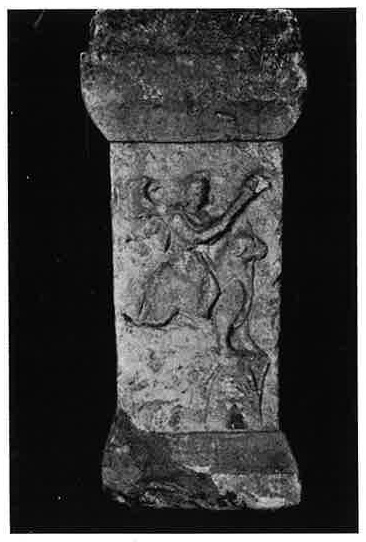
Limestone base from Apulum, Dacia, decorated on the front with Mithras riding the bull to the right while holding an upraised torch — the tauriphoros riding type, distinct from the tauroctony.
Base from Aquincum, Pannonia Inferior, recording that Marcus Aurelius Frontinianus and Marcus Aurelius Fronto, soldiers of Legio II Adiutrix and fratres, built a temple to Soli socio; dated to the consulship of Antoninus, either AD 213 or 222.
Altar from Aquincum, Pannonia Inferior, dedicated to Deo invicto for the welfare of the household of Tiberius Haterius Saturninus, clarissimus vir and legatus Augusti pro praetore, by Caius Iulius Viator, beneficiarius consularis.
Terracotta relief from Aquincum, Pannonia Inferior, depicting a Venus-like goddess in the company of a child holding a fruit basket; its association with the Mithraeum is probable but not certain.
Fourth Mithraic sanctuary discovered near the southern town-wall of Aquincum, Pannonia Inferior, between a rectangular building and an apsidal structure; excavated in 1941–42 and yielding the most complete sculptural assemblage from the city.
Large limestone altar from near Mithraeum III at Aquincum, Pannonia Inferior, with a hole in the base probably designed to hold a cult object; the detailed iconographic programme of this altar is notable within the Aquincum Mithraic assemblage.
Sandstone statue from near Mithraeum III at Aquincum, Pannonia Inferior, depicting a lion to the right with an open frontal mouth, holding an ox head between its forefeet with a red-painted tongue.
Two marble reliefs of the same height from Brigetio, Pannonia Superior, each depicting a cross-legged torchbearer in Oriental dress — Cautes and Cautopates — holding their torches.
