Your search Val di Non gave 2329 results.

Limestone relief of Silvanus found south of the Krempelmühle near Mithraeum III at Aquincum, Pannonia Inferior, in 1895; mentioned because similar representations of Silvanus are attested at other Mithraic sites.
Four uninscribed altars and fragments of torchbearer statues from Mithraeum III at Aquincum, Pannonia Inferior.
Sandstone statue from near Mithraeum III at Aquincum, Pannonia Inferior, probably depicting Mithras's rock-birth.
Observation that two altars dedicated by Caius Iulius Primus to Sol deo sacrum at Aquincum may belong either to Mithraeum I or to Mithraeum III.
Fragment of a relief from Brigetio, Pannonia Superior, preserving the central tauroctony scene surrounded by a laurel wreath.
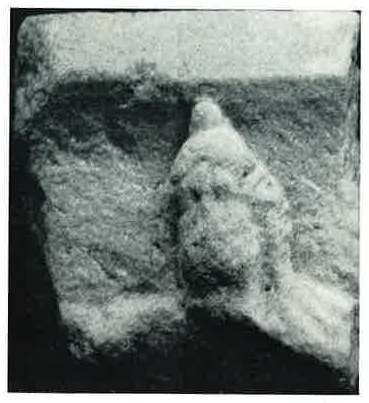
White marble relief fragment from Carnuntum, Pannonia Superior, preserving the upper part of a figure in Oriental dress with the beginning of an upraised right arm — probably Cautes.
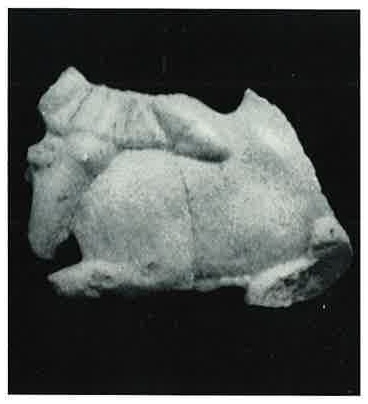
White marble tauroctony relief fragment from Carnuntum, Pannonia Superior, preserving the bull and the lower part of Mithras's tunic.
Sandstone shell from Mithraeum III at Carnuntum, Pannonia Superior, probably mounted on a base and serving as a cult water basin.
Two sandstone fragments from Mithraeum III at Carnuntum, Pannonia Superior, comprising a base with one leg and a downward torch, and a Phrygian-capped head of Cautopates; probably stood at the beginning of the benches alongside the Cautes statue.
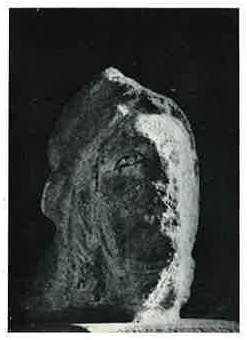
Two sandstone fragments from Mithraeum III at Carnuntum, Pannonia Superior, belonging to a torchbearer statue probably of Cautes, comprising a Phrygian-capped head with painted eyes and a body fragment; the statues probably stood at the beginning of the benches…
Minor finds from Mithraeum I at Carnuntum, Pannonia Superior, comprising legionary brick stamps, burnt coal and wood, ash with ox, sheep, and goat bones, and fragments of serpent-vases; the coin evidence points to a terminus ante quem in the early third century…
Cone-shaped sandstone stone encircled by a serpent from Mithraeum I at Carnuntum, Pannonia Superior, probably forming the base of a rock-birth group.
Sandstone statue from Mithraeum I at Carnuntum, Pannonia Superior, depicting a lying lion with a bull's head before its forefeet; a large opening at the back of the head communicated with a channel below, suggesting use as a cult water outlet.
Sandstone haut-relief from Mithraeum I at Carnuntum, Pannonia Superior, depicting Cautopates cross-legged; head, feet, and left arm are lost; possibly belonging to the great tauroctony relief.
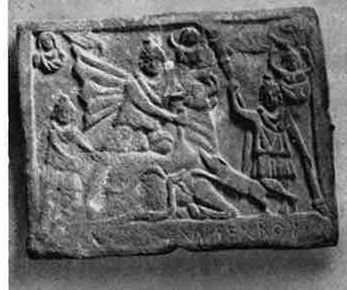
White marble tauroctony relief from Stix-Neusiedl, Pannonia Superior, depicting Mithras killing the bull with the raven perched on the rim of the god's flying cloak — an unusual detail placing the raven on the cloak rather than on the grotto border…
Fragment of a marble altar from Mithraeum IV at Ptuj, ancient Poetovio, preserving only the opening of a dedication to Deo invicto Mithrae.
Marble altar from Mithraeum IV at Ptuj, ancient Poetovio, dedicated to Deo invicto Mithrae by Aurelius Aurelianus.
Marble altar from Mithraeum IV at Ptuj, ancient Poetovio, dedicated to Deo invicto Mithrae by Titus Flavius Aper, decurio of the Colonia Poetovionis.
Fourth Mithraic sanctuary discovered at Ptuj, ancient Poetovio, at Zgornji Breg in 1937; the sanctuary (c.14 × 7 m) is oriented west–east with the standard corridor and bench division, an altar before the cult niche, and a water-basin in the pronaos.
Marble altar from Mithraeum III at Ptuj, ancient Poetovio, dedicated to Deo invicto Mithrae by Aurelius Victor, miles of Legio XIII Gemina.
