Your search Val di Non gave 2351 results.


Late Roman funerary inscription from Antium commemorating the senator, governor of Numidia and Mithraic pater Alfenius Ceionius Iulianus Kamenius.
Altar from Mithraeum I at Carnuntum, Pannonia Superior, dedicated to Deo invicto by Iulius Pacatus ex voto, with Marcus Valerius serving as sacerdos for the second time — one of the few attestations of the Mithraic title sacerdos from Pannonia.
Marble votive altar from Stix-Neusiedl, Pannonia Superior, recording that Valerius and Valerianus restored a collapsed Mithraic temple at their own expense for the welfare of Emperor Lucius Septimius; red-painted lettering is preserved.
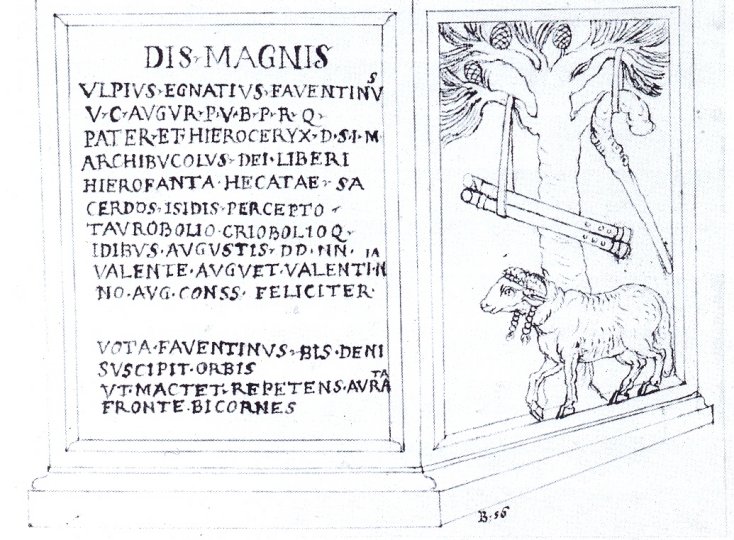
Both of them were discovered in 1609 in the foundations of the façade of the church of San Pietro, Rome.
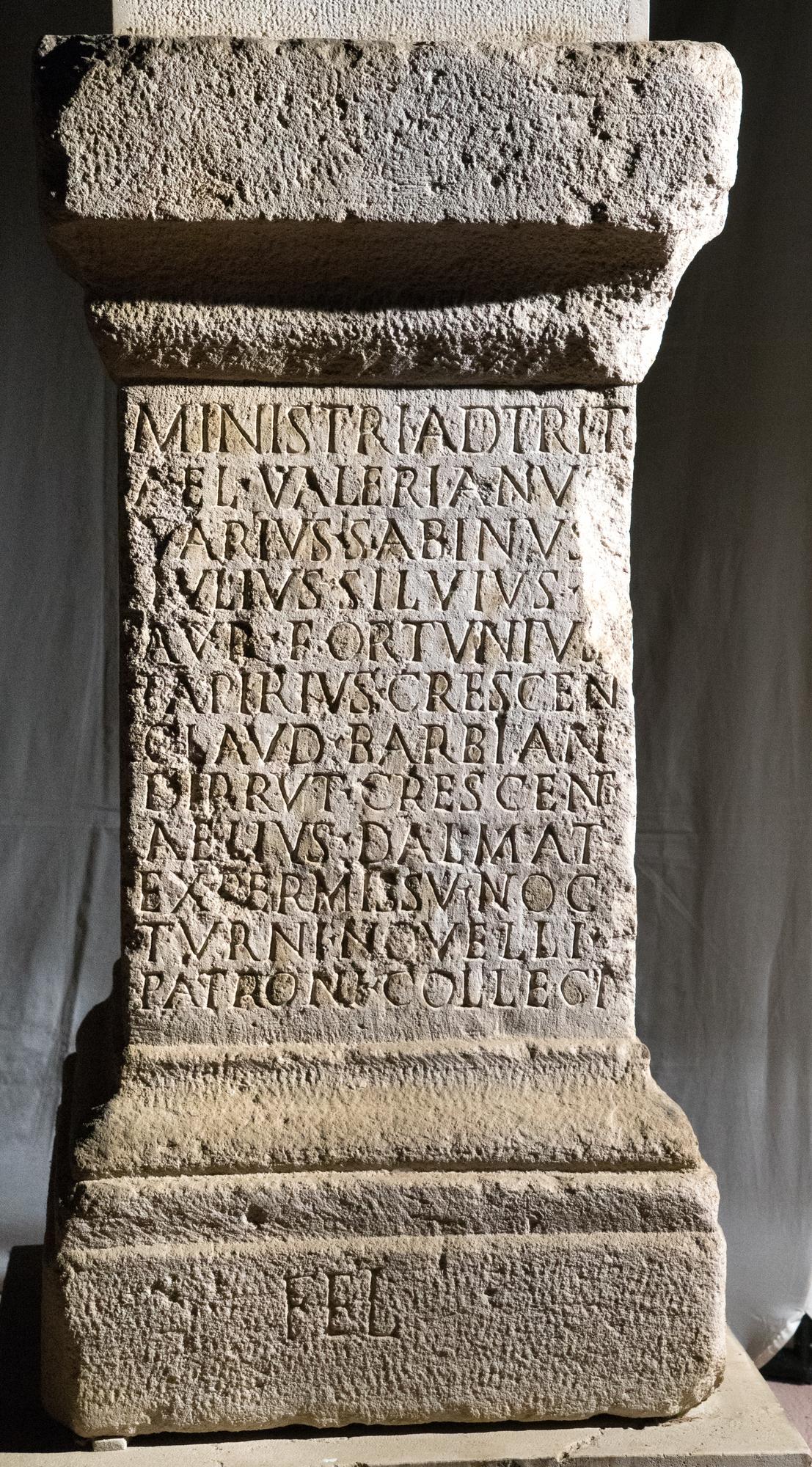
This inscribed limestone altar from Roman Salona preserves several lists of ministers associated with the Tritones collegium during the Tetrarchic period.
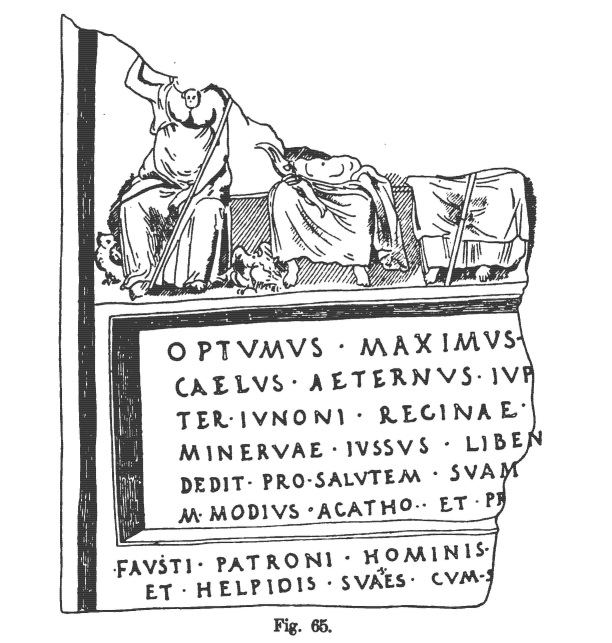
This marble relief bears an inscription by Marcus Modius Agatho, who dedicated several monuments to Mithras on the Caelian Hill in Rome.
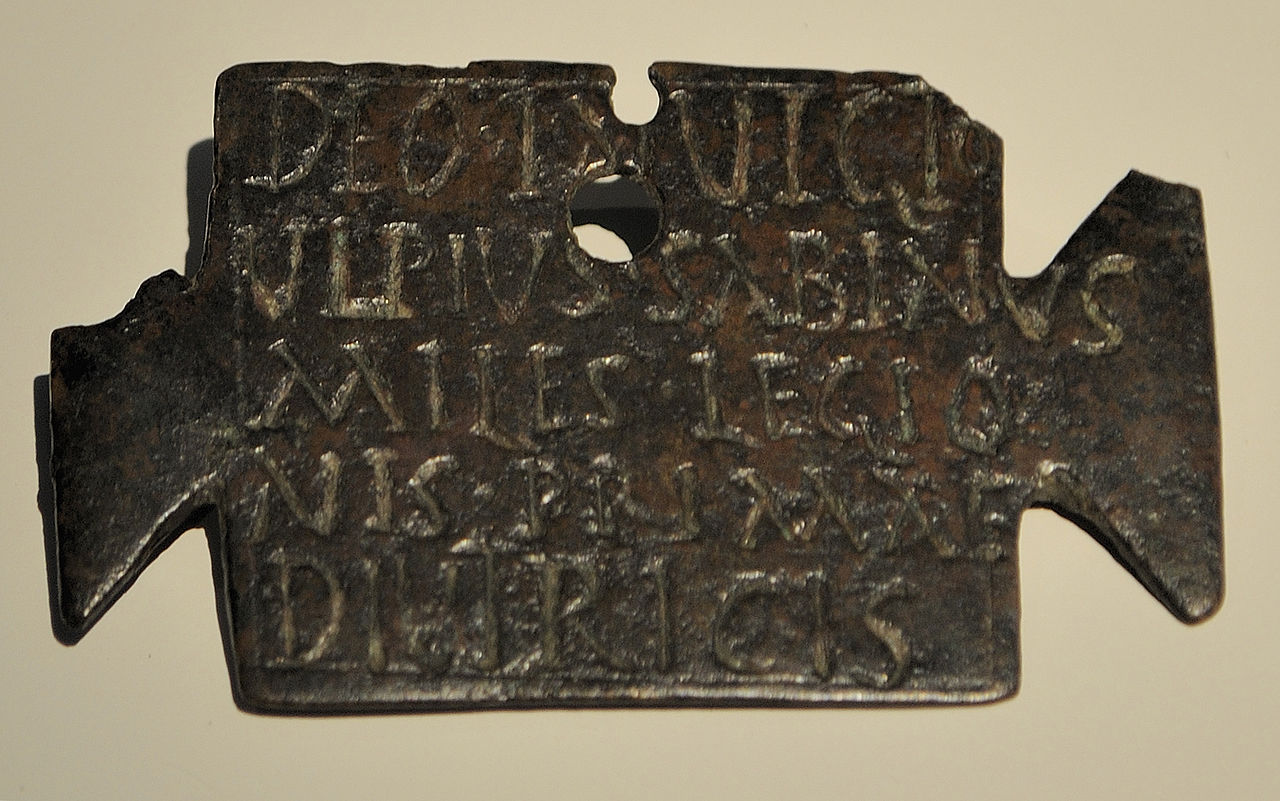

The Mithraeum under and behind S. Prisca on the Aventine is without doubt the most important sanctuary of the Persian god in Rome.