Your search Villa dei Quintili gave 359 results.

Base of a Venus statuette preserving only the feet and a jug with a cloth on the right side, from the Mithraeum at the Palazzo dei Musei, Rome; a second broken base may also have belonged to a Venus statuette.
Lower part of a small statuette of Minerva in a long chiton, leaning on a shield with her left hand, from the Mithraeum at the Palazzo dei Musei, Rome.
Marble pilaster broken in two with ridges on all four sides and the head of Sol in a radiate crown at the top, from the Mithraeum at the Palazzo dei Musei, Rome.
Marble serpent's head with a small hole at the beginning of its neck, belonging to a Mithras bull-killing group or a rock-birth scene, from the Mithraeum at the Palazzo dei Musei, Rome.
Fragment of a small white marble relief showing Cautes in tunica manicata and long cloak with an upraised flaming torch, from the Mithraeum at the Palazzo dei Musei, now at Via Portico d'Ottavia 29, Rome.
Small undecorated altar of travertine without inscription, from the Mitreo dei Serpenti at Ostia.
Two marble busts of youthful figures with Phrygian caps, probably representing the torchbearers Cautes and Cautopates, from the Villa Borghese collection, found at Formiae.
Late Roman funerary inscription from Antium commemorating the senator, governor of Numidia and Mithraic pater Alfenius Ceionius Iulianus Kamenius.
Large marble base from near Kutyamál at Apulum, Dacia, dedicated ex iussu dei Apollinis and naming the Fons Aeternus — the eternal spring — by Ulpius Proculinus, speculator of Legio XIII Gemina.
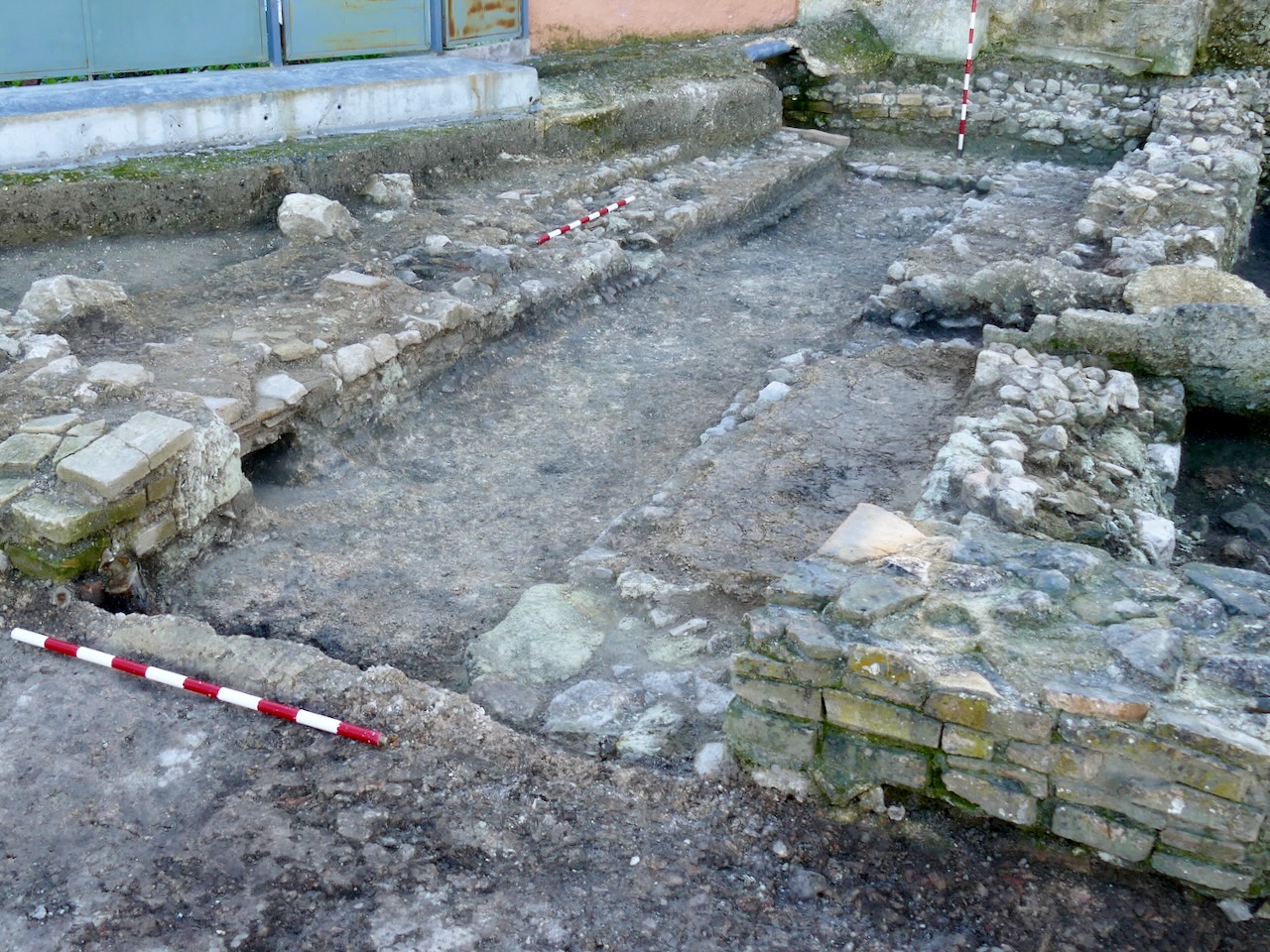
The Mithraeum of Cabra is located in the Villa del Mitra, which owes its name to the discovery in 1951 of a Mithras tauroctonus in the remains of the Roman villa.
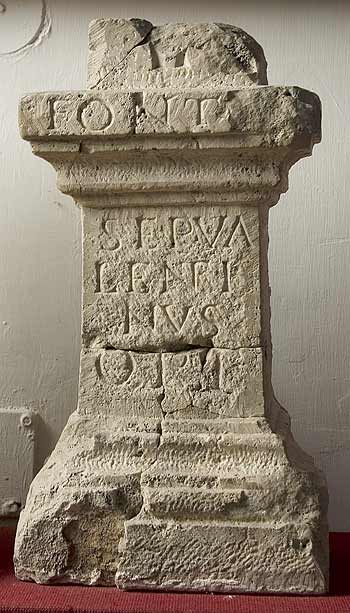
Fragmentary limestone altar dedicated by Septimius Valentinus, an optio, probably discovered in Mithraeum IV at Aquincum.

Garlic merchant, probably from Lusitania, who dedicated an altar to Cautes in Tarraconensis.
This inscription probably belonged to the fourth mithraeum of Poetovio and records the restoration of a Mithraic temple by the dux Aurelius Iustinianus.
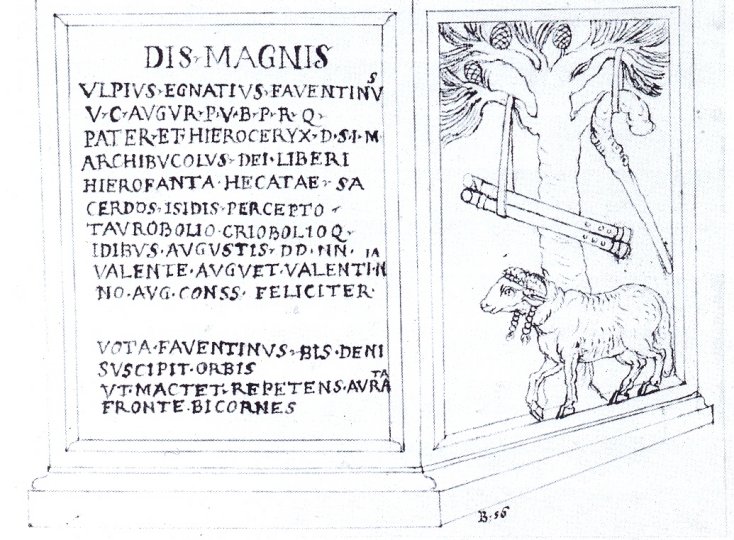
Both of them were discovered in 1609 in the foundations of the façade of the church of San Pietro, Rome.
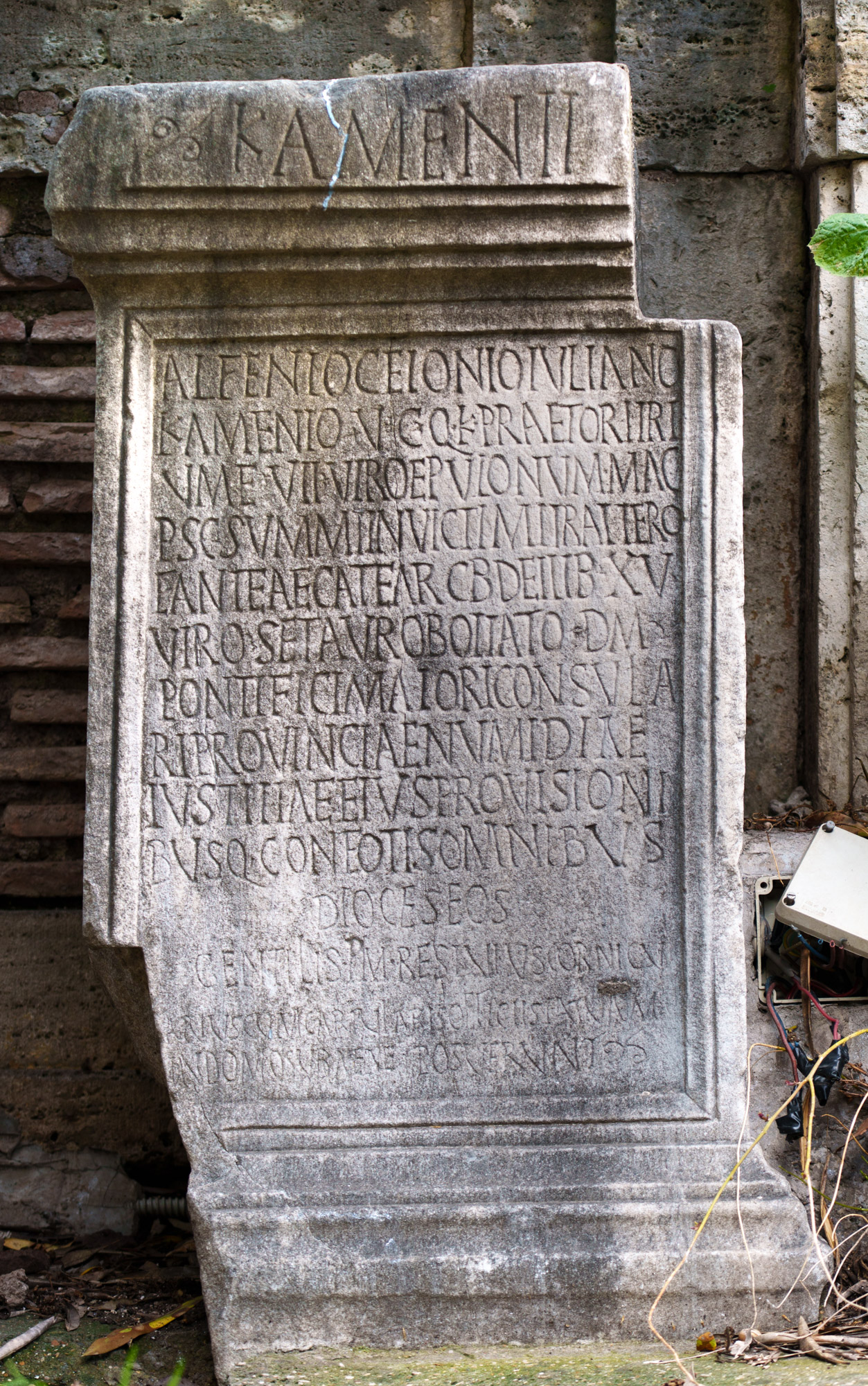
Honorific marble statue base dedicated to the senator and Mithraic pater Alfenius Ceionius Iulianus Kamenius by members of his provincial administration.
Marble altar dedicated at the Vatican Phrygianum in Rome by the Mithraic pater Alfenius Ceionius Iulianus Kamenius in 374 CE.
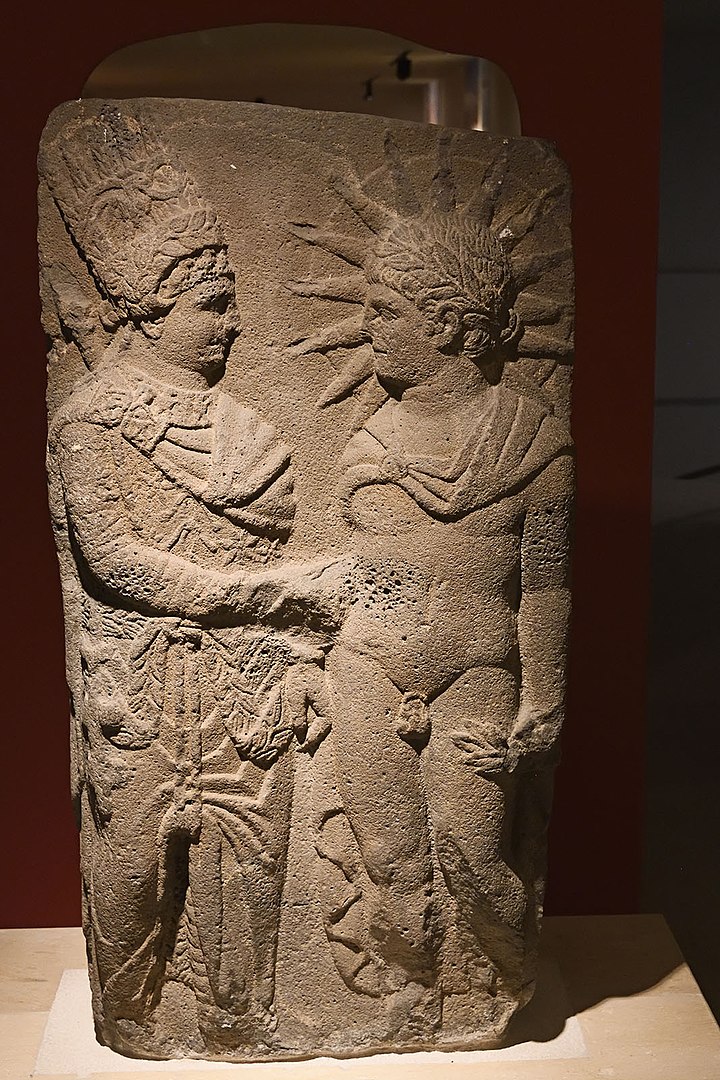
Stele representing Apollo-Mithras-Helios in a Hellenistic nude fashion, shaking hands with Antiochus I.
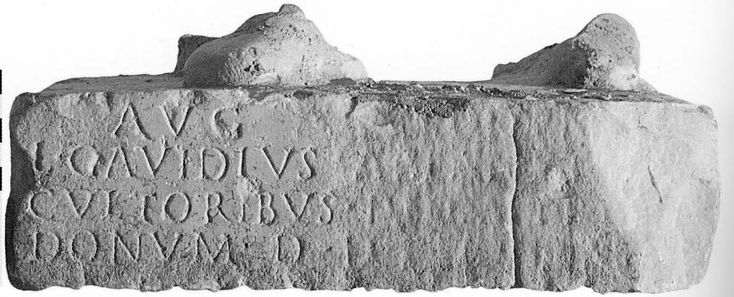
This inscription on white marble by Lucius Gavidius uses the term ther cultores to refer to his Mithraic community in Stabiae, Italy.
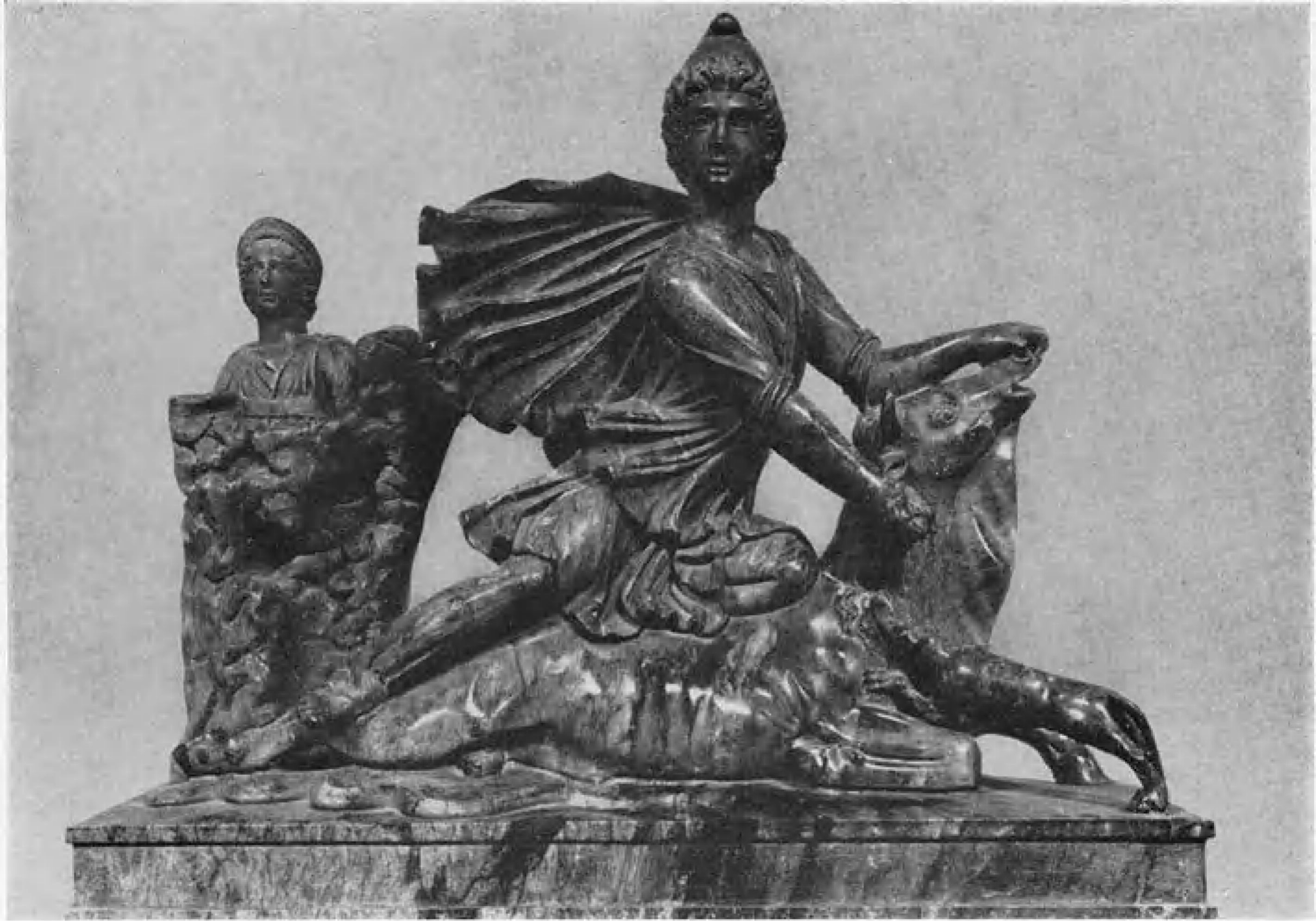
This black marble of Mithras killing the Bull has belonged to the sculptor Carlo Albacini.
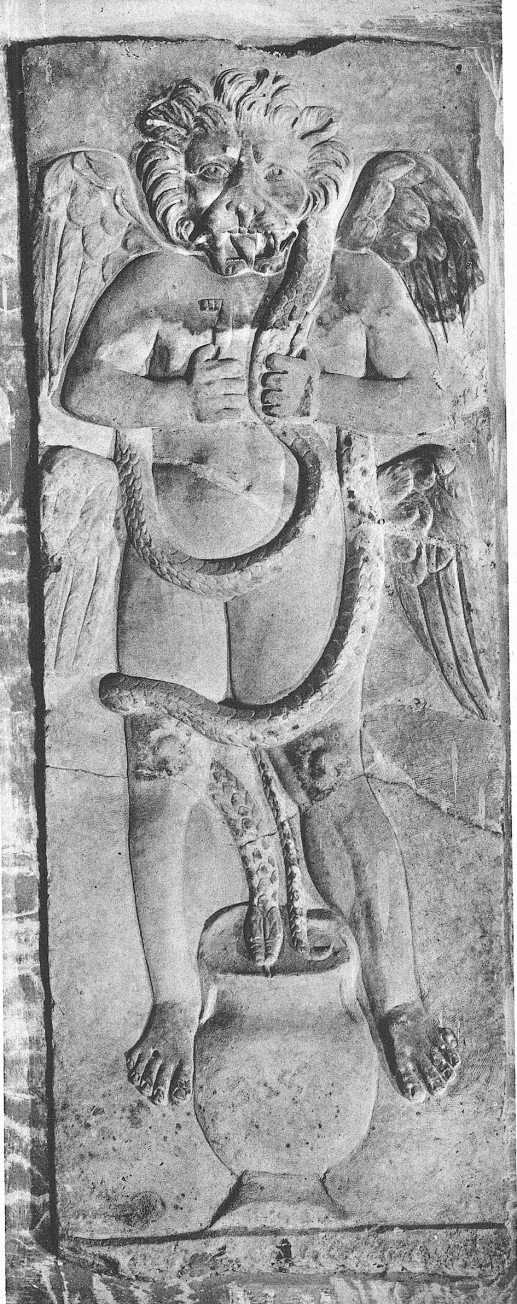
This white marble relief depicting a lion-headed figure from Ostia is now exposed at the Musei Vaticani.
