Your search aquincum gave 80 results.

Altar found at Altofen in 1855, ancient Aquincum, dedicated to Deo Arimanio — Ahriman, the Zoroastrian adversary — by Libella, leo, as a votive dedication to the fratres; one of the very few Mithraic dedications to Ahriman from the Roman world.
Minor finds from Mithraeum IV at Aquincum, Pannonia Inferior, comprising a stamped terra-sigillata bowl (CINNAMI), serpent-vase fragments, pine-apples, altars, balls, and lamps.
Terracotta relief from Aquincum, Pannonia Inferior, depicting a Venus-like goddess in the company of a child holding a fruit basket; its association with the Mithraeum is probable but not certain.
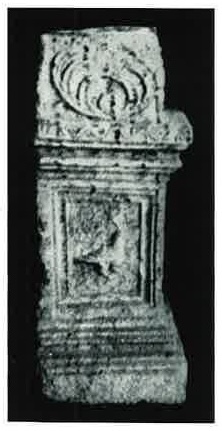
Inscription from Aquincum, Pannonia Inferior, dedicated to Deo invicto Mithrae by Caelius Anicetus with his son.
Sandstone statue from near Mithraeum III at Aquincum, Pannonia Inferior, depicting a lion to the right with an open frontal mouth, holding an ox head between its forefeet with a red-painted tongue.
Sandstone statue from near Mithraeum III at Aquincum, Pannonia Inferior, probably depicting Mithras's rock-birth.
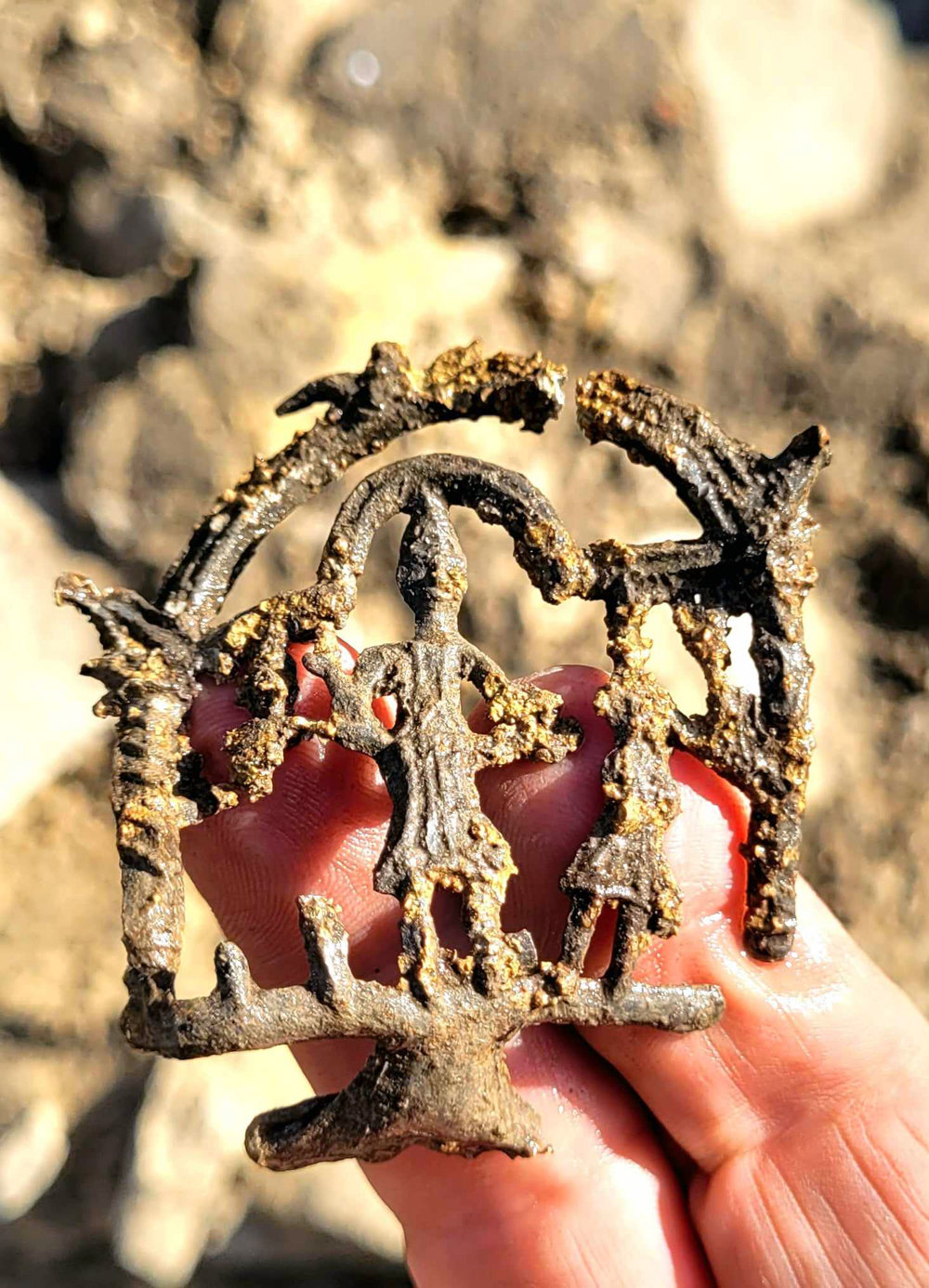
A sixth temple dedicated to Mithras has been identified for the first time in the military sector of the ancient Roman city of Aquincum.
The fifth mithraeum from Aquincum has been found in the house of a military tribune.
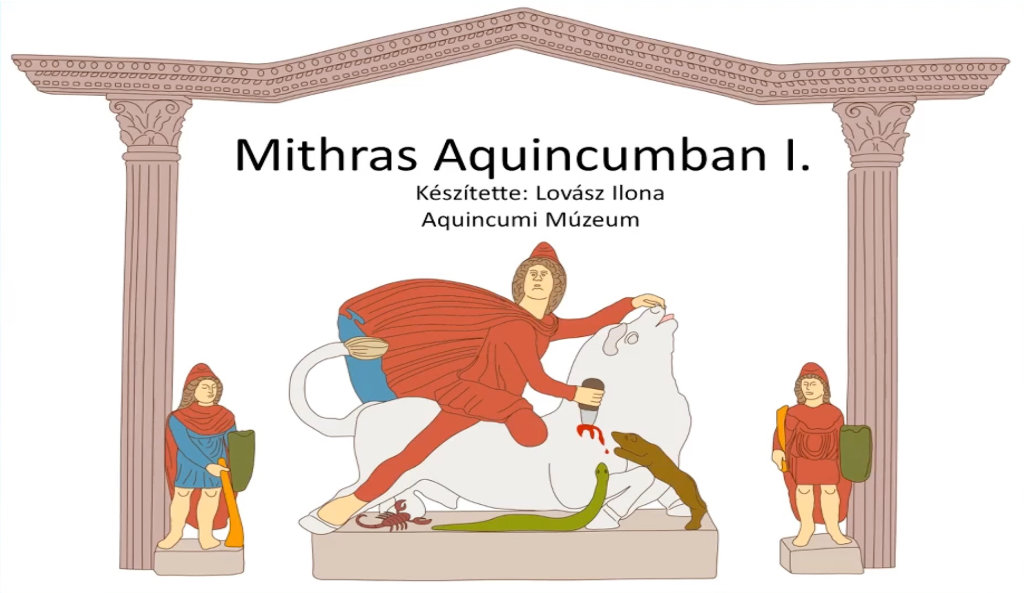
Video report in Hungarian by the Aquincum Museum on the Mithraic discoveries in the region.

First Mithraic sanctuary in the potter's quarter of Aquincum, Pannonia Inferior; destroyed during the Marcoman wars; the rectangular building is known only from the four altars found side by side.
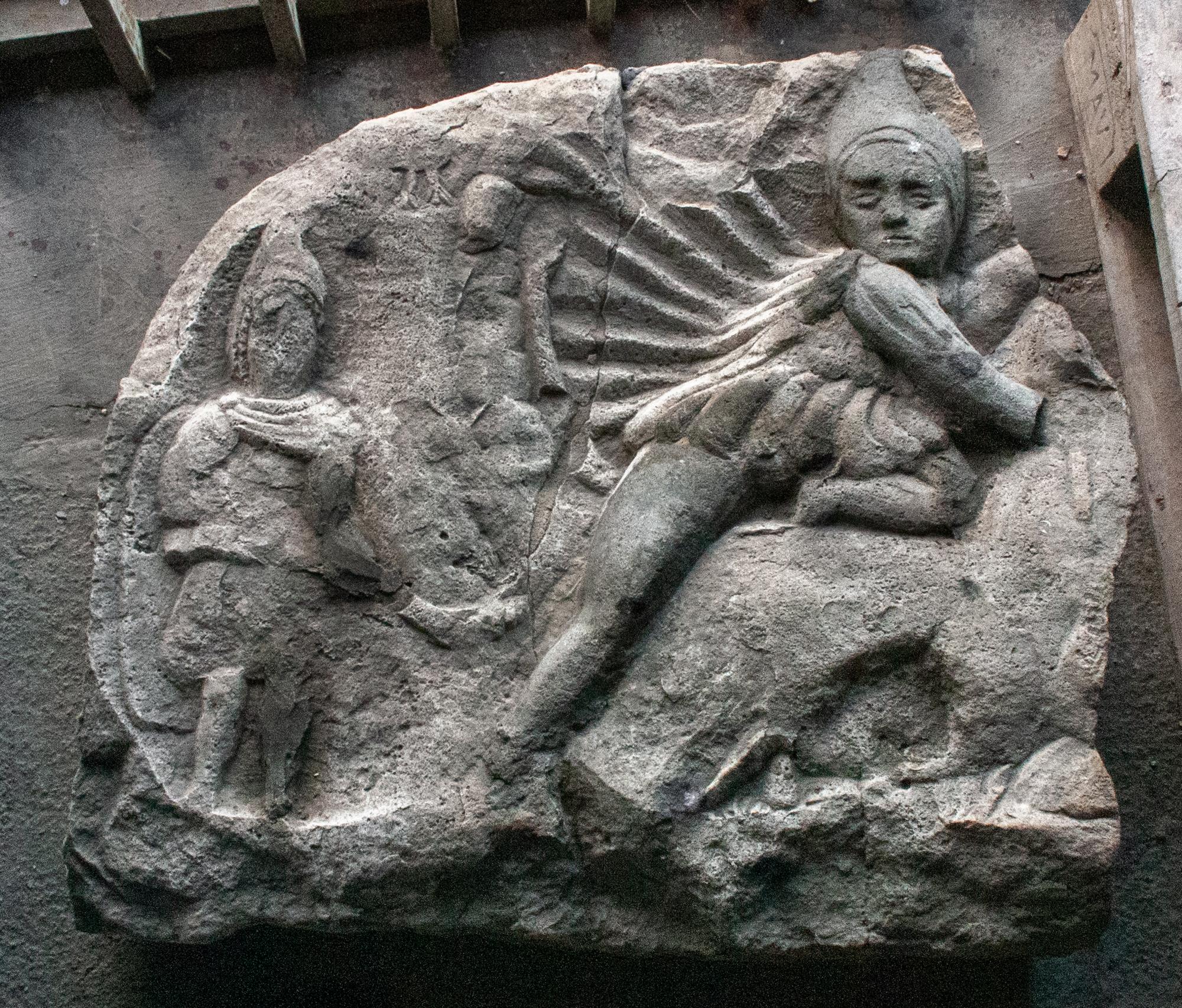
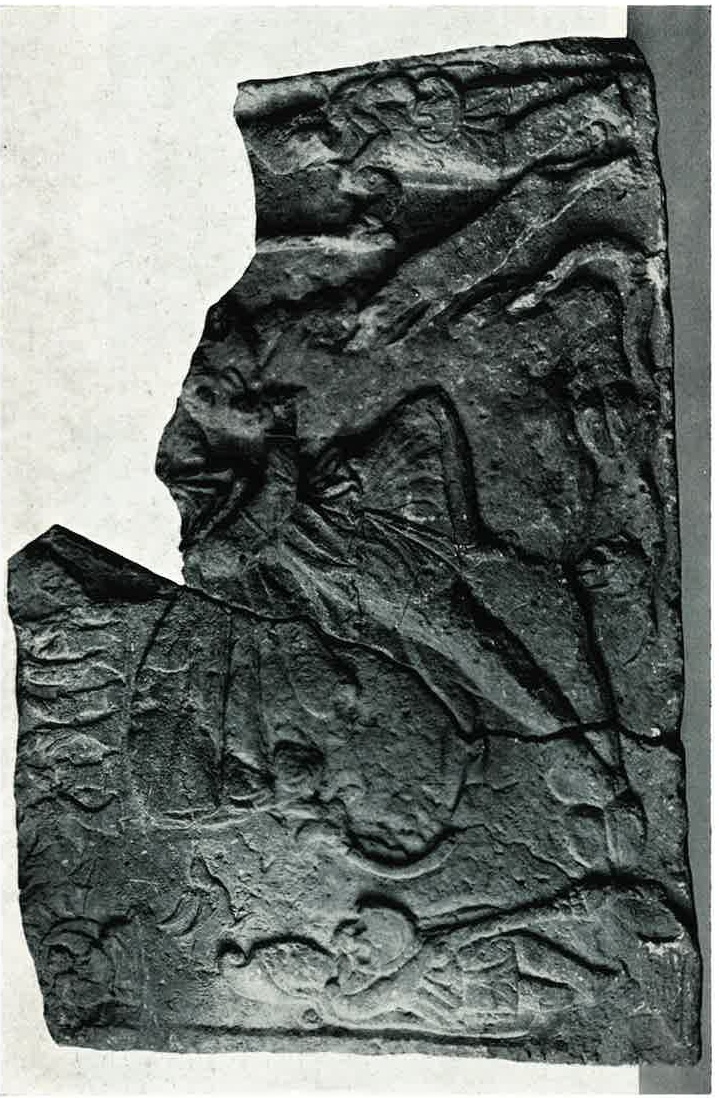
This limestone tauroctony from Aquincum preserves Mithras slaying the bull together with Cautopates, the serpent, the scorpion, and the legs of the raven.
Fragments of this limestone statue include the head and torso of Mercury, holding the caduceus in his left hand.
Two limestone statue fragments from Mithraeum II at Aquincum, Pannonia Inferior, representing Mercury in a shoulder-pinned garment with wings in his hair; probably stood in room A on base y.
Base from Mithraeum II at Aquincum, Pannonia Inferior, dedicated by a decurio and aedilis of the Colonia Aquincum; the dedicatee and dedicant's name are not preserved.
Fragment of a relief from Aquincum, Pannonia Inferior, walled into a house at Majláth-Utcai 51, preserving the lower left corner of a tauroctony with the bull's hind-leg, Mithras's leg, and the scorpion.
Base from Aquincum, Pannonia Inferior, dedicated to Deo invicto Mithrae by Marcus Aurelius Frontinianus, decurio of the Colonia Aquinci.
Altar from Aquincum, Pannonia Inferior, dedicated to Deo invicto for the welfare of the household of Tiberius Haterius Saturninus, clarissimus vir and legatus Augusti pro praetore, by Caius Iulius Viator, beneficiarius consularis.
Fourth Mithraic sanctuary discovered near the southern town-wall of Aquincum, Pannonia Inferior, between a rectangular building and an apsidal structure; excavated in 1941–42 and yielding the most complete sculptural assemblage from the city.
Large limestone altar from near Mithraeum III at Aquincum, Pannonia Inferior, with a hole in the base probably designed to hold a cult object; the detailed iconographic programme of this altar is notable within the Aquincum Mithraic assemblage.
Limestone relief of Silvanus found south of the Krempelmühle near Mithraeum III at Aquincum, Pannonia Inferior, in 1895; mentioned because similar representations of Silvanus are attested at other Mithraic sites.
