Your selection in monuments gave 62 results.

Small altar found at Töltschach in 1817, Noricum, decorated with the traces of two ram heads flanking foot-prints; the relief is no longer visible and only the inscription survives.
Inscription from Virunum, Noricum, dedicated to Deo Soli invicto by Iuventinus, who identifies himself with the Mithraic grade leo — one of the clearest grade attributions in the epigraphic record of Noricum.
Lost altar from the Zollfeld at Virunum, Noricum, dedicated to Deo invicto Mithrae by Ulpius Valerius, speculator of Legio I Noricorum, who fulfilled a vow undertaken by his father.
Inscription from Virunum, Noricum, dedicated to Deo invicto Mithrae for the welfare of Antonius Severinus by Helvius Acceptinus ex voto.
White marble slab from the Zollfeld at Virunum, Noricum, dedicated to Deo invicto Mithrae by Diadumenus, arcar(ius) of the imperial dispensator Nicolaus for the kingdom of Noricum.
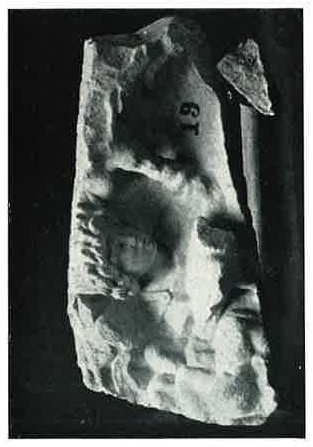
Three Italian marble fragments from the Zollfeld at Virunum, Noricum, forming a tauroctony relief; the iconography is well preserved and the use of imported Italian marble reflects the high status of the dedicants.
Small finds from the Mithraeum at Schachadorf, Noricum, comprising white stucco fragments, an iron dagger, a knife, and faunal remains of chicken, sheep, and pig.
Deposit of twenty-three coins from the Mithraeum at Schachadorf, Noricum, spanning from Claudius II to Valentinianus II and providing a terminus for the sanctuary's use.
Conglomerate statue from a layer of fire debris in the Mithraeum at Schachadorf, Noricum, depicting a naked Mithras without Phrygian cap being born from the rock with upraised hands; a coiling serpent is visible below.
Small rectangular Mithraic sanctuary (spelaeum 8.00 m long) found in 1935–36 in a gravel terrace at Schachadorf near Wartberg an der Krems, Noricum; the building is divided into a pronaos and an inner cult room, and shows traces of fire destruction.
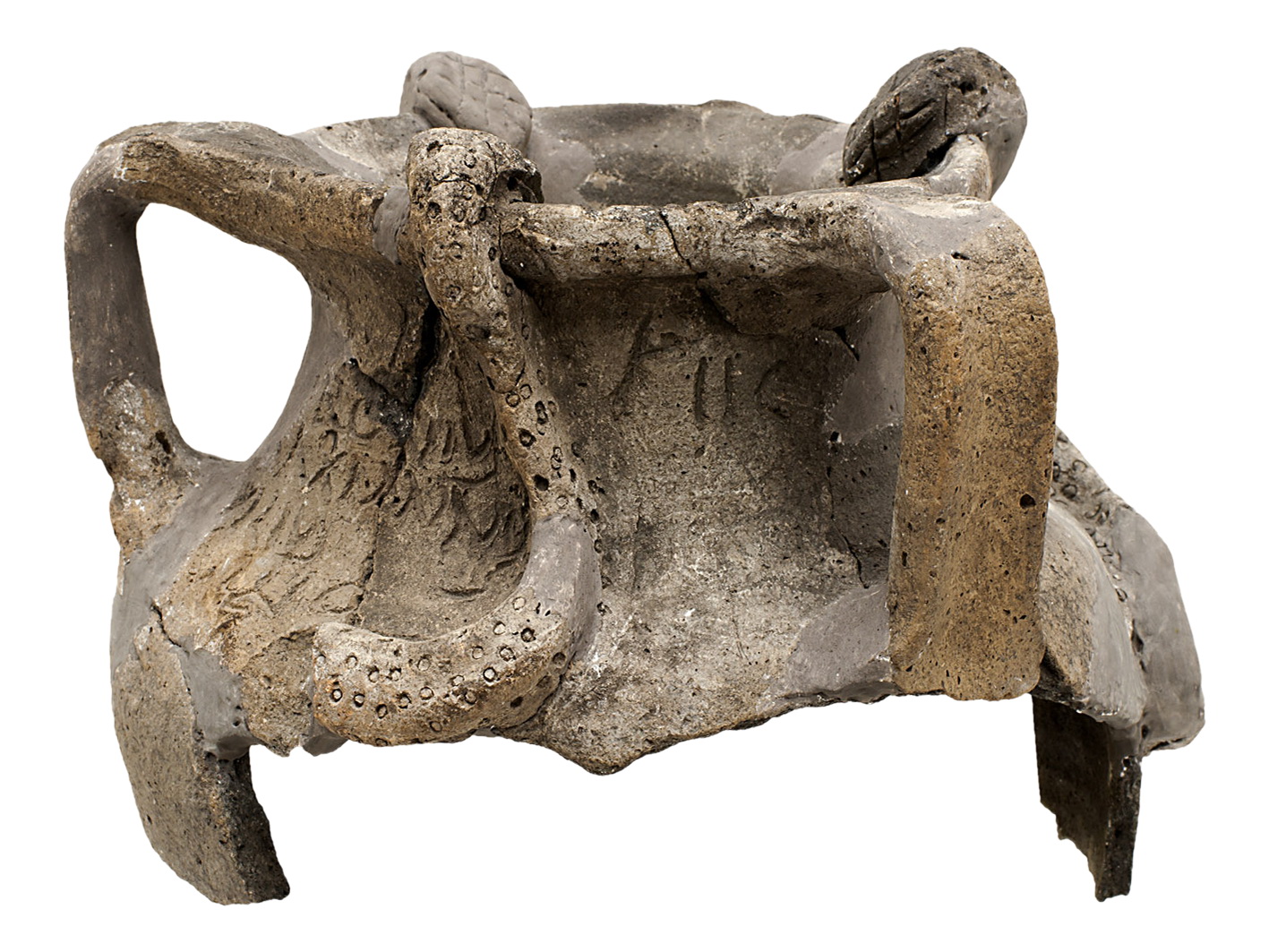
Upon first examination, archaeologists interpreted the inscription on the cult vessel from Gradishje as referencing Mithras, though it has since been re-evaluated.
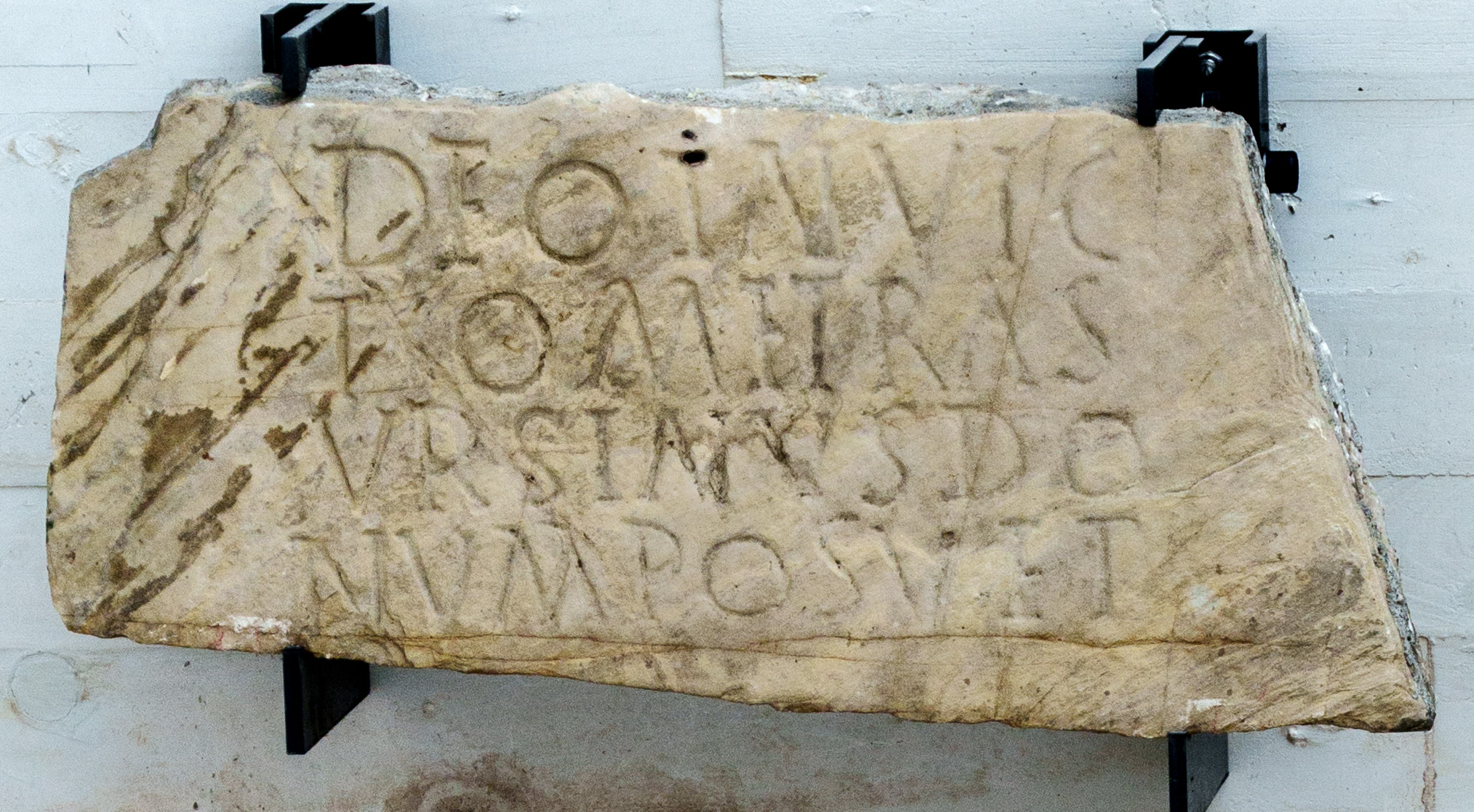
Marble plaque with inscription by a certain Ursinus found in Virunum in 1838.
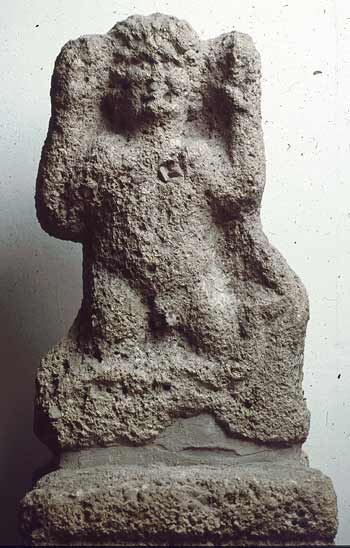
Conglomerate statue of the birth of Mithras, found in a burnt layer, showing the god nude emerging from the rock with raised hands and a snake.
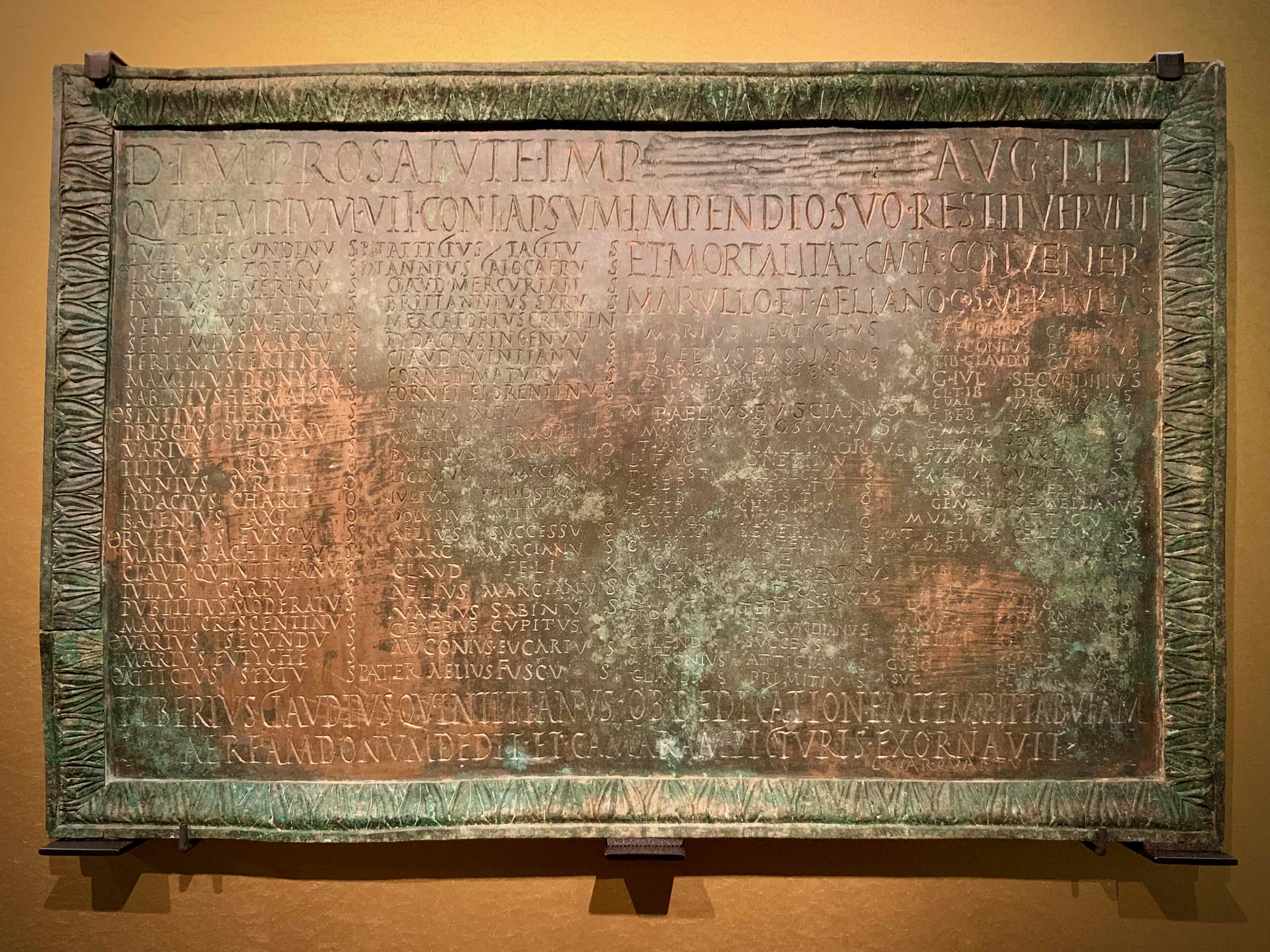
The bronze bears the dedication of a restoration of a Mithraeum carried out in 183.
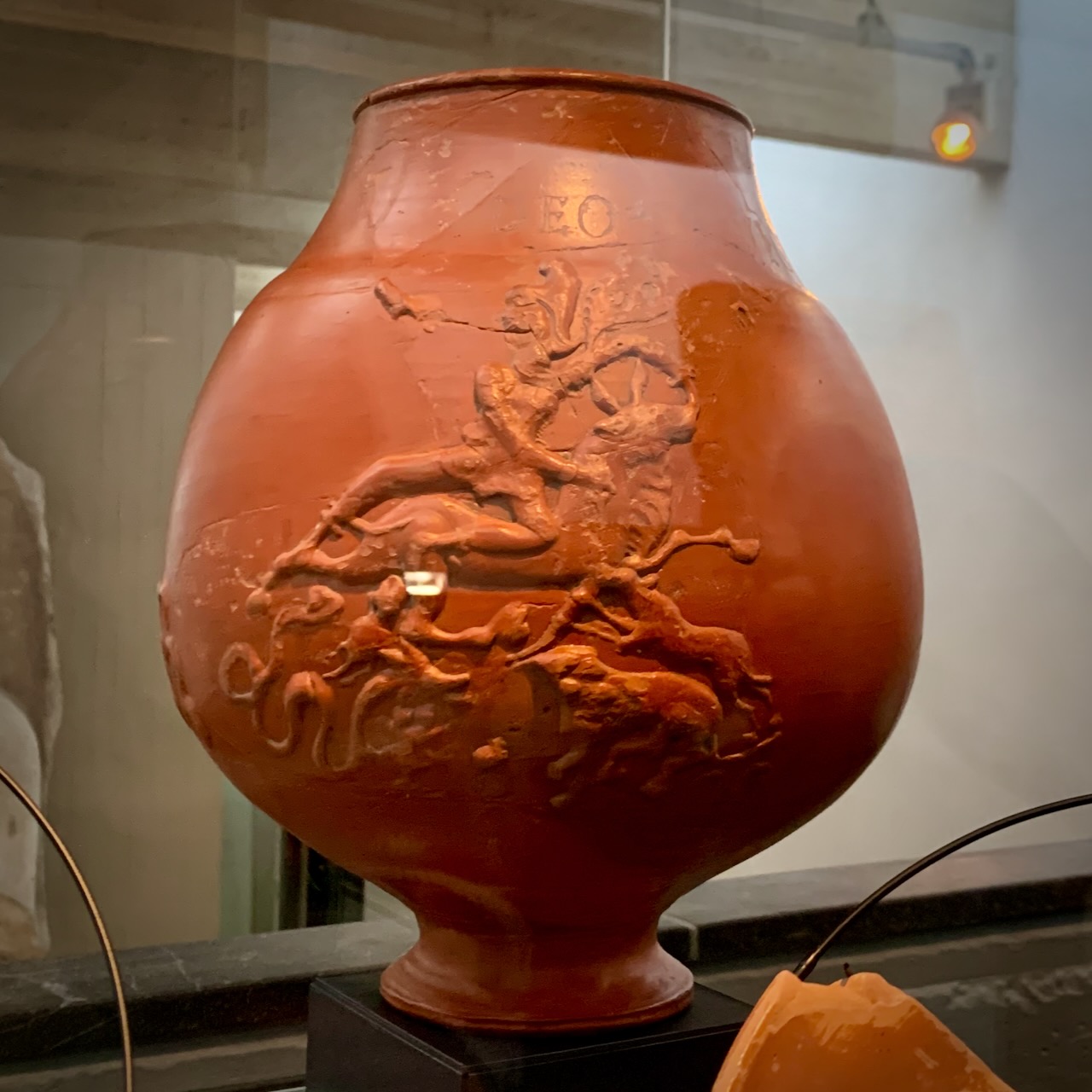
The Mühltal Mithraic crater was discovered among the artefacts of a mithraeum found in Pfaffenhoffen am Inn, Bavaria.
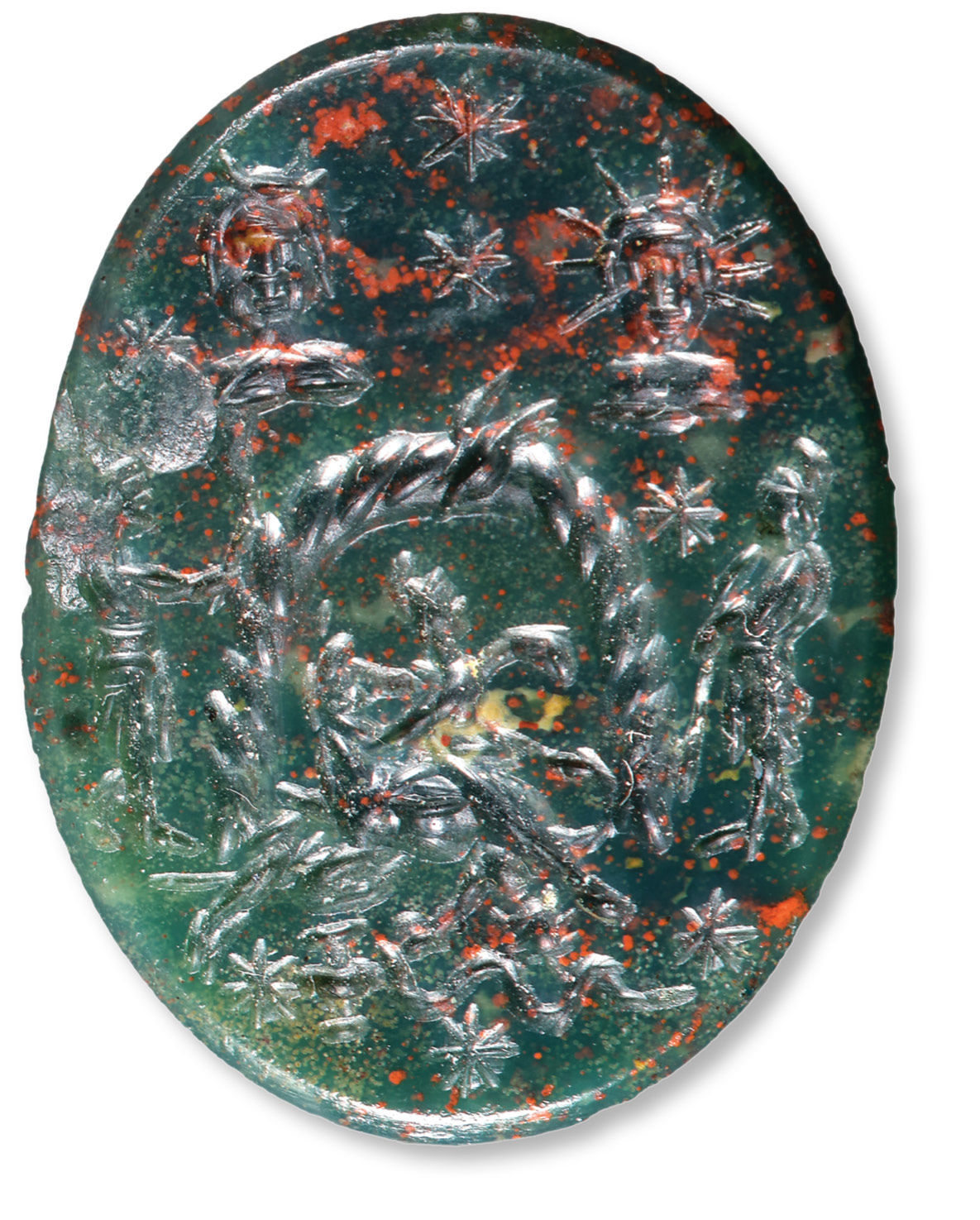
This heliotrope gem, depicting Mithras slaying the bull, dates from the 2nd-3rd century, but was reused as an amulet in the 13th century.
A certain Secundinus, steward of the emperor, dedicated this altar to Mithras in Noricum, today Austria.
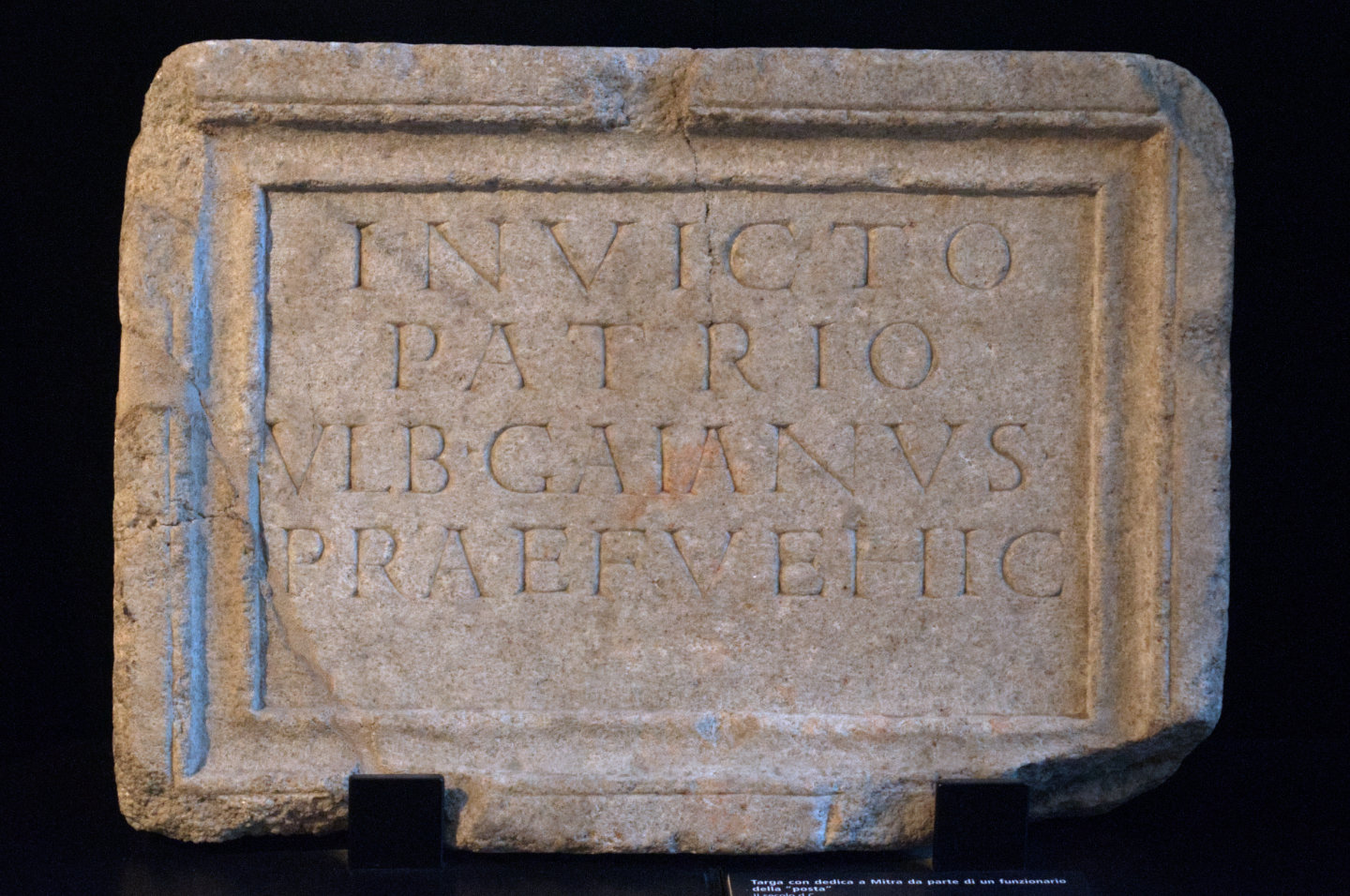
This monument dedicated to 'Invicto Patrio' was found in Milan in 1869.

A bronze plaque records the existence of a mithraeum at Virunum that collapsed and was rebuilt by members of the community.
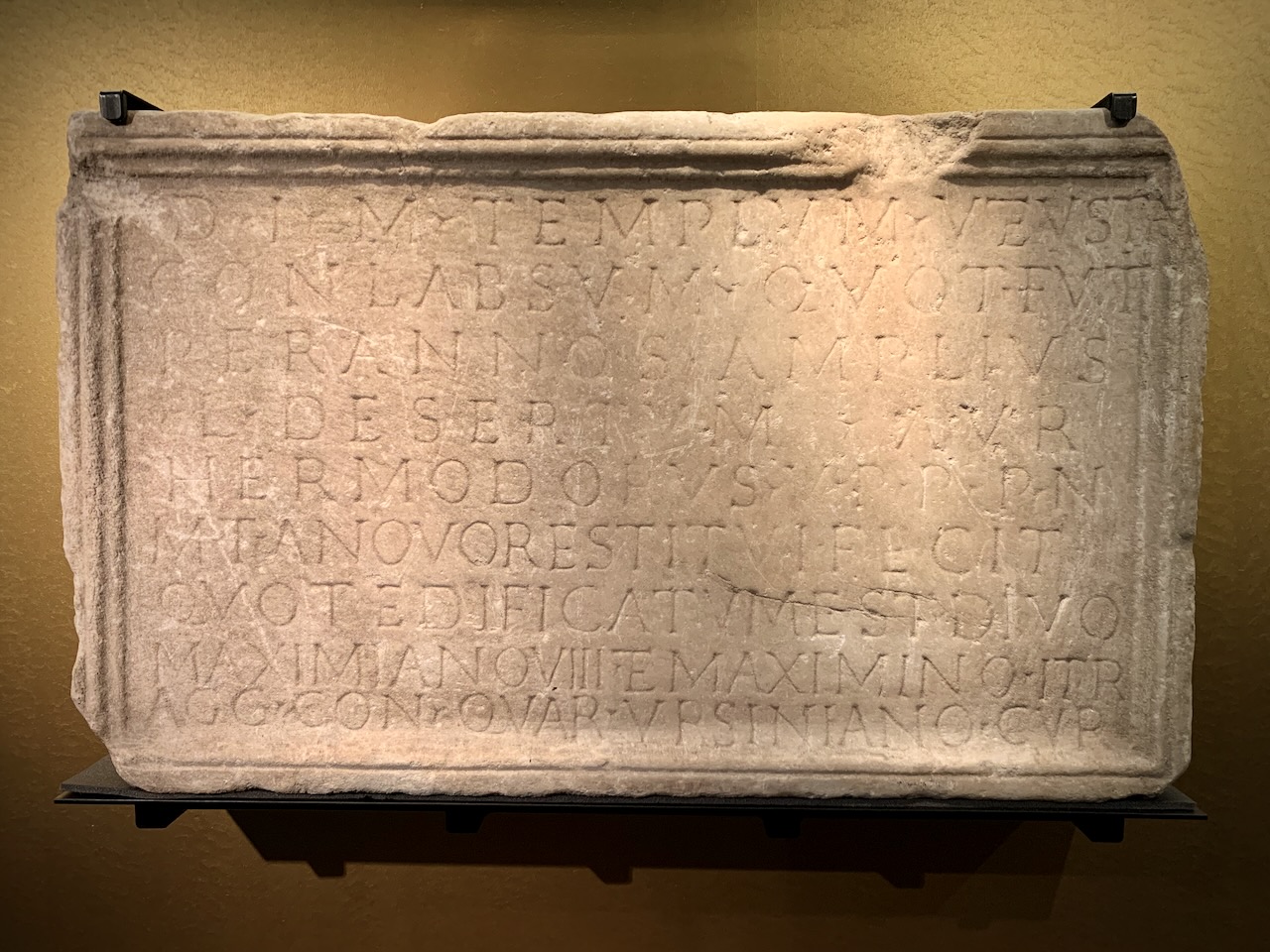
This marble gives some details of the reconstruction of the Virunum Mithraeum.
