
Lost altar dedicated by Lucius Apronius Chrysomallus on the occasion of his initiation into the Mithraic grade of Perses, the only known inscription explicitly recording admission to this grade.
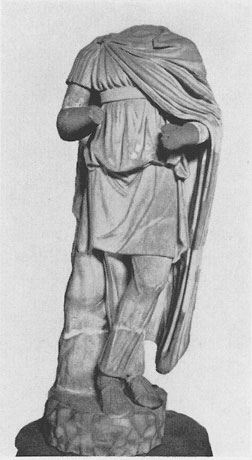
Penthelic marble statue of a standing torchbearer in Eastern attire, cross-legged, with head and torch arm broken off, probably 2nd century A.D., found at Antium (modern Anzio).
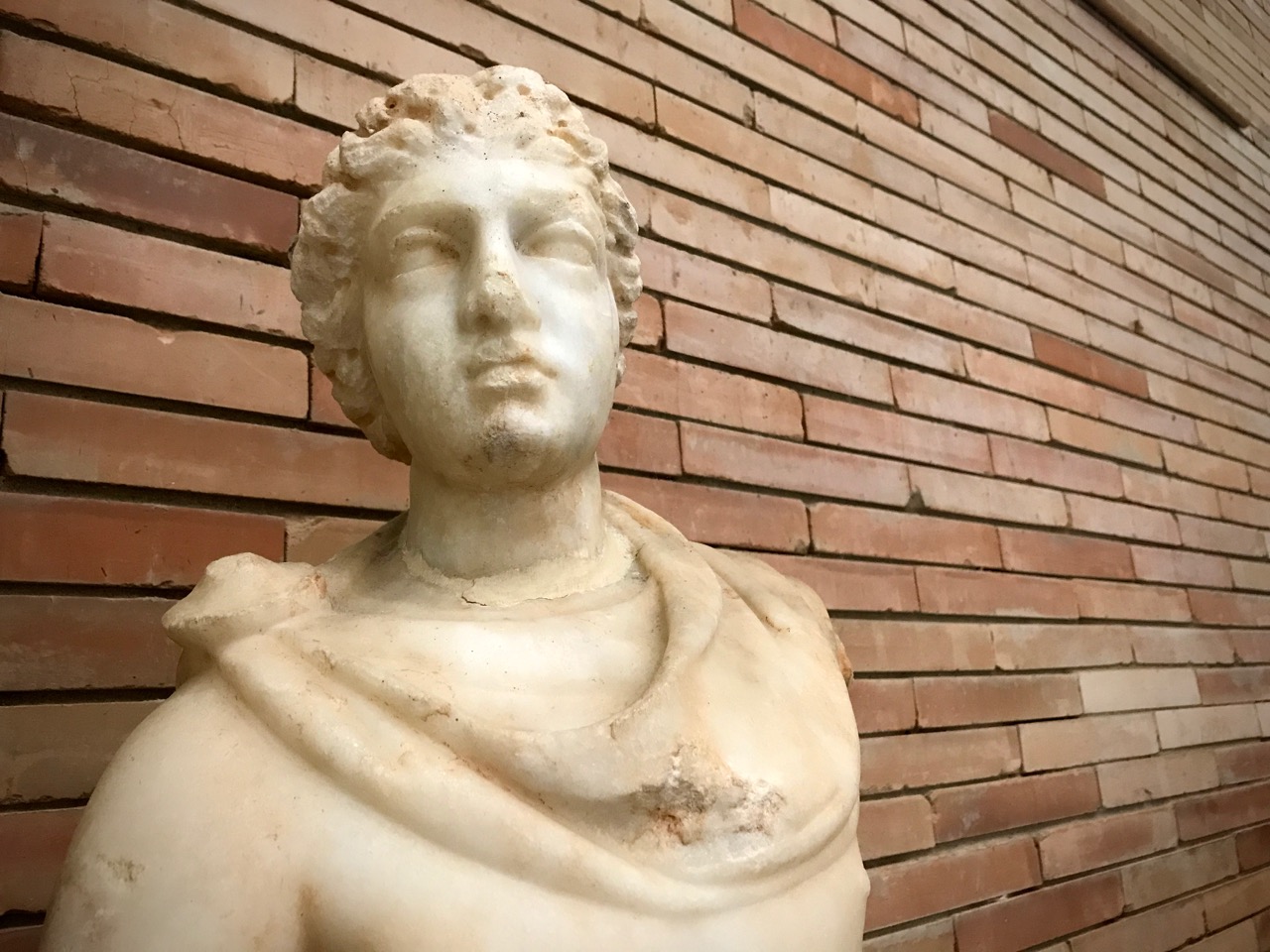
Marble statue of a naked young man from Mérida, variously identified as a Mithraic torchbearer, a solar figure or a newly initiated member of the cult.
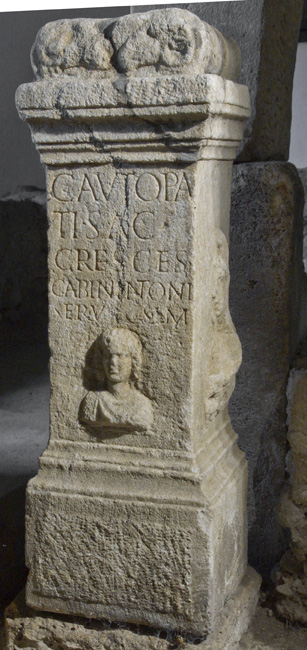
White marble altar from Mithraeum I at Ptuj, ancient Poetovio, decorated with a bust of Cautopates, two ram heads flanking a palm, and lateral representations of Mithras’ rock-birth.
White marble base from Mithraeum I at Ptuj, ancient Poetovio, with an inscription and the preserved legs, garment, and torch of a Cautopates statue.
White marble base from Mithraeum I at Ptuj, ancient Poetovio, with an inscription and the preserved foot and lower garment of a Cautes statue.
This marble monument was dedicated in Rome by the slave Fructus and his son Myro.

This marble altar was found ’in the street called di Branco’, behind the palace of the Cardinal of Bologna, in Rome.
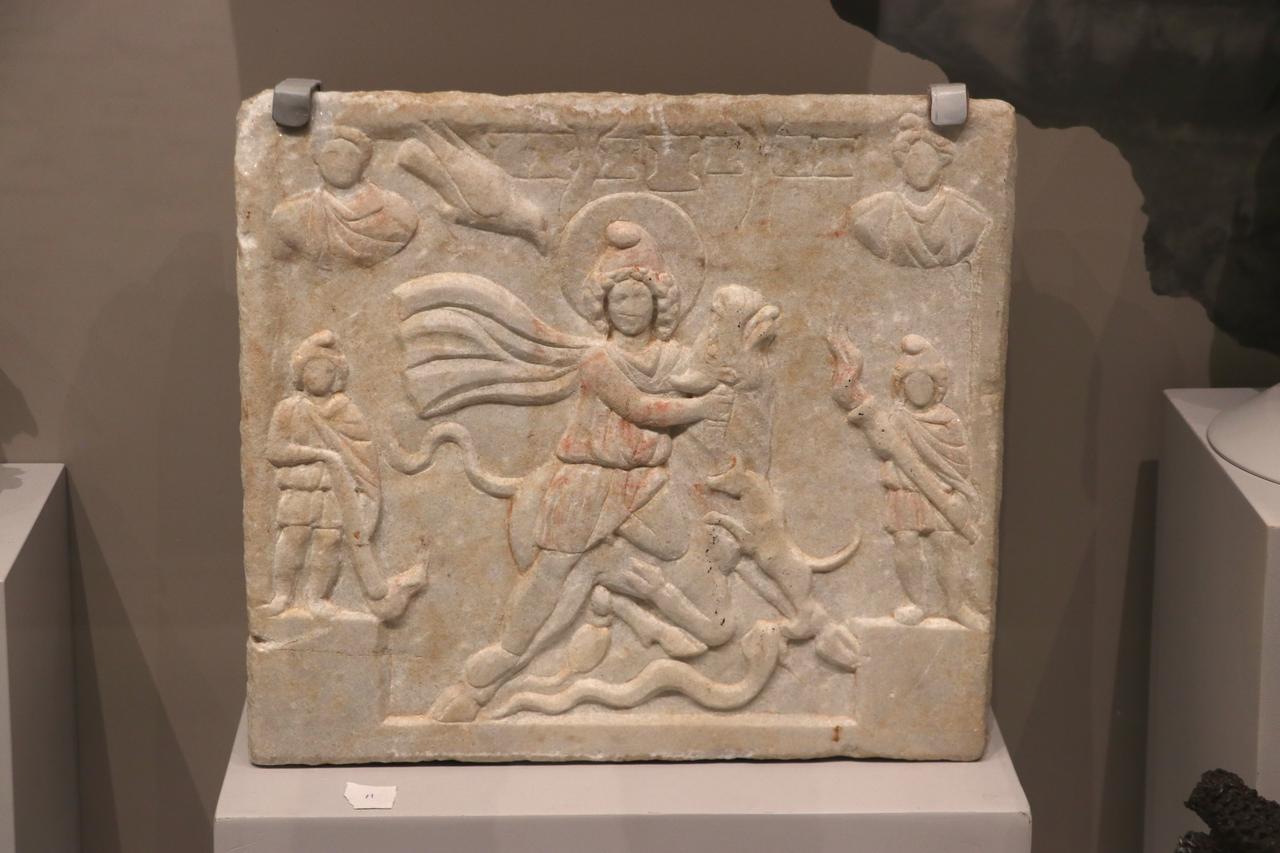
A marble tauroctony discovered in the military quarter of ancient Zeugma, providing the first known evidence for the cult of Mithras at the city.
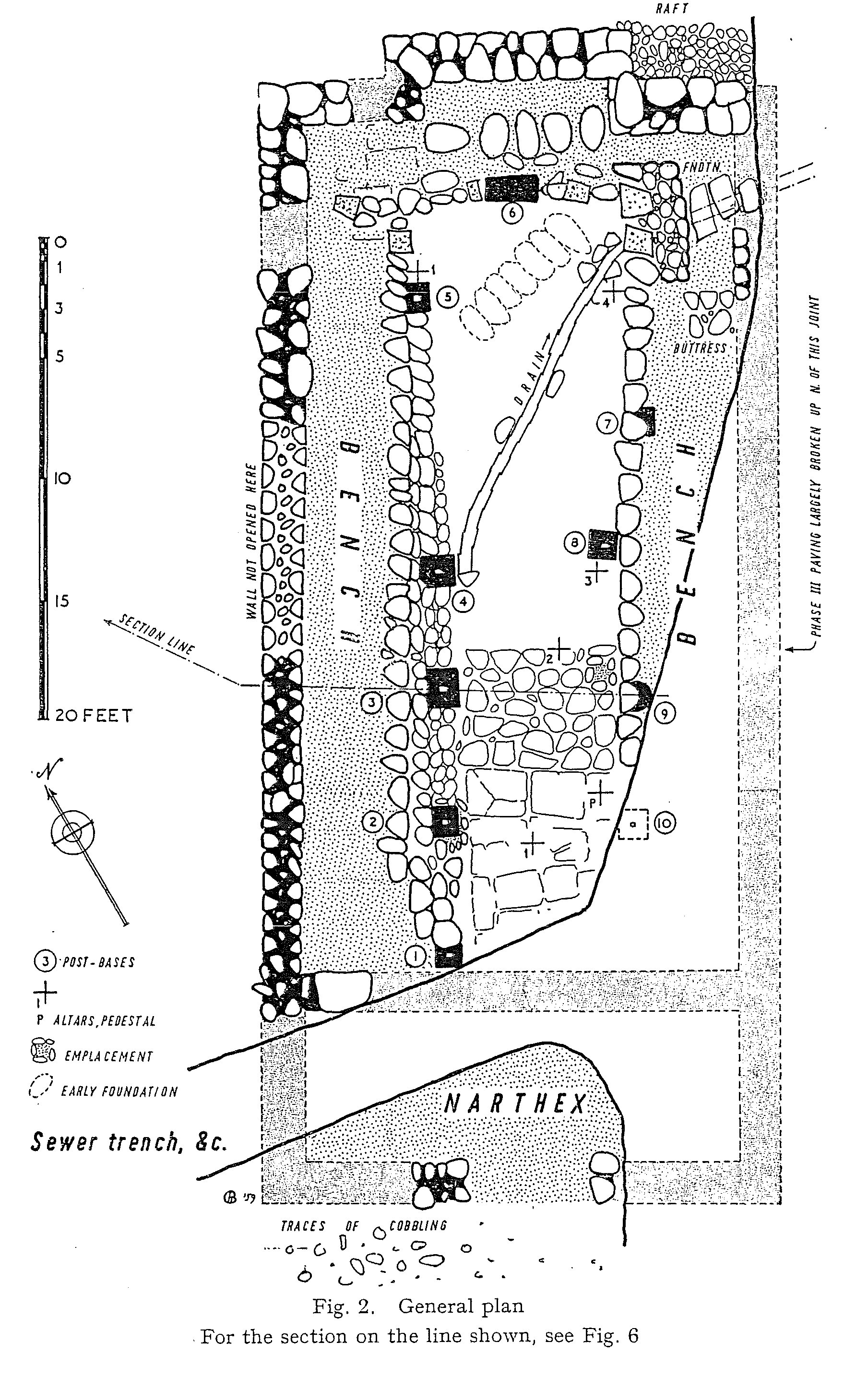
Mithraeum near the Roman fort of Segontium at Caernarfon, built around AD 200 and refurbished twice before being desecrated and burnt in the later 4th century.
Stone altar from Ceanu Mic bearing a fragmentary dedication to Invictus, possibly erected by a Valerius Valerianus.
Small limestone altar found in 1905 inside the legionary fortress at Potaissa, modern Turda, bearing a brief dedication to Sol Invictus Mithras.

Found in Illmitz, Austria, in 1959, this altar was dedicated to the unconquered god Mithras by a certain Aelius Valerianus.
Relief depicting the Thracian Horseman from Intercisa; its relationship to the Mithraic finds is uncertain.
Inscribed altar from Besnyő dedicated to Sol Invictus Mithras by Lucius Septimius Victor, acting on behalf of the Legio II Adiutrix, and dated by the consuls to AD 217.
Limestone altar from Aquincum dedicated to Sol, preserving the brief inscription Solis ara and now in the Hungarian National Museum.
Altar from Aquincum dedicated to Mithras by Aurelius Florianus, a veteran of the Legio II Adiutrix, who fulfilled his vow in AD 240.
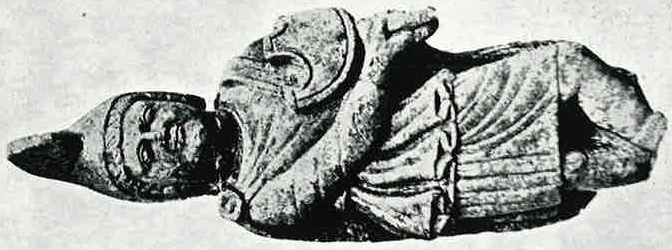
Statue from Aquincum depicting Cautopates standing cross-legged in Oriental dress, holding a lowered torch in his right hand and a pelta in his left.
Small limestone border fragment from Sárkeszi preserving part of a dedication to Mithras, possibly belonging to the altar catalogued immediately afterwards as CIMRM 1814.
Altar discovered during the restoration of a church at Pécs, ancient Sopianae, in 1890, preserving a fragmentary dedication to Sol Invictus pro salute.
