
People attested in Mediolanum




Inscriptions from Mediolanum
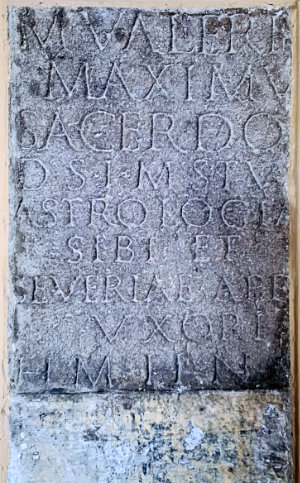
Slab of the astrologer Maximus of Milan
M[arcus] Valeri[us] / Maximu[s] / sacerdo[s] / d[ei] S[olis] i[nvicti] M[ithrae] / stu[di[osus]] / astrologia[e] / sibi et / Severiae Apr[.] / uxori. / H[oc] m[onumentum] h[eredes] n[on] [s[equetur]].
Marcus Valerius Maximus, priest of the invincible sun god Mithras, scholar of astrology, for himself and his wife Severia Apr[---]. This monument is not part of the heritage.
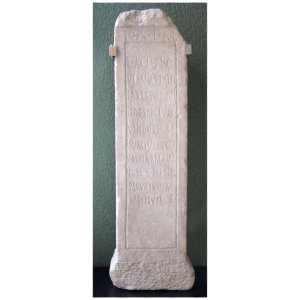
Stele of Acilius Pisonianus from Milan
D[eo] S[oli] i[nvicto] M[ithrae] / P[ublius] Acil[ius] Piso/nianus pater / patratus qui / hoc speleum / vi{i} ignis ab/sumtum com/parata area a re-/publ[ica] Mediol[anensi] / pecunia sua / restituit.
To the invincible Sol god Mithras, Publius Acilius Pisonianus, pater patratus, who at his own expense restored this speleum, which had been completely destroyed by the violent fire, the site having been repaired thanks to the public funds of the Mediolanenses.
Altar of Varia Severa from Milan
D(eo) I(nvicto) M(ithrae) / Varia / Q(uinti) f(ilia) / Severa / v(otum) s(olvit) l(ibens) m(erito).
Varia Severa, daughter of Quintus, willingly and deservedly fulfilled her vow to the Unconquered God Mithras.
References
- Aleš Chalupa (2023) Římský kult boha Mithry. Atlas lokalit a katalog nálezů I
- Alfred Shenington Geden. Stele of Acilius Pisonianus from Milan in EDCS
- Alison Griffith (2006) Completing the Picture: Women and the Female Principle in the Mithraic Cult
- Israel Campos Méndez (2026) Mitra. Un dios entre Oriente y Occidente
- Laurent Bricault & Philippe Roy (2021) Les cultes de Mithra dans l’Empire romain
- Vittoria Canciani (2022) Archaeological Evidence of the Cult of Mithras in Ancient Italy
