Mitreo di Vulci
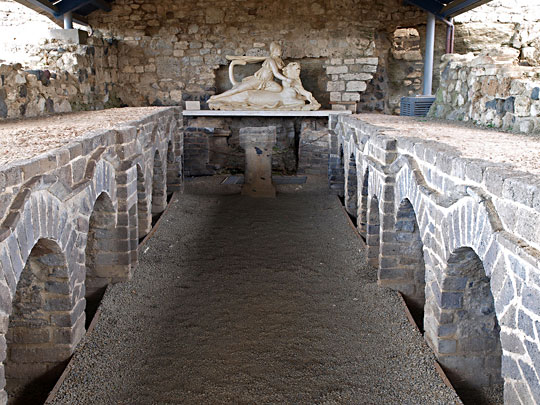
General view of the Vulci Mithraeum
mararie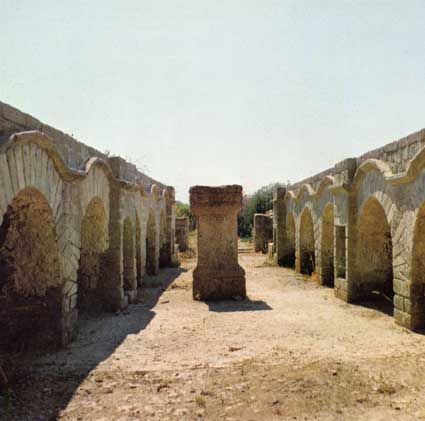
General view of the Vulci Mithraeum
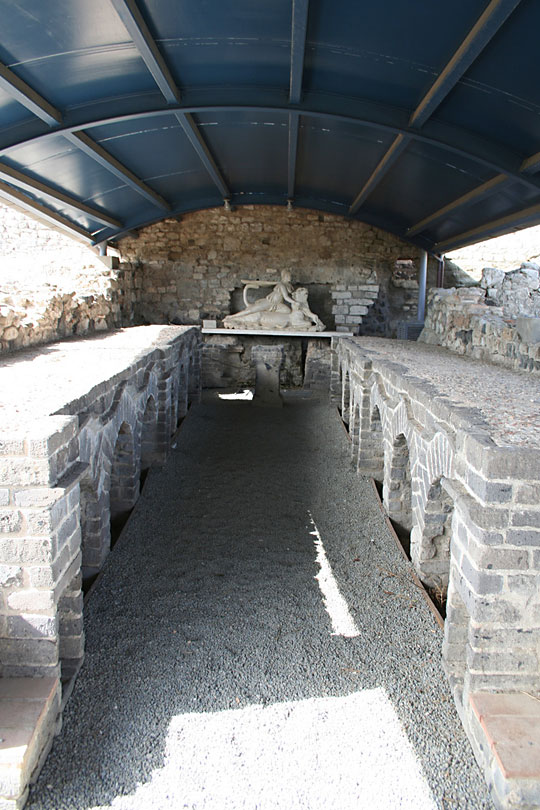
General view of the Vulci Mithraeum
cinqueottobre


TNMM 20
The Mithraeum of Vulci was discovered in 1975, during the excavations of a Roman Villa. The elevation of the lateral benches, more than a meter, is quite unusual as remarked Roger Beck.
On each side a row of six of these arches is flanked by two small square niches. A third niches is set in the centre of the SW bench, with three arches to each side and a smaller arch in the corresponding position on the opposite bench.
Rightly, Sgubini Moretti compares this structural feature with the mosaics of Sette Porte and Sette Sfere at Ostia as a further — and most significant — example of the use of celestial symbolism within the Mithraeum. However, it is unlikely, given the much smaller size of the central openings, that each bench represents the seven planetary spheres. More probable is Gordon's suggestion that the twelve large arches together represent — and perhaps held images of — the signs of the zodiac and that the two central openings represent the gates of heaven.
The sculptures discovered at Vulci include two fine but fragmentary statues of the tauroctony (the back of the smaller is carefully worked so as to suggest the rocky setting of the cave) and a most curious Cautes. On the back of this last is a ladder of seven arcs, ostensibly the folds of his cloak but too regular and quite unlike the natural fall of fabric. It recalls the arches of Sette Sfere, and the symbolism is surely the same — the seven celestial spheres of the soul's ascent.
