This site uses cookies to offer you a better browsing experience.
Find out more on how we use cookies in our privacy policy.

 
Provincia

Mithras in Etruria

Etruria formed part of the cultural and religious heartland of central Italy closely connected to Rome and the Tyrrhenian world.

The Mithraic evidence documented in Etruria reflects the circulation of cults through urban centres, elite environments and communication networks linking the region to Rome and northern Italy. The province contributed to the broader religious landscape of central Roman Italy.

Mithraic monuments of Etruria


Mitreo di Sutri

The Mithraeum of Sutri was built inside a rocky hill that also hosted the Roman theatre of the city.

CIMRM 653


Mitreo di Vulci

The Mithraeum of Vulci is remarkable because of his high benches and the arches below them.


Mitreo di Cosa

The Mithraeum was inserted into the basement of the basilica-theater by the 3rd century.


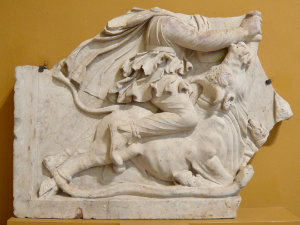
Tauroctony on display in Boston

This fragmentary relief depicts Mithras killing the bull in the usual manner, remarkably dressed in oriental attire.

CIMRM 607


Heliodromus inscription of Cerveteri

This inscription by a certain Memmius Placidus is the first ever found signed by a Heliodromus.


Petrogeny from Florence

The sculpture of the birth of Mithras in Florence included the head of Oceanus.

CIMRM 666


CIMRM 667

A marble head in the Uffizi Gallery, long interpreted as a “dying Alexander,” but probably representing Mithras tauroctonos.

CIMRM 667


Mitreo di Capodimonte

The Mithraeum of Visentium, near Capodimonte in Viterbo, was carved grotto-style into a tuff cliff overlooking the waters of Lake Bolsena, just a few dozen metres away.


CIMRM 645

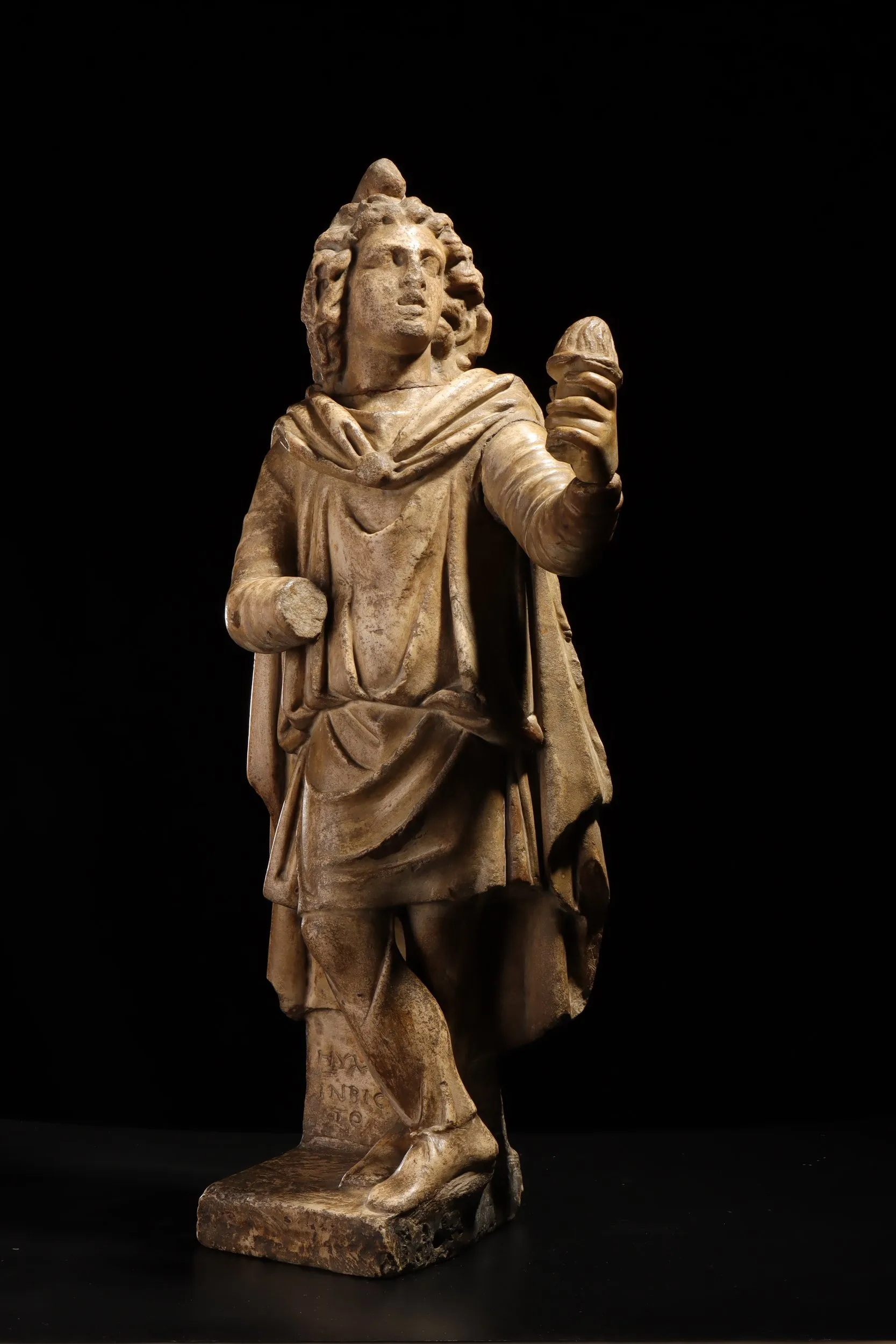
Marble statue (H. 0.65), found at Torrita near Nazzano in the beginning of the 19th century.

CIMRM 645


CIMRM 646

CIL XI 3865; MMM II No.

CIMRM 646


CIMRM 654

Marble relief (H. 0.63 Br. 1.07 D. 0.025-0.03), broken in two pieces.

CIMRM 654


CIMRM 655

Relief of peperino, fixed in a great height into a wall of the old farm "Le Capa- nacce", situated on the main road Le Capranicie-Vetralla, about 6 km from Vicus Matrini along the Via Cassia.

CIMRM 655

See all Mithraic monuments in Etruria

Places in Etruria


Caere

Caere is the Latin name given by the Romans to one of the larger cities of southern Etruria, modern Cerveteri, some 50-60 kilometres north-west of Rome.


Cosa

Cosa was an ancient Roman city near the present Ansedonia in southwestern Tuscany, Italy.


Florentia

Florentia was a Roman city in the Arno valley from which Florence originated.


Luna

Carrara is a town and comune in Tuscany, in northern Italy, of the province of Massa and Carrara, and notable for the white or blue-grey marble quarried there.


Sitrium

Sutri is an Ancient town, modern comune and former bishopric in the province of Viterbo, about 50 kilometres from Rome and about 30 kilometres south of Viterbo. The modern comune of Sutri has a few more than 5,000 inhabitants.


Visentium

Visentium was the Latin name of one of the minor Etruscan cities.

Inscriptions from Etruria

Heliodromus inscription of Cerveteri

[Deo Soli Invic]/[to Mi]thrae / [Mem]mius Pla/cidus helio/dromus sacr/atus a Curtio / Iuvenale patre / votum [solvit] / [libens merito].
To the Invincible Sun God Mithras, Memmius Placidus, Heliodromus, initiated by Curtius Juvenalis, Pater, fulfilled his vow willingly and deservedly.

References

Back to Top