The Mithraic evidence documented in Roman Italia occupies a central position in the history of the cult, particularly through the extraordinary concentration of material preserved in Rome and Ostia. The region illustrates the integration of Mithraic communities within the political, commercial and social environments of the imperial capital and its wider Italian networks.
Mithraic monuments of Italia
Mitreo di San Clemente
The Mithraeum under the Basilica of San Clemente made part of a notable Roman house.
CIMRM 338
Mitreo di Santa Maria Capua Vetere
One of Roman Italy’s most important Mithraic sanctuaries, the Mithraeum at S. Maria Capua Vetere preserves a remarkable painted cycle of initiation scenes, offering rare visual evidence for the ritual life of Roman Mithaism.
CIMRM 180
Mitreo di Santa Prisca
The Mithraeum of Santa Prisca houses remarkable frescoes showing the initiates in procession.
CIMRM 476
Fresco scene from Mitreo of Santa Maria Capua Vetere
Fresco showing a scene of initiation into the mysteries of Mithras in the Mithraeum of Santa Maria Capua Vetere.
CIMRM 188
Relief of Aion-Phanes
The Aion / Phanes relief, currently on display in the Gallerie Estensi, Moneda, is associated with two Eastern mysteric religions: Mithraism and Orphism.
CIMRM 695
Mithraeum of the Baths of Caracalla
The Mitreo delle terme di Caracalla is one of the largest temples dedicated to Mithras ever found in Rome.
CIMRM 457
Intaglio with Mithras and Abraxas at the Walters Art Museum
This unusual piece depicts Mithras slaying the bull on one side and the Gnostic god Abraxas on the other.
CIMRM 2364
Sabazios with Mithras from Bolsena
This unusual bronze bust of Sabazios features multiple symbolic elements, with Mithras depicted in his characteristic pose of slaying the bull, positioned just below Sabazios’ chest.
CIMRM 659
Fresco Tauroctony of Mitreo di Marino
The importance of the Mithraeum of Marino lies in its frescoes, the most significant of which is that of Mithras slaying the bull, surrounded by mythological scenes.
Tauroctony in the British Museum
The sculpture of Mithras slaying the bull was transported from Rome to London by Charles Standish in 1815.
CIMRM 592
Aion of Villa Albani
White marble statue of Lion-head god of time, formerly in the Villa Albani, nowadays in the Musei Vaticani.
CIMRM 545
People attested in Italia
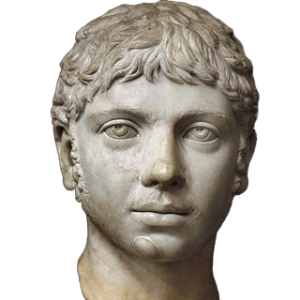
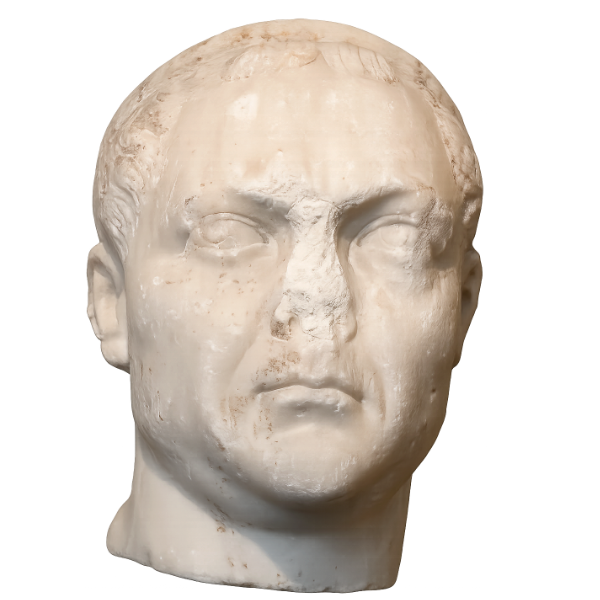


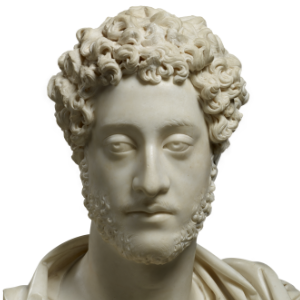




Provinces of Italia
Aemilia
Aemilia connected northern and central Italy through prosperous urban centres and major communication routes of the Roman Peninsula.
Apulia
Apulia connected southern Italy to the Adriatic and eastern Mediterranean through maritime trade and regional urban networks.
Bruttium
Bruttium occupied the southernmost reaches of the Italian Peninsula where maritime mobility linked Italy, Sicilia and the wider Mediterranean.
Campania
Campania preserved a vibrant urban and maritime environment closely connected to the commercial life of Roman Italy.
Etruria
Etruria formed part of the cultural and religious heartland of central Italy closely connected to Rome and the Tyrrhenian world.
Histria
Histria connected the northern Adriatic to the Balkan and Danubian worlds through maritime and regional communication networks.
Latium
Latium formed the political and religious centre of the Roman world where some of the most important Mithraic communities developed.
Liguria
Liguria linked northern Italy to southern Gaul and the western Mediterranean through coastal and Alpine communication routes.
Lucania
Lucania connected inland southern Italy to the Tyrrhenian and Ionian maritime worlds through regional communication networks.
Picenum
Picenum connected the Adriatic coast of central Italy to inland communication routes and the wider networks of the Roman Peninsula.
Samnium
Samnium occupied a mountainous region of central Italy linked to Rome through military movement and regional urban networks.
Transpadana
Transpadana occupied the northern plains of Italy where major communication routes connected the peninsula to the Alpine and Danubian worlds.
Umbria
Umbria formed part of the central Italian heartland through which religious practices circulated between Rome and the northern provinces.
Venetia
Venetia connected northern Italy to the Adriatic and Danubian worlds through trade, mobility and imperial communication routes.
Places in Italia
Roma
Archaeological evidence shows that the area around Rome has been inhabited since around 14,000 years ago. Excavations support the theory that Rome grew from pastoral settlements on the Palatine Hill, which was built over the area of the Roman Forum.
Aesernia
Isernia is a town and comune in the southern Italian region of Molise, and the capital of the province of Isernia.
Ager Albanus
Albano Laziale, sometimes known simply as Albano, is a comune in the Metropolitan City of Rome Capital, on the Alban Hills, in the Italian region of Lazio.
Angera
Roman settlement on the southern shore of Lacus Verbanus (Lake Maggiore) in Transpadana, known for Mithraic inscriptions and a cave sanctuary traditionally identified as a Mithraeum.
Antium
Antium was an ancient coastal settlement in Latium, founded around the 11th century BC. A major stronghold of the Volsci before its conquest by Rome, its territory largely corresponds to modern Anzio and Nettuno.
Aquileia
Aquileia, now a small municipality in north-eastern Italy, was one of the largest cities in the world in the 2nd century AD, with a population of 100,000.
Arretium
Arezzo is a city and comune in Italy and the capital of the province of the same name located in Tuscany.
Aveia Vestina
Aveia was an ancient town of the Vestini and Roman former bishopric, which remains a Latin Catholic titular see.
Bergomum
Bergamo is a city in the alpine Lombardy region of northern Italy, approximately 40 km northeast of Milan, and about 30 km from Switzerland, the alpine lakes Como and Iseo and 70 km from Garda and Maggiore.
Inscriptions from Italia
Relief of Aion-Phanes
Slab of Sol Invictus
Intaglio with Mithras and Abraxas at the Walters Art Museum
Mitreo di Felicissimo
Tauroctony 593
Altar from Mitreo di San Clemente
Leontocephalic deity from the Fagan Mithraeum
Procession Fresco from Santa Prisca
Mosaic of the Mitreo di Felicissimo
Dedication to Zeus-Helios, Mithras, and Phanes
Tauroctony from Nesce
Tauroctony from the Collezione Torlonia
[Soli i]nvicto / Mithrae [f]ec[it] L[ucius] Aur[elius] Severus Pra[es[idente] L[ucio]] Domitio Mar[cel]lino patr[e].
To the Unconquered Sol Mithras, Lucius Aurelius Severus made this, under the presidency of Lucius Domitius Marcellinus, the Pater.
References
- Attilio Mastrocinque (2022) The Mithraic Prophecy
- Attilio Mastrocinque (2017) The Mysteries of Mithras. A Different Account
- Carel Claudius van Essen (1965) The Excavations in the Mithraeum of the Church of Santa Prisca in Rome
- David Walsh (2018) The Cult of Mithras in Late Antiquity. Development, Decline and Demise ca. A.D. 270-430
- Jaime Alvar Ezquerra (2008) Romanising Oriental Gods Myth Salvation and Ethics in the Cults of Cybele Isis and Mithras
- Jaime Alvar Ezquerra (2021) The Mystery of Mithras. Exploring the heart of a Roman cult
- M. Clauss (1990) The Roman cult of Mithras
- Maarten Vermaseren (1963) Mithras, the Secret God
- Maarten Vermaseren (1971) Mithriaca I. The Mithraeum at S. Maria Capua Vetere
- Maarten Vermaseren (1974) Mithriaca II. The Mithraeum at Ponza
- Maarten Vermaseren (1982) Mithriaca III. The Mithraeum at Marino
- Maarten Vermaseren (1978) Mithriaca IV. Le Monument d'Ottaviano Zeno et le culte de Mithra sur le Célius
- Manfred Clauss (1992) Cultores Mithrae. Die Anhangerschaft Des Mithras-Kultes
- Multiple authors; Ugo Bianchi (1979) Mysteria Mithrae
- Philippe Roy (2021) Les cultes de Mithra dans l’Empire romain
- Robert Turcan (1993) Mithra et le Mithriacisme
- Roger Beck (2004) Beck on Mithraism. Collected Works with New Essays
- Roger Beck (2007) The Religion of the Mithras Cult in the Roman Empire. Mysteries of the Unconquered Sun
- La Réaction païenne. Étude sur la polémique antichrétienne du Ier au VIe siècle
- Mitra. Un dios entre Oriente y Occidente
- Římský kult boha Mithry. Atlas lokalit a katalog nálezů I
