Mercury of Mérida
TNMM 394 ↔ CIMRM 780 & 781
The material employed for this statue comes from the quarries of Estremoz. Lusitanian marble was primarily used in Colonia Augusta Emerita, beginning with the reign of Tiberius, as much for architectural adornment as for this provincial capital's exceptional production of statuary.
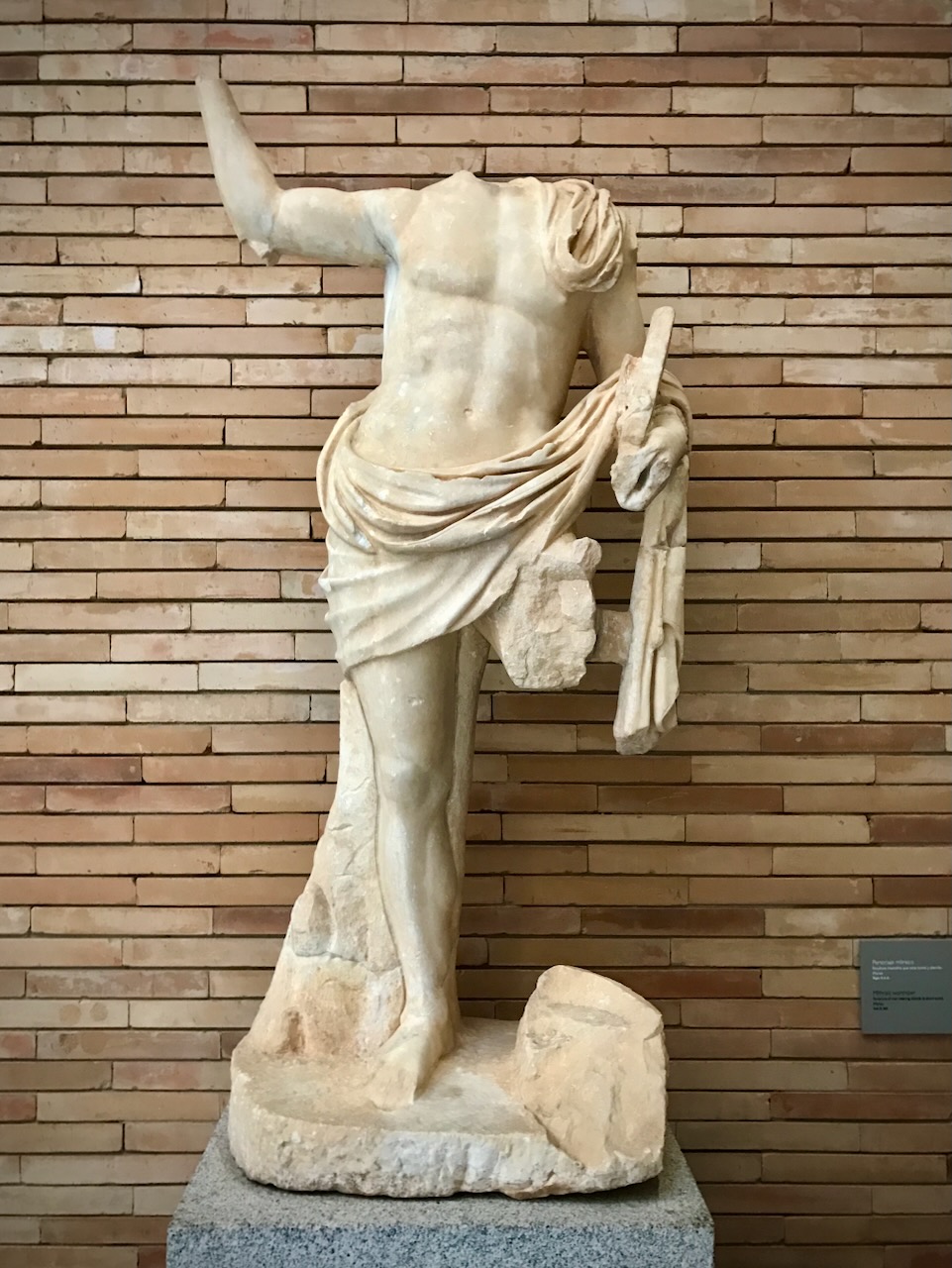
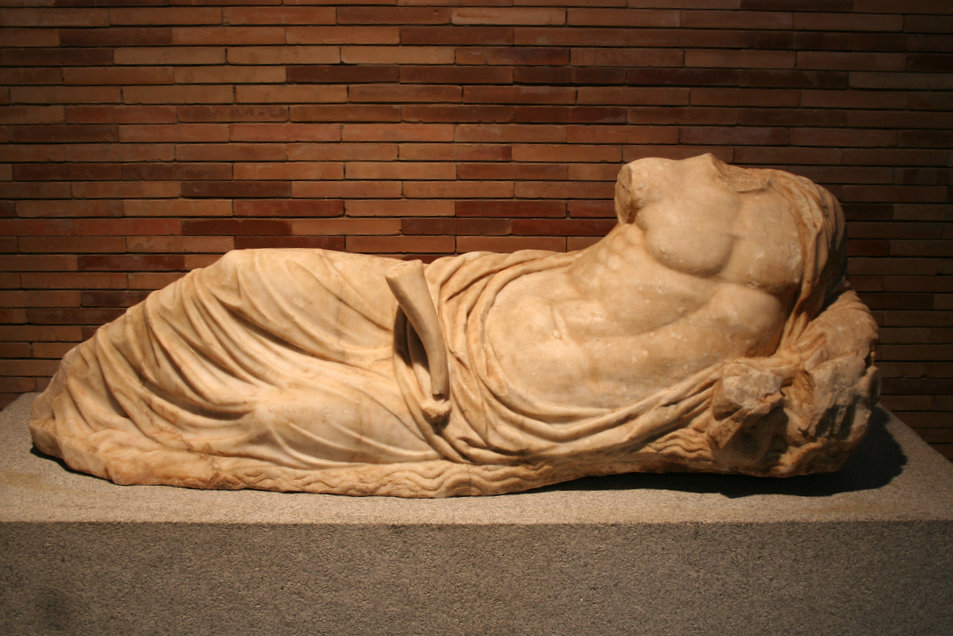
The figure undeniably is derived as much from a theme, i.e. Hermes seated, as from an aesthetic attributed to Lysippus, the sculptor of the Greek Hellenistic period. The version done in marble from Mérida, which associates with this god's image the lyre, wings on the sandals (mostly broken), and perhaps the caduceus (now lost) in his right hand, probably arques for the existence of an original work on a larger scale, which can be assigned to the period between 338 and 335 B.C.E. Today one can discern a small series of replicas and derivatives, primarily in bronze the style and attitude of which are comparable to the so-called Lysippean type. These pieces demonstrate a flexible attitude, which is expressed by means of a strong pivot towards the left of the bust and head, thus permitting them to take full possession of the space. This is also how a smaller representation of Mercury done in marble, that was discovered in the Mithraeum at London is presented.
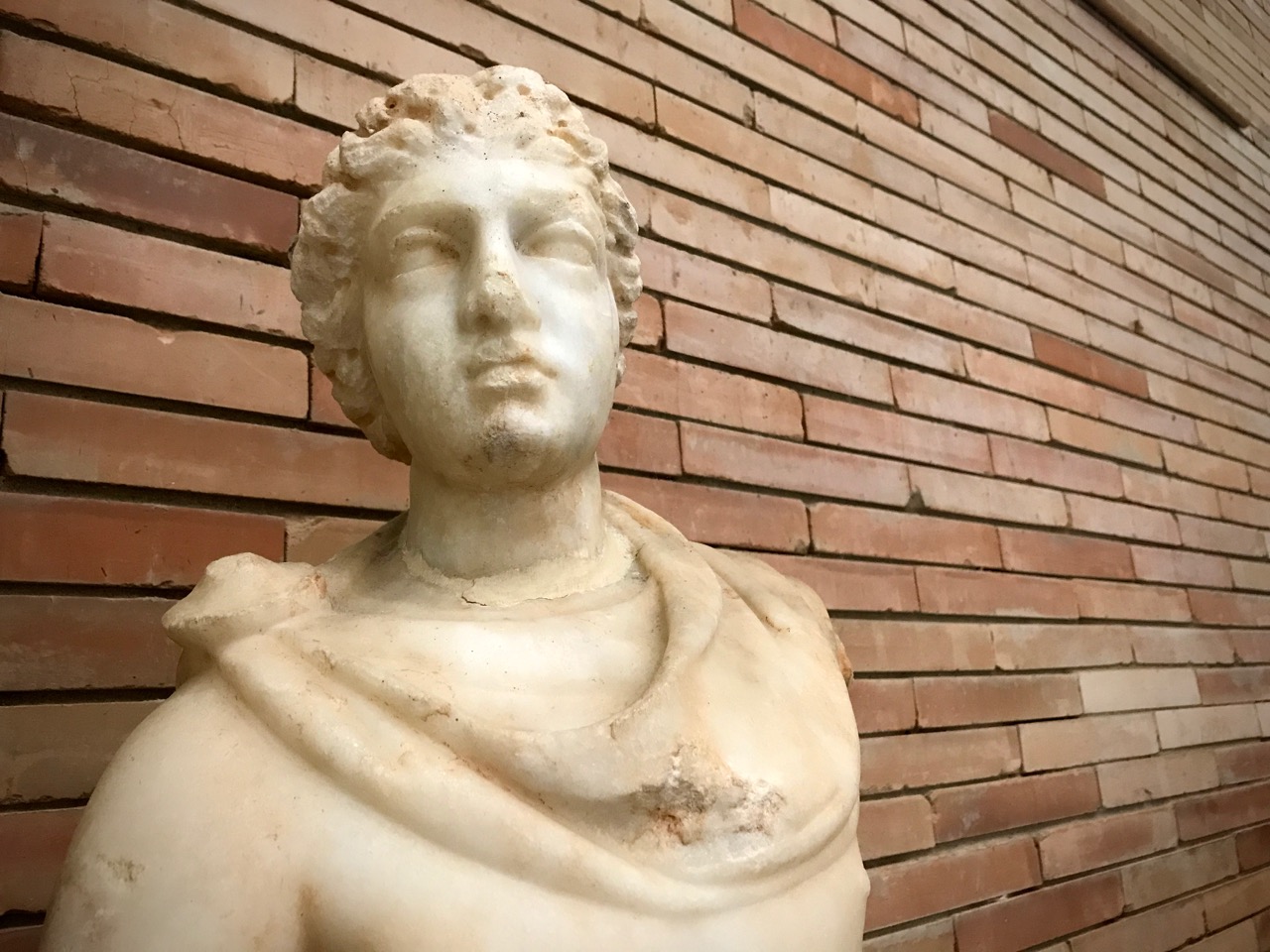
If the work from Mérida, notably due to its material, remains marked more by its stiffness, then its proportions – as with Mercury's anatomy, which is distinguished by a relatively powerful muscular but somewhat lean design – drew from formulas established during the second half of the 4th century B.C.E. The lips, separated by a deep furrow, the very subtle accentuation of the nasolabial wrinkles, the marked arches of the eyebrows, and the outline of the hair all obey stylistic criteria that are shared with a head preserved in Rome at the Museo Barracco (inv. MB 159). Only the drill holes on the back part of the hair give the Mercury of Mérida a plastic vigour, and perhaps also a spirit that is more provincial, and foreign to the Roman copy.
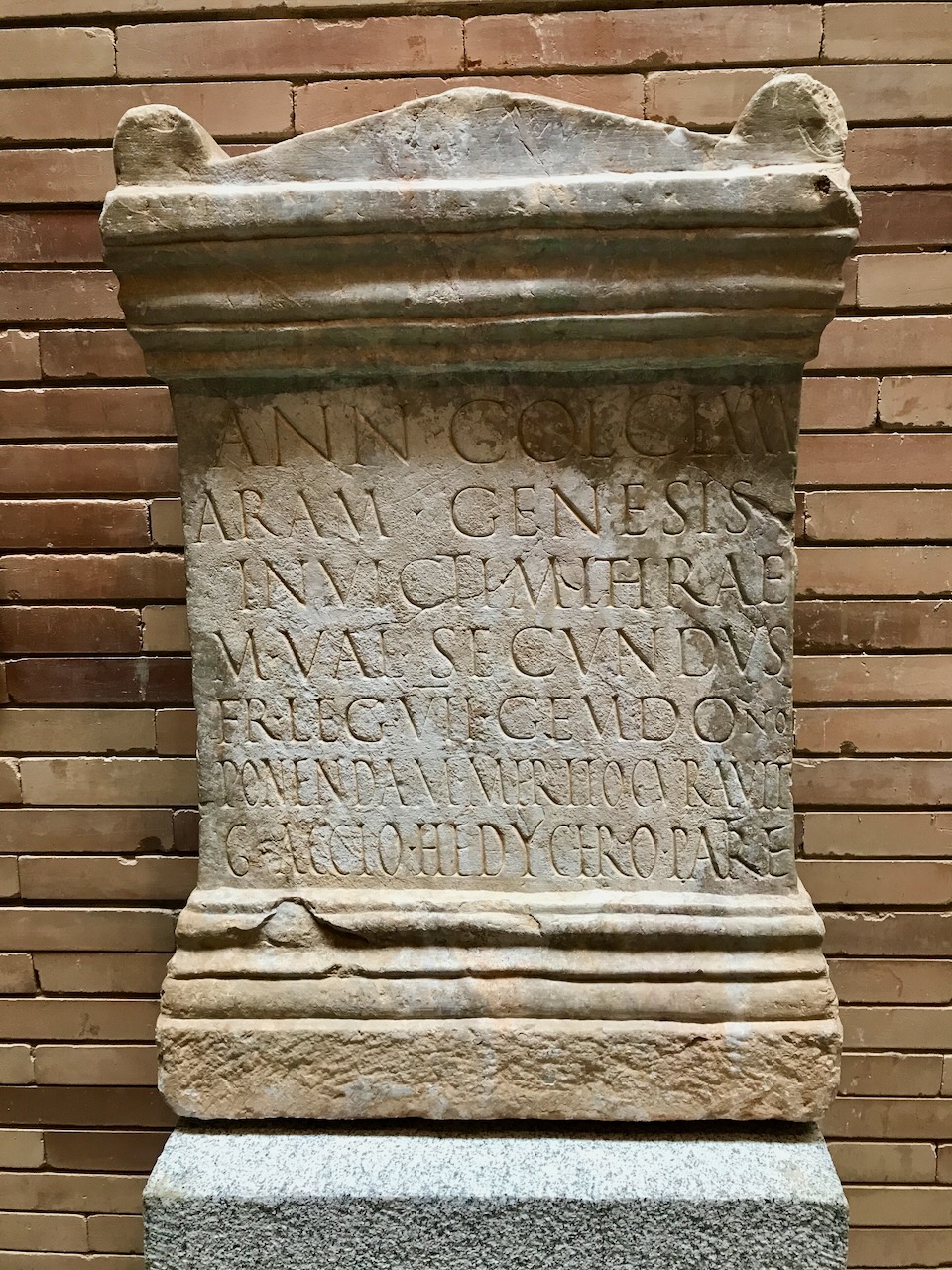
The tortoise's shell, serving as a soundbox for the lyre, is inscribed with a dedication:
Ann(o) col(oniae) CLXXX / invicto deo Mithrae / sacr(um) / G(aius) Accius Hedychrus / Pater / a(nimo) (libente) plosuit).
In the colony's 180th year. Consecrated to the invincible god Mithras. Gaius Accius Hedychrus, Father, willingly deposited this
This inscription was set up by a Roman freedman, Roman citizen and Father of the community in 155 C.E, whose name appears at least four times in the context of the Mithraic sanctuary at Mérida.
———
Marble statue (H. 1.51), found in the Plaza de Toros in 1913. Mus. Merida, Inv. No. 580.
A naked Mercurius with winged feet, sits on a large boulder, on which a cloth lies spread out. A part of his l. leg is lost. Under his l.h;, which rests on the rock, a lyre, on which an inscription.
CIMRM 781
Ann(o) col(oniae) CLXXX / invicto deo Mithrae / sacr(um) / G(aius) Accius Hedychrus / pater / a(nimo) l(ibente) p(osuit).
155 A.D.
Main inscription
References
Paris in AA 1914, 377f and fig. 52; RA XXIV ,1914, 9f No. 9 and fig. 7; Melida in BAH 1914, 453 No. 11 and Pl. VII; Cat. Badajoz, No. 1088; Legge in Proc. Soc. Bibl. Arch. XXXVII, 1915, Pl. XIX, 5; Lianez, 190f No. 580 and fig. 68; Leipoldt, XIII and fig. 25; Pidal, Hist. Esp. II, 431 and figs. 231-232; Garcia y Bellido, Culto, fig. 13. See fig. 213.
- Vermaseren, Maarten Jozef (1956) Corpus Inscriptionum et Monumentorum Religionis Mithriacae


Comments