
Biography
of Victorius Victor
- Victorius Victor, a freedman, is attested as a member of a Mithraic community (syndexios) at the Mitreo de Lugo.
- Attested at Lucus Augusti, Tarraconensis, Hispania in 212 – 218 (TNMM 189).
TNMP 4
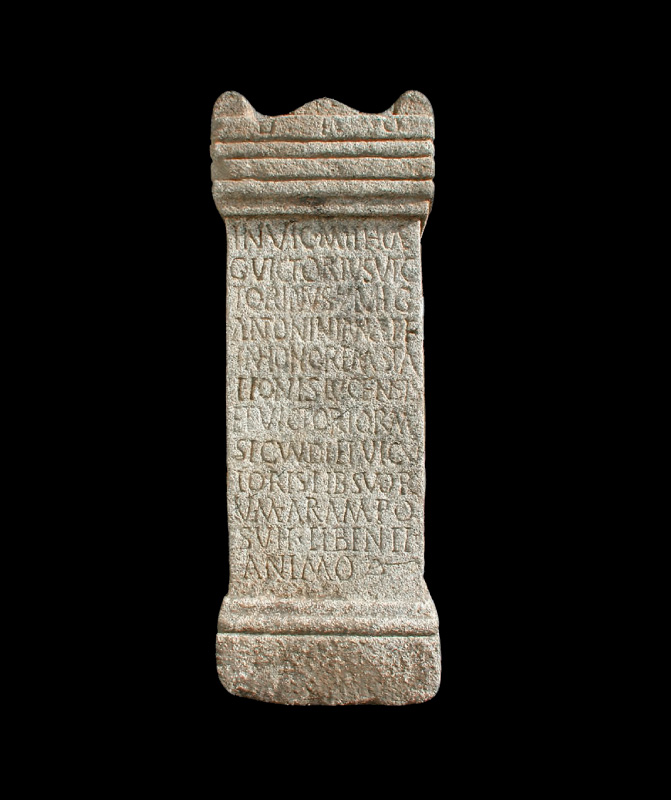
Victorius Victor is known from a single Mithraic inscription discovered in the mithraeum of Lucus Augusti (modern Lugo), one of the most important pieces of evidence for the cult of Mitra in north-western Hispania. The inscription records that the centurion Gaius Victorius Victorinus of the Legio VII Gemina Antoniniana Pia Felix dedicated an altar to Invictus Mithras “in honour of the statio Lucensis and of his freedmen Victorius Secundus and Victorius Victor” (et Victoriorum Secundi et Victoris libertorum suorum). The monument can be dated between AD 212 and 218 on the basis of the legion’s epithet Antoniniana, placing it among the earliest securely dated Mithraic monuments of third-century Hispania (TNMM 189; Albar, Gordon & Rodríguez 2006; Alvar 2021).
Although Victorius Victor is explicitly associated with a Mithraic dedication, the inscription does not identify him as an initiate, nor does it attribute to him any religious grade or office. What can be established with confidence is that he was a freedman (libertus) of Gaius Victorius Victorinus and formed part of the centurion’s household or personal entourage. His unusual inclusion, together with the fellow freedman Victorius Secundus, suggests that both men enjoyed a privileged position within the familia of their patron, since the explicit commemoration of freedmen in a votive inscription was by no means obligatory.
The reasons for this honour remain uncertain. Rodríguez and Alvar have suggested that the two freedmen may have played an important role in Victorinus’ religious life, perhaps introducing him to the cult of Mitra or acting as intermediaries between the centurion and the local Mithraic community. Such interpretations remain hypothetical, but the mention of the freedmen has been used as an argument that the Lugo mithraeum may originally have functioned within the private sphere of Victorinus’ residence rather than as a purely institutional sanctuary of the military statio. Whatever the precise circumstances, Victorius Victor remains one of the few named freedmen directly associated with the Mithraic evidence from Roman Hispania.
References
- Jaime Alvar Ezquerra (2018) El culto de Mitra en Hispania.
- Epigraphic Database Heidelberg. Ara of the Mithraeum of Lugo in EDH.
- Alfred Shenington Geden. Ara of the Mithraeum of Lugo in EDCS.
- Hispania Epigraphica. Ara of the Mithraeum of Lugo in HE.
- Jaime Alvar Ezquerra, Celso Rodríguez & Richard Gordon (2006) The mithraeum at Lugo (Lucus Augusti) and its connection with Legio VII Gemina, Vol. 19.
- Mitra en Hispania. Ara of the Mithraeum of Lugo in MEH.
Attestations
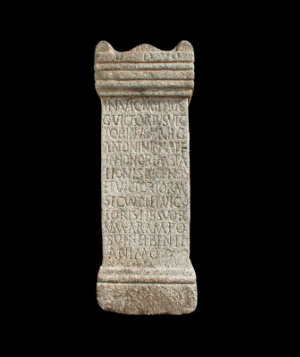
Ara of the Mithraeum of Lugo
TNMM 189
Victorius Victorious, centurion of the Legio VII, erected the altar in honour of the Lugo garrison and of the Victorius Secundus and Victor, his freedmen.
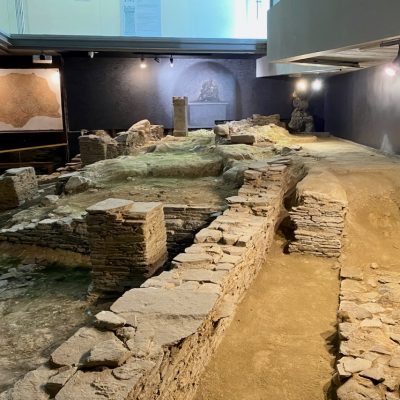
Mitreo de Lugo
TNMM 27
The exploration of an old pazo, a manor house, near the Roman wall, in Lugo, led to the discovery of a Roman domus, which existed continuously from the beginnings of the Christian Era until the Late Empire.