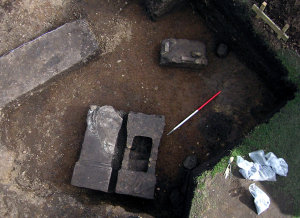
Inveresk, immediately south of modern Musselburgh in East Lothian, occupied a strategic position overlooking the Firth of Forth and close to the mouth of the River Esk. Its ancient name is unknown. A Roman fort was established here during the Antonine advance into Scotland in the mid-2nd century CE, forming part of the military network associated with the Antonine Wall, while a substantial civilian settlement (vicus) developed around it. Archaeological discoveries attest to a flourishing community with military, domestic and religious activity. Among them is the Mithraeum excavated east of the fort in 2010, the first identified in Scotland and the earliest securely dated example known from Roman Britain.
People attested in Inveresk

Inscriptions from Inveresk
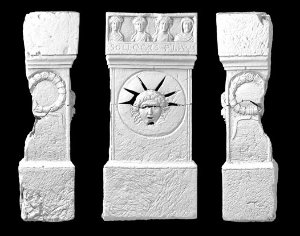
Altar with openwork of Inveresk
Soli C[aius] Cas[sius ?] Fla[vianus ?] >.
À Sol, Caius Cas[sius ?] Fla[vianus ?], centurion.
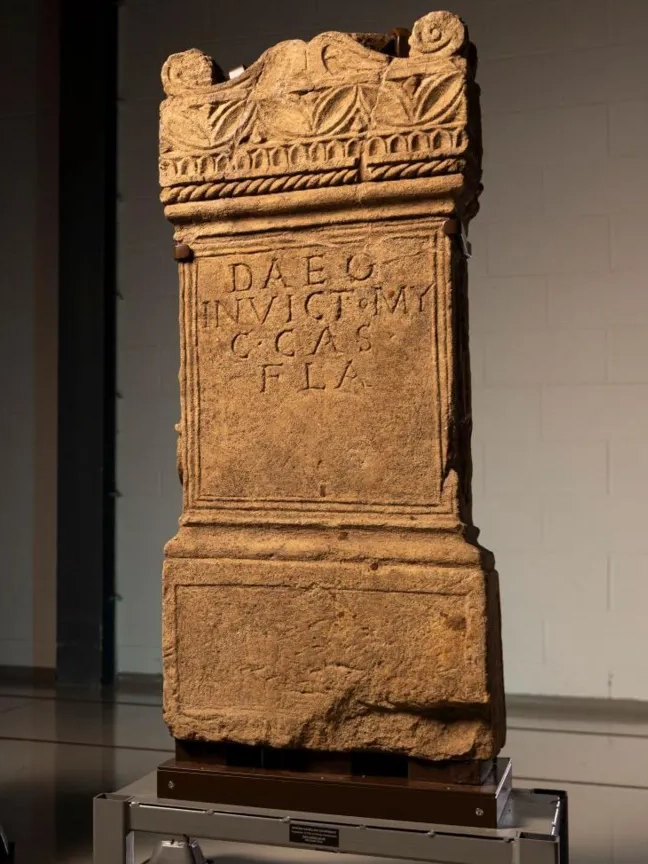
Altar of Inveresk with a griffin
Daeo [sic] / invic[to] My[thrae] / C. Cas[sius ?] / Fla[vianus ?].
To the god Mithras the Unconquered, Gaius Cassius Flavianus [set this up].
References
- Current Archaeology (2014) Bodyguards, corpses, and cults
- Hunter, F, Henig, M & Sauer, E (2016) Mithras in Scotland: A Mithraeum at Inveresk (East Lothian), Britannia, vol. 46, pp. 1-50
- Jessica Bowen (2026) Ancient Roman altars found in Scotland to go on display
- Laurent Bricault & Philippe Roy (2021) Les cultes de Mithra dans l’Empire romain
- Mariana Egri & Matthew M. McCarty (2020) The Archaeology of Mithraism. New Finds and Approaches to Mithras-Worship
