Evidence from Histria reflects the circulation of Mithraic cults through coastal settlements and exchange routes linking northeastern Italy to the Adriatic and frontier provinces. The region occupied an intermediary position between Italy and the Balkans.
People attested in Histria


Places in Histria
Parentium
The roman castrum was built in the 2nd century BC. During the reign of Emperor Augustus in the 1st century BC, it officially became a city and was part of the Roman colony of Colonia Iulia Parentium.
Inscriptions from Histria
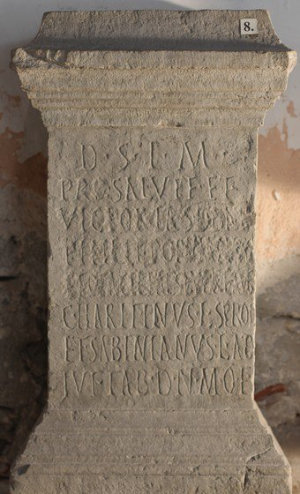
Altar of Poreč
D[eo] S[oli] i[nvicto] M[ithrae] / pro salute et / victoria s[acratissimorum] d[ominorum] n[ostrorum] / Philipporum Aug[ustorum] / et Otaciliae Severe Aug[ustae] / Charitinus I[ibertus] s[ub]proc[urator] / et Sabinianus I[ibertus] ad/iut[or] tab[ulariorum] / d[evoti] n[umini] m[aiestati]q[ue] e[orum].
To the god Sol, invincible Mithras, for the safety and the victory of our most sacred lords, the two emperors Philip and of Otacilia Severa. Charitinus, freedman and steward of the imperial patrimony, and Sabinianus, freedman and assistant, dedicated to the numen and the majesty of the emperors.
