This site uses cookies to offer you a better browsing experience.
Find out more on how we use cookies in our privacy policy.

 
Provincia

Mithras in Moesia superior

Moesia superior preserves frontier evidence shaped by the military infrastructure and circulation networks of the middle Danube.

The material documented in Moesia superior illustrates the importance of the province within the Danubian military zone of the Roman empire. Mithraic cults circulated through legionary communities, urban centres and strategic routes linking the Balkans to the wider frontier world.
Mithraic monuments of Moesia superior


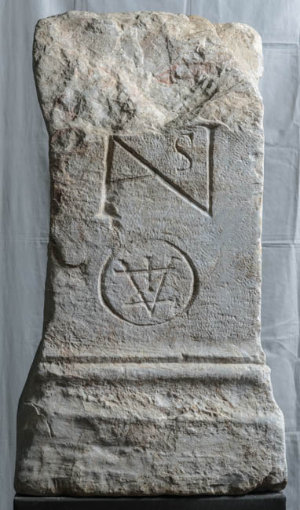
Altar of Klechovtse

The limestone altar at Klechovtse in North Macedonia bears an inscription to the invincible Mithras.

CIMRM 2209


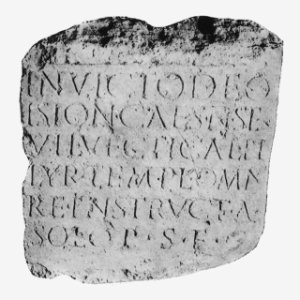
Inscription of Ision from Guberevac

In this monument, the imperial slave Ision claims the completion of a new temple to Mithras in Moesia.

CIMRM 2235


Circular tauroctony from Kadine-Most

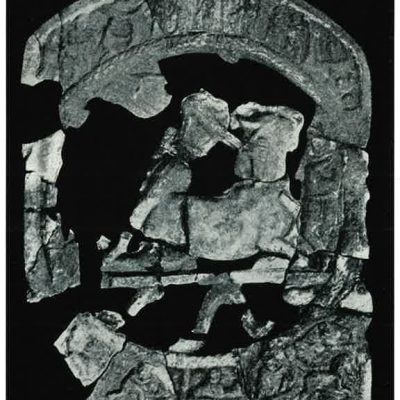
Small circular marble tauroctony relief from Kadine-Most in the Küstendil district, Moesia Superior, divided into two parts by a horizontal rim, with the bull-slaying in the upper and a figure or inscription in the lower.

CIMRM 2246


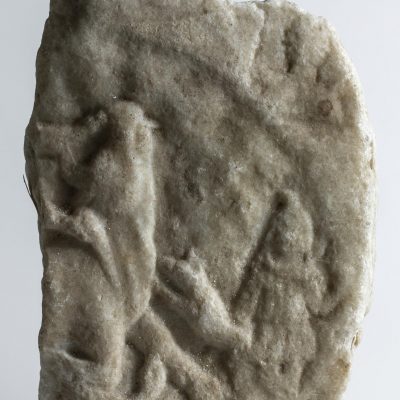
Fragmentary tauroctony from Kostolac

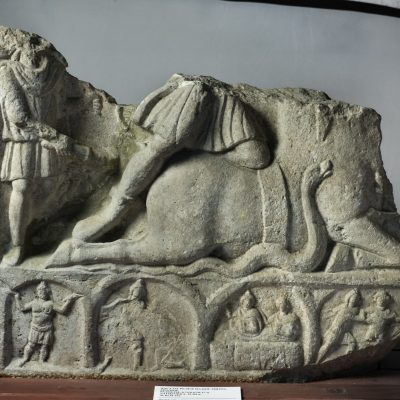
This weathered marble fragment from Viminacium preserves part of a tauroctony with Luna, Cautopates, the serpent, and the dog.


Mithraeum at Biljanovac

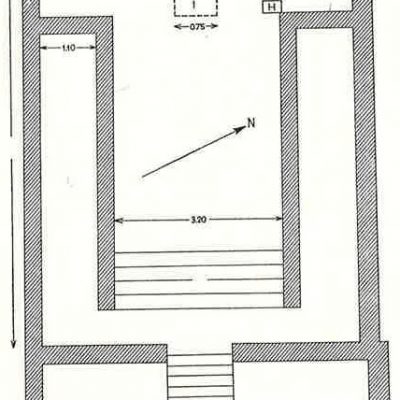
Mithraic sanctuary found at Biljanovac north-east of Kumanovo, Moesia Superior, with a pronaos and inner sanctuary, yielding marble reliefs, an altar, and associated cult objects.

CIMRM 2201


Rock-birth fragment from Cladova

Small marble tauroctony fragment from Cladova, Moesia Superior, preserving part of Mithras's rock-birth scene.

CIMRM 2215


Tauroctony cloak fragment from Ratiaria

Fragment of a marble tauroctony relief from Artschar, ancient Ratiaria in Moesia Superior, preserving only part of Mithras's flying cloak with the raven perched on it.

CIMRM 2226


Tauroctony fragment from Drmno

White marble tauroctony relief fragment from Drmno, Moesia Superior, found in 1892 and now in Brussels, depicting the standard bull-slaying scene.

CIMRM 2233


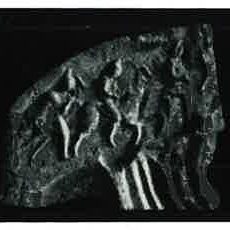
Tauroctony lower portion from Pautalia

Lower part of a marble tauroctony relief from Küstendil, ancient Pautalia in Moesia Superior, preserving only the lower half of the bull-slaying scene with partially visible legs of the torchbearers.

CIMRM 2241


Tauroctony relief from Biljanovac

White marble tauroctony relief in several fragments from the Mithraeum at Biljanovac, Moesia Superior, depicting the standard bull-slaying with the full iconographic programme.

CIMRM 2202


Tauroctony relief from Biljanovac

White marble tauroctony relief from the Mithraeum at Biljanovac, Moesia Superior, depicting the standard bull-slaying with torchbearers and Sol and Luna busts in the upper corners.

CIMRM 2204


Tauroctony relief from Janjevo

Marble tauroctony relief from Janjevo near Kosovo, Moesia Superior, whose right corners are broken off; the current whereabouts are unknown.

CIMRM 2214

See all Mithraic monuments in Moesia superior

Brothers attested in Moesia superior

Places in Moesia superior


Almus

Almus occupied a strategic position on the southern bank of the Danube in western Moesia.


Biljanovac

Ancient site in Moesia Superior, north-east of Kumanovo, where the remains of a Mithraic sanctuary were discovered together with several marble reliefs, altars and cult objects.


Civitas Montanensium

Civitas Montanensium developed around the important Roman settlement at modern Montana in Bulgaria.


Cladova

Kladovo lies near the Iron Gates region and formed part of the Danubian frontier landscape.


Dražinovići

The locality of Dražinovići is associated with archaeological remains from the central Balkan region.


Drmno

Drmno lies near the important Roman site of Viminacium on the Danube frontier.


Guberevac

Guberevac is a village in the municipality of Sopot, Serbia.


Guberevci

The locality of Guberevci belongs to the inland communications zone of Roman Moesia Superior.


Janjevo

Janjevo formed part of the mining and settlement landscape of the central Balkans.


Jassen

The locality of Jassen belongs to the inland communications landscape of the Balkan provinces.


Kadine-Most

Kadine-Most lies within the central Balkan region historically connected with Roman Moesia.


Klečovac

The locality of Klečovac is associated with archaeological material from the Danubian hinterland.

See all Mithraic places in Moesia superior

Inscriptions from Moesia superior

Altar of Klechovtse

[D[eo] i[nvicto]] M[ithrae] / fano mag[no] / pro sal[ute] Aug[g[ustorum]] n[ostrorum] / Apollonides / eorund[em] vect[igalis] Il/lyr[ici] ser[vus] [contra]sc[riptor] st[ationis] / Lamud[---] quam vove/rat [contra]sc[riptor] sta[tionis] Vizi[ani] // A[pollo]n[ides]s Viz[iani] // Gentia/no et / Basso [co[n]s[ulibus]].
To the invincible god Mithras, a great temple, for the safety of our Agustus Apollonides, the servant of Illyricum, the contrascriptor of the garrison of those tributaries, Lamud--- which he had vowed, the contrary of the station of Viziani.

Inscription of Ision from Guberevac

Invicto deo / Ision Caes[aris] n[ostri] ser[vus] / vil[icus] vectigal[is] Il/lyr[ici] templ[um] omn[i] / re instruct[um] a / solo p[ecunia] s[ua] f[aciendum] c[uravit].
To the invincible god, Ision, a slave of our emperor and steward of the taxes of Illyricum, saw to it that the temple, complete with all its furnishings, was built from the ground up at his own expense.
Back to Top